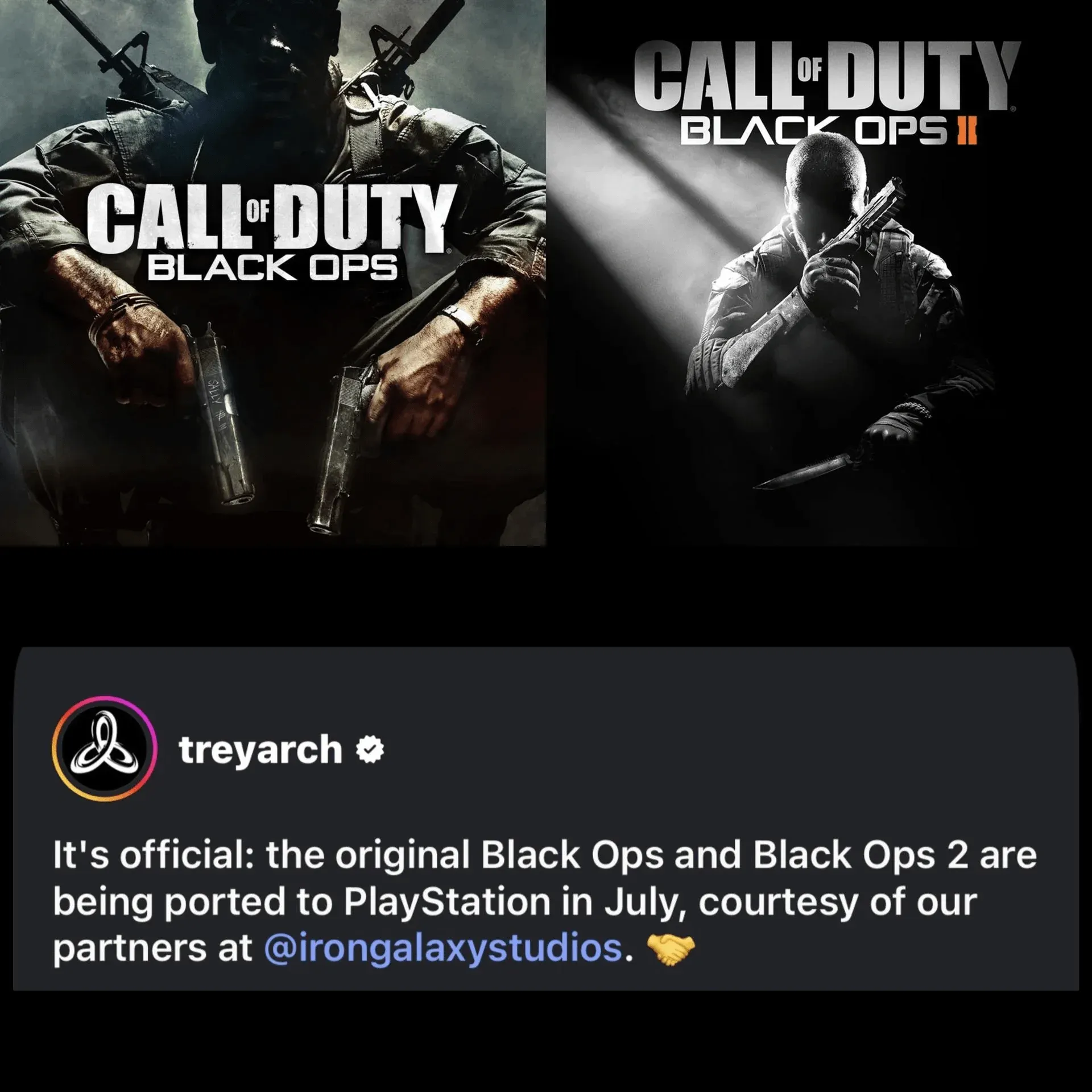


The leaks were right. After ratings board listings in Korea quietly surfaced weeks ago, Treyarch made it official on X: Call of Duty: Black Ops and Call of Duty: Black Ops 2 are heading to PlayStation. Both games arrive in July, bringing their full packages, including campaign, Zombies, and multiplayer, to PS4 and PS5. If you've been waiting to revisit these shooter games on modern PlayStation hardware, that wait is almost over. But here's the thing: the word "remaster" is nowhere in sight, and that gap matters more than you might think.
Activision confirmed directly that these are ports, not remasters. That's not just PR semantics.

Use code TRYHARD33 at checkout to redeem this offer before code expires again.
Get 33% Off GAMES+ Subscription
What "port" actually means here
The studio handling the work is Iron Galaxy, a well-regarded work-for-hire outfit with a solid track record on ports and remasters across multiple titles. Their involvement is a decent sign for stability, but the scope of the job is what it is.
Because these releases span both PS4 and PS5, don't expect native PS5 features. No 120Hz support, no DualSense haptic integration, and no rebuilt assets. Ports locked to cross-gen targets rarely get that treatment, and nothing in Treyarch's announcement suggested otherwise. The games will essentially run as they did on original hardware, with whatever compatibility adjustments Iron Galaxy applies to make them functional on current PlayStation systems.
There's also a specific technical wrinkle worth flagging: both Black Ops games from that era tied certain physics and gameplay characteristics directly to framerate. Any meaningful change to frame pacing would require extra engineering work, and a port by definition isn't set up to do that.
The hacked lobby problem hasn't gone away
Performance expectations are one thing. Multiplayer is where the bigger question sits.
The original Black Ops and Black Ops 2 still exist on PS3 and Xbox 360, and anyone who has dropped into those lobbies recently knows what they find: hacked sessions, modified parameters, and injected code that makes competitive play nearly unplayable. Those platforms stopped receiving security updates long ago, leaving the door wide open for that kind of interference.
The key question Treyarch hasn't answered yet is whether these PlayStation ports will connect to that same aging server infrastructure, or whether Activision will stand up separate, controlled dedicated servers. If it's the former, the hacked lobby problem follows the games to PS4 and PS5. If it's the latter, that's a much cleaner experience, but also a meaningful operational commitment that hasn't been confirmed.
The PlayStation gap that made this necessary
On Xbox, both games have been accessible for years through backwards compatibility. PlayStation has no equivalent system, which is exactly why ports like this exist. It's the same playbook Rockstar ran with the Red Dead Redemption re-release on PS4, getting a classic onto modern hardware without the full investment of a remaster.
That framing is useful context. This isn't Activision treating Black Ops and Black Ops 2 as prestige releases worthy of a full overhaul. It's closing a platform gap. For players who just want to run through the Black Ops 2 campaign or grind Zombies on a PS5 without tracking down old hardware, that's still a win. For anyone expecting the visual polish and feature upgrades of something like a proper remaster, the expectations need adjusting now, before July.
For everything else happening in the Black Ops universe right now, the Call of Duty: Black Ops 6 game page has the latest, and the full Call of Duty: Black Ops 6 guides collection covers the current game in depth while the classic ports take shape.