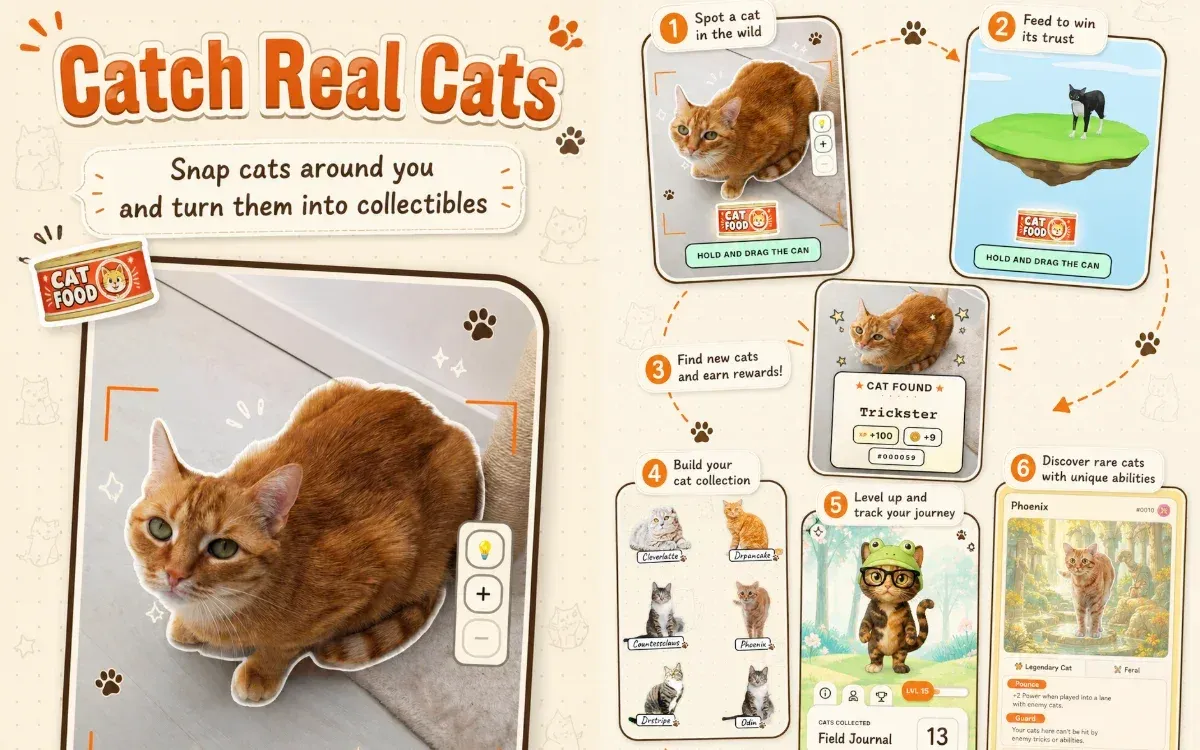


Solo developer Sebastian Seidel (known online as NineToFiveDude) launched CatchCat in June 2026, and within its first 24 hours the game had racked up thousands of downloads without a single dollar of marketing spend behind it. The concept is almost offensively simple: go outside, find a real cat, photograph it, and the app turns it into a collectible card with AI-generated stats. That's it. That's the whole game. And somehow, it's one of the most talked-about mobile releases of the year.

Use code TRYHARD33 at checkout to redeem this offer before code expires again.
Get 33% Off GAMES+ Subscription
How photographing a stray tabby becomes a battle-ready collectible
The core loop runs entirely through your phone's camera. Open CatchCat, point it at a real cat, and the app's on-device AI verifies you've actually found a live feline rather than a screenshot or photo pulled from the internet. Pass that check and the game generates a unique digital card for your collection.
Every card gets a name, a rarity ranking, personality traits, and battle statistics. Some of those values are randomized, but others respond to the cat's actual appearance, so two players photographing different ginger cats on the same street could walk away with completely different collectibles. That unpredictability is doing a lot of the heavy lifting here.
The game also includes a community-powered map showing general areas where cats have been spotted before, a progression system for leveling up your favorites, and a battle mode called Alley Clash where you can pit your collection against friends. None of it is particularly deep, but the loop is tight enough to keep you glancing around on your morning commute.
Why this went viral when bigger games couldn't
Here's the thing: CatchCat didn't invent anything new. Location-based mobile games have existed since at least 2016, and cat content has been the internet's default currency for two decades. What Seidel did was combine both at exactly the right moment.
The social media spread followed a predictable but effective pattern. Players started posting screenshots of rare finds, joking about stalking legendary neighborhood cats, and sharing memes about waiting for an iOS version. The game's wholesome framing made it shareable without being alienating to non-gamers, which is exactly the kind of organic reach money can't buy.
For comparison, the pet-collecting genre has been heating up across mobile platforms. If you're into that space, the Mewgenics cat breeding and combat guide covers a very different but equally cat-obsessed approach to the formula, and it's worth a read if CatchCat hooks you on the concept.
The Pokémon Go comparison only goes so far
Every article about CatchCat name-drops Pokémon Go, and it's a fair starting point. Both games push you to explore your real-world surroundings and reward you for doing it. But the comparison breaks down fast.
Pokémon Go layers augmented reality over the world and asks you to chase fictional creatures. CatchCat strips all of that out and replaces it with something players already do: notice cats. There's no AR overlay, no Pokéstops, no gym battles requiring coordinated groups. The barrier to entry is basically zero, which is a big part of why it pulled in casual players who haven't touched a mobile game in years.
What most players miss in early impressions is that the on-device AI verification is actually doing serious work here. Preventing players from submitting stock photos or recycled images keeps the collection feel honest. Your cards represent cats you actually found, which gives the whole thing a low-key journal quality that pure AR games don't replicate.
Pet and creature collecting has been a strong trend across mobile this year. Grow a Garden's Mega Safari Harvest Event pet guide shows how much appetite there is for new collectibles in that space, even in games built around very different mechanics.
What's missing and what's coming
CatchCat is Android-only for now, available free through the Google Play Store. An iPhone version is in development with no confirmed release window. Given that iOS users represent a massive slice of the casual mobile audience, that gap is almost certainly limiting the game's ceiling right now.
Seidel has been active with community feedback since launch, and the roadmap hints at new features as the player base grows. The privacy considerations around a location-based app that involves photographing other people's pets are real, and the developer's approach of keeping location data general rather than precise is the right call.
For a free solo-developed Android game that launched with no marketing, the trajectory is hard to argue with. If you want to stay across the growing wave of creature-collecting and mobile games worth your time, the gaming guides hub has you covered as more releases drop through the rest of 2026.