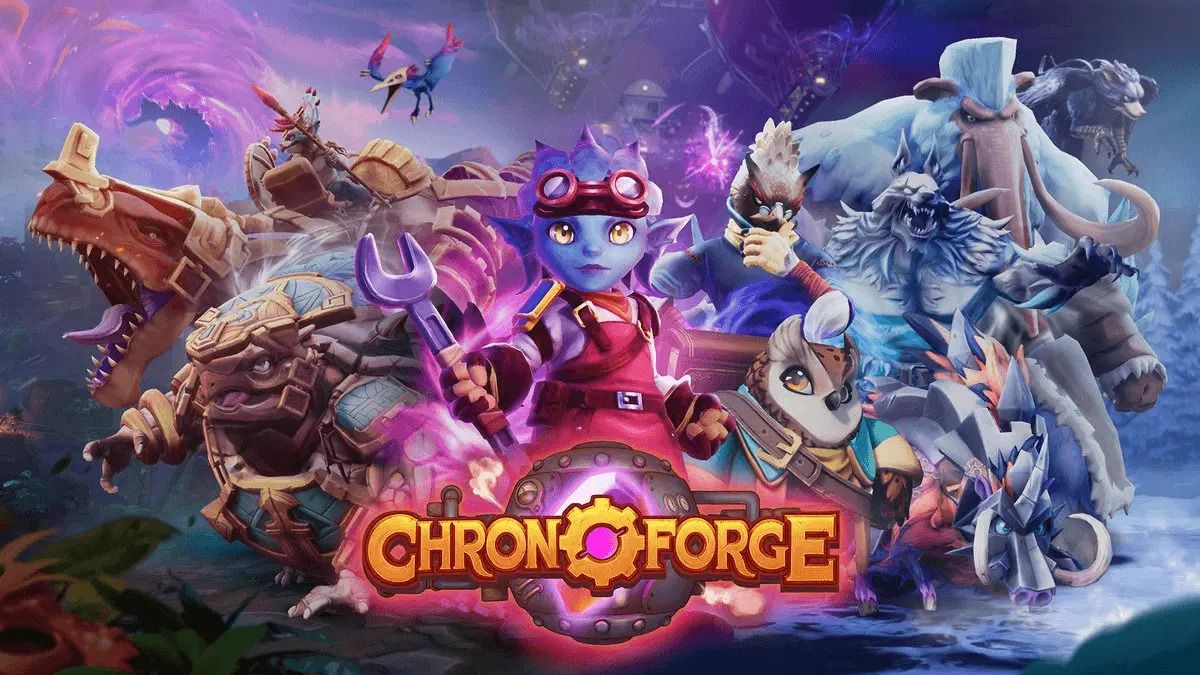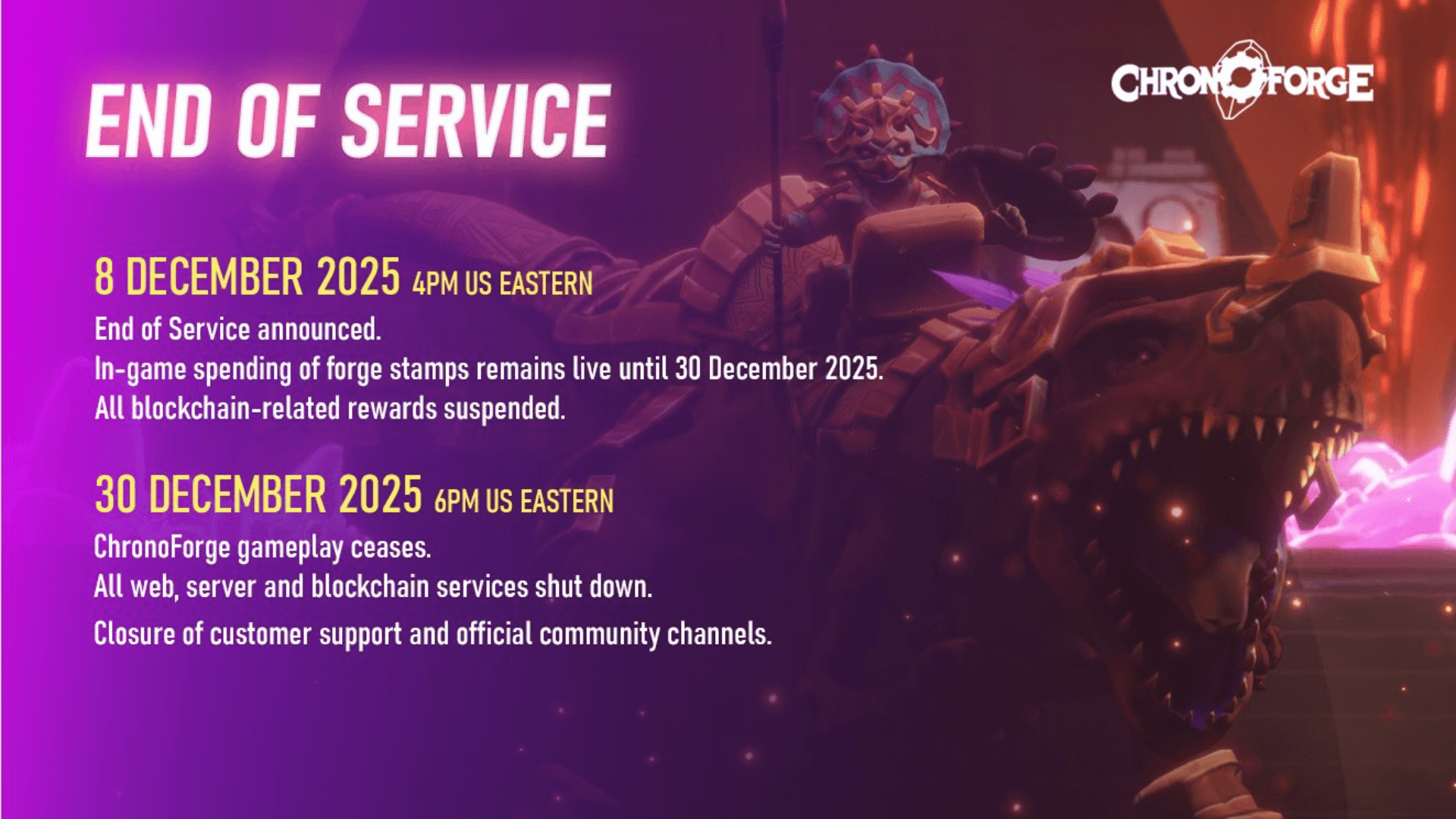

ChronoForge, a web3 gaming studio formerly operating under the name PxQuest, will cease operations on December 30. The company announced the closure after failing to attract new investors or locate a buyer willing to take over the project. Financial pressures that have forced multiple studios to close their doors this year proved too severe for ChronoForge to overcome.
Since July, the founders have been funding the studio out of their own pockets after cutting approximately 80 percent of the workforce to reduce expenses. Even with these drastic measures and ongoing development work, the game's revenue failed to cover basic operating costs. The studio pointed to broader problems in the web3 gaming sector, including widespread skepticism toward blockchain games and the collapse of partnerships with codevelopment teams.
Development Hurdles and Game Status
ChronoForge made it to Early Access, but never reached completion. The studio worked alongside codevelopment partners Tantalus Media and Ammobox Studios, starting with a team of roughly 50 people. The plan to build a full MMORPG demanded more money than the studio could secure, leaving the game in an unfinished state. Other web3 studios have managed to release minimal viable products and expand them gradually through player spending, but ChronoForge couldn't make that approach work.
The shutdown follows a familiar trajectory in blockchain gaming, where projects launch with incomplete builds and never generate enough income to stay afloat. Numerous other ventures have met the same fate, illustrating the difficulty of matching ambitious plans with realistic budgets and market realities.
Funding Through NFTs and Strategic Rounds
ChronoForge secured funding by selling NFTs across more than six collections and conducting a token-based strategic round. The first NFT drop launched in January 2022 under the PxQuest branding, offering 5,000 NFTs at 0.125 ETH apiece and bringing in around $2 million. A Support Airship collection in December 2023 raised approximately $600,000, and a Totem NFT drop in March 2025 pulled in about $300,000 after selling 3,630 of 5,000 available NFTs.
Beyond NFT revenue, the studio closed a $3 million strategic token round in 2024 with participation from crypto personalities including Alex Becker, FaZe Banks, EllioTrades, and Ivan on Tech. Combined, the studio raised somewhere between $7 million and $8 million from NFT sales and private backers. Even with that capital, the money ran out before the game could reach a sustainable state.
Lessons from ChronoForge's Closure
ChronoForge's collapse highlights persistent issues in web3 game development. Studios frequently chase large-scale projects without building reliable income sources, leaving them exposed when funding dries up or market conditions shift. Some smaller teams have succeeded by releasing basic playable versions and expanding incrementally, but ChronoForge's more ambitious scope magnified the financial risks.
The closure mirrors a pattern across the industry, where blockchain games depend too heavily on NFT and token sales instead of revenue generated by actual gameplay. For both players and developers, the takeaway is clear: sustainable financial models and realistic development timelines matter more than initial funding rounds when it comes to keeping a studio alive.
Frequently Asked Questions (FAQs)
Why is ChronoForge shutting down?
ChronoForge is closing because it couldn't secure additional funding or find a buyer. The studio's revenue streams and personal contributions from the founders weren't enough to keep operations running.
How much money did ChronoForge raise?
The studio raised an estimated $7–8 million through NFT sales and a strategic token round that included backing from several crypto industry figures.
Was ChronoForge's game ever released?
ChronoForge launched in Early Access, but the game never reached completion and didn't generate enough revenue to sustain the studio.
What were some of ChronoForge's NFT collections?
Key collections include the original PxQuest mint from January 2022, the Support Airship collection in December 2023, and the Totem NFT collection in March 2025.
Does this reflect broader issues in web3 gaming?
Yes, ChronoForge's shutdown is part of a larger pattern where ambitious blockchain game projects fail to balance development costs with revenue, frequently leading to unfinished games and studio closures.
Could the game have been saved?
Without securing more funding, establishing a sustainable revenue model, or adopting a different development strategy, ChronoForge faced fundamental obstacles that made continuing the project nearly impossible.