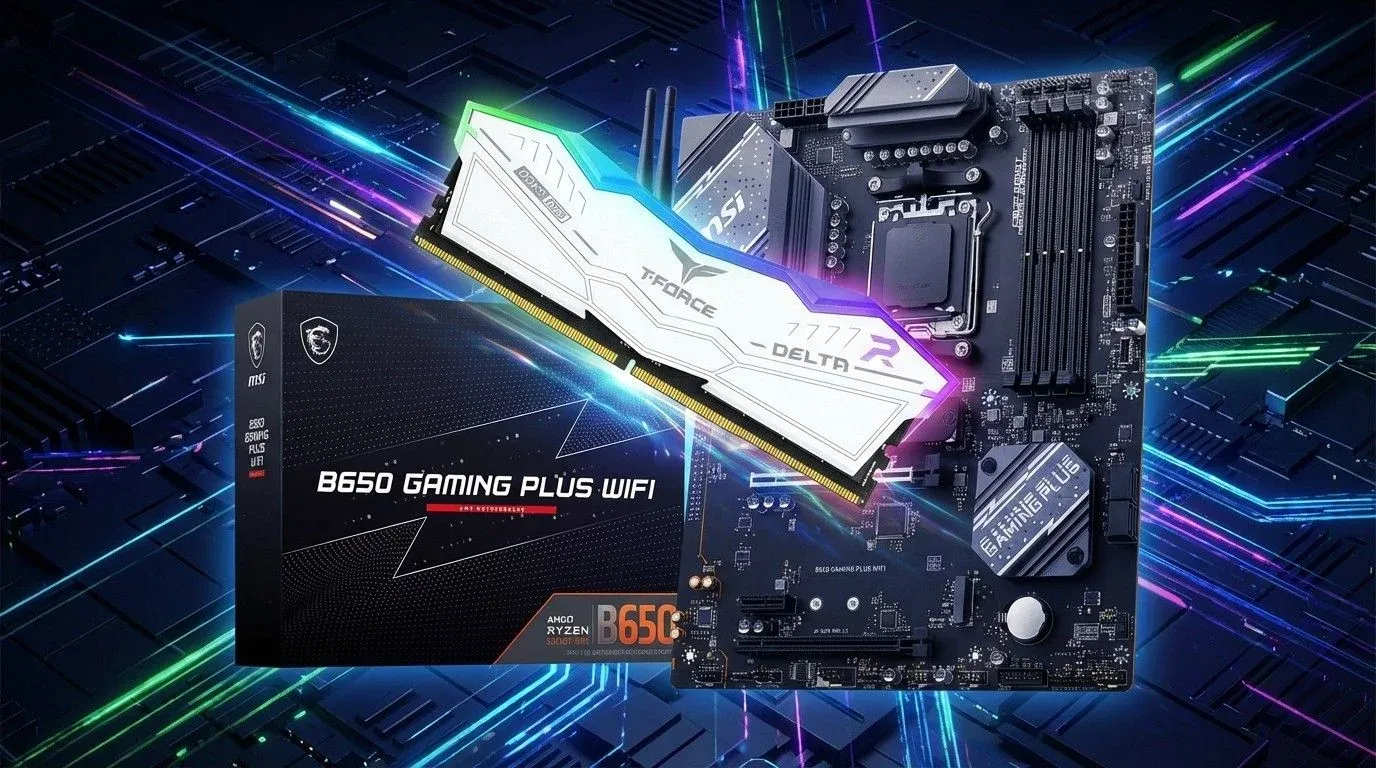


Your next RAM kit might be made in China, and the biggest motherboard brands are already on board with that.
MSI and Asus have both moved forward with official BIOS validation for DDR5 memory built on CXMT (ChangXin Memory Technologies) DRAM dies, marking a meaningful shift in how the PC component industry is responding to a memory supply crunch that analysts don't expect to ease until at least 2028.

Use code TRYHARD33 at checkout to redeem this offer before code expires again.
Get 33% Off GAMES+ Subscription
How MSI and Asus got here
MSI fired the first shot this week, announcing BIOS support for CXMT DDR5 across its AMD motherboard lineup. The update is a notable step up from where things stood before: CXMT modules were previously limited to DDR5-6800 on MSI boards. The new BIOS pushes that ceiling to DDR5-8200, which puts Chinese-made memory firmly in enthusiast overclocking territory.
Asus followed with its own update for AM5 socket motherboards, also supporting up to DDR5-8200 depending on your specific hardware setup. The headline result Asus shared was a KingBank 2x 24 GB DDR5-6000 kit overclocked all the way to DDR5-8400, which is a number that would have seemed unrealistic for Chinese DRAM just a year ago.
Here's the thing that separates the two announcements, though: Asus released its BIOS version 1686 through its global support pages, meaning it's not restricted to the Chinese market. MSI's rollout appears more regionally focused for now.
Who else is betting on CXMT
It's not just motherboard makers paying attention. Corsair has already started using CXMT DDR5 DRAM dies inside its Vengeance RAM kits sold in China. Lexar is reportedly preparing CXMT-based Thor RGB DDR5 kits at DDR5-7600 CL38 and DDR5-7200 CL38, both in 2x 16 GB configurations. MSI's own validation tests used a Lexar kit, though no specific model name was confirmed at the time.
The interest in CXMT is a direct consequence of the supply situation. Samsung, SK hynix, and Micron are all building out new production capacity, but none of those expansions are expected to meaningfully impact DRAM pricing before 2028. That leaves a two-year window where alternative suppliers look increasingly attractive to component makers trying to keep shelves stocked.
CXMT's rise and the controversy around it
CXMT's growth has been fast. The company accounted for 11% of global DRAM wafer capacity last year, a figure expected to climb to 15% by 2028. That trajectory has pushed CXMT to fourth place among the world's DRAM producers, behind the established trio of Samsung, SK hynix, and Micron.
The financial numbers are striking. CXMT posted a 33 billion yuan net profit in Q1 2026, representing a 719% year-on-year increase. That kind of growth attracts attention, not all of it welcome.
The company's rise hasn't been without serious complications. A former Samsung researcher was recently sentenced to seven years in prison for leaking core DRAM semiconductor technology to CXMT. The Pentagon has also placed CXMT on its military blacklist, citing alleged ties to China's armed forces. Apple, which has been testing CXMT DRAM for devices sold in China, is reportedly lobbying for clearance to continue purchasing from the company despite that designation.
What most players miss in all of this is that the validation push from MSI and Asus is happening against that geopolitical backdrop. These companies aren't making a political statement; they're responding to a supply gap with whatever technically viable options exist. Whether CXMT memory ends up in your next build probably depends less on brand loyalty and more on which kit hits the right price point when you're ready to buy.
For a broader look at PC hardware and gaming setups, the gaming guides on our site cover everything from component choices to in-game optimization. If you're deep in the Deadlock scene right now, the Deadlock laning guide is worth a read before your next session, and so is the Deadlock guide to mastering Rem if you want to tighten up your hero play while the hardware side of things sorts itself out.