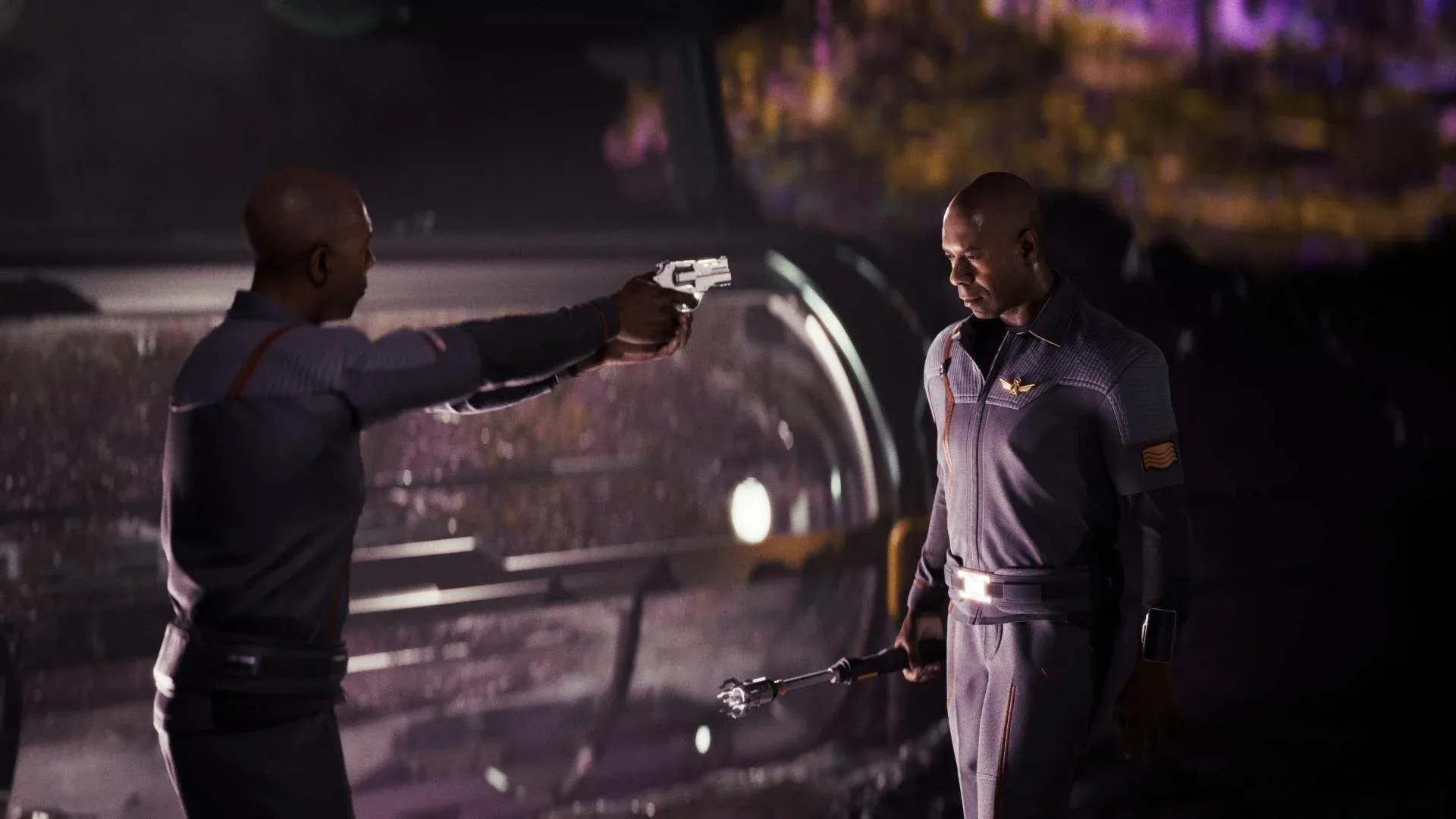


Supermassive Games just launched Directive 8020 today, May 12, and it marks the first entry in the second season of the Dark Pictures Anthology after a four-year gap since 2022's The Devil in Me. The wait, it turns out, was worth it.
The premise puts you aboard the Cassiopeia, a sleeper ship sent to scout humanity's first exoplanet colony. The crew is sold a story about escaping a dying Earth, but the cracks in that official line start showing early. Think Alien meets The Thing, with a healthy dose of corporate paranoia layered on top. The setting is a genuine departure for a series that has mostly stuck to earthbound horror, but isolation in the void of space turns out to be a natural fit for what Supermassive does best.
A story that earns its twist
Across eight episodes that run roughly 10 hours on a first playthrough, the writing holds up in a way the series hasn't always managed. There's a central twist that doesn't announce itself too early, but leaves enough breadcrumbs that a thorough player can piece it together before the reveal. That balance is harder to pull off than it sounds, and the writers thread it well. Several other theories will lead you nowhere, which keeps the paranoia alive all the way through.
The characters themselves are genuinely memorable, not just horror movie archetypes waiting to die. Supermassive's performance capture tech, already strong, gets its most demanding workout yet here, and it mostly delivers. There's a slight uncanny valley effect in certain lighting conditions, a side effect of this being the studio's highest fidelity game to date, but it rarely pulls you out of the story.
The Destiny system: smart in theory, frustrating in practice
Returning from earlier entries, the trait and Destiny system lets you shape characters through dialogue choices, eventually locking them into one of two personality paths that affect the rest of the series. When it works, it feels like a natural payoff to a character arc. When it doesn't, it blocks you from making what seems like the obviously correct decision in a high-stakes moment, with no way to have anticipated the consequence. If playing a character as serious and professional can get someone killed on a space mission, that's not a puzzle to solve, it's a coin flip dressed up as a choice.
The branching structure also thins out the cast in the back half. By the final episodes, players who have lost characters to earlier decisions may find several crew members present in scenes but completely silent, which creates an odd theatrical awkwardness.
Stealth sections add tension but overstay their welcome
The headline new mechanic is active stealth, with players navigating around a prowling threat using cover, darkness, and environmental distractions. It works well enough to break up the visual novel pacing that has sometimes made Dark Pictures feel static. The problem is that by the final episodes, almost every moment of mortal danger defaults to this same routine. The series has other tools, and leaning this hard on stealth starts to feel repetitive before the credits roll.
There is a cooldown-based parry mechanic that can pull you out of a stealth situation if caught, but on the default setting it makes these sections feel low-stakes. The game does offer a solid range of difficulty and accessibility options, so you can tune this however you like.
The scene tree problem
Here's the thing: Directive 8020 ships with a scene tree that maps out all possible story paths, their unlock conditions, and, if you're not careful, some significant spoilers. The game offers two core modes, Explorer (with scene rewind) and Survivor (no rewind, live with your choices), but even in Survivor mode the scene tree is accessible from the pause menu at any point with no warning.
Glancing at it even once, just to see how an episode is structured, reveals more about the mechanics behind the curtain than you'd want on a first run. Knowing that certain scenes have no real death possibility kills the tension that quicktime events depend on. There's no option to disable the tree entirely, which is a real oversight for a game that sells itself on suspense and consequence. The recommendation here is simple: don't open it until you've finished the story at least once. It becomes a genuinely useful replay tool after that point.
Audio and atmosphere
The Cassiopeia's visual design blends Ridley Scott-era retrofuturism with a cleaner modern aesthetic, and the threats you eventually face don't just read as H.R. Giger knockoffs. The sound design is largely effective, though directional audio on surround setups is imprecise enough to cause real problems in stealth sections where locating a threat by sound should matter. The needle drops closing each episode are a highlight, and the series' framing device hasn't disappeared entirely, though how it appears here is best left to discover yourself.
For anyone tracking the anthology's trajectory, Directive 8020 is a clear step forward from The Devil in Me, which struggled with pacing and low stakes. The full picture of what season two looks like will depend on what comes next, but as an opening chapter, this one sets a strong baseline. Check out our game reviews for more coverage as the series continues, and our gaming guides if you want help navigating the branching paths without spoiling yourself.