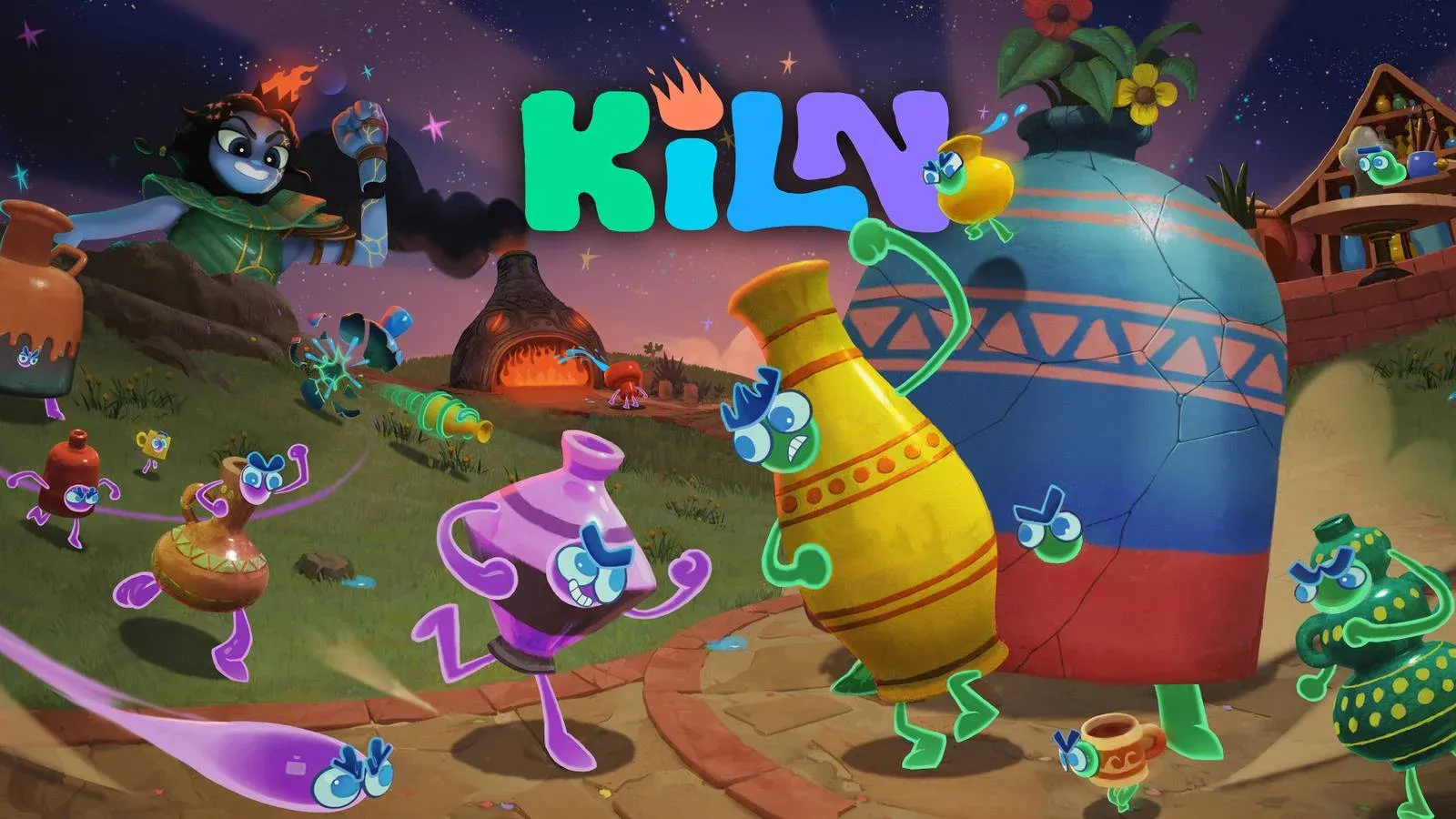


Double Fine has never been shy about weird premises. The studio that gave us Psychonauts and Brutal Legend now wants you to possess pottery, smash opponents into shards, and haul water across a map as a sentient ceramic vessel. That's Kiln, and it launched on PS5 this week.
Here's the thing: the concept actually works. The question is whether it works for you specifically, and that answer depends almost entirely on your social situation.

Use code TRYHARD33 at checkout to redeem this offer before code expires again.
Get 33% Off GAMES+ Subscription
What you actually are in Kiln
The first thing to understand is that you're not playing as a pot. You're a spirit, a customisable blob that possesses ceramic objects and discards them when they stop being useful. Think body-swapping more than character selection. That distinction reframes everything about how the game plays.
Between lives, you hit the pottery wheel and sculpt your next form. Pull, squeeze, and stretch to build your vessel. This isn't a token cosmetic system. The shape you create directly determines your abilities and movement style. A big, heavy vessel carries more water and absorbs punishment, but moves slowly enough to become an obvious target. A smaller, nimble piece zips through gaps and causes chaos, but shatters if anyone hits it with real intent.
Sculpting your next form
The body posture system adds another layer. Standing upright gives you control. Flopping sideways trades dignity for speed and lets you slip through tight spaces. Players stop thinking about button inputs quickly and start thinking about shape, angle, and momentum instead.
The Quench mode loop and why water is everything
Kiln's primary mode, Quench, is straightforward on paper. Two teams of 4 collect water from the centre of the map, carry it to the enemy kiln, and dump it in 3 times to win. Simple to explain. Much harder to execute.
Water is awkward by design. Move too fast and you spill it. Get knocked over and you lose it. Roll for speed and you might as well be pouring it out on purpose. That friction is intentional, and it creates a constant tension between aggression and patience.
Mid-map control becomes the real contest. Water sources turn into contested territory. Special abilities get held rather than spammed. Coordination emerges organically, even when players didn't plan it.
Each pottery form unlocks a specific ability that can swing fights. A chalice build might come with a hurricane-style power that shreds opponents. An hourglass shape trades raw aggression for a time-slowing effect on nearby enemies. The key here is that you're not locked into a bad decision. The wheel is always available, and switching mid-match to fill a different role is not just possible but actively encouraged.
Where the cracks start to show
Kiln's biggest limitation at launch is scope. There's one primary mode. The systems are deep enough to support extended play, but that puts real pressure on whether players engage long enough to extract that depth. Map variety feels thin early on, with layouts becoming recognisable quickly.
The learning curve is steeper than the cartoon exterior suggests. Managing water retention, reading when to switch forms, and understanding map flow all take time. None of that is a fatal flaw, but it does mean the experience can feel chaotic and unfocused before it clicks.
Online play is the more significant concern. Without coordination, roles blur. Four players all trying to be the hero in Kiln usually means four players respawning in quick succession. The netcode holds up technically, but random lobbies strip away the communication layer the game thrives on.
Couch co-op is where Kiln genuinely sings. Three TVs, a couple of friends, and zero latency to blame turns every mistake into a shared moment. That version of the game is a genuinely good time. For players without a regular crew willing to engage with the systems, the experience becomes harder to predict.
The social hub, visual style, and PS5 performance
The Wedge, Kiln's social hub, offers a space to practice builds and exist between matches. It's pleasant connective tissue without being essential.
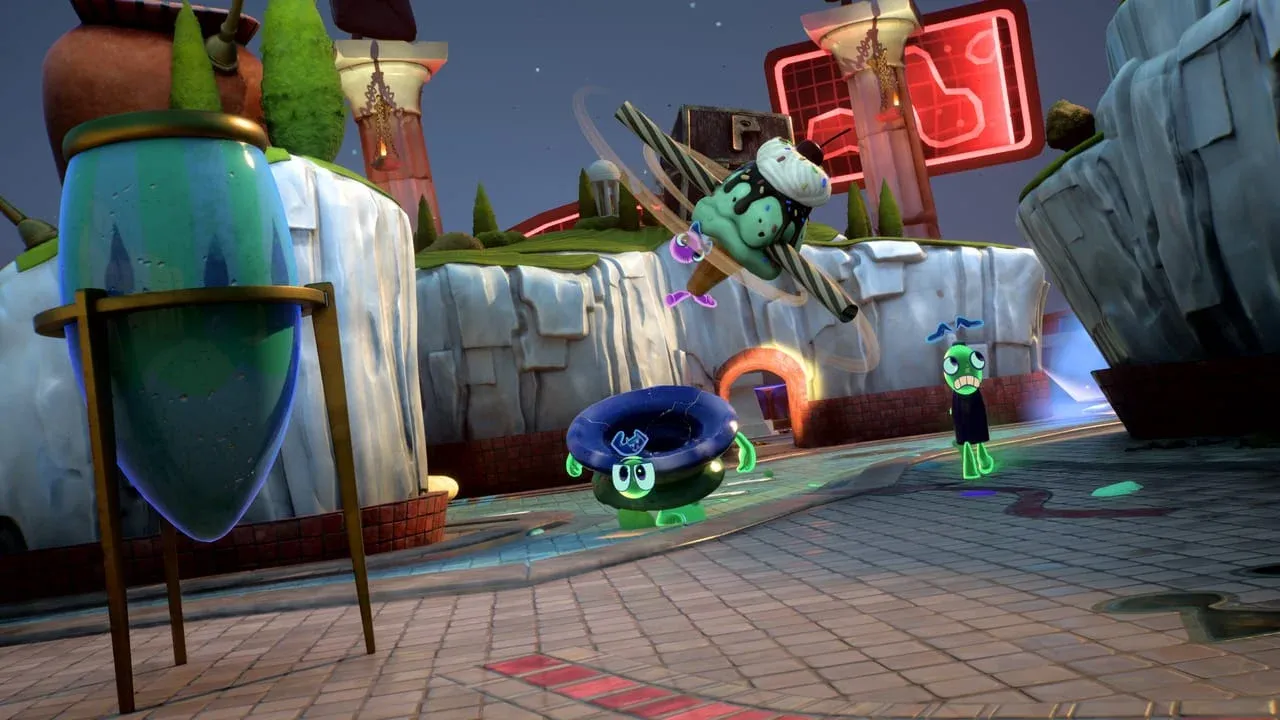
Visually, the game leans into a chunky, colourful aesthetic that suits the chaos. Pots wobble, spin, and explode into shards in a way that feels tactile. Readability in motion is solid, which matters when four pottery spirits are competing for the same space. On PS5, performance stays smooth enough that frame rate is never the story.
Combat skips health bars entirely. Damage shows up as cracks, chips, and eventual shattering. Hits feel governed by momentum and angle rather than combo execution, which keeps the focus on positioning and form rather than button timing.
For players who want to dig into more PS5 titles worth your time, browse our latest reviews for a broader look at what's landing on the platform right now.
The verdict on Double Fine's oddest idea yet
Kiln is a smart idea that occasionally feels like it's waiting for the right conditions to fully emerge. The possession and shape-shifting mechanics are genuinely fresh. The pottery wheel feeding directly into abilities is clever design. The tactical layer, once teams engage with it, is more rewarding than the premise suggests.
The limitations are real. One primary mode at launch, map variety that runs thin quickly, and an online experience that depends heavily on coordination that random matchmaking rarely provides. These aren't dealbreakers, but they are the factors that will determine whether Kiln becomes a regular fixture or a short-lived curiosity for most players.
With the right group, it's easy to recommend. For solo players or those relying on random lobbies, it's a more cautious proposition. Future updates expanding the mode pool and map variety could shift that calculation significantly. If you want to track what Double Fine does next with the game, check back for our latest gaming news as updates roll in.