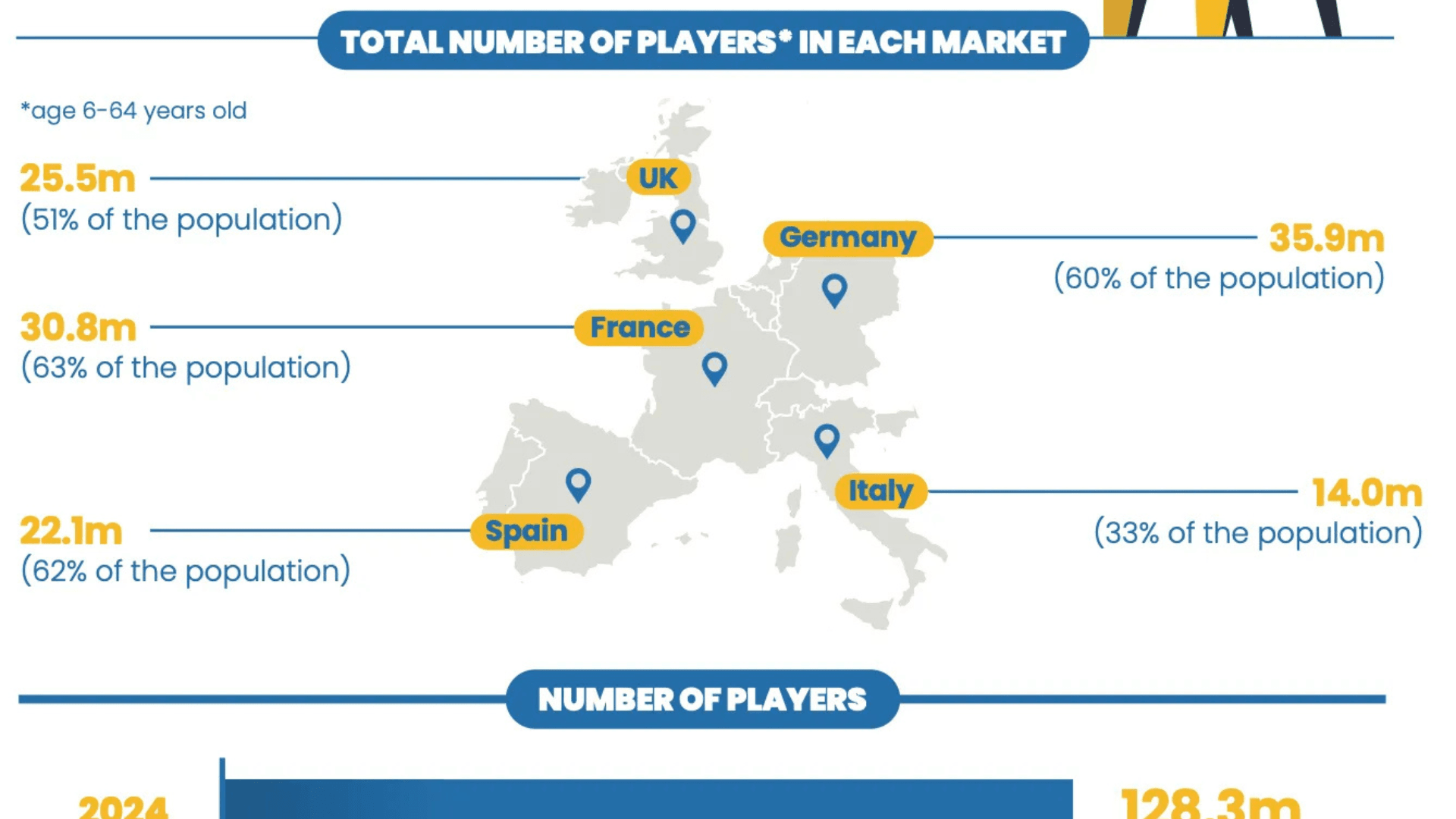

As the American gaming market slows toward year's end, Europe's gaming sector provides a window into how publishers are responding to economic headwinds and structural shifts. Over the past decade, European gaming revenue climbed from $6.3 billion in 2015 to nearly $20 billion by 2023. The latest figures show a pullback to $18 billion, marking a pivot from acquisition-fueled expansion toward tighter operations, player retention, and content that stands out. This recalibration reflects a more measured phase as investment slows and demand levels off.

Use code TRYHARD33 at checkout to redeem this offer before code expires again.
Get 33% Off GAMES+ Subscription
CD Projekt's comeback story
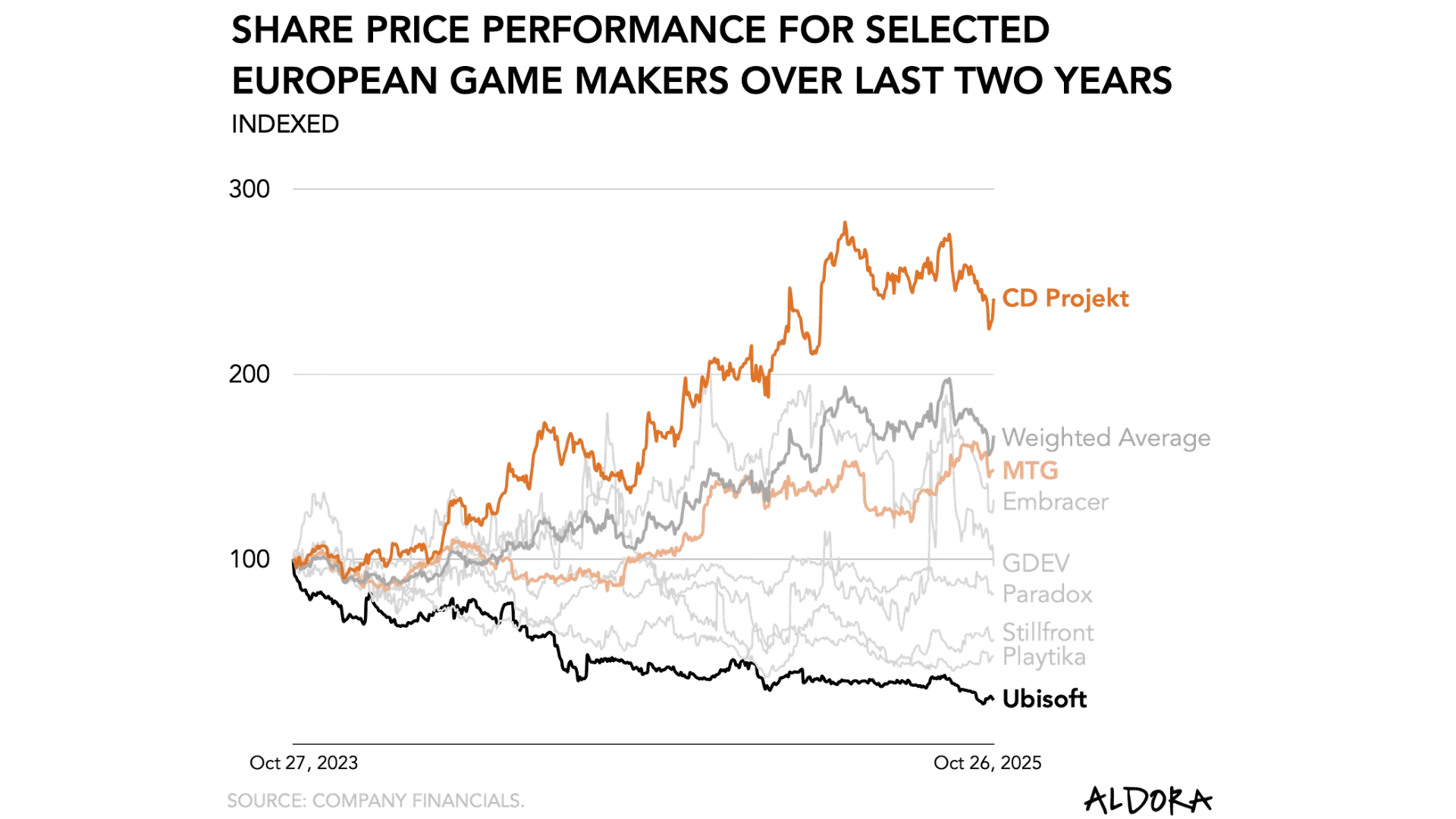
Polish developer CD Projekt offers a case study in recovery through operational focus. The rocky debut of Cyberpunk 2077 initially eroded player confidence, but deliberate internal changes and cost discipline have gradually restored credibility. The game has now sold 35 million copies lifetime, and the studio's most recent quarterly revenue jumped 30 percent year-over-year with a 46 percent profit margin.
CD Projekt moved quickly to stabilize after Cyberpunk 2077's launch troubles, tightening budgets and restructuring earlier than many competitors. That early action has left the studio on steadier ground. The trade-off: no major releases are scheduled until 2026, with projects like The Witcher 4 still in development. Investors may grow impatient with the slow cadence, but the approach favors shipping polished, well-crafted experiences over rushed launches.
Ubisoft's uphill climb
French publisher Ubisoft highlights the difficulty of staying independent in today's European gaming landscape. The company recently delayed its earnings report, unsettling investors, and has cut costs by laying off 1,500 employees. A significant portion of its revenue now comes from legacy titles, underscoring the challenge of sustaining momentum without a steady stream of new releases.
To manage debt, Ubisoft has sold partial stakes in key franchises to Tencent while resisting a full buyout by private equity. Its ongoing "Creative Houses" reorganization—granting semi-autonomous teams control over major franchises—signals a strategic shift in how the company operates.
Ubisoft's scale and cultural footprint mean a major stumble would ripple across the industry, affecting jobs and subscription platforms that depend on its catalog. Still, the publisher continues shipping content across multiple platforms, including plans to bring franchises like Rabbids to Roblox.
MTG's disciplined model
Stockholm-based Modern Times Group (MTG) takes a different tack, prioritizing structural agility and tight operational control. MTG grants its studios creative freedom while keeping firm oversight of marketing, capital deployment, and strategic direction.
This balance has driven growth across diverse game types—from strategy to word puzzles—while keeping the business profitable. In Q2 2025, MTG doubled sales and held a 22 percent profit margin even as it ramped up user acquisition spending by more than 50 percent, all guided by strict return-on-investment metrics.
MTG's approach is built for adaptability, navigating new app store rules, rising competition from Asian studios, and tighter platform economics. Unlike publishers that grew through acquisitions, MTG's disciplined structure emphasizes sustainable expansion and long-term efficiency.
What's next for European gaming
The paths taken by CD Projekt, Ubisoft, and MTG reveal the variety of strategies European publishers are testing under economic strain and shifting market dynamics. CD Projekt is rebuilding through operational stability and player trust, Ubisoft is attempting complex restructuring to hold its ground, and MTG shows what disciplined, flexible management can achieve.
Europe's gaming sector appears to be leaving behind growth driven chiefly by scale and dealmaking, moving instead toward adaptability, operational rigor, and the advantages of local talent and regulation. Long-term success may hinge on how effectively studios control costs, retain skilled developers, and deliver high-quality content that resonates in a crowded global market.
Frequently Asked Questions (FAQs)
Why is Europe's gaming market in transition?
The sector is adjusting to slower growth, tighter investment, and shifting player expectations, moving from acquisition-driven expansion toward operational discipline and sustainable content strategies.
How has CD Projekt recovered from Cyberpunk 2077?
The studio rebuilt credibility through cost management, internal restructuring, and focused development. Strong quarterly revenue and high profit margins reflect this turnaround.
What challenges is Ubisoft facing?
Ubisoft is managing investor skepticism, cost reductions, and dependence on older titles. The company has sold partial IP stakes to handle debt while reorganizing teams under its Creative Houses framework.
How does MTG's strategy differ from other European publishers?
MTG emphasizes structural flexibility, studio autonomy, and disciplined capital allocation. It adapts to platform shifts and competitive pressure while maintaining profitability through careful user acquisition.
What does the future hold for European gaming?
The industry will likely compete on adaptability, operational efficiency, and content quality rather than size alone. Studios that manage costs, retain talent, and produce engaging games are best positioned for sustained success.