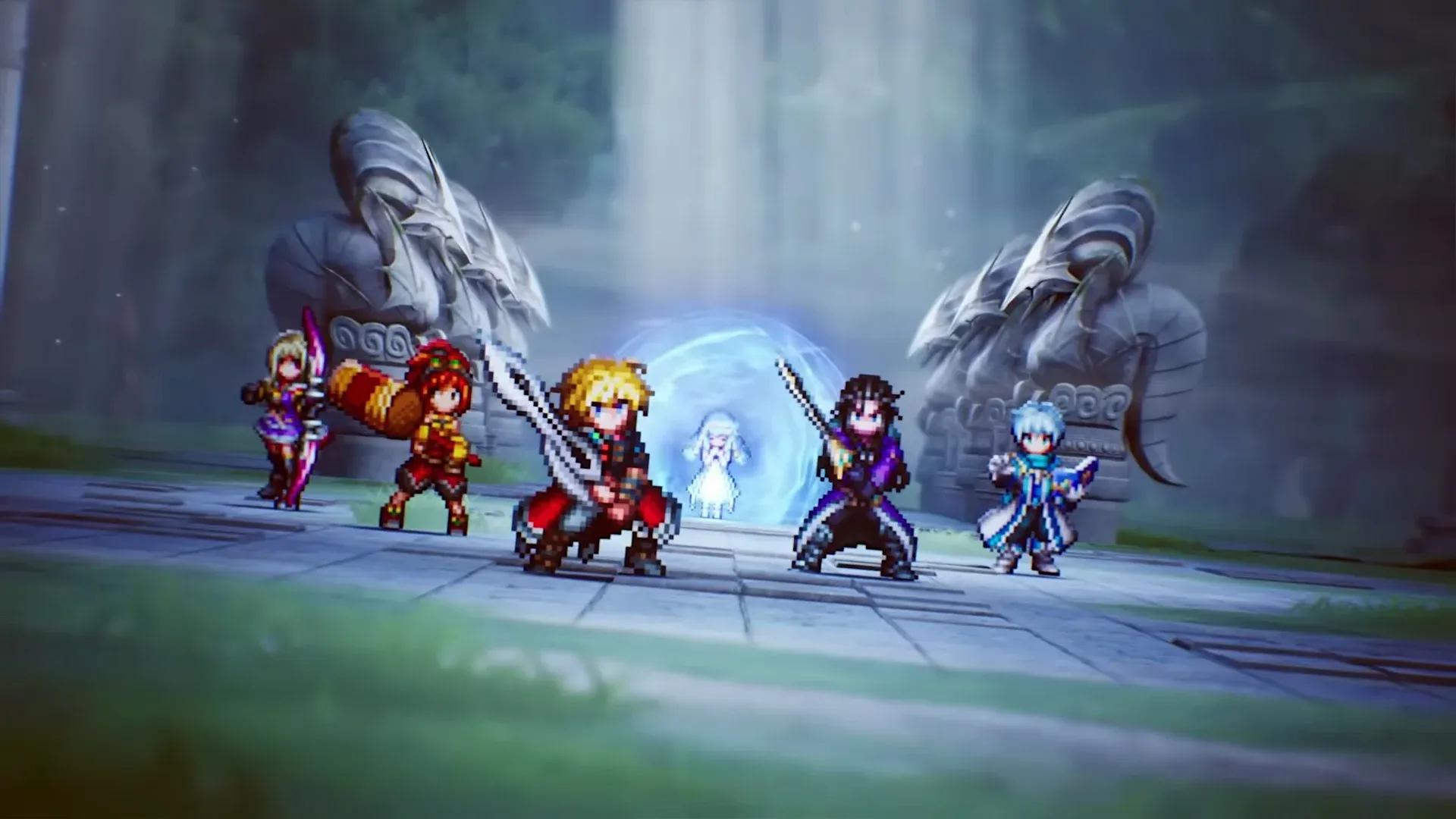

Square Enix's Final Fantasy Resonance, the HD-2D remake of mobile title Final Fantasy Brave Exvius, is shaping up to be one of the more technically demanding projects the studio has taken on. At Japan Expo 2026, producer Kiseki Nakashima pulled back the curtain on just how difficult it was to make the game look the way it does, and the short answer is: a lot harder than it might appear.
The core problem was the camera. HD-2D as a visual style, the same fusion of pixel sprites and 3D environments that defined Octopath Traveler and Triangle Strategy, is extremely sensitive to perspective shifts. Move the camera even slightly in the wrong direction and the illusion collapses. For a game with the cinematic ambitions of Final Fantasy Resonance, that constraint created a serious puzzle.
"Adjusting the camera even slightly could break the 2D look, so we had to adjust everything pixel by pixel," Nakashima said during the panel. "It was real craftsmanship."
The team didn't arrive at HD-2D immediately. Nakashima described a period of heavy experimentation, including voxel representations using 3D cubic pixels and layering 2D effects on top of other 2D effects. None of those approaches satisfied what the team was going for. HD-2D ultimately won out because it offered the best path to both visual flair and cinematic storytelling, particularly for sequences involving large-scale creatures like Bahamut or dramatic airship arrivals that needed scale to land properly.
Balancing 26 beloved characters without a weak link
The camera wasn't the only headache. Final Fantasy Resonance features 26 Visions, playable characters drawn from across the Final Fantasy series, and Nakashima was direct about how much pressure that created.
"There are 26 Visions, all beloved characters, and we couldn't have any of them feel weaker than the others. Every single one had to be interesting and well-balanced," he said.
For fans of JRPG games who know how easily character rosters can develop a meta where a handful of picks dominate everything else, that's a meaningful design goal. Whether the team actually pulled it off won't be clear until players get their hands on it, but the intent is there.
Modernizing turn-based combat without losing what made it work
Nakashima also addressed how the team approached the combat system. The goal wasn't to rebuild it from scratch but to add two specific layers on top of the traditional turn-based foundation.
The first was immediacy. Nakashima described wanting players to pick up a battle and feel good about it right away, through fluid action chaining and super attacks that reward aggressive play. The second was depth in team building, inspired directly by his personal affection for Final Fantasy 5's job system. The result is a customization system designed to let players build genuinely distinct party compositions rather than just swapping in whoever has the highest stats.
"I'm a big fan of Final Fantasy 5 and its job system. That's why we made the system of customizing your team very deep and detailed so you can create unique abilities," he explained.
The parallel to Final Fantasy VII Rebirth is worth noting here. Square Enix has been pushing character build depth across its modern Final Fantasy releases, and Resonance looks to continue that trend through a very different mechanical lens. If you want to see how that philosophy plays out in a more action-oriented context, the FF7 Rebirth best builds guide covers how deep that rabbit hole goes for Rebirth's party.
What Nakashima's confidence signals for the October launch
Nakashima closed the Japan Expo panel on a notably personal note, describing Final Fantasy Resonance as a game he "genuinely finds enjoyable," and framing it as both a love letter to longtime series fans and an accessible entry point for newcomers. "For newcomers, it contains everything that makes the series charming," he said.
Square Enix has also been fielding questions about whether Resonance signals a broader return to traditional Final Fantasy gameplay. The company's response to shareholders was measured: it will keep developing in whatever direction "truly resonates" with the current market, for both original titles and remakes.
The bigger picture here is that Square Enix has two major Final Fantasy releases stacked in close succession. Final Fantasy Resonance hits October 22, with Final Fantasy 7 Revelation targeting Spring 2027 across the same platforms. How Resonance performs will almost certainly shape how much runway traditional-style Final Fantasy gets going forward.