

Autobattlers have always had a reputation problem with players who prefer direct control. Teamfight Tactics refined the formula to a high gloss over years of sets and patches, but for a certain type of gamer, watching your units fight without being able to intervene still feels like being stuck in the passenger seat. Flask, a new roguelike autobattler from Ghost Ship Publishing, has a free demo live on Steam right now, and it takes a genuinely different angle on the whole thing.
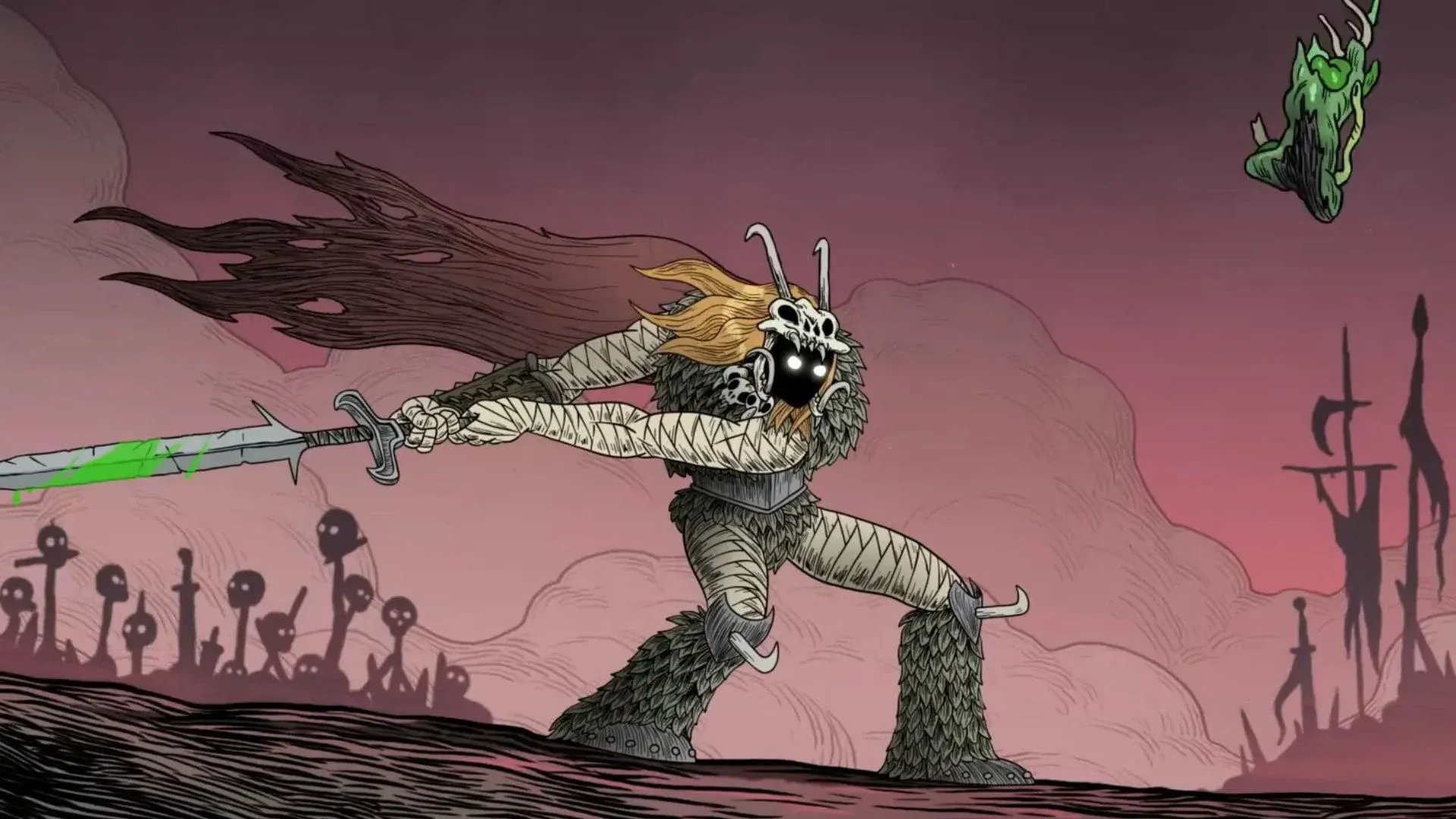
The premise is delightfully grim. You're a debt-ridden alchemist piloting a mobile tower beyond the Goblin Gate, dispatching squads of mutant homunculi to harvest goblin blood and claw your way back to financial stability. It sounds absurd because it is, but the creature designs by artist John Kenn Mortensen give the whole thing a scratchy, grotesque visual identity that sits somewhere between a Hieronymus Bosch painting and a metal album cover. Every run is a parade of twisted flesh and emerald gore.
What you're actually building between fights
Here's the thing about Flask's loop: the autobattle part is almost secondary to the build construction happening between rounds. Each homunculus class (Warrior, Rogue, Ranger, and others) gets upgraded through three distinct systems working simultaneously.
Ability flasks are the primary driver, each one adding a new combat action to a homunculus's rotation. Snacks layer on passive perks that modify how those abilities behave. Organ grafts shift the fundamental playstyle of a unit, sometimes dramatically. The game introduces each system gradually across a run, so you're never hit with everything at once.
By mid-run, the combinations get genuinely interesting. A Warrior built around the focus mechanic, for example, can accumulate a buff that gets wiped on any damage taken, but pairing it with a flask that converts that buff into a flurry of bonus attacks turns the fragility into a high-risk offensive engine. A Rogue can stack accelerating poison on enemies before dropping into stealth, then close rounds with an attack that scales harder the more times it has been used in that fight, eventually one-shotting armored targets.
The Ranger is where things get properly absurd. Loading a rifle with buffed bullets, then chaining a guaranteed-success gamble flask on top of a flask that randomly fires bonus shots, produces a unit that can empty an entire magazine of damage-amplified rounds in a single burst. It's the kind of combo that feels discovered rather than designed, which is exactly what a good autobattler run should feel like.
PvP encounters test your build against real alchemists
Flask doesn't just pit your squad against goblin mobs. Throughout a run, you'll face the homunculi teams of other real players' alchemist builds in asynchronous PvP battles. This is where the autobattler DNA shows most clearly, and also where the game's depth becomes apparent.
A Warrior built to stack armor on every hit while simultaneously dealing bonus damage whenever an opponent attacks it can completely dismantle a squad optimized for burst damage. The key here is that losing to a clever build doesn't feel unfair; it feels like a puzzle you want to solve on the next run.
That feedback loop, losing, identifying the gap in your logic, rebuilding with new knowledge, is what separates a well-designed autobattler from one that just feels random. Flask seems to understand this.
How it connects to the broader autobattler space
Flask is doing something that Teamfight Tactics has always done well at the highest level: making the pre-fight preparation feel as engaging as the fight itself. TFT players who have spent time learning TFT Set 17's Mecha trait transforms and breakpoints will recognize the same satisfaction of a plan coming together in combat without direct input.
The difference is that Flask wraps this in a single-player roguelike structure, removing the competitive pressure of an eight-player lobby and replacing it with a more exploratory pacing. You can afford to experiment with weird combos without immediately dropping LP for it.
Flask doesn't have a release date yet. The demo is free and available on Steam now. If you're looking to sharpen your autobattler instincts while you wait for more Flask content, the Teamfight Tactics strategy guides at GAMES.GG cover everything from trait breakpoints to carry optimization across the current set.