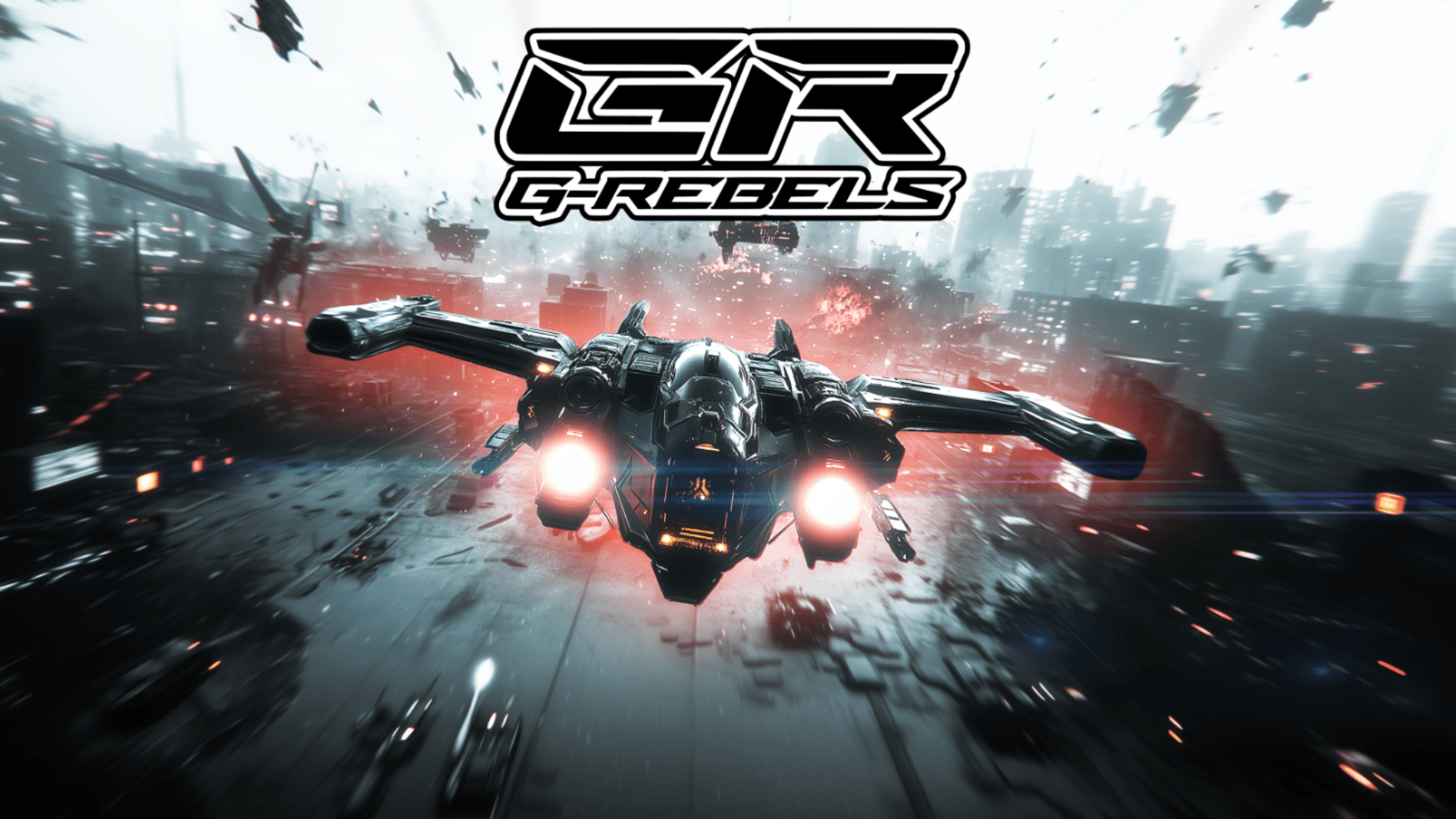

G-Rebels is an attempt to revive a subgenre that has largely disappeared from modern gaming: cyberpunk flight combat set in dense, vertical cities. Developed by Reakktor Studios, the game positions itself as a spiritual successor to Psygnosis' 1997 title G-Police, a cult favorite remembered for its tense dogfights and oppressive urban atmosphere. While G-Police struggled with technical limitations of its era, G-Rebels is built with the express goal of finally realizing that concept using contemporary technology.

Use code TRYHARD33 at checkout to redeem this offer before code expires again.
Get 33% Off GAMES+ Subscription
A Modern Take on Urban Flight Combat
Set in a future shaped by a catastrophic climate disaster, G-Rebels takes place across four surviving megacities, each designed as a large-scale open world. Players take on the role of a police pilot operating a Skyblade, a heavily armed aircraft that blends jet-like speed with helicopter-style maneuverability. Flights begin through towering skylines lit by neon billboards and dense traffic lanes, then expand into broader horizons as weather and time of day shift.
Unlike many traditional flight sims that prioritize realism and rigid mission structures, G-Rebels keeps players constantly engaged. Criminal activity, faction conflicts, and side objectives populate the city, encouraging exploration alongside structured missions. The pacing feels closer to action-focused series like Ace Combat, while maintaining its own identity through slower, more deliberate handling and urban-level combat.
Open Worlds Built for Vertical Exploration
One of G-Rebels' defining features is its emphasis on verticality. Players can ascend from street-level corridors to the stratosphere, transitioning seamlessly between tight urban spaces and open air. Buildings serve as essential gameplay elements rather than mere visual dressing, offering cover during firefights and opportunities to break line of sight while shields recharge.
Reakktor Studios has focused heavily on making these cities feel active. Airships, civilian gliders, and faction-controlled craft move independently through the environment, each with distinct affiliations and cargo. Scanning systems let players gather information on nearby units, reinforcing the idea that the world continues to function whether or not the player intervenes.
Tactical Combat Beyond Shooting
Combat in G-Rebels extends beyond straightforward dogfights. High-speed chases through clouds and between skyscrapers form the backbone of the experience, but scanning and hacking mechanics add a layer of strategy. Players can identify enemy hideouts, detect ambushes, and disrupt hostile forces before engagements escalate.
Hacking allows direct interaction with the environment: taking control of enemy vehicles, disabling generators, or shutting down defensive systems. This introduces a subtle stealth element, encouraging players to outthink opponents rather than relying solely on reflexes and firepower.
Larger-scale encounters further vary the combat, with missions that involve attacking massive carriers or fortified outposts. These moments shift the focus from agile duels to sustained assaults, emphasizing positioning and system management over raw speed.
Atmosphere Driven by Modern Technology
Reakktor's previous experience with space-based games like Black Prophecy informed its technical approach, but G-Rebels represents a clear shift toward environmental detail. Dynamic weather, day-night cycles, and changing seasons play a significant role in shaping the game's mood. Sudden storms, lightning strikes, and fog can dramatically alter visibility and combat conditions, often transforming short test flights into extended exploration sessions.
This attention to atmosphere is central to the studio's vision. G-Rebels rewards players not only for completing objectives but also for simply flying through its world, reinforcing the sense of scale and autonomy that older hardware could not support.
A Niche Genre Finds New Ground
Cyberpunk flight combat is no longer a common sight in modern gaming, making G-Rebels an unusual release in today's market. By combining open-world design, tactical systems, and a strong focus on atmosphere, Reakktor Studios aims to appeal both to longtime fans of G-Police and to players looking for a different take on aerial combat.
G-Rebels is scheduled to release soon on the Epic Games Store, positioning itself as both a homage to a forgotten classic and a contemporary reimagining built for modern systems.
Frequently Asked Questions (FAQ)
What is G-Rebels?
G-Rebels is a cyberpunk flight combat game developed by Reakktor Studios, inspired by the classic PlayStation title G-Police. It features open-world megacities and tactical aerial combat.
What platforms will G-Rebels release on?
G-Rebels is set to launch on the Epic Games Store for PC.
Is G-Rebels an open-world game?
Yes, G-Rebels features large open-world cities with vertical exploration, dynamic weather, and active air traffic.
How does combat work in G-Rebels?
Combat combines high-speed dogfights with scanning and hacking mechanics, allowing players to disrupt enemies and environments strategically.
Is G-Rebels connected to web3 or blockchain features?
There is no indication that G-Rebels includes web3 or blockchain-related systems; it is a traditional single-player-focused action flight game.