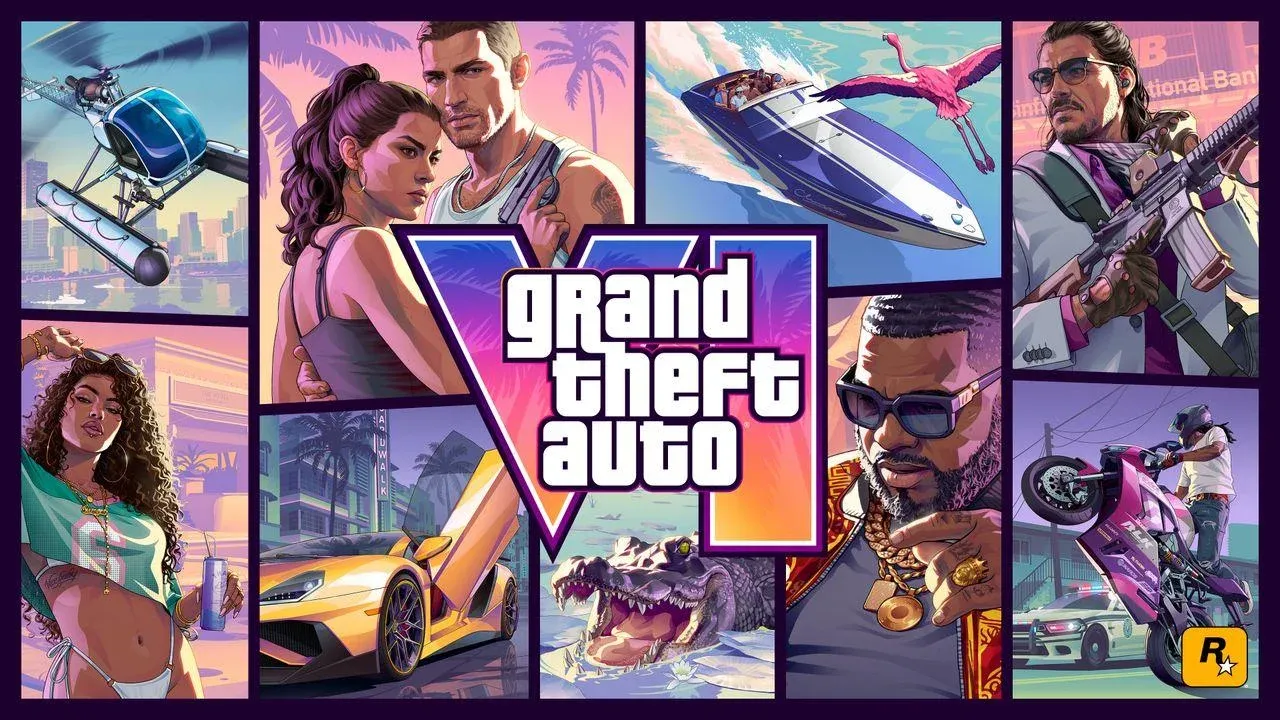


GTA Online turned 13 years old this past October, and it still pulls in millions of active players every month. That's a staggering run for any live-service game, let alone one built as an afterthought to a single-player story. So when Grand Theft Auto 6 launches and Rockstar officially describes it as a "single-player experience," the obvious question isn't whether multiplayer is coming. It's what form it takes, and whether Rockstar can actually meet the bar it set for itself over a decade ago.
Why the single-player-first approach actually makes sense
Here's the thing: GTA Online's 2013 launch was a disaster. Servers buckled, progress wiped, and players couldn't access the mode for days. Rockstar learned that lesson the hard way, and launching GTA 6 as a clean single-player experience first gives the studio time to build the multiplayer infrastructure properly before opening the floodgates.
It also buys Rockstar something more valuable than stability. It buys time to watch the live-service market and decide where GTA Online 2.0 actually fits. The competition in that space looks nothing like it did in 2013. Fortnite, Roblox, and Minecraft have collectively redefined what players expect from a shared world, and simply dropping players into a Vice City lobby with the same heist loop won't cut it anymore.
Project Rome and the user-generated content question
The codename Project Rome has been floating around forums for a while now, widely associated with Rockstar's reported push toward user-generated content tools for the next GTA Online era. Rockstar's acquisition of Cfx.re, the company behind FiveM, signals exactly where this is heading. FiveM built an entire parallel economy around GTA 5's world, with thousands of custom roleplay servers, minigames, and community-made jobs that Rockstar's own team never designed.
The numbers tell the story. FiveM regularly peaks at over 200,000 concurrent players. That's a massive audience spending hundreds of hours in Los Santos without ever touching Rockstar's intended content loop. Buying Cfx.re wasn't just an acquisition. It was Rockstar acknowledging that the community had already built something worth owning.
So the real question isn't whether GTA Online 2.0 will have UGC tools. It almost certainly will. The question is how deep that system goes, and who controls it.
- Who moderates player-created content in a game with GTA's tone?
- Can creators monetise their work, and if so, does Rockstar take a cut?
- Do custom servers stay independent, or does everything funnel through an official hub?
- What happens to the existing GTA Online player base on GTA 5?
None of these have public answers yet. That's a lot of unresolved architecture for a multiplayer mode that needs to launch in a world where Epic Games already has a formalised creator economy through the Unreal Editor for Fortnite (UEFN), complete with revenue sharing.
What the next GTA Online actually needs to deliver
Setting aside the UGC debate, the baseline expectations for GTA Online 2.0 are already high just from what GTA Online became organically. The mode evolved from a chaotic deathmatch sandbox into something closer to a platform, hosting a machinima scene, a stunting community, a thriving roleplay ecosystem, and live events like the Dr. Dre update that pulled in players who hadn't touched the game in years.
That breadth needs to carry over, and then some. A few things feel non-negotiable:
- Bigger heists with more players. The Cayo Perico Heist in GTA Online was a solo mission. Grand Theft Auto has always been at its best when it's a group sport, and Vice City's setting opens up possibilities for ocean-based, multi-crew operations that the Los Santos map never quite allowed.
- Seamless roleplay integration. The FiveM community proved there's an enormous appetite for structured RP servers with custom jobs, economies, and rules. Building that into the official product, rather than leaving it entirely to third-party servers, would be a significant shift.
- Live events with actual production value. Fortnite's Travis Scott concert in 2020 drew 12.3 million concurrent players. Rockstar has world-class music connections through its Circo Loco Records imprint. A Vice City music event done at Rockstar's scale would be genuinely unmissable.
- A clear answer on GTA Online's future. Players have millions of dollars, properties, and businesses built up in the current GTA Online. Rockstar needs to communicate whether that world continues alongside GTA 6's multiplayer or gets quietly sunsetted, similar to how Blizzard handled the Overwatch to Overwatch 2 transition.
What most players miss in the current conversation is that Rockstar isn't just competing with other games anymore. It's competing with its own legacy. GTA Online set the template for open-world live service, and GTA Online 2.0 has to clear a bar that Rockstar itself built.
The pressure is real, and Rockstar knows it
The gap between GTA 6's console launch and its eventual PC release actually works in Rockstar's favour here. That window gives the studio time to observe how the console playerbase engages with Vice City, stress-test the infrastructure, and build out the multiplayer component with real data rather than assumptions.
The risk is that the silence drags on too long. Players who have been waiting years for this game will want to know what comes next before they've finished the story. Rockstar's communication strategy around GTA Online 2.0 will matter almost as much as the product itself.
For everything confirmed about the base game so far, the Grand Theft Auto 6 guide collection has the details you need as launch approaches.