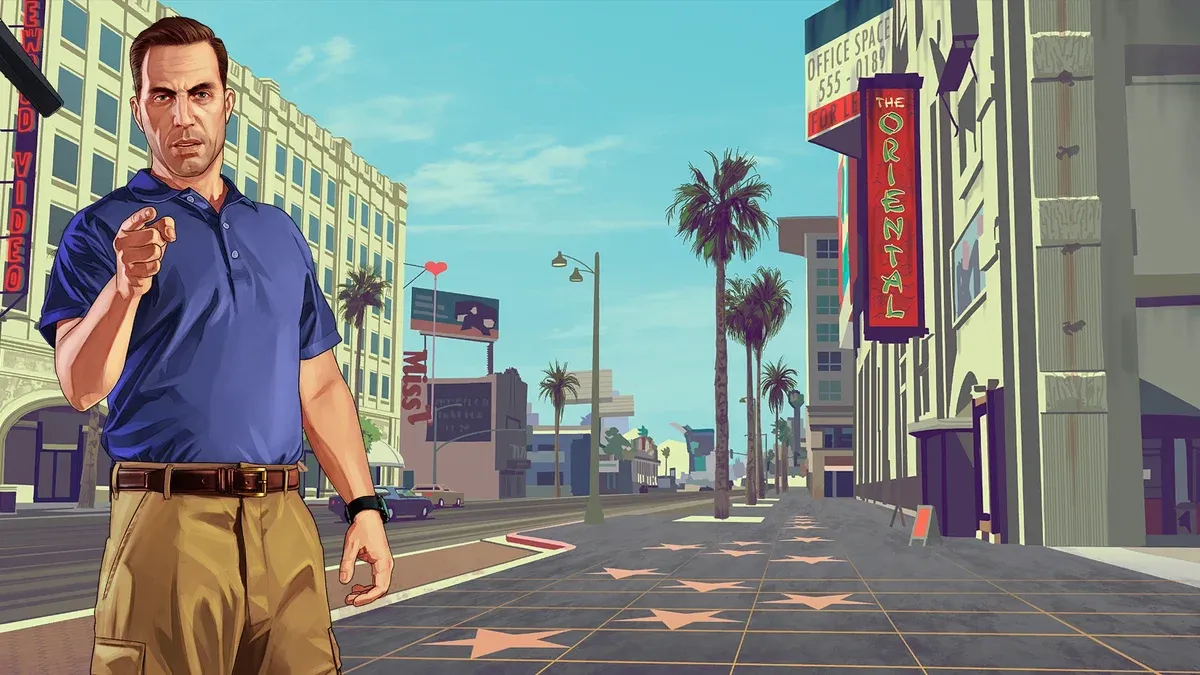


Filmmaker Jordy Veenstra has started broadcasting his entire machinima production process live on YouTube and Twitch, giving viewers a front-row seat to the often chaotic reality of making films inside Grand Theft Auto V. The streams, titled "Machinima Dev Streams," cover everything from initial location scouting through Los Santos to scene staging, camera planning, and the kind of live technical debugging that only happens when a game decides to freeze at the worst possible moment.
Here's the thing: most machinima audiences only ever see the polished final cut. The hours of repositioning NPCs, the lighting tests that go nowhere, the script revisions mid-session. Veenstra's streams exist specifically to change that.
What the streams actually cover
The broadcasts are not passive watch-alongs. Veenstra works through active production decisions in real time, explaining why a particular location in GTA 5 works not just visually but symbolically. Environmental choices factor in lighting conditions at different in-game times of day, how a location frames narrative intent, and whether the composition holds up once a camera angle is locked in.
Tooling gets a serious spotlight too. Veenstra demonstrated Menyoo and ScriptHookVDotNet across the streams, using both to manipulate the game environment well beyond what vanilla GTA 5 allows. Prop placement, NPC behavior scripting, weather control. The kind of setup work that takes longer than the actual filming.
Then the game crashed. Live, on stream, with viewers watching.
Rather than cutting away or editing it out later, Veenstra treated it as part of the content. "Sometimes things don't work the way we want to and we must work around them," he said during the broadcast. The stream restarted, the debugging continued, and the production moved forward. Two separate streams documented the process across what Veenstra describes as a "wide angle perspective" on machinima craft.
Why this format connects with the machinima community
The GTA 5 machinima scene has been active for well over a decade, but the production side of it rarely gets documented in public. Most creators share finished films or short behind-the-scenes clips. Watching someone work through a scene's blocking, hit a scripting wall, improvise a fix, and then have the engine crash before a save point is a genuinely different kind of content.
Veenstra's motivation came from a straightforward observation: after spending long hours working alone on projects, he started wondering whether sharing the "creative process, lines of thought, hardships, euphoria, bugs, workarounds and other events" might be valuable for other filmmakers and machinima artists watching.
The response has been positive enough that more streams are already being planned.
What comes next for the series
Future broadcasts are expected to expand beyond GTA 5 entirely. Veenstra has mentioned exploring framing techniques, depth-of-field work, and virtual lighting systems inside VRChat, where creators build real-time light shows using DMX protocols. The same protocols used in physical venues.
That breadth signals something worth paying attention to. This is not just a GTA content series. It is shaping up as a broader education project on virtual filmmaking as a discipline, using GTA 5 as the entry point because of its established modding tools and community familiarity.
Pro tip: if you are interested in GTA 5's creative side beyond standard play, the Grand Theft Auto V guide collection covers the game's mechanics in depth and is worth bookmarking alongside Veenstra's streams for context on how the engine actually behaves.
For anyone who has spent time in the GTA 5 modding or machinima space, Veenstra's streams are worth tracking. The next broadcast could cover virtual lighting design or camera composition theory, and if the first two are any indication, the game will probably crash at least once. That is part of the appeal. Check out more gaming guides to stay sharp on the tools and techniques that matter across the broader creative gaming space.


![Walking in GTA V - Los Santos International Airport [ 4K Ultra - Natural Vision Evolved ]](https://assets.games.gg/gta_5_flights_v_mod_airports_hero_1af1376cf2.webp)