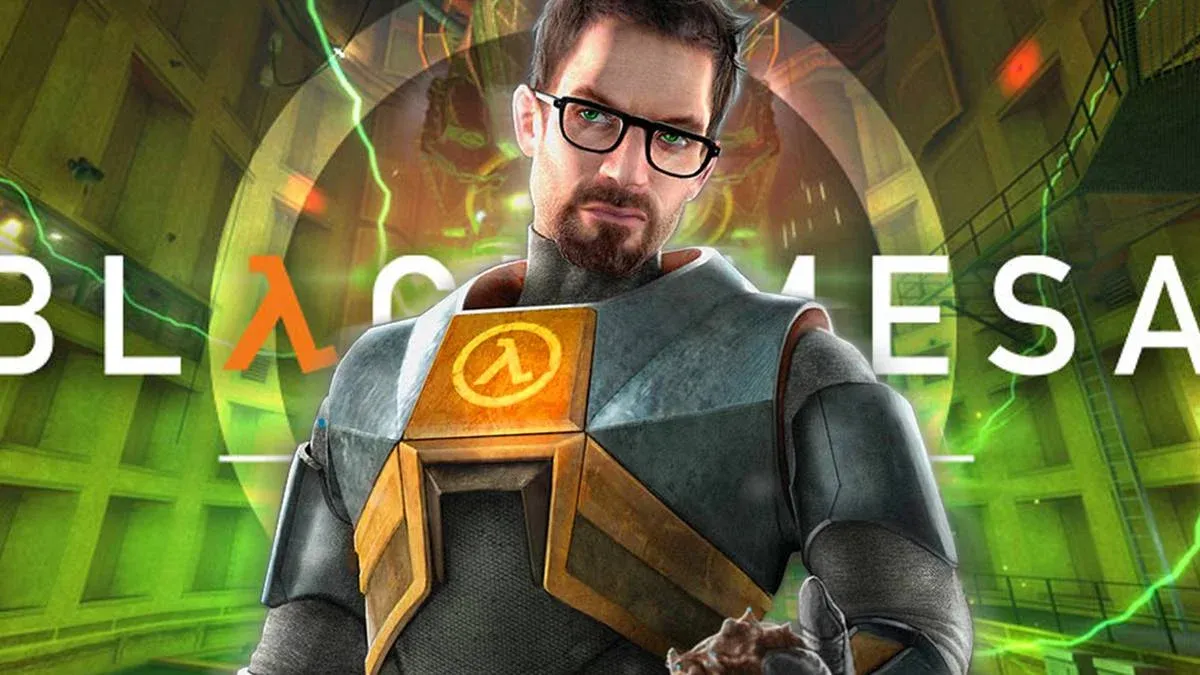

Marc Laidlaw had one expectation after Half-Life shipped: that the FPS genre would follow Valve's lead on storytelling. Nearly three decades later, it mostly didn't.
Laidlaw, the writer and designer behind Half-Life, recently resurfaced comments he made in the holiday 2009 issue of GamesTM magazine, where he expressed genuine surprise at how few shooters committed to the same narrative principles Valve had built into Gordon Freeman's adventure. The core idea was simple but demanding: keep the player in control at all times, never cut away, never break the first-person perspective to force a cinematic moment. You see everything through Gordon's eyes. The story happens to you, not at you.
What Valve actually built, and why it was harder than it looked
Half-Life's narrative design sounds straightforward until you try to replicate it. Every story beat, every character interaction, every moment of exposition had to work within a single locked perspective without pulling the player out of the experience. No cutscenes. No mission briefings delivered over a loading screen. No camera pans to show you what's coming. Laidlaw and the team at Valve built a system where the world communicated its story through environment, dialogue, and action happening around you in real time.
The key here is that this wasn't just a stylistic choice. It was a design constraint that shaped every level, every character placement, every scripted sequence in the game. Removing player control, even briefly, was treated as a failure condition.
Where Medal of Honor and Call of Duty picked it up, and where they dropped it
Laidlaw acknowledged that some major franchises did take cues from Half-Life. "Medal Of Honor, for instance, and Call Of Duty both followed those principles," he said, "but it was inconsistent. There were moments of non-interactive exposition interspersed with the dynamic parts."
That inconsistency is the tell. Call of Duty's original Stalingrad mission, with its slow boat crossing and the chaos of Soviet soldiers being cut down around you, absolutely carries Half-Life's DNA. The first Modern Warfare's nuclear detonation sequence, where you experience the aftermath firsthand rather than watch it from a safe cinematic distance, is another flash of that same thinking.
But those moments exist inside a structure that also includes globe-trotting multi-character campaigns, non-interactive mission briefings, and perspective shifts between different soldiers and factions. Call of Duty never committed to a single unbroken viewpoint the way Half-Life did. It borrowed the technique selectively, deployed it for maximum impact in specific setpieces, then returned to its usual approach.
info
Laidlaw's comments originally appeared in the holiday 2009 issue of GamesTM magazine, roughly 11 years after Half-Life's 1998 release, and remain relevant given how rarely the FPS genre has fully adopted Valve's approach since.
Why the FPS genre mostly went a different direction
Laidlaw's own explanation is worth sitting with. "I suppose it's a risky endeavour," he said, "and the narrative rules we implemented should only be done so if you know you're going to get something good out of it."
That's a fair read. Half-Life's approach demands total confidence in your level design, your pacing, and your world-building. You can't lean on a cutscene to deliver exposition when the gameplay gets complicated. You can't cut to another character to explain what's happening elsewhere. Every piece of story information has to reach the player organically, which puts enormous pressure on the design team to make every room, every NPC, every scripted event carry its weight.
Most developers, faced with that constraint, opted for the safety of traditional cinematic tools. The result is a genre full of games that tell their stories at players rather than through them.
What this means for how Half-Life still stands apart
Here's the thing: the games that have genuinely committed to Half-Life's principles remain a short list. Half-Life 2 and its episodes are the obvious continuation. Bioshock applied a version of it. Titanfall 2's campaign got close in places. But the mainstream FPS genre, from military shooters to hero shooters to extraction games, has largely treated narrative as something that happens between the action rather than during it.
That gap is part of why Half-Life still gets discussed as a design reference point in gaming news circles, even now. The genre moved toward spectacle and multiplayer, and the specific discipline Valve practiced quietly became rarer rather than more common.
For anyone wanting to trace exactly how that influence spread and where it stalled, the latest reviews of modern FPS releases make for an interesting comparison against what Laidlaw described. The ambition is still there in places. The full commitment, less so. Make sure to check out more: