
Hell Clock: Cursed War just dropped, and developer Rogue Snail has delivered a fourth act, new skills, and an expanded crafting system to one of the most underrated action RPGs in the genre right now.
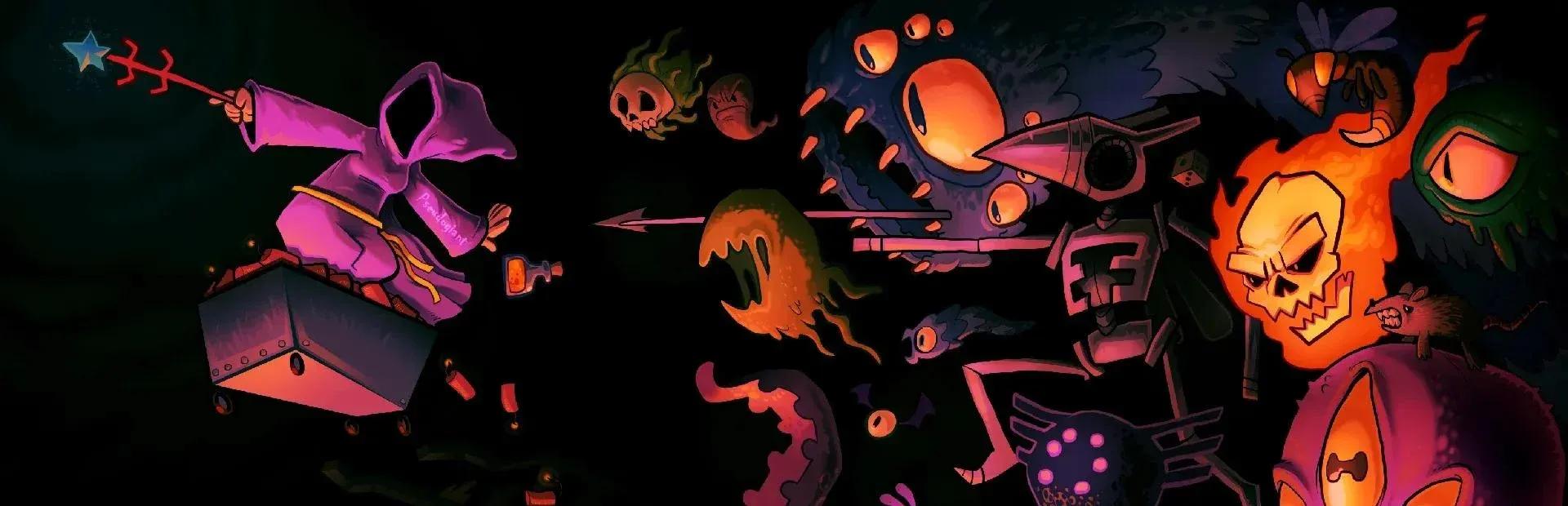
If you've been sleeping on Noita as a benchmark for what small studios can achieve with physics-driven chaos, Hell Clock is the companion piece that proves indie developers are still building some of the most inventive action RPG systems in the space. The two games occupy different corners of the roguelike world, but both share that same quality: every run teaches you something new.
What the Cursed War expansion actually adds
The headline addition is a full fourth act that tells the origin story of Pajeu, the game's main character. Where the original three-act campaign drops you into the aftermath of a real historical atrocity, the War of Canudos in 19th century Brazil, Cursed War rewinds the clock to show how Pajeu was conscripted into the Brazilian army during the Paraguayan War as a slave. That backstory recontextualizes everything that comes after it, and the third act's gut-punch lands even harder on a second playthrough with this context in mind.
Here's the thing: Hell Clock was already doing something most action RPGs don't bother with. The enemies aren't faceless demons. They're soldiers with names and uniforms, and the game's setting is rooted in a massacre that actually happened. Cursed War leans further into that premise, and it works.
On the gameplay side, the expansion introduces new skills including Tupã's Wrath, a lightning-based ability that fires bolts in every direction simultaneously. Players who've spent time with Path of Exile 2's storm-calling builds will feel immediately at home. The key here is how the skill scales: relics can empower skeletal minions with each lightning strike, and certain item combinations stack a defensive layer over your health pool that lets you tank hits while spamming thousands of bolts per run.
Crafting changes that shift how you build
Rogue Snail also expanded the game's crafting system in a meaningful way. The new crafting items borrow ideas from Path of Exile's modifier system, letting players shape their gear rather than just accepting whatever drops. It's not as deep as PoE's full crafting bench, but it's far more intentional than the original game's loot-and-equip loop.
What most players miss on their first few runs is that the crafting system isn't just a quality-of-life feature. In higher difficulties, where monsters gain elemental resistances and stacking bonuses, having gear that specifically shores up your defensive gaps is the difference between clearing a boss and getting two-shot. Normal mode is forgiving enough to ignore it, but the two harder difficulty tiers make it feel mandatory.
Timing and the action RPG calendar
The expansion's release timing wasn't accidental. Rogue Snail deliberately held back Cursed War to avoid launching directly against a major Path of Exile 2 season update, a decision that reflects how well the studio understands its own audience. Action RPG players run on a seasonal rhythm, cycling between games as each new content drop lands. Hell Clock fits neatly into the gaps, with runs short enough to squeeze in between longer PoE 2 sessions and deep enough to reward dedicated play.
At $10, the expansion sits comfortably in the impulse-buy range for anyone who already owns the base game. The base game itself has also received significant updates since launch, including smoother WASD and click-to-move controls and reworked boss encounters that are noticeably more aggressive than the original versions.
For players who want to get the most out of the new act and the expanded skill set, the Noita guides collection offers a useful reference point for roguelike buildcrafting principles that transfer across the genre. Broader gaming guides are worth checking if you're new to the action RPG roguelike space and want to build a foundation before jumping into Hell Clock's harder difficulties.