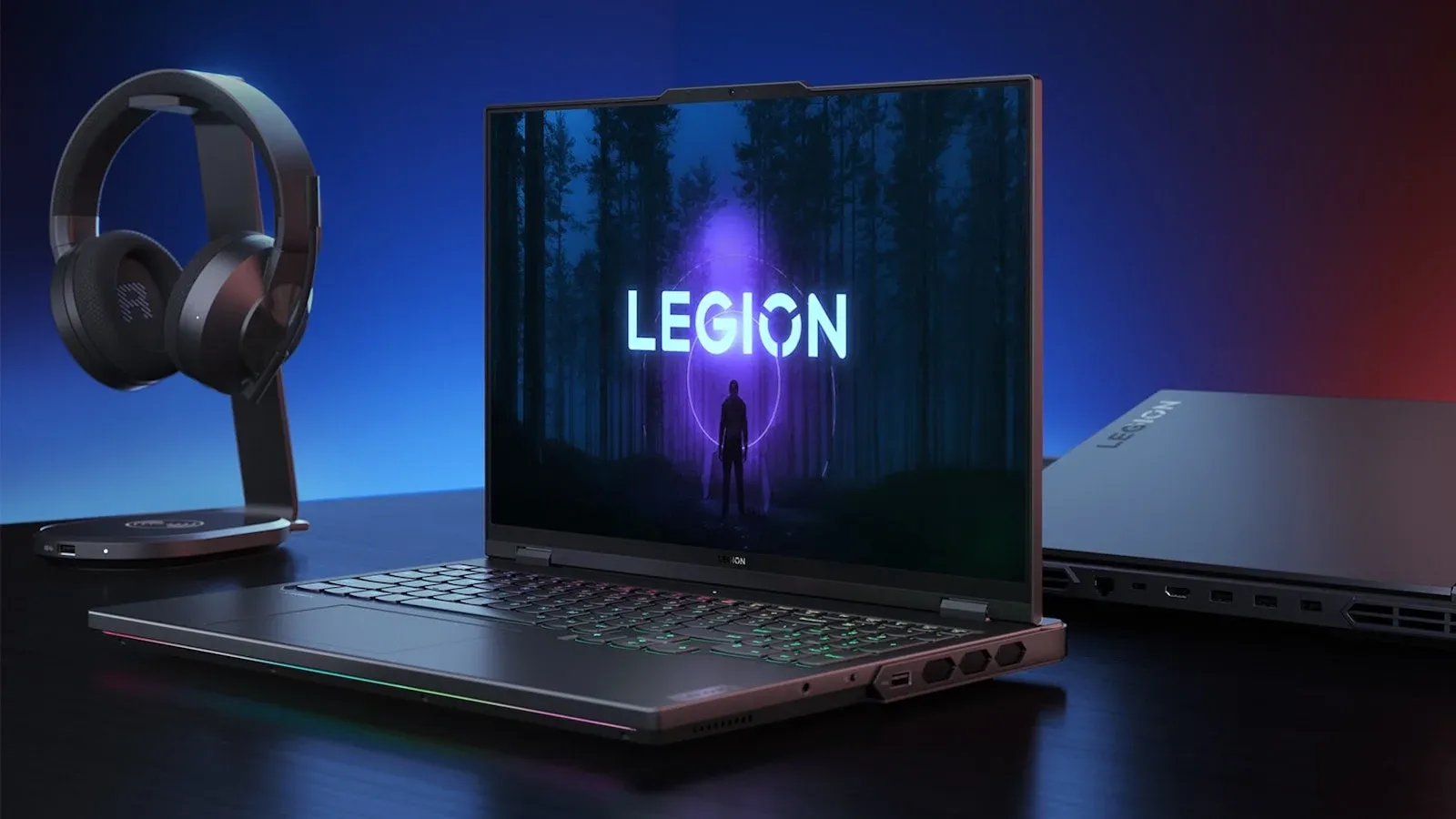


The Lenovo Legion Pro 7i has spent the last year sitting comfortably at the top of the high-end gaming laptop pile. Then, this week, Lenovo dropped a mid-cycle refresh and immediately sparked a conversation that every serious PC gamer should pay attention to: how much is a marginal CPU upgrade actually worth?

Use code TRYHARD33 at checkout to redeem this offer before code expires again.
Get 33% Off GAMES+ Subscription
What actually changed in the new model
The headline upgrade in this 2026 refresh is a processor swap. The previous Legion Pro 7i ran on an Intel Core Ultra 9 275HX. The new model slots in an Intel Core Ultra 9 290HX Plus. Both chips share a 24-core, 24-thread configuration, operate within the same power limits, and split those cores identically across 8 Performance and 16 Efficient cores. The newer chip edges ahead with a max boost of 5.5GHz versus the 275HX's 5.4GHz, which translates to roughly 6-7% better real-world performance by most measurements.
Everything else stays essentially the same. The QHD+ OLED panel still runs at 240Hz. Both configs ship with 32GB DDR5 RAM. Here's the thing: the older model actually ships with 2TB of storage, while the new refresh drops that in its base configuration.
The price gap that makes this a hard sell
The new Legion Pro 7i Gen 10 carries a list price of $5,478.99, currently available at $4,463.99 direct from Lenovo. The previous-generation RTX 5080 model, meanwhile, has dropped to $2,649 at retail, down from its original $3,499.
That's a price difference of roughly $1,800 at current street prices, or a 68.5% premium, for a CPU that performs about 6-7% better in practice. The GPU, which does the overwhelming majority of the heavy lifting in any gaming workload, is identical across both configurations.
For most gaming use cases, this gap is essentially invisible. CPU-bound titles exist, but the RTX 5080 is going to be the bottleneck in any demanding game long before the 275HX becomes a problem.
Why gaming laptop prices are climbing anyway
Lenovo isn't alone here. Gaming laptop prices have been trending sharply upward throughout 2026, driven by increased component costs for RAM and storage compared to the previous release cycle. Retailers are also sitting on shrinking inventory of last-gen machines, and as that stock thins out, even mid-range RTX 5060 laptops are becoming harder to find under $1,400.
That context matters, because it means the $2,649 deal on the older Legion Pro 7i isn't guaranteed to stick around. Prices on remaining stock have been creeping up as supply tightens, so the window to pick up last year's model at a steep discount may not stay open indefinitely.
For gamers who want to squeeze maximum performance out of their hardware, the settings side of things matters just as much as the silicon inside. Optimizing your titles properly can recover more frame rate than a 6% CPU bump ever would. The Highguard best PC settings guide and the Directive 8020 PC optimization guide are solid examples of how much headroom proper configuration leaves on the table.
Who should actually consider the new model
The 2026 refresh makes sense in a narrow set of circumstances: content creators or streamers who run sustained CPU-heavy workloads alongside gaming, professionals using the machine for rendering or simulation tasks where that extra clock speed compounds over hours, or buyers who simply want the latest silicon and have the budget to match.
For pure gaming? The previous-generation Legion Pro 7i at $2,649 is the more rational purchase by a significant margin. Same GPU, same display, more storage, and roughly $1,800 back in your pocket.
The broader picture here is that mid-cycle CPU refreshes have always been a tough value proposition in gaming laptops, and the current pricing environment makes the math even harder to justify. If you're in the market for a high-end gaming machine right now, check out our gaming guides for optimization tips that can help you get the most out of whichever configuration you land on.