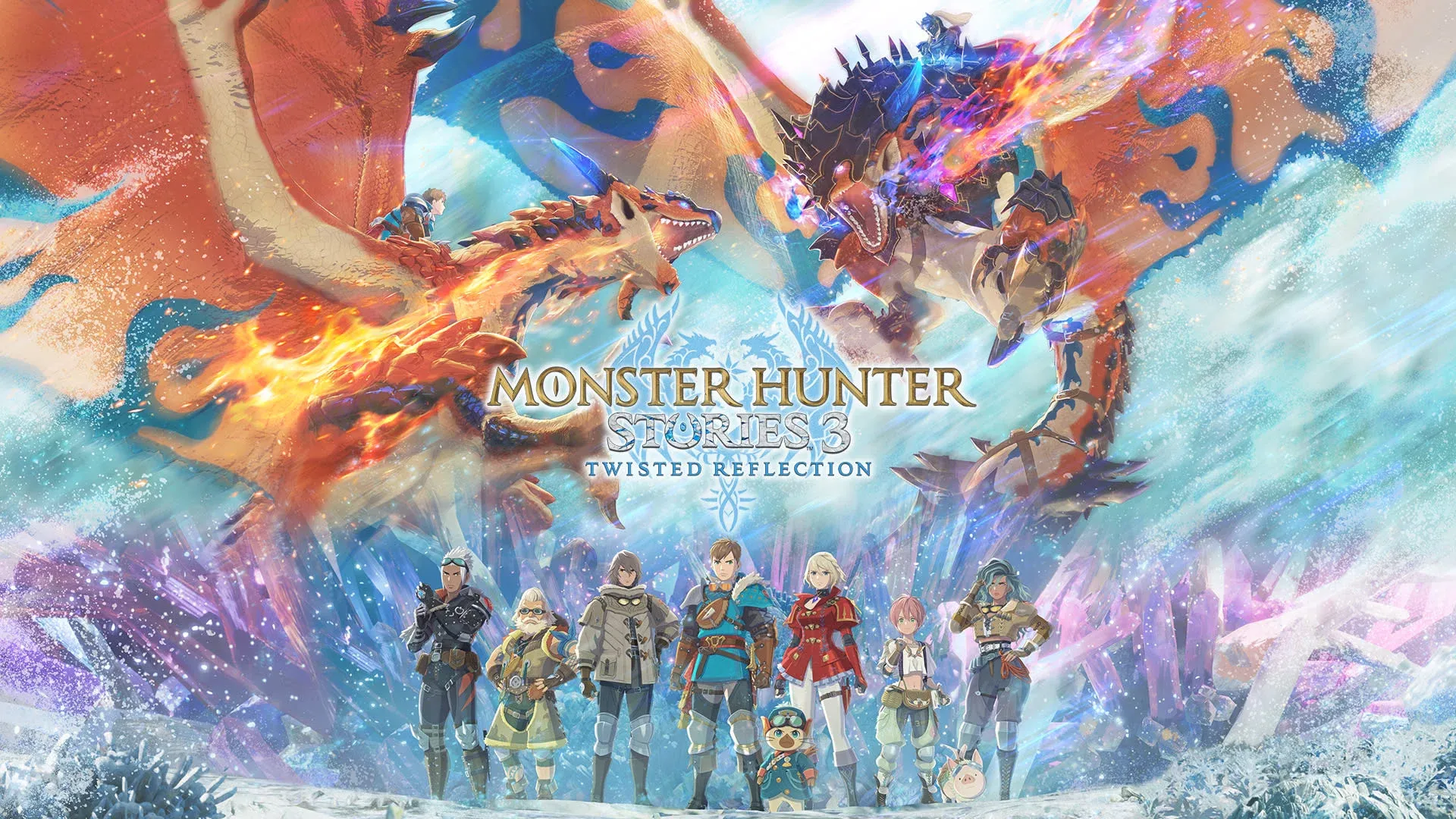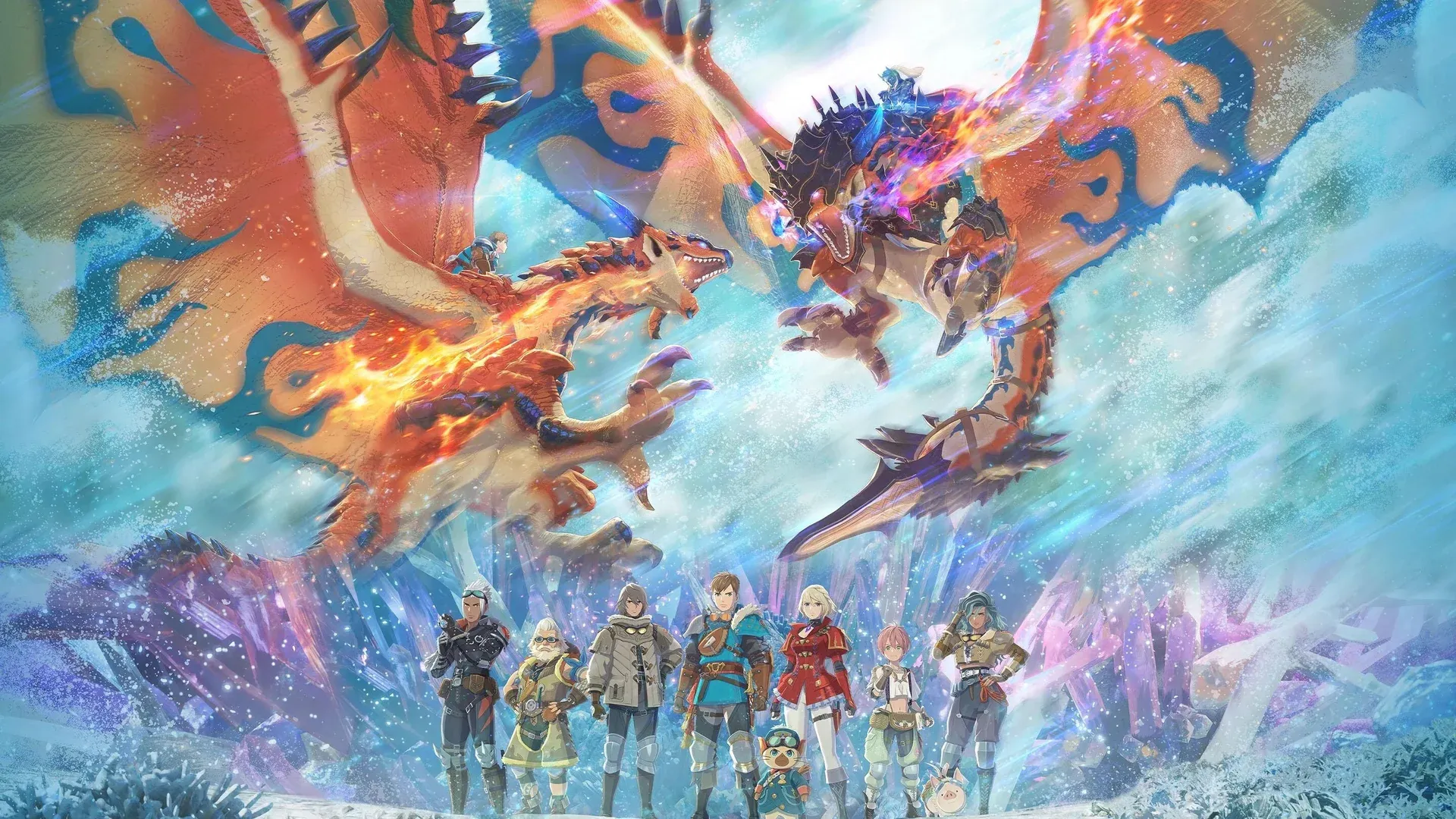


Capcom'sMonster Hunter Stories 3: Twisted Reflection arrives on March 16, 2026 for Nintendo Switch 2, PlayStation 5, Xbox Series X|S, and PC. Early hands-on time with the game—over 45 hours—reveals the most mature and complex entry the Stories spin-off series has delivered.
The series has always occupied a gentler corner of the Monster Hunter universe, focusing on "Riders" who bond with and ride monsters called Monsties instead of hunting them down. Monster Hunter Stories 3 maintains that core philosophy while expanding the formula beyond what the original 2017 Nintendo 3DS release or Monster Hunter Stories 2: Wings of Ruin from 2021 ever reached.
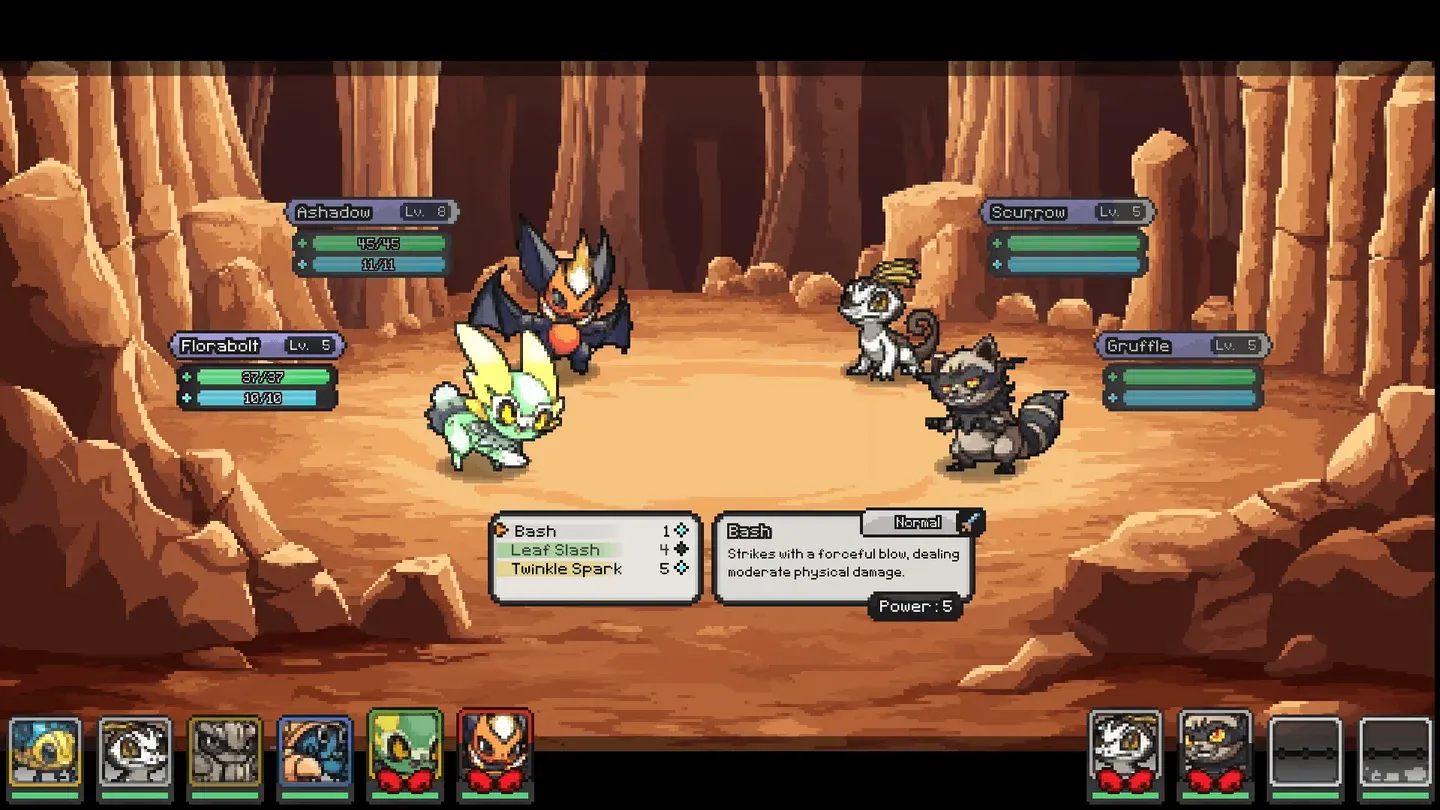
Monstie battle selection screen
A Richer World With Real Stakes
The story positions players as the young heir or heiress to a wealthy kingdom, bonded to a cursed Skyscale Rathalos born with a twin that was stolen by a traitorous mother. A crystallizing plague spreads across the environment and its creatures, forcing you into a collapsing world to repair the damage.
What separates Monster Hunter Stories 3 thematically is its direct environmental commentary. Kingdoms squabble over shrinking resources, Guilds prey on common folk, and rulers argue while the world crumbles. The game hands players concrete tools to reverse that decline, and the satisfaction of rebuilding ecosystems becomes one of its strongest progression systems.
Turn-Based Combat That Demands Attention
The rock-paper-scissors core of the Stories battle system remains, but Twisted Reflection tilts the design away from randomness and toward tactical planning. Monsters wear armor across multiple body sections, elemental attack options run deep, and shattering monster parts opens stagger windows for bonus damage. Even routine fights take time.
Key combat features include:
- Part-breaking mechanics that echo mainline Monster Hunter encounters
- A wide range of elemental attacks accessible to both the player and their Monsties
- Comrade and Monstie pairing in every battle, introducing a second strategic layer
- Non-boss encounters that allow easy disengagement, cutting down on frustration
Boss fights stretch out but feel like earned victories rather than slogs.
Camp setup for Monstie hatching
Environmental Restoration as Core Gameplay
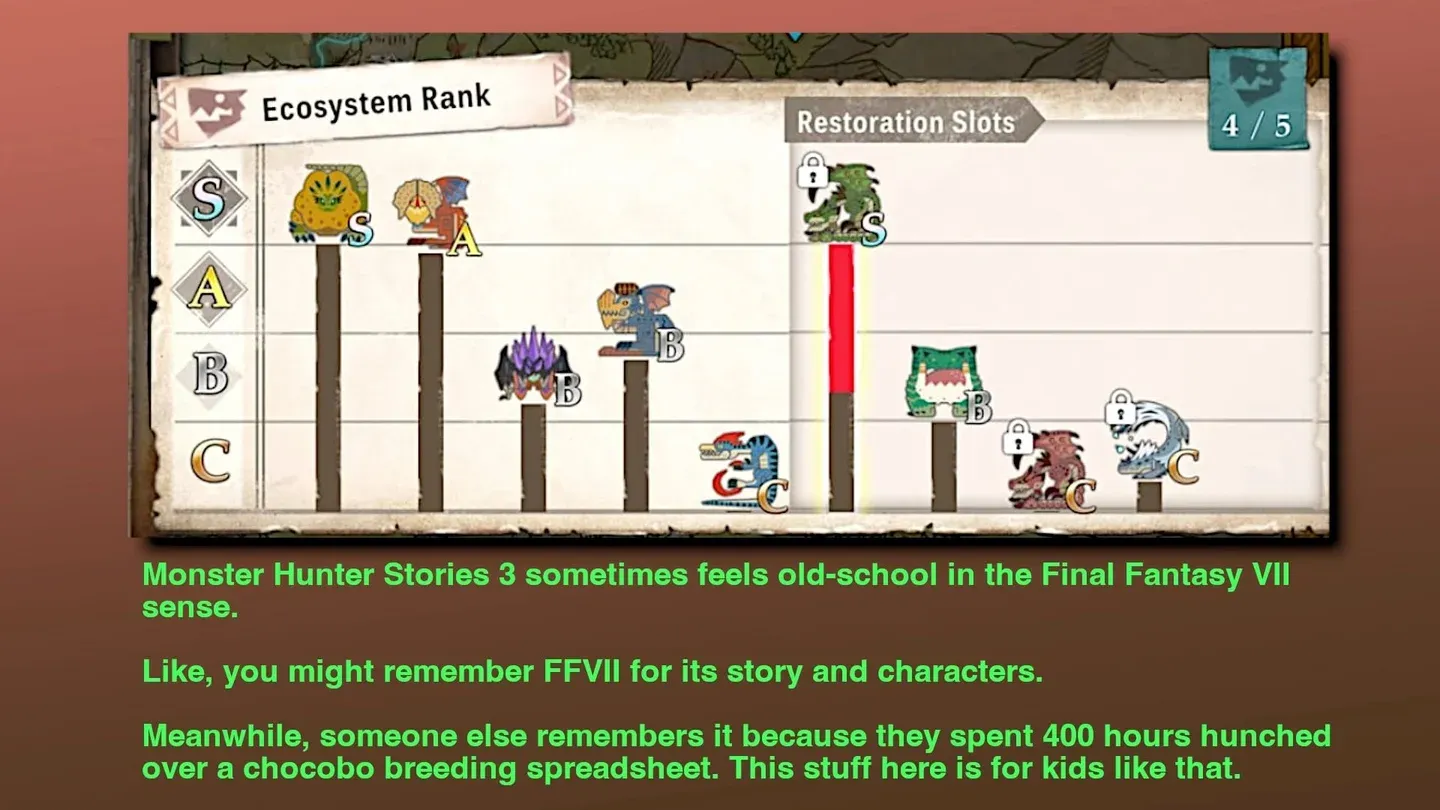
One of Monster Hunter Stories 3's defining systems is its ecosystem restoration mechanic. Across zone maps, invasive monsters have pushed out native wildlife. Players scout those monsters' lairs for tactical intel, then take them down in combat. Recovering and hatching the displaced species' egg reintroduces that Monstie type to the wild, slowly repopulating the region and unlocking stronger Monsties for recruitment.
The first restoration mission involves bringing Rathians back to the plains, a multi-step process covering combat, egg recovery, and hatching. As ecosystems heal, the quality of recruitable Monsties in that zone improves, building a meaningful connection between exploration and character growth.
Performance and Platform Notes
On Nintendo Switch 2, Monster Hunter Stories 3 runs at 30 FPS in both docked and handheld modes. Some texture pop-in appears in crowded areas, but the frame rate stays consistent. The game works well as a portable experience. Whether the PS5, Xbox Series X|S, and PC versions target 60 FPS remains unconfirmed in available materials.
After 45 hours of play, the story remained unfinished, with significant time devoted to overworld restoration and gear crafting alongside main narrative progression.
Make sure to check out our articles about top games to play in 2026:
Best Nintendo Switch Games for 2026
Best First-Person Shooters for 2026
Best PlayStation Indie Games for 2026
Best Multiplayer Games for 2026
Most Anticipated Games of 2026
Top Game Releases for January 2026
Frequently Asked Questions (FAQs)
When does Monster Hunter Stories 3: Twisted Reflection release?
Monster Hunter Stories 3: Twisted Reflection launches on March 16, 2026 for Nintendo Switch 2, PlayStation 5, Xbox Series X|S, and PC.
Do I need to play the previous Stories games first?
No. While characters from earlier entries reappear and the games share a timeline, each Monster Hunter Stories title is designed to work as a standalone experience. New players can start with Twisted Reflection without missing critical story context.
What is the frame rate on Nintendo Switch 2?
Monster Hunter Stories 3 runs at 30 FPS on Switch 2 in both docked and handheld modes. Frame rates on PS5, Xbox Series X|S, and PC have not been officially confirmed in current review materials.