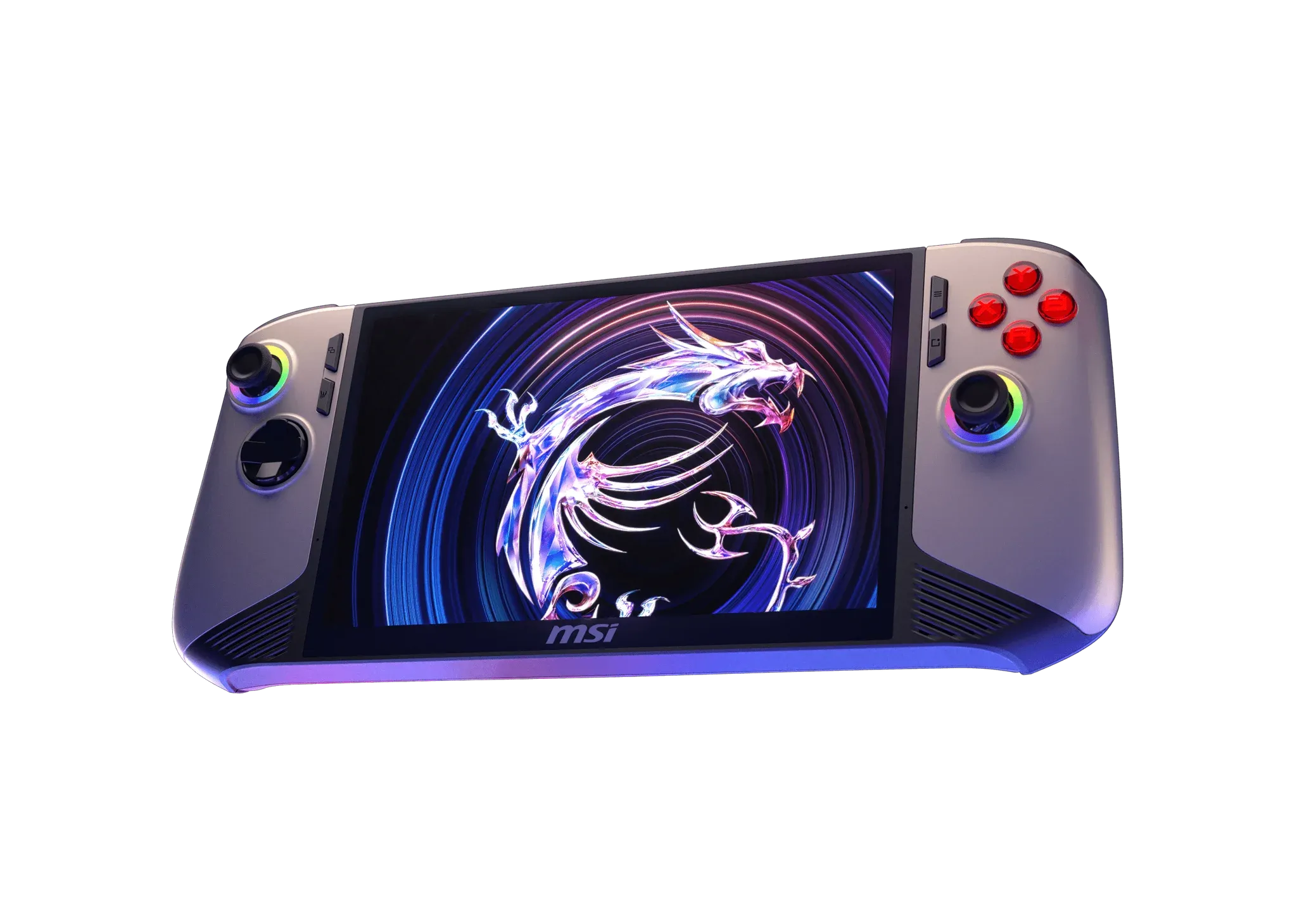


"It's been a tough year for gamers," MSI said as it pulled the wraps off its latest handheld gaming PC. That kind of candor from a hardware manufacturer is rare, and it makes the timing of the Claw 8 launch all the more interesting.
The new device carries a $1,799 price tag, placing it firmly at the premium end of a market that already includes the ASUS ROG Ally X and Lenovo Legion Go. MSI isn't pretending otherwise.

Use code TRYHARD33 at checkout to redeem this offer before code expires again.
Get 33% Off GAMES+ Subscription
What the Claw 8 is actually bringing to the table
The Claw 8 steps up from its predecessor with a larger 8-inch display, and MSI is positioning it as the handheld for players who want a closer-to-desktop experience in a portable form factor. The spec sheet is built around Intel's Lunar Lake architecture, which promises better power efficiency compared to the previous generation's Core Ultra chips, a genuine weak point that held the original Claw back in early testing.
Here's the thing: the original MSI Claw had a rough reception. Battery life was a persistent complaint, and performance per watt lagged behind AMD-powered rivals. Lunar Lake addresses both of those concerns on paper, with integrated graphics that pull meaningfully less power under load. Whether real-world handheld play matches those numbers is the question every buyer should be asking.
The 8-inch screen is a notable jump from the 7-inch panels found on most competitors. For games with dense UI elements, like strategy titles or RPGs with heavy inventory systems, that extra screen real estate genuinely matters. You'll want to check out optimized settings guides for demanding titles before assuming the hardware alone will carry you to smooth framerates.
MSI's market read and what it signals
The acknowledgment that 2025 was a difficult year for gamers isn't just corporate modesty. PC gaming hardware sales softened noticeably across the board last year, with handheld PCs facing pressure from both directions: console portables on the value end and high-end gaming laptops on the performance end. The handheld PC segment grew fast after the Steam Deck proved the category had legs, but that growth has started to plateau as the novelty factor fades and buyers become more selective.
Pricing a new device at $1,799 into that environment is a bold call. MSI is clearly betting that the Claw 8's larger screen and improved silicon justify the premium over competitors sitting closer to the $700-$900 range. The key here is whether the performance gap is large enough to convert buyers who are already comfortable with what the ROG Ally X or Legion Go delivers.
The broader handheld PC picture right now
The handheld gaming PC space has matured faster than most analysts expected. What started as a Steam Deck-dominated niche now has serious entries from ASUS, Lenovo, MSI, and others, all competing on specs, ergonomics, and software optimization. Windows-based handhelds in particular have struggled with the software side, where game compatibility, sleep/wake behavior, and controller mapping still create friction that the Steam Deck largely avoids through SteamOS.
MSI hasn't detailed major software improvements with the Claw 8 announcement, which is worth watching. Hardware alone won't close the gap if the Windows handheld experience stays as inconsistent as it has been. Getting the most out of any handheld PC still requires digging into per-game settings, and if you're picking up demanding titles at launch, checking file size and preload details ahead of time saves real headaches on a device with limited storage.
For players already deep in the handheld PC ecosystem, the Claw 8 is a genuine option worth evaluating when hands-on reviews land. For everyone else, the gaming guides hub has everything you need to squeeze performance out of whatever handheld is already sitting in your hands.