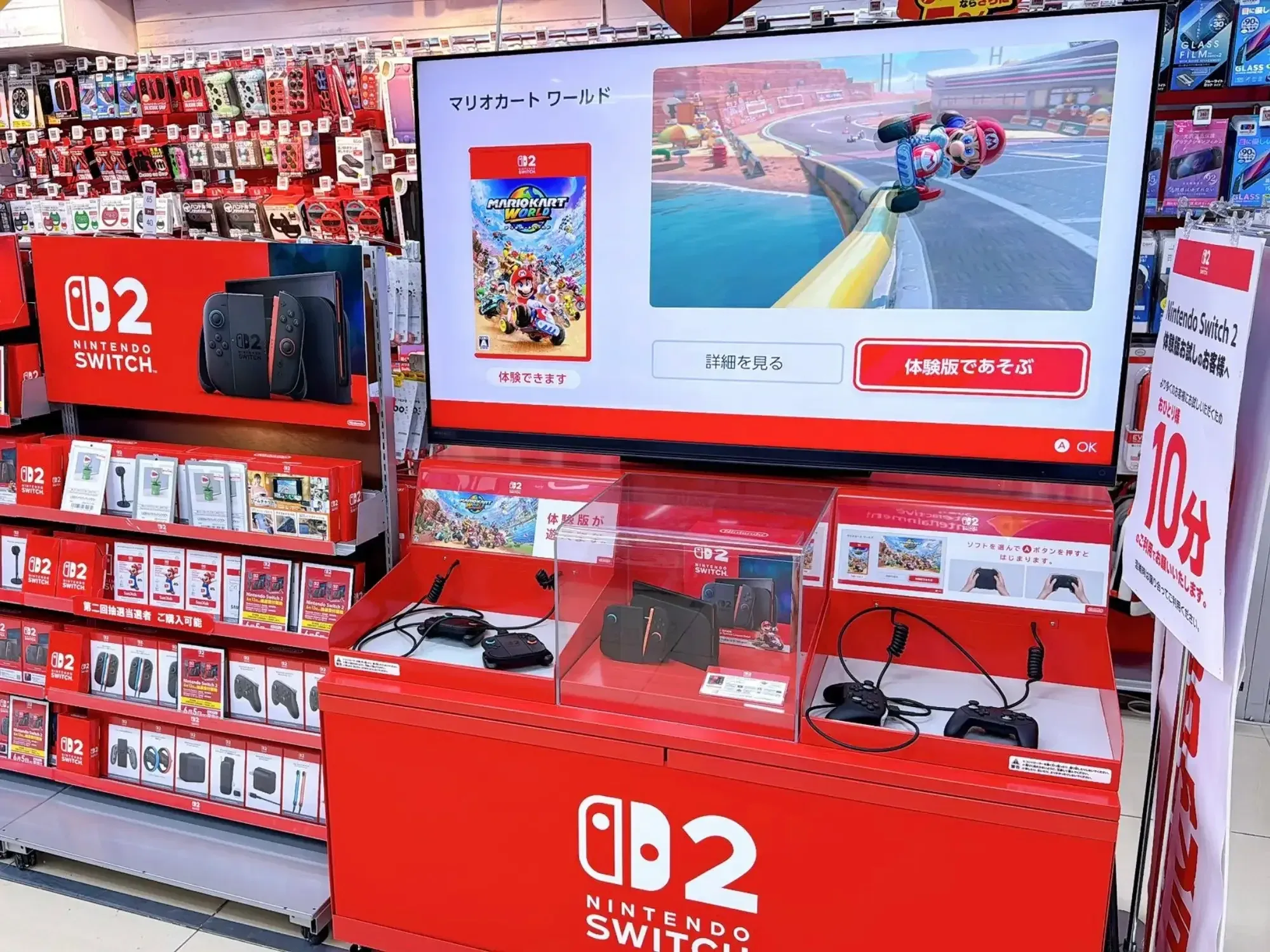


Nintendo has pulled the plug, at least temporarily, on sales of the multi-region Switch 2 through its official online store in Japan. The reason? Suspected bulk buying, with signs pointing to scalpers and resellers snapping up units to move them overseas at a markup.
Use code TRYHARD33 at checkout to redeem this offer before code expires again.
Get 33% Off GAMES+ Subscription
Why the multi-region model is the target
Here's the thing: not all Switch 2 units are created equal. The version sold in Japan that attracted this unwanted attention is a multi-region model, meaning it functions outside of Japan without the region restrictions that apply to the standard Japanese unit. That makes it significantly more attractive to buyers outside the country who want a Japanese-market console that still plays games from other regions.
Nintendo sells this particular variant exclusively through its own online store in Japan, which makes it both the only place to get it and, as it turns out, a convenient target for bulk purchases. The company noticed purchasing patterns consistent with hoarding and moved quickly to suspend sales while it figures out how to address the problem.
The scalper problem Nintendo keeps running into
This is not a new fight for Nintendo. The original Switch faced persistent stock manipulation at launch, and the Switch 2 has already seen demand outpace supply in several markets since its release. The multi-region model creates a specific arbitrage opportunity: buy in Japan, sell internationally at a premium. It's a straightforward play for resellers, and it clearly worked well enough that Nintendo noticed the volume.
The key here is that Nintendo's own storefront gives the company direct visibility into purchasing patterns. Unlike third-party retailers, Nintendo can see exactly how many units individual accounts are ordering and flag unusual activity. That visibility is presumably what triggered the suspension in the first place.
What this means for legitimate buyers in Japan
For anyone in Japan who genuinely wanted the multi-region Switch 2 for personal use, the timing is frustrating. The console is only available through Nintendo's online store, so the suspension effectively cuts off access entirely until Nintendo lifts it or introduces new purchase controls.
Nintendo has not announced a specific timeline for when sales will resume, but the expectation is that the company will put stricter purchase limits or verification measures in place before restocking. One-per-customer limits and account-age requirements are the most common tools Nintendo has deployed in similar situations before.
The Switch 2 continues to build out its library at pace. Titles like Phasmophobia are heading to Switch 2 later in 2026, and Nintendo exclusives like Tomodachi Life: Living the Dream are already live. If you're sorting out which Switch version you need for that game, the Switch 1 vs Switch 2 breakdown for Tomodachi Life covers exactly what each version gets you.
The bigger picture for Switch 2 availability
Scalping and bulk purchasing remain genuinely difficult problems for hardware manufacturers to solve at scale. Nintendo's decision to suspend sales rather than let the hoarding continue shows the company is paying attention, but suspensions are a blunt instrument. They stop the bleed without fixing the underlying issue.
What most players miss in stories like this is that the damage is already partly done. Units purchased before the suspension are already in the hands of resellers, and some portion of those will end up on secondary markets at inflated prices. The suspension protects future stock, not what's already gone.
Nintendo will need a more durable solution before the next high-demand product launch, because this same playbook gets run every time supply is tight and a desirable variant exists. For now, if you're after the multi-region Switch 2 from Japan's official store, the wait continues. Keep an eye on Nintendo's Japanese online storefront for updates, and check out the gaming guides to make the most of whatever Switch 2 you already have.