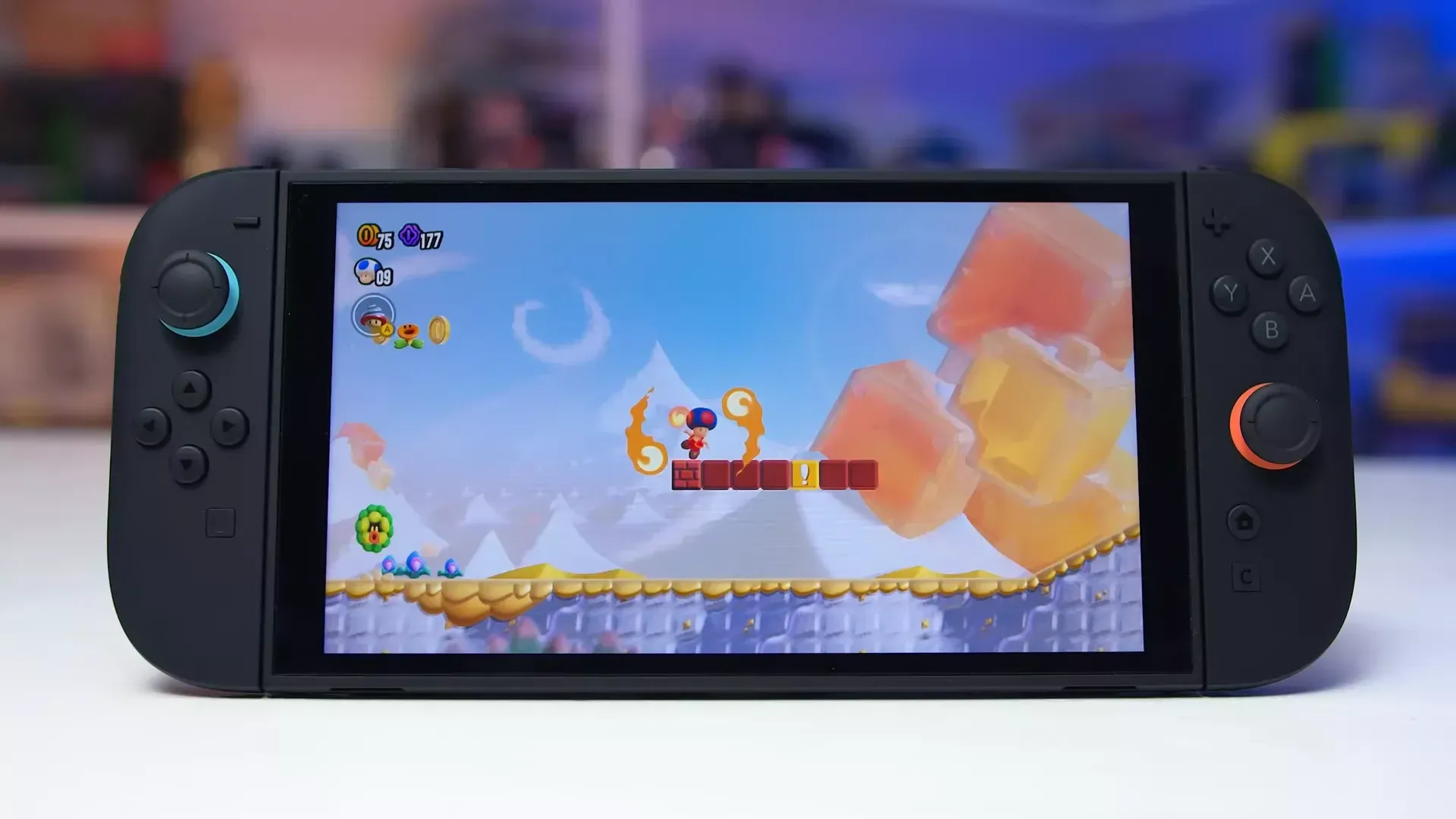


The Nintendo Switch 2 has only been on shelves for a matter of months, and hardware watchers are already spotting signs of a revised model. A panel listing surfaced on a Chinese resale site this week, and the circuit, connector, and cable layout look meaningfully different from the launch unit's Innolux screen. That's enough to raise eyebrows, even if the bigger picture is more complicated.
Use code TRYHARD33 at checkout to redeem this offer before code expires again.
Get 33% Off GAMES+ Subscription
What the panel listing actually tells us
The display in question carries the model number LS079T1SX10P and is suspected to be manufactured by Sharp, the Japanese electronics company. Hardware-focused Bluesky account Nintendo Patents Watch flagged the listing and noted that the exposed circuit and connector arrangement differs enough from the launch model to suggest a deliberate design update, not a routine component swap.
Here's the thing, though: the specs on paper look almost identical to what the Switch 2 already ships with. The new panel appears to be a 7.9-inch, 1080p LTPS LCD display, which is exactly what the current console uses. Sharp also referenced "expanded sales for mobile applications" in a financial disclosure, which lends some weight to the idea that this panel is destined for a consumer device rather than sitting in a parts bin.
So what would actually change? Nintendo Patents Watch admitted they "don't know how much of a quality improvement this Sharp assembled panel can bring," but one specific area keeps coming up: ghosting.
The ghosting problem Switch 2 owners know well
Ghosting is that blurry trailing shadow you see on fast-moving objects when a display can't keep up with the action. It's not universal on Switch 2, but it's been a consistent complaint since launch, particularly in games with rapid camera movement or high-speed traversal. A revised panel with better response characteristics could address that without changing anything visible in the spec sheet.
That context matters. The current Switch 2 already represents a significant step up from the original Switch's 720p handheld display, and a same-resolution upgrade might feel underwhelming on paper. What most players miss is that display quality isn't just about resolution. Panel uniformity, response time, and color accuracy can all improve without the numbers changing at all.
No OLED, and a separate EU revision is already confirmed
For anyone hoping this leak pointed toward a Switch 2 OLED, the LCD classification shuts that down. Nintendo has not announced an OLED variant of the Switch 2, and nothing in the LS079T1SX10P listing suggests one is coming.
What Nintendo has confirmed is a separate hardware revision launching in Europe in February 2027. That model is not about the display at all. It's a compliance update featuring a replaceable battery, designed to meet EU regulations around electronic waste reduction. A different screen is not part of that announcement.
The Switch 2 library is growing fast regardless of what's happening with the hardware. Games like Phasmophobia are confirmed for the platform in 2026, and Nintendo exclusives are stacking up across the year. Players deciding between platform versions of upcoming titles will also want to check the Switch 1 vs Switch 2 breakdown for Tomodachi Life: Living the Dream to understand exactly what each version offers.
What to do while waiting for Nintendo to say something
Nintendo has not confirmed anything about a revised Switch 2 display. Until there's an official announcement, this sits firmly in the "credible but unverified" category. The panel listing is real, the component differences are observable, and Sharp's financial disclosures are a matter of public record, but none of that adds up to a confirmed product.
One practical note worth flagging: a price increase on Nintendo Switch 2 hardware is scheduled for September 1, 2026. If you're planning to buy and don't want to wait on the off chance a revised model surfaces, buying before that date makes financial sense.
For more Nintendo Switch 2 coverage, the gaming guides hub has you covered as the platform's library keeps expanding.