

Paralives hit Steam Early Access on May 25, and one of the first decisions you make in the character creator carries more weight than it might appear. Alongside stats like physique, mind, creativity, and charisma, you pick a Vibe for your Para, and that single choice ripples through nearly every social interaction, skill check, and needs bar in the game.
Picking your Para's vibe
What the Vibe system actually is
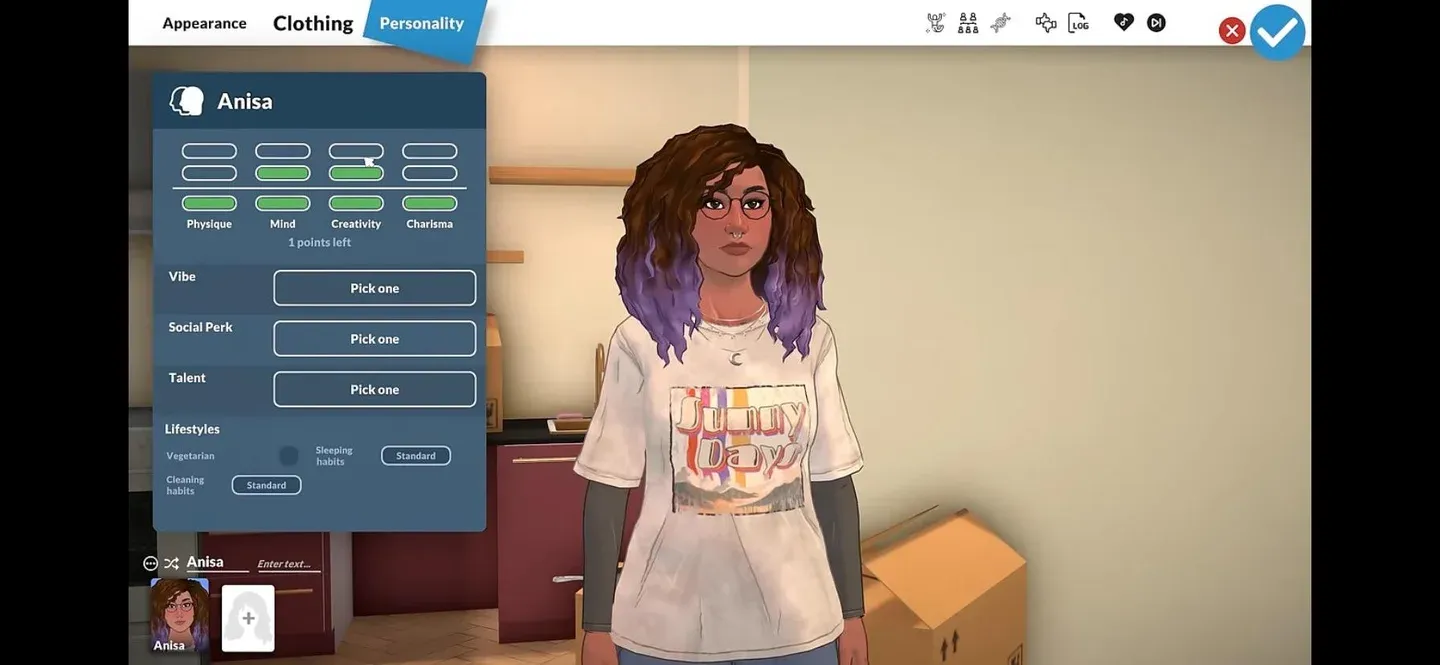
The Vibe sits inside a larger personality framework. When you build a Parafolk, you spread points across four core attributes, then add a social perk, a talent, and the Vibe. The Vibe is the emotional baseline of your character — the lens through which they see Melino and everyone in it.
This system shapes which dialogue options you see during conversations. Paralives doesn't let you spam interactions like The Sims does. Dialogue prompts appear sporadically, and you only get a few choices at a time. What shows up depends on your Para's skills, current mood, active needs, recent experiences, and their Vibe.
Personality isn't window dressing here. A Para's Vibe can open or close specific dialogue paths, change the odds on social skill checks, and sometimes add entirely new needs bars. Energetic Parafolk have a surplus energy mechanic that mellower types never touch.
How vibes interact with the rest of the personality system
The Vibe doesn't operate in a vacuum. Paralives Studio built a system where small choices stack over time. As your Para levels different parts of their life, they unlock more perks and modifiers that build on the original Vibe. A creative Para who picks a socially outgoing Vibe will evolve differently than one who leans into solitude and craft.
The Vibe you pick at character creation matters. Players who want specific relationship outcomes or skill tree paths should think about which Vibe fits their intended playstyle before committing. Paralives moves slower and more deliberately than The Sims. A mismatched Vibe can create friction across dozens of hours, not just the first few sessions.
Attribute points shape your Para
Why this matters for the broader Paralives experience
Paralives Studio positioned the game as a more measured, lower-stakes alternative to The Sims, and the Vibe system is central to that. Where The Sims leans into soap-opera momentum and exaggerated speed, Paralives lets situations breathe. A social interaction that might resolve in seconds in The Sims can stretch across multiple in-game sessions here, with the outcome shaped by accumulated personality decisions rather than rapid-fire clicks.
That texture makes the Vibe choice feel meaningful. Players who backed the project (which has raised over $2.5 million in community funding) have been waiting years for exactly this kind of depth in a life sim. Early impressions suggest the system delivers, even if the UI for tracking all these intersecting modifiers is currently a bit of a maze to navigate.
For anyone jumping into indie games like Paralives expecting a breezy character builder with no downstream consequences, the Vibe system is worth taking seriously from the start.
Getting the most out of your first Para
The current early access build includes the full character creation suite, so you have access to the complete Vibe selection from day one. The Paralives community is still mapping out exactly which Vibes produce which downstream effects, particularly at higher skill levels where the perk trees start branching in unexpected directions.
For a deeper look at how all the systems connect, the Paralives guides collection is the best place to track community discoveries as the early access period progresses and Paralives Studio continues rolling out updates on their published development roadmap.