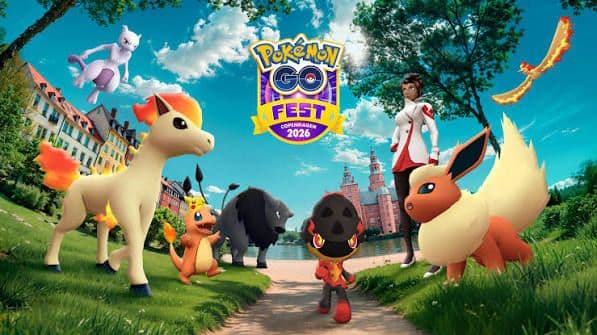

Pokémon Go has been running Go Fest for a decade now, and the formula is well-established: limited Pokémon, ticketed bonuses, real-world gatherings, and a reliable surge in spending. So when Go Fest 2026 posted its second most lucrative single day in the event's entire history, the instinct is to call it a success. Here's the thing, though: second place cuts both ways.
What the number actually tells us
The revenue figure puts 2026 behind only one previous Go Fest day in Niantic's records, which is a genuinely strong result for a game that launched in 2016. Player spending at live events has historically been the clearest signal of community health in Pokémon Go, because unlike passive in-app purchases, Go Fest tickets require active intent. You have to want to be there.
That makes the second-place finish worth examining carefully. The top spot still belongs to an earlier year, which means 2026 came close but did not surpass it. For a franchise that thrives on momentum, "almost" is a complicated place to land.
The case that this is genuinely good news
Pokémon Go has shed players steadily since its 2016 peak. Every year the game survives a Go Fest with strong commercial performance is a year that contradicts the narrative of irreversible decline. Reaching second-best revenue in event history, in 2026, suggests the core audience is still spending and still engaged enough to show up, physically or virtually.
The remote ticket option deserves real credit here. By letting players participate from anywhere, Niantic effectively turned a city-specific event into a global one, and the revenue reflects that. What most players miss is that the remote tier did not cannibalize in-person attendance the way critics predicted. Both categories have grown.
There is also the competitive context to consider. Mobile gaming is more crowded than it has ever been, and creature-collector games specifically have multiplied. blockchain Monster Hunt represents the web3 angle of that same genre pressure, bringing on-chain monster collecting to players who want ownership mechanics alongside the catching loop. The fact that Pokémon Go can still generate near-record event revenue despite that expanded competition says something real about brand loyalty.
The case that second place is a yellow flag
Here is where the read gets more complicated. If 2026 is the second-best Go Fest day ever, it also means Niantic had a clear opportunity to set a new record and did not. The game has the catalog, the nostalgia, and the infrastructure. What it may be losing is the ceiling.
Player count data has trended downward for years. Revenue holding up while player numbers shrink typically means the remaining audience is spending more per person, not that the game is growing. That is a sustainable model in the short term, but it compresses the upside. You cannot set new all-time revenue records indefinitely when the player base is contracting.
The gap between first and second place matters too. If 2026 came within a few percentage points of the record, that reads very differently than finishing 20% behind it. Without that specific delta being confirmed, the second-place result sits in an ambiguous zone.
What Niantic does next will answer the question
The real test is not what Go Fest 2026 earned. It is whether Niantic reads the result as confirmation that the current formula works, or as a signal to push harder on what makes the event special.
The years that set revenue records were years when Pokémon Go felt genuinely unmissable, either because of a debut Pokémon that players had waited years for, a mechanic that changed how the game played, or a cultural moment that pulled lapsed players back in. Second place suggests 2026 was very good. It does not confirm it was unmissable.
For players curious about how the creature-collector genre is evolving beyond Pokémon Go, checking out our full review of blockchain Monster Hunt gives a useful point of comparison on where web3 mechanics are taking the catching formula. If you want broader context on navigating the genre, the gaming guides hub covers strategy and progression across titles.
Niantic's next move, whether that is a surprise Pokémon announcement, a structural change to how Go Fest tickets work, or a new mechanic tied to the 2027 event, will tell you more about the game's trajectory than any single revenue day.