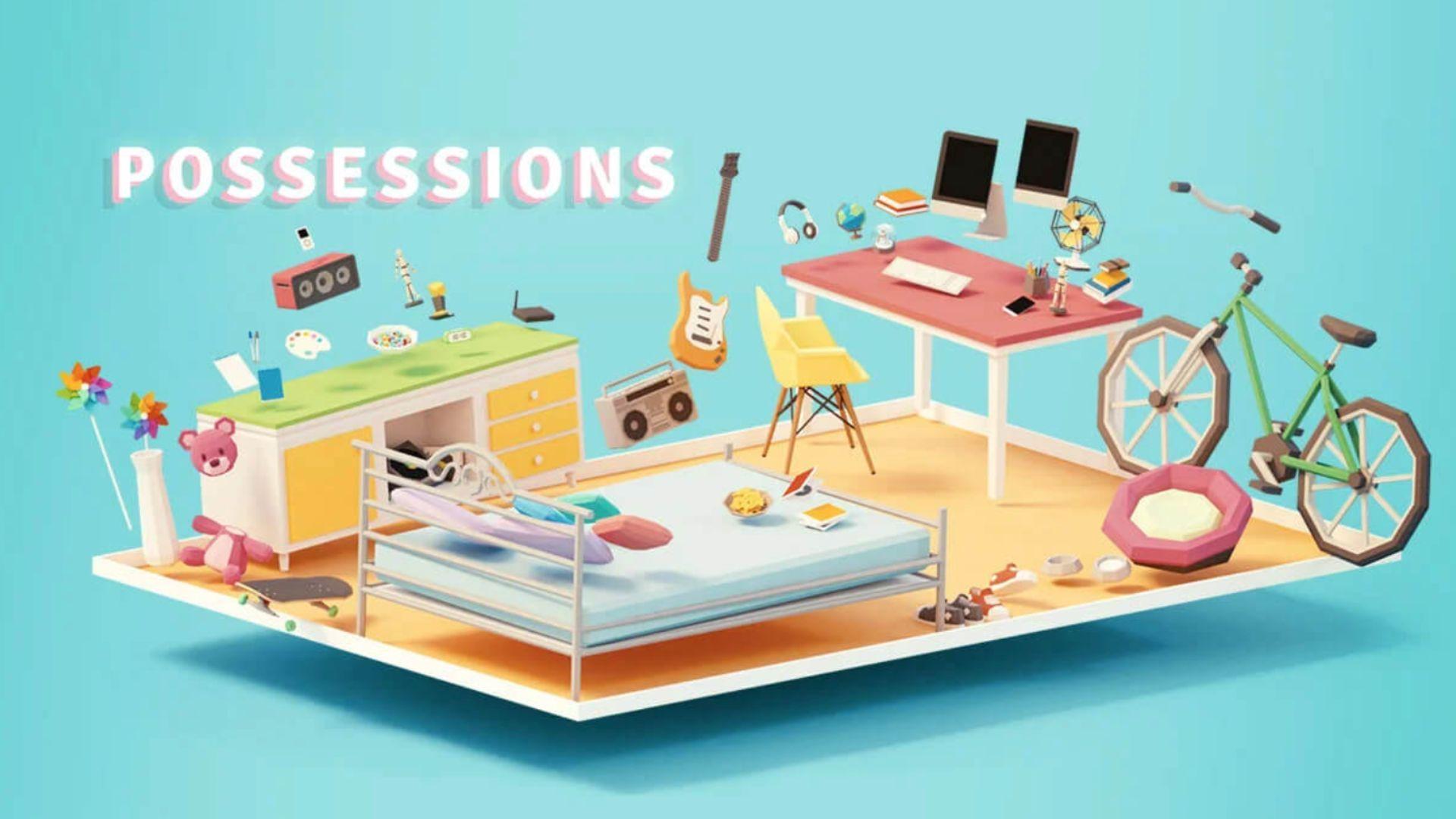

Possessions, a minimalist 3D puzzle game from New Delhi studio Lucid Labs, builds its entire design around one clean idea: rotate the world until scattered objects align into something that makes sense. Players don't move items around a room. They spin the room itself, hunting for the angle where everything clicks. It's a game that treats perspective as both the puzzle and the point.
Founder Chirag Chopra says the team never wanted to deliver a heavy narrative. The focus was on how everyday objects—furniture, photos, toys—can feel comforting or distant depending on how you look at them. That concept became the core of the design.
Early prototypes played with optical illusions, but the breakthrough came when the team realized a messy scene could be "fixed" just by rotating it. That moment defined Possessions. You're not repairing a room. You're finding the viewpoint where it already makes sense.

Use code TRYHARD33 at checkout to redeem this offer before code expires again.
Get 33% Off GAMES+ Subscription
How the puzzles work
Each level drops you into a room full of familiar objects that look misplaced from the default angle. Rotate the scene, and those objects shift into alignment. Once you find the right perspective, the room locks and the puzzle resolves.
The mechanic is simple to grasp but not always easy to solve. Objects that seem disconnected from one angle suddenly form logical structures from another. The game tests observation and patience, not reflexes or memory. You stop, look carefully, and experiment until the space reveals its intended shape.
Unlike most modern puzzle games, Possessions strips out friction. No timers, no penalties, no fail states. Rotation is smooth and constant, so you can explore freely. The challenge is understanding the space, not managing systems layered on top of it.
Visual storytelling without words
Possessions avoids direct storytelling, but its rooms quietly suggest meaning through layout and object placement. A framed photo on the wall, a half-packed shelf, a lone toy in a corner—these details communicate context without dialogue or text. The game doesn't explain relationships or events. It leaves interpretation to you.
Chopra notes the team didn't set out to make a game about specific emotional themes. They focused on creating spaces that felt natural and lived in. As you move through the game, the tone of those spaces shifts. Early environments feel warm and shared. Later rooms feel more transitional and empty, hinting at separation and change.
This approach keeps the experience open-ended. You're never told what to feel, but the visual cues let you project personal meaning onto the environments. It's storytelling through implication, not exposition.
From prototype to finished game
The first version of Possessions came together quickly. Chopra describes an early prototype built from simple grey blocks floating in empty space—no textures, no lighting, no mood. What mattered was interaction. When the camera rotated and a confusing shape suddenly made sense, the team knew the idea worked.
That same interaction sits at the center of the final game. The finished version adds warmth through lighting, color, and sound design, but the puzzles still rely on the same visual logic introduced in those early experiments. The prototype solved shapes. The final game solves moments.
Lucid Labs focused on refinement over expansion. Each level is compact and readable. The goal is clarity, not complexity. You're discovering the right viewpoint, not learning complicated systems.
A relaxed approach to challenge
One of Possessions' defining traits is how it handles difficulty. The game avoids frustration by design. No wrong moves, no limited attempts, no enforced pacing. You can rotate rooms endlessly, observing how objects connect from different angles.
Chopra says the puzzles are meant to feel light, while the meaning remains optional. If you engage with the emotional undertones, the game supports that. If you just want to solve spatial puzzles, the experience still works mechanically.
This balance lets Possessions function as both a calm puzzle game and a reflective experience. It guides your hands through simple controls while leaving interpretation entirely open.
Presentation that supports stillness
Visually, Possessions uses a minimalist art style built from clean geometry, soft lighting, and muted color palettes. The lack of clutter makes every object feel deliberate. Rooms feel like small dioramas rather than fully simulated environments, reinforcing the idea that you're studying a space instead of navigating it.
Sound design follows the same philosophy. Instead of dominant music tracks, the game relies on gentle ambient tones that keep attention focused on the environment. Nothing in the presentation pushes urgency. Everything supports observation.
The combined effect is a space designed for slowing down. In a genre often driven by escalation, Possessions stays consistent, calm, and controlled.
Reaching a wider audience
Possessions first gained attention through its launch on Apple Arcade, where it stood out as the only Indian-developed title on the service at the time. That opportunity gave Lucid Labs stability and freedom to focus on pacing and polish rather than monetization.
Now the game is preparing to reach a broader audience with an upcoming release on the Epic Games Store. Chopra's goals remain modest. The team hopes the game finds players interested in thoughtful, self-contained experiences rather than endless progression loops.
In an industry shaped by live-service models and constant engagement systems, Possessions positions itself as deliberately finite. It begins, develops, and ends, mirroring the quiet emotional arc suggested through its environments.
Rather than asking you to force solutions, Possessions asks you to change how you look. The answer is rarely to move the world, but to find the angle where the world already fits together.
Make sure to check out our articles about top games to play in 2026:
Best Nintendo Switch Games for 2026
Best First-Person Shooters for 2026
Best PlayStation Indie Games for 2026
Best Multiplayer Games for 2026
Most Anticipated Games of 2026
Top Game Releases for January 2026
Frequently Asked Questions (FAQs)
What is Possessions?
Possessions is a minimalist 3D puzzle game by Lucid Labs where you rotate rooms to align objects visually instead of moving them directly.
How do the puzzles work in Possessions?
Each level presents a scattered room. By rotating the environment, you change perspective until objects visually connect and the scene resolves.
Does Possessions have a story?
The game doesn't use direct storytelling. Instead, it relies on visual cues and object placement to suggest personal and emotional meaning.
Is Possessions difficult?
The game avoids traditional difficulty systems. No timers, no penalties, no failure states. Challenge comes from observation rather than pressure.
Where can you play Possessions?
Possessions previously launched on Apple Arcade and is coming soon to the Epic Games Store.
Who developed Possessions?
The game was developed by Lucid Labs, an independent studio based in New Delhi, led by founder Chirag Chopra.
What makes Possessions different from other puzzle games?
Instead of rearranging objects, you discover the correct viewpoint. The focus is on perspective, calm pacing, and visual storytelling rather than mechanical complexity.