

"My belief that a console is necessary for playing games hasn't changed," Hideaki Nishino told Famitsu recently. But buried just a few sentences away from that reassurance was something far more interesting.
The Sony Interactive Entertainment CEO said the company will be building future game consoles by "leveraging technologies that can be used in various forms and locations," and that this approach will lead to "something exciting." That single phrase has the internet doing exactly what you'd expect: reading between every line.

Use code TRYHARD33 at checkout to redeem this offer before code expires again.
Get 33% Off GAMES+ Subscription
What Nishino actually said
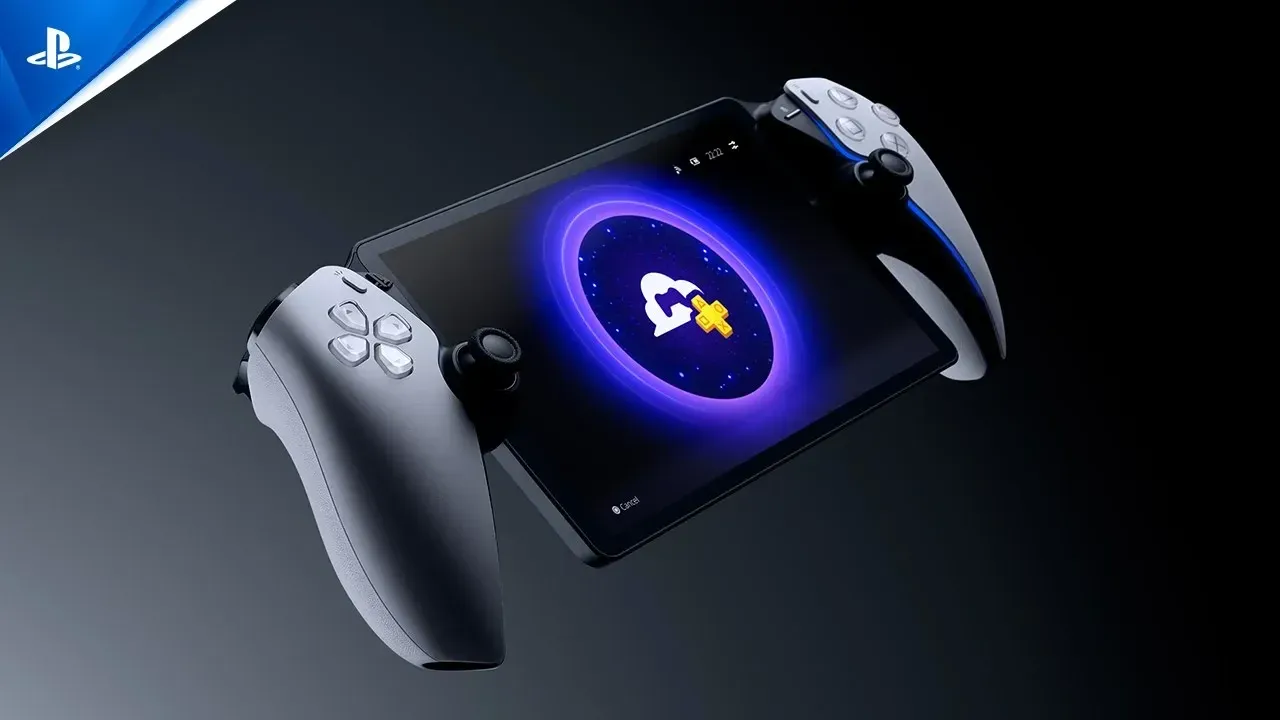
The comments came from a Famitsu interview, and the full picture is worth unpacking. Nishino pointed out that today's consoles need a strong "pick up and play" quality, and that the PlayStation brand, while historically tied to the living room TV, is actively working to reach players wherever they are. He cited the PlayStation Portal as a direct example of this thinking in action.
"For example, although the PlayStation brand is strongly associated with playing on the TV in the living room, we're planning to release monitors and speakers so that people can play comfortably in other locations as well," he said. "We developed the PlayStation Portal as part of this initiative."
Here's the thing: that framing matters. He's not describing the Portal as a one-off experiment. He's describing it as step one in a longer strategy.
The Portal's surprising momentum
The PlayStation Portal has been more successful than most people expected from what is essentially a $200 remote play accessory. Nishino shared that cloud streaming usage on the Portal in January 2026 was 1.5 times higher than it was in December 2025. That's a sharp month-over-month jump, and it tells Sony something important: players want to game away from the TV, and they'll actually do it if the hardware is there.
The Portal's limitation is that it's not a standalone device. It needs a PS5 to stream from, which puts a hard ceiling on how many people can use it. A true PS6 handheld with native game support would remove that ceiling entirely.
Sony's complicated handheld history
PlayStation has been here before. The PSP sold over 70 million units worldwide and genuinely challenged Nintendo's grip on the handheld market. Then the PS Vita arrived, and despite being technically impressive, it stumbled badly enough that Sony walked away from dedicated handhelds entirely for over a decade.
That history explains why Sony has been careful. The Vita's failure wasn't just about hardware; it was about software support, memory card pricing, and a market that had shifted toward smartphones. The conditions in 2026 are different. The Nintendo Switch 2 has proven there's massive appetite for a device that bridges home and portable play, and PC handhelds like the Steam Deck and ROG Ally have shown the market will pay serious money for capable portable hardware.
What the rumor mill has been saying
This isn't the first signal pointing toward a PS6 handheld. Earlier rumors suggested the device could pack 24GB of RAM, putting it in the same ballpark as high-end PC handhelds. Separate reports flagged that players shouldn't expect anything before 2028 at the earliest, with some analyst estimates pushing the PS6 family launch to 2028 or 2029 altogether.
Nishino's comments don't confirm a handheld exists. But they do confirm that Sony is thinking about hardware in a fundamentally different way than it was five years ago. "Various forms and locations" is not accidental language from a CEO.
For players already invested in the PlayStation ecosystem, the hardware angle is only part of the story. Features like DualSense haptics and Tempest 3D audio are deeply tied to the PS5 experience, and you can see how Sony has built those into games in our breakdown of GTA 6 PS5 exclusive features. Whatever form the PS6 takes, expect those kinds of hardware-software integrations to carry forward.
The bigger picture for next-gen PlayStation
Sony is in an interesting position heading into the PS6 generation. Microsoft has leaned hard into platform agnosticism with Xbox, Nintendo owns the hybrid console space, and PC handhelds are eating into the market that used to belong exclusively to dedicated gaming devices. A PS6 handheld would be Sony's answer to all three pressures at once.
The key here is that Nishino framed this as a technology strategy, not a product announcement. Sony appears to be designing the PS6's underlying architecture so that it can be deployed across different form factors, rather than building a home console first and a handheld as an afterthought. That's a meaningfully different approach, and if it works, it could produce hardware that feels cohesive across both formats rather than compromised.
Nothing is confirmed. The PS6 in any form has no official release date, no official price, and no official spec sheet. But if you want to get a sense of where PlayStation's hardware thinking is heading right now, check out our gaming guides for the latest on what Sony's current-gen hardware can do, because the next generation is clearly being designed with much bigger ambitions in mind.