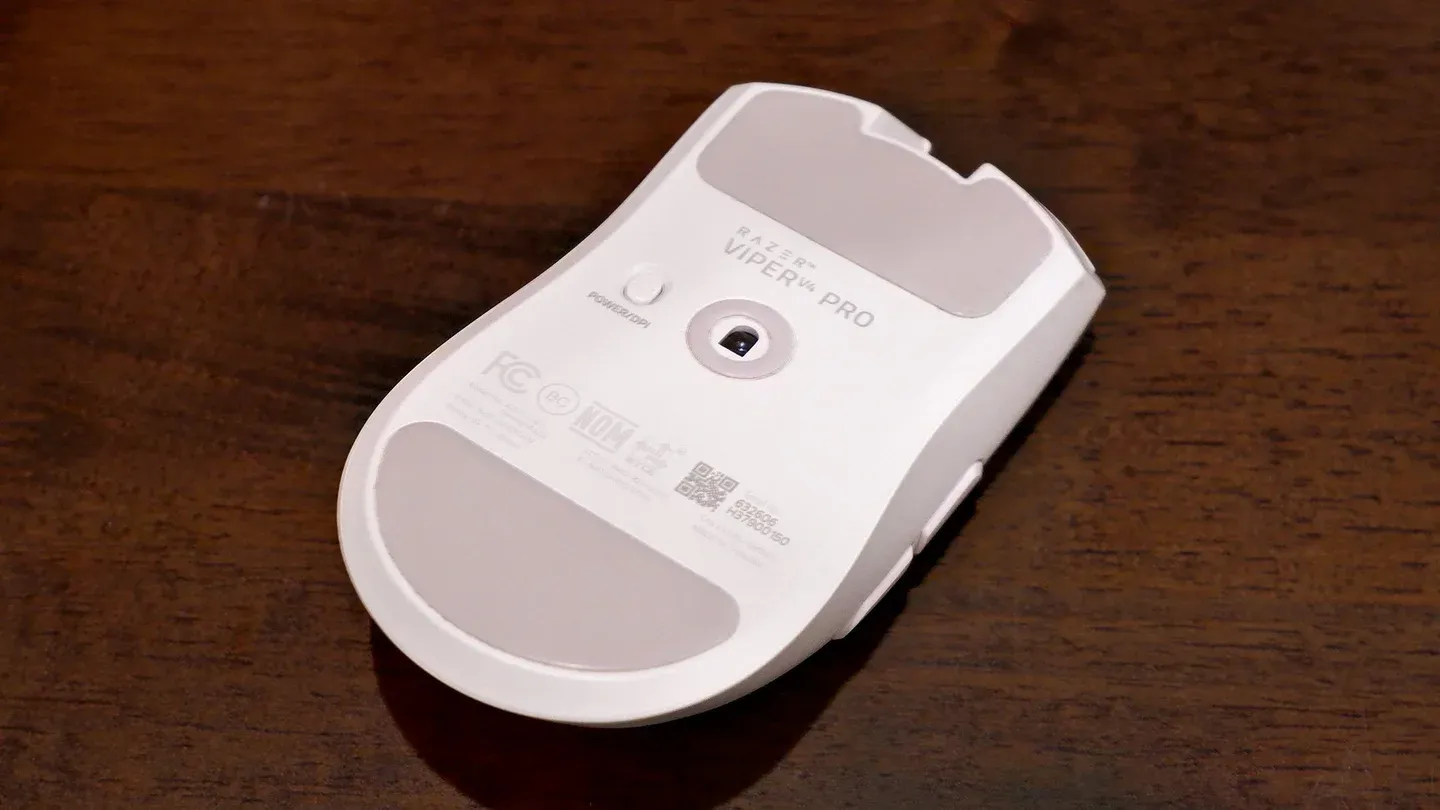

The gaming mouse market has spent the last year chasing extremes. Ultralight shells pushing below 40g. Analogue switches promising to shave milliseconds off your click latency. And then the Razer Viper V4 Pro arrives and quietly makes the case that none of that matters as much as getting every single detail right.
PC Gamer hardware writer Jacob Fox put it plainly after extended testing: “There is no part of the Viper V4 Pro that doesn't feel crafted with the goal of perfection in mind.”
The two mice that came first
To understand why the Viper V4 Pro lands so hard, you need the context of what came before it. The Corsair Sabre V2 Pro turned heads by hitting just 36g, a genuinely featherweight number that almost nothing else on the market touches. That low mass translates to real benefits in competitive play, letting your hand move faster and adjust aim with less resistance.
Then came the Logitech G Pro X2 Superstrike, which flipped the script entirely. Its analogue switches, a first for gaming mice, let you set actuation exactly where you want it. Set it light enough and your clicks register fractionally faster, which matters in CS2 and Valorant where the gap between starting a click and hearing a gunshot is the difference between a kill and a death. The Superstrike weighs around 60g, nearly double the Sabre V2 Pro, but the haptic click tech made that tradeoff feel worth it after extended time in Counter-Strike.
Here's the thing: both mice earned genuine enthusiasm for genuinely new ideas. The Viper V4 Pro has neither of those ideas.
What the Viper V4 Pro actually brings
Razer's new flagship does introduce FrameSync, a sensor capture and USB polling synchronization system that squeezes out a small improvement in click latency and a meaningful boost to battery life. Useful, but not the kind of thing that makes you put the mouse down and tell someone about it.
What does make you do that is picking it up. The shell feels sturdy in a way that cheaper mice never quite manage. The scroll wheel has genuine tactile resistance. The side buttons click with a satisfying snap rather than the mushy response you get on mice that treat them as an afterthought. The optical switches on the main buttons are built for longevity and resist double-click issues, even if their sound profile is less satisfying than mechanical alternatives.
info
The Viper V4 Pro uses optical switches on its main buttons. They last longer and avoid double-click problems, but produce a slightly different sound compared to mechanical switches. That is the one genuine trade-off here.
At 49-50g, the weight sits between the Sabre V2 Pro's extreme lightness and the Superstrike's heftier frame. Light enough to move quickly, heavy enough to feel like something real is in your hand.
FrameSync and Synapse Web
The FrameSync technology is worth understanding even if it is not the headline feature. By synchronizing sensor capture with USB polling, Razer reduces the timing inconsistencies that can cause minor input jitter. The side effect is extended battery life, which matters for a wireless mouse you are relying on during long sessions.
Software-side, the Viper V4 Pro works with Synapse Web, Razer's browser-based configuration tool. The traditional local Synapse application has a reputation for consuming significant memory and running background processes players do not want. The web version sidesteps most of that, and while Razer is not the first to offer browser-based mouse configuration, having it available here rounds out a package where almost nothing feels neglected.
Build quality as the competitive argument
The broader point here is about what actually separates good mice from great ones once you get past the spec sheet. Teardowns of the Viper V4 Pro circulating on YouTube back up the impression you get from holding it: the internal construction matches the external feel.
For competitive FPS players specifically, mouse shape still trumps every other consideration. A mouse with revolutionary technology built around a shape that does not fit your hand is useless. The Viper V4 Pro uses a symmetrical, ambidextrous form that works across a wide range of hand sizes and grip styles. Palm grip players with smaller hands may want to look elsewhere, something like the Razer Cobra HyperSpeed fits that niche better, but for the majority of claw and fingertip grip players, the shape is genuinely comfortable.
After testing all three mice extensively in CS2, Fox noted that actual in-game stats did not shift noticeably between them. Skill matters more than the mouse. But the Viper V4 Pro is the one that feels best doing it.
The competitive mouse field right now
Here is how the three main contenders stack up on the specs that matter most:
None of these is a wrong choice. The Sabre V2 Pro is still the pick if raw weight is your priority. The Superstrike still has the most interesting technology for players who want to squeeze every millisecond out of their setup. But the Viper V4 Pro is the one where you will not find yourself wishing anything were different.
For more hardware coverage and gear breakdowns, check out the latest reviews or browse our guides for help finding the right setup for your playstyle. Make sure to check out more: