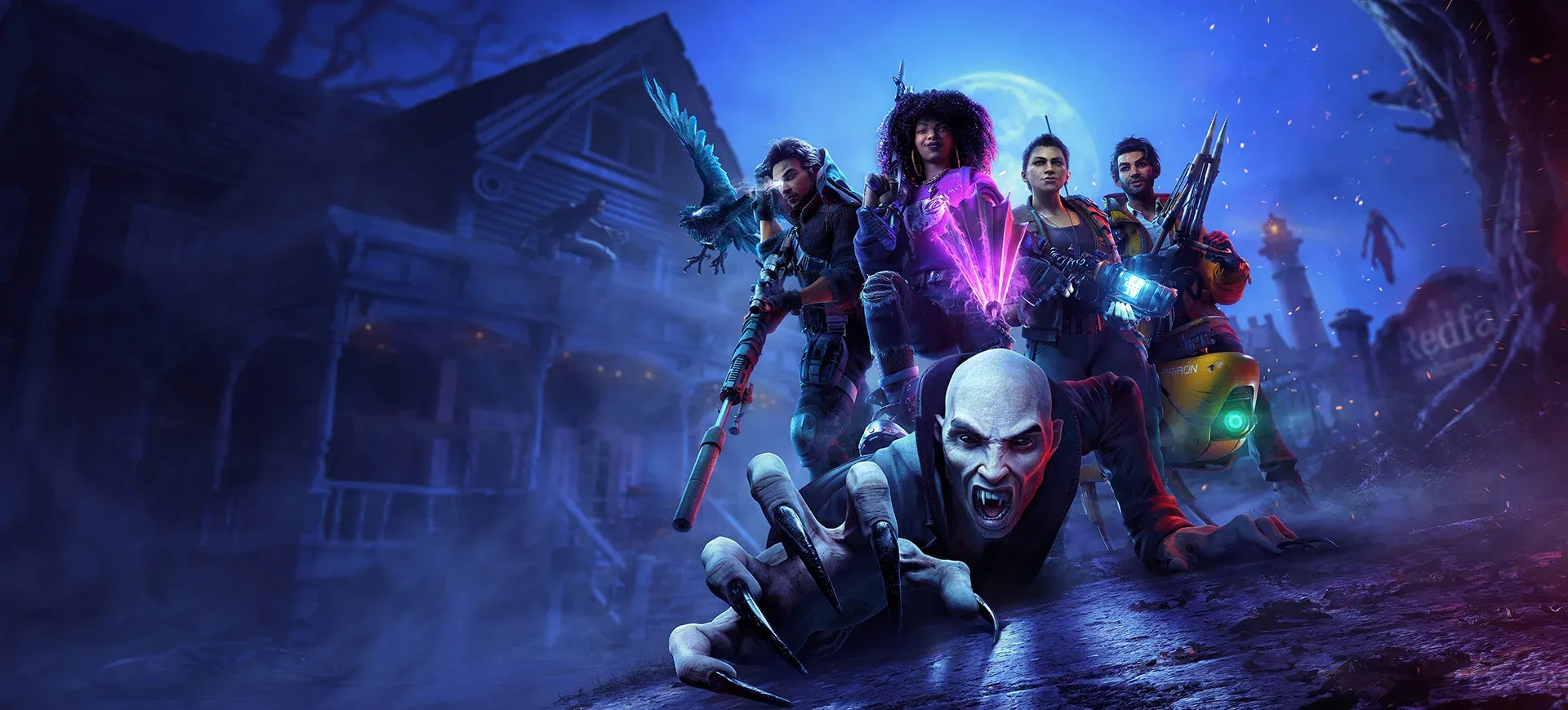


Arkane Austin is gone, but Redfall is still here, and it's worth checking in on what the studio left behind.
After the final 1.4 patch dropped before Microsoft shuttered Arkane Austin in 2024, Redfall remains disappointing. But for the first time, it's genuinely convincing that a better version of this game existed somewhere in development, and that the studio might have eventually reached it.

Use code TRYHARD33 at checkout to redeem this offer before code expires again.
Get 33% Off GAMES+ Subscription
What the 1.4 patch actually added
The headline addition in update 1.4 is the Community Standing system, a second progression track you build up by rescuing citizens, securing Safe Houses, and completing side missions tied to those locations. The rewards start modest (better safehouse defenses, extra ammo storage) and scale up to genuinely useful abilities, including a temporary cloaking power and the ability to revive after death.
Here's the thing: the system works, at least in isolation. It gives you a concrete reason to stop treating Redfall like a linear co-op shooter and actually engage with the town around you. Individual upgrades are purchased with in-game currency, and you can track down larger sums by following location clues tied to Sam's tour guide, with new hints unlocking as you secure each Safe House. It nudges exploration without forcing it.
The AI received fixes too, though the improvements are modest at best. Enemy behavior is slightly less embarrassing than it was at launch, but the core feel of shooting cultists and Bellweather mercenaries remains flat. Blasting vampires with stake launchers and UV cannons has always been the more satisfying part of Redfall's combat, and that hasn't changed.
The world Arkane built and couldn't quite use
What the patch does most effectively is slow you down enough to notice Redfall's actual strengths. The town itself is genuinely well-realized. Its coastal New England atmosphere, redbrick avenues, clapboard suburbs, and the cold, overcast light of an endless autumn, is specific and considered in a way that most open worlds aren't.
The class tension baked into the environment is particularly sharp. Gentrified high streets sit a short walk from the remnants of a working fishing industry. Dead Catch Records, an old fishing warehouse converted into a hip vinyl store, captures that contradiction better than any cutscene could. Redfall clearly wants you to read it as a place, not just a shooting gallery.
The problem is that the game's structure fights against the story it wants to tell. Redfall is nominally about restoring a community, essentially a reversal of Salem's Lot, but the conditions of a looter shooter make meaningful NPC relationships nearly impossible. Nobody is having a quiet, character-building conversation while three co-op partners bounce around in the background.
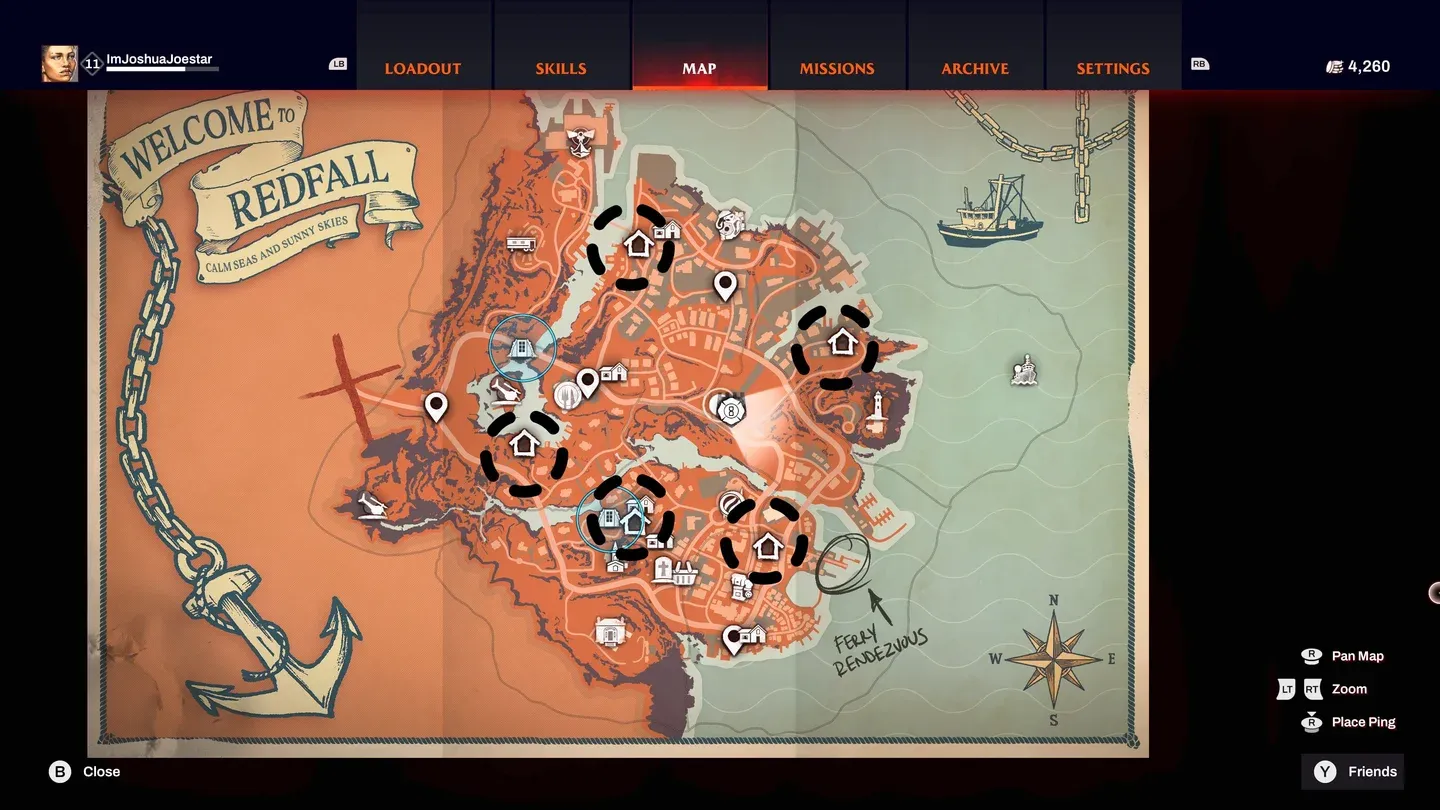
Safe House mission objectives
The character problem nobody fully solved
Creative director Harvey Smith stated at the time of 1.4's release that, had the patch shipped with the original game, Redfall might have succeeded. That's a significant statement, and it's hard to fully dismiss after spending time with the updated version.
But the patch couldn't fix one of Redfall's most fundamental design choices: three of the four playable characters are complete strangers to the town. Only Layla has any prior connection, and even her memories of the place were partially erased by the vampire takeover. The outsider framing exists for practical reasons (it makes exposition easier when characters learn things alongside the player), but it severs the emotional link between the people you're playing and the community you're supposedly saving.
If the characters had history with Redfall, recognized specific streets, knew the people whose diaries you're finding scattered across the environment, the storytelling could happen in the moment rather than through ambient notes arranged like a conspiracy board. The world has the texture. The characters just don't have the roots.
What most players miss about this postmortem
What most players miss when looking back at Redfall is that its failure wasn't purely technical. Yes, the launch build was unfinished, the AI was broken, and the shooting lacked punch. Those are real problems. But the more interesting failure is structural: a studio known for deeply authored single-player immersive sims was asked to build a live-service co-op looter shooter, and the DNA of both approaches kept pulling against each other.
The 1.4 patch leans into the immersive sim instincts. Community Standing, exploration incentives, world-reading through environmental detail. These are Arkane moves. They work better than the looter shooter scaffolding they're bolted onto. That tension, more than any individual bug, is probably why Redfall never cohered.
Redfall 1.4 is a better game than Redfall 1.0. It's still not a good one. But it's now possible to see the outline of a version that could have been, which is a strange and melancholy thing to say about a studio that no longer exists.
For more analysis of games that almost got there, browse the latest reviews or check out the guides section for titles worth your time right now.