

Slay the Spire has always been a game that wears its influences openly, but nobody expected Valve's hero shooter to show up on that list. Mega Crit co-creator Anthony Giovannetti has confirmed that he was deep in a Deadlock phase when the idea for Slay the Spire 2's most debated enemy took shape, and the admission has the community talking.
How a hero shooter ended up inside a roguelike deckbuilder
Giovannetti's comment was blunt and self-aware: "I was playing too much Deadlock." That single line explains a lot about the design DNA of the Doormaker, the boss that split the Slay the Spire 2 player base hard enough that Mega Crit eventually pulled it from the game entirely before reworking and reintroducing it. The Doormaker's mechanics leaned into a kind of aggressive, pressure-based tempo that felt alien to the careful, turn-by-turn rhythm most players associate with the series.
Here's the thing: Deadlock is built around constant forward momentum. Every fight in that game punishes hesitation and rewards players who press advantages the moment they appear. Translating that philosophy into a card game boss means an enemy that doesn't let you breathe, set up your deck, or stall for the perfect hand. For players who love the methodical side of Slay the Spire 2, that design was genuinely frustrating. For others, it was the most exciting boss the game had seen.
The Doormaker's rocky road through early access
The timeline here matters. Mega Crit introduced the Doormaker, faced significant community pushback, removed it, reworked it, and brought it back with a visual overhaul. That loop happened entirely within the early access window, which is exactly what early access is supposed to enable. What most players miss in that story is how transparent Giovannetti and the team were throughout the process, publicly acknowledging the friction rather than quietly patching it away.
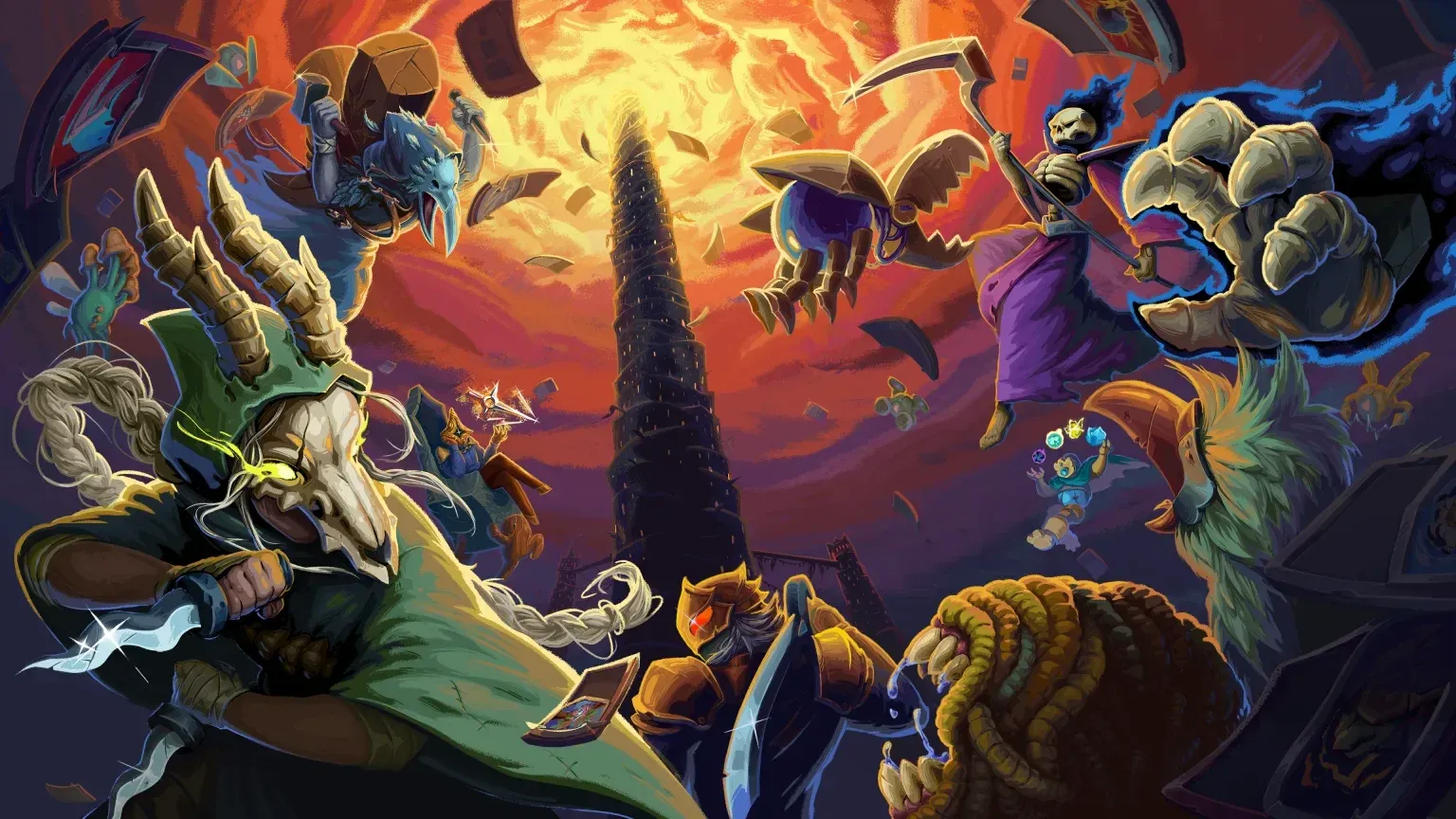
The Aeonglass, the boss that received a visual overhaul in the most recent beta branch patch (0.108.0), is part of that same ongoing refinement process. Mega Crit is clearly treating Slay the Spire 2's early access period as a genuine feedback loop rather than a soft launch.
15 new co-op cards land on the beta branch
Separate from the Doormaker story, patch 0.108.0 also dropped 15 new cards built specifically for co-op play. The additions cover every class, including three cards each for the Ironclad, Silent, Necrobinder, and Defect, two for the Regent, and one colorless card called The Ball that bounces between allies and grows stronger with each pass.
Some of these read very aggressively on paper. The Necrobinder's Cacophony deals 66 damage to a random enemy every 33 cards drawn collectively, which in a full three-player run could trigger constantly. Imitation Learning lets the Defect copy the next two or three powers played by a chosen ally. Midnight, a rare Ironclad attack, costs 12 energy but deals 99 damage and drops one cost for every card exhausted by anyone in the run.
The key here is that Mega Crit also softened enemy block scaling in two-player specifically, making fights slightly less punishing when you're running with just one partner. That tweak, paired with cards that actively reward coordination and communication, suggests the studio is pushing co-op toward a more combo-driven, expressive playstyle rather than the careful solo experience the original game built its reputation on.
Whether that design direction holds or gets pulled back in future patches remains an open question. Mega Crit has shown it's willing to reverse course fast when something isn't working, and some of these new additions are strong enough that nerfs feel likely before they ever leave the beta branch.
For players wanting to dig into the new co-op mechanics or brush up on class synergies before the patch hits the main branch, the Slay the Spire guides cover the core systems in detail. Broader gaming guides are also available if you're picking up other roguelikes inspired by the same design space Giovannetti has been quietly pulling from.