

Sony announced last week that large-scale production of physical discs for new PlayStation games will cease in January 2028. The news landed hard across the industry, sparking debate about game preservation, console strategy, and what the PlayStation 6 era actually looks like for players who still buy physical. But for the people running games stores on the high street, this wasn't a debate. It was a reckoning.

Use code TRYHARD33 at checkout to redeem this offer before code expires again.
Get 33% Off GAMES+ Subscription
The pre-owned engine was already sputtering
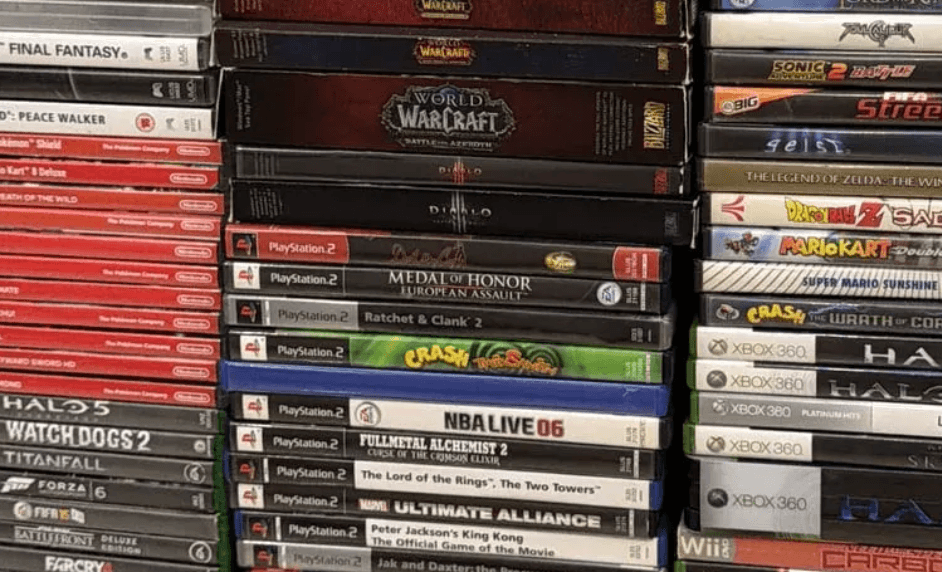
Here's the thing about physical game retail: it was never really about new releases. The margins on new games are notoriously thin for retailers. The real money has always lived in used games, trade-ins, and second-hand stock. That's the engine that kept specialist stores breathing.
Rhys Elliot from Alinea Analytics called Sony's announcement a "hammer blow for games retail" and described the pre-owned market as "one of the rusty engines keeping specialist retailers alive." He would know. Elliot worked in GAME in the UK between 2006 and 2013, where hitting used-game sales targets was a weekly reality from head office.
That engine, he says, has been sputtering for years. GAME has already stopped accepting trade-ins. CEX, once a staple of UK high streets, has dramatically scaled back. And now, with Sony pulling the physical plug entirely, the remaining justification for a specialist games store gets even harder to articulate.
The code-in-a-box situation makes this worse, not better. Products like the retail version of GTA 6, which ships as a cardboard sleeve containing a download code, strip away every reason physical ever had an advantage. No resale value. No lending. Reduced collectability. As Elliot puts it: "A code-in-box has none of the things that made physical worth choosing."
If you want to understand exactly what PS5 players are getting in that kind of digital-first future, the GTA 6 PS5 exclusive features guide breaks down what Sony's platform actually delivers when the disc is out of the picture entirely.
What the analysts are actually saying
Chris Dring at The Game Business acknowledged that PlayStation games "do sell well at physical retail," describing it as still worth millions of sales worldwide. The announcement surprised him. From a retail perspective, he calls it "clearly a blow."
Dring's more optimistic read is that the code-in-a-box model could evolve into something more meaningful: a system where retailers participate directly in digital game sales for PlayStation titles, not just the major releases. That would give stores a reason to exist in the digital era, though it would require Sony to actively build that infrastructure rather than simply let retail wither.
Piers Harding-Rolls from Ampere Analytics agrees the pre-owned market takes the biggest hit, but frames Sony's decision as potential pressure toward innovation. Retail chains have already shrunk massively compared to two decades ago and have diversified to survive. Ending physical media entirely might force publishers to keep selling through retail channels longer than they otherwise would, if those channels can reinvent around digital sales.
The key here is whether retailers actually have the runway to attempt that reinvention, or whether the announcement accelerates a collapse that was already underway.
Nintendo's shadow and what comes next
One detail worth noting: Nintendo still makes up a significant portion of the physical retail business alongside Sony. With Switch 2 cartridges keeping physical alive on that side of the market, some specialist retailers may find their survival increasingly tied to Nintendo's continued commitment to physical media rather than PlayStation's.
The PS5 platform still has a full library worth exploring in the meantime. Games like the survival horror title Hollowbody are the kind of releases that show what the platform delivers right now, and the Hollowbody before you buy guide is worth a look if you're weighing up your next PS5 purchase before the digital transition fully takes hold.
For brick-and-mortar stores, the next 18 months are probably the last window to figure out what the post-disc version of their business actually looks like. The code-in-a-box compromise satisfies almost nobody: publishers get limited retail presence, stores get near-zero margin on a product with no resale upside, and players get a physical-looking purchase that behaves entirely like a digital one.
The broader PlayStation platform picture, from DualSense features to PS5 Pro modes, is covered in the Starfield PS5 guide if you want a sense of what Sony's hardware ecosystem looks like as it pushes further into digital-only territory.
Retail's best-case scenario involves Sony and other publishers actively building digital sales infrastructure that routes through physical stores. The worst case is that January 2028 becomes the quiet date when the last meaningful reason to visit a games shop disappears from the calendar.