

"PlayStation has long been strongly associated with the idea of playing in the living room."
That's Sony admitting the problem. The solution, apparently, is not putting Ghost of Yotei or the next big PlayStation Studios exclusive on Steam. It's selling you a monitor.
This week, Sony published a translated Q&A featuring joint responses from three senior figures: president and CEO Hideaki Nishino, studio business CEO Hermen Hulst, and senior VP of finance and corporate development Lynn Azar. The document was released as part of Sony's investor-facing business segment materials, and buried inside it is a telling answer about how the company plans to court players who drifted toward PC gaming.

Use code TRYHARD33 at checkout to redeem this offer before code expires again.
Get 33% Off GAMES+ Subscription
The monitor pivot nobody asked for
The question put to Sony's leadership was direct: how does PlayStation attract gamers who moved to PC during the COVID period? The answer sidesteps the obvious response entirely.
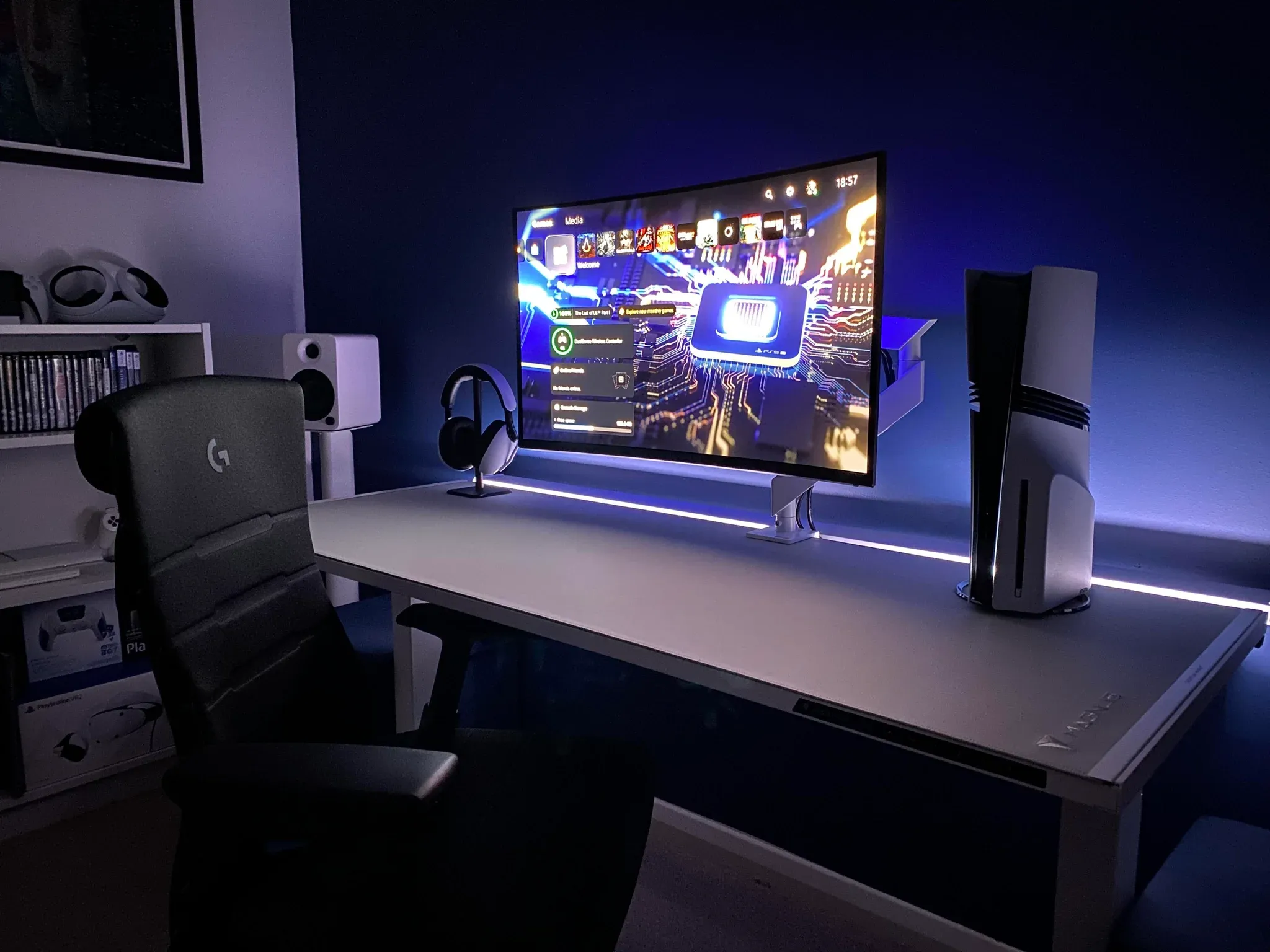
Rather than addressing the software side, Sony points to hardware. "In recent years, more users globally have been using personal monitors," the Q&A reads. "In response, we are selling peripherals such as monitors and speakers to break away from the fixed perception that 'PlayStation equals the living room' and to broaden usage scenarios."
Here's the thing: that framing treats a desk monitor as a meaningful bridge to PC gamers. Someone who switched to PC gaming over the last five years didn't do it because they wanted a different screen. They did it for the games, the flexibility, the upgrade path, and the sheer breadth of the library. A PlayStation-branded monitor doesn't address any of that.
What Sony actually said about PC gaming
The Q&A does engage with the PC question more directly in a separate section, though the language is carefully managed. "Creators may push to expand titles to other platforms such as PC to maximize reach, while our responsibility is to take a broader view and optimize total value for SIE, avoiding sub-optimization," Sony says.
Translated: first-party studios want their games on PC, but corporate leadership is pulling in the other direction. The company frames this as "constructive dialogue" based on "clear logic and rationale," though it doesn't spell out what that logic actually is.
Former PlayStation head Shawn Layden has publicly questioned this direction, arguing that PC ports of PlayStation games were not cannibalizing console hardware sales. That's a significant data point Sony hasn't addressed publicly.
The one carve-out Sony does make is for live service games. "In some areas, such as live service games, broader platform expansion can make sense," the Q&A notes. So Helldivers 2 gets Steam. Ghost of Yotei, presumably, does not. If you're optimizing your PS5 setup for the titles that are staying exclusive, the Ghost of Yotei PS5 settings guide is worth bookmarking.
The bigger picture Sony is building toward
Sony does gesture at a longer horizon. The Q&A acknowledges that "most of the value of our ecosystem is driven by third-party publishers" and mentions that "opportunities exist beyond console (e.g., mobile and PC)," with a note that the company aims to "proceed carefully" over the next five years.
Five years is a long runway. And the broader context makes the peripheral push feel less like a strategy and more like a holding pattern. PlayStation is simultaneously ending physical disc production for new games by January 2028, shutting down the PS3 and Vita digital storefronts (in some regions as soon as next month), and reportedly keeping its major single-player titles locked to PS5 hardware.
The company insists that "the value of our proprietary device lies in the experience, not the hardware itself" and that PlayStation offers "seamless, immediate access to content" compared to the "multiple layers before gameplay" on general-purpose devices. That's a reasonable argument for the console experience in theory. In practice, it also describes a platform that is actively narrowing where and how players can access its games.
For players keeping an eye on upcoming PlayStation-adjacent releases like Pragmata, the Pragmata game size and preload date details are already up if you want to plan ahead. And if you're already playing across both PS5 and PC, the Nova Roma best settings for PC and PS5 covers the cross-platform performance side of things.
The PS6 is reportedly at least two years out. Between now and then, Sony's answer to the PC gaming question appears to be: buy a monitor.