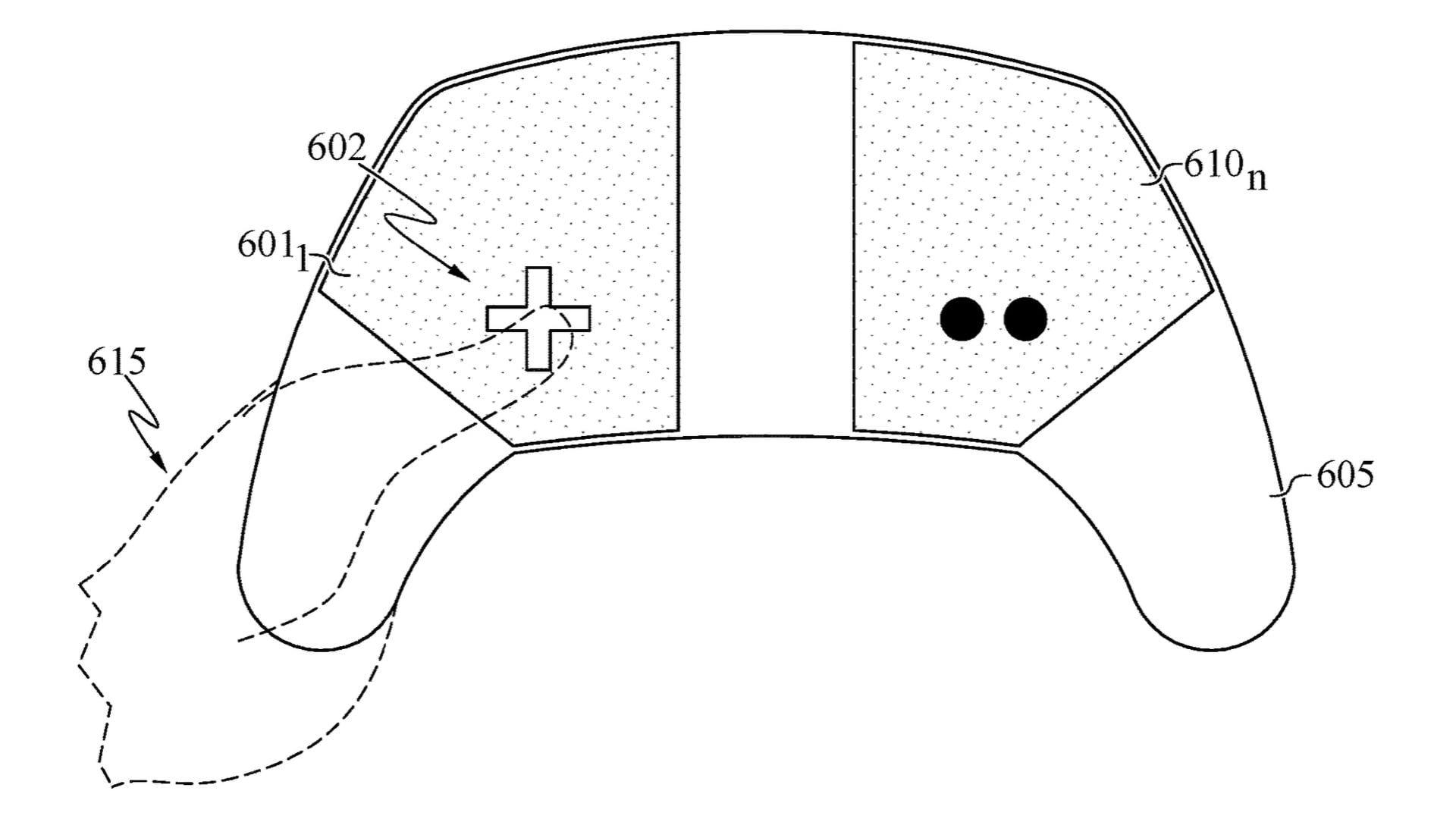

Sony received a US patent last week for a PlayStation controller built around a touchscreen interface. The design lets players reposition, resize, or remove buttons entirely. Filed in February 2023, the patent outlines a controller where D-Pads, analog sticks, and face buttons exist as virtual elements on a touch-sensitive surface rather than fixed physical components.

Use code TRYHARD33 at checkout to redeem this offer before code expires again.
Get 33% Off GAMES+ Subscription
How the touchscreen layout works
The patent describes a controller where most of the top surface is a touchscreen. Players could shrink or enlarge individual inputs depending on what a game requires. If you're playing something that only needs a jump button, you could make that button larger and hide everything else. If a game uses only directional input, you could expand the D-Pad or left stick and remove the rest. The layout adapts to the game or your preferences.
The flexibility extends to hand size and comfort. Traditional controllers use a single layout that works for most people but not everyone. This design lets you move inputs to positions that feel natural for your grip, which could reduce hand strain during long sessions.
Why Sony thinks fixed layouts are a problem
The patent documentation calls out specific issues with standard controller designs. Fixed button arrangements don't accommodate different hand sizes well. A layout that feels comfortable for one player might cause discomfort for another. Manufacturing a single design is cheaper, but it forces everyone to adapt to the same ergonomic compromises.
The patent states that fixed configurations can be "too small, or too large" for individual users and "may not be comfortable." By making the layout adjustable, Sony aims to solve this problem without producing multiple controller variants. Players configure the hardware themselves instead of choosing between a few preset options.
This approach could significantly improve accessibility. Players with limited hand mobility or other physical considerations could arrange controls in ways that standard controllers don't support. Customizable layouts make games more approachable for people who struggle with traditional input methods.
The accidental input problem
Touchscreen controllers have failed before. The Turbo Touch 360 from the 1990s replaced physical buttons with a touchpad, but players kept triggering inputs by accident when their thumbs rested on the surface. Any touchscreen controller has to solve this problem or it becomes unusable.
Sony's patent includes pressure and heat sensors to distinguish between a thumb resting on the screen and an intentional press. The idea is that the controller can tell when you're actively pushing versus just making contact. Whether that works in practice is another question. Sensitivity tuning will determine if this design avoids the mistakes of earlier touch-based controllers.
What this could mean for PlayStation hardware
Sony has pushed controller innovation before. The DualShock introduced rumble. The DualSense added adaptive triggers and haptic feedback. This patent suggests they're exploring another shift in how players interact with games. Whether it becomes a commercial product depends on factors the patent doesn't address, like cost, durability, and whether players actually want a touchscreen controller.
For web3 games, a dynamic controller interface could integrate with in-game systems in new ways. Imagine a controller that reconfigures itself based on which digital assets you're using or changes layout when you switch between game modes. The hardware could respond to on-chain data or player-owned items, creating a tighter connection between physical input and digital ownership models.
Potential advantages:
- Better accessibility: Players with different physical needs can tailor the layout.
- Genre-specific optimization: Fighting games, shooters, and platformers could each get ideal button arrangements.
- Reduced hand fatigue: Personalized ergonomics mean less strain over time.
- Future flexibility: New game mechanics wouldn't require new controller models.
Sony's track record with controller tech
PlayStation controllers have evolved steadily since the original DualShock. Each generation has added features aimed at deeper immersion or more precise input. The DualSense's haptic feedback and adaptive triggers changed how games communicate physical sensations to players. This patent continues that trajectory, focusing on personalization and adaptability rather than new sensory feedback.
The broader gaming industry is moving toward more inclusive and customizable hardware. This patent reflects that trend. Whether Sony manufactures this specific design or not, the patent shows where they see controller technology heading.
Make sure to check out our articles about top games to play in 2026:
Best Nintendo Switch Games for 2026
Best First-Person Shooters for 2026
Best PlayStation Indie Games for 2026
Best Multiplayer Games for 2026
Most Anticipated Games of 2026
Top Game Releases for January 2026
Frequently Asked Questions (FAQs)
What does the Sony touchscreen controller patent describe? A controller with a large touchscreen surface where players can move, resize, or hide virtual buttons, D-Pads, and analog sticks.
Is Sony releasing this controller soon? No confirmation exists. Patents represent ideas companies are exploring, not product announcements. Many patented concepts never reach consumers.
How would this improve accessibility? Players could reposition and resize controls to match their hand size and physical capabilities, making gaming more comfortable for people who struggle with standard controller layouts.