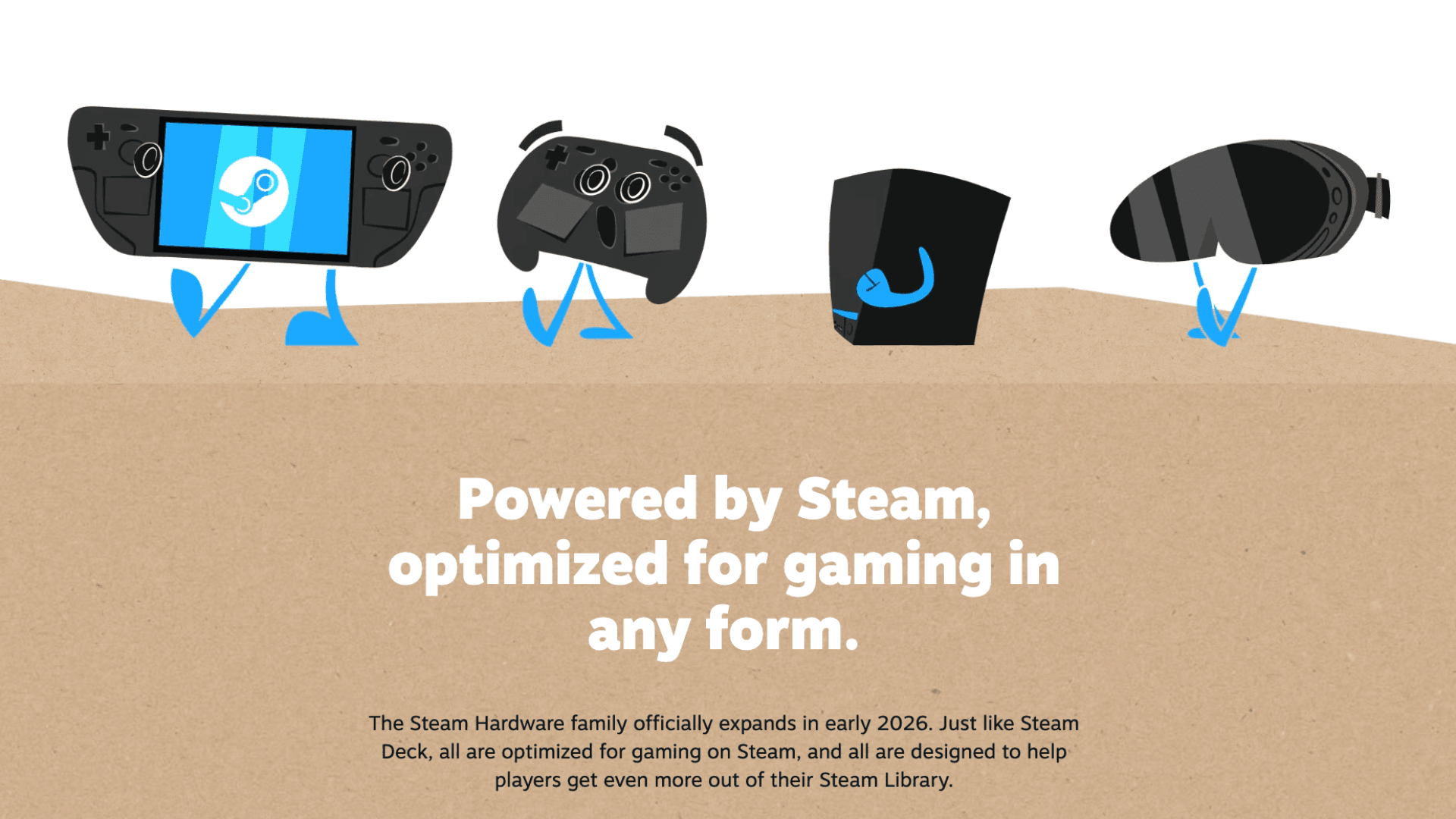


Valve has announced a new lineup of hardware this week, including an updated Steam controller, the Steam Frame VR headset, and a second-generation Steam Machine. The new Steam Machine, first launched in 2013, is scheduled for release in early 2026, though pricing details have not been confirmed. The company's latest announcements reflect an ongoing push to deliver console-like PC gaming experiences through SteamOS.
The Steam controller has been redesigned with refined input options and ergonomics, while the Steam Frame is a compact VR headset that functions as a standalone PC and also supports WiFi streaming from other devices. Valve acknowledges that VR adoption has been slower than initially anticipated, positioning the Steam Frame as a device suitable for both VR and traditional gaming.

Use code TRYHARD33 at checkout to redeem this offer before code expires again.
Get 33% Off GAMES+ Subscription
The Potential of Steam Machine 2.0
The second-generation Steam Machine may prove to be the most impactful of Valve's recent hardware releases. The original Steam Machines struggled due to incomplete Linux support, but the new model arrives after years of software development. Proton, the open-source compatibility layer that allows Windows games to run on Linux, now supports the majority of Steam's catalog, significantly expanding the device's appeal.
Steam Deck has also laid the groundwork for a console-style Steam experience. By pushing developers to implement consistent controller support and ensuring compatibility across a broad range of titles, the Steam Deck has created an environment where a PC-based console like the Steam Machine can thrive. This approach lets Valve offer a device that brings a familiar Steam library experience to the TV without forcing players to repurchase games.
Hardware Considerations and Market Strategy
Designing a Steam Machine-style PC is less complex than engineering a handheld device like the Steam Deck, which demands more innovation and resources. SteamOS remains freely available to hardware partners, making it straightforward for manufacturers to build and support Steam Machine devices. Valve's strategy diverges from traditional console marketing — the company leans on its existing Steam user base rather than investing in paid advertising or broad retail distribution.
This positions the Steam Machine as an optional expansion for PC gamers rather than a mandatory console. Valve has reported between 170 and 200 million monthly active users on Steam, and the Steam Deck has contributed an estimated 5 to 7 million units to the ecosystem. The company projects that the Steam Machine could add an additional 7 to 10 million units over the next five years.
Remaining Challenges
Despite progress, some limitations persist with the new Steam Machine. Kernel-level anti-cheat systems are not yet compatible with SteamOS, preventing certain multiplayer titles, such as Battlefield 6, from running on the platform. Valve has expressed hope that the Steam Machine's launch will encourage wider anti-cheat support among developers.
Valve's hardware strategy remains centered on gradual ecosystem expansion rather than direct competition with consoles like the PlayStation 5 or Xbox Series X. While those consoles target mass-market appeal and high sales volumes, Valve appears content to steadily build a Windows-independent Steam environment for players who want a PC-based console experience.
Conclusion
Valve's second-generation Steam Machine represents a continuation of the company's long-term vision to create a flexible, console-style gaming experience on SteamOS. Combined with the refreshed Steam controller and Steam Frame VR device, the new hardware lineup underscores Valve's focus on steady growth and ecosystem integration rather than a high-stakes hardware gamble. For Steam users, the new Steam Machine offers another way to access their game libraries on a TV, backed by years of advancements in software compatibility and controller support.
Frequently Asked Questions (FAQs)
When will the new Steam Machine be released?
The second-generation Steam Machine is scheduled for release in early 2026. Pricing has not yet been announced.
Will all Steam games work on Steam Machine 2.0?
Most Steam games should be compatible thanks to Proton, which enables Windows games to run on SteamOS. However, some multiplayer titles that rely on kernel-level anti-cheat may not be supported initially.
How does Steam Machine 2.0 differ from the Steam Deck?
The Steam Machine is a console-style PC built for use with a TV, while the Steam Deck is a handheld device. The Steam Machine benefits from simpler hardware design and full SteamOS compatibility across larger screen setups.
Does Valve plan to sell Steam Machines in retail stores?
Valve's strategy emphasizes online sales and ecosystem growth rather than wide retail distribution. There may be limited retail availability through select partners, but mass retail placement is not a priority.
Can the Steam Frame be used for non-VR gaming?
Yes. The Steam Frame supports both VR and traditional PC gaming, either as a standalone device or through WiFi streaming from another PC.