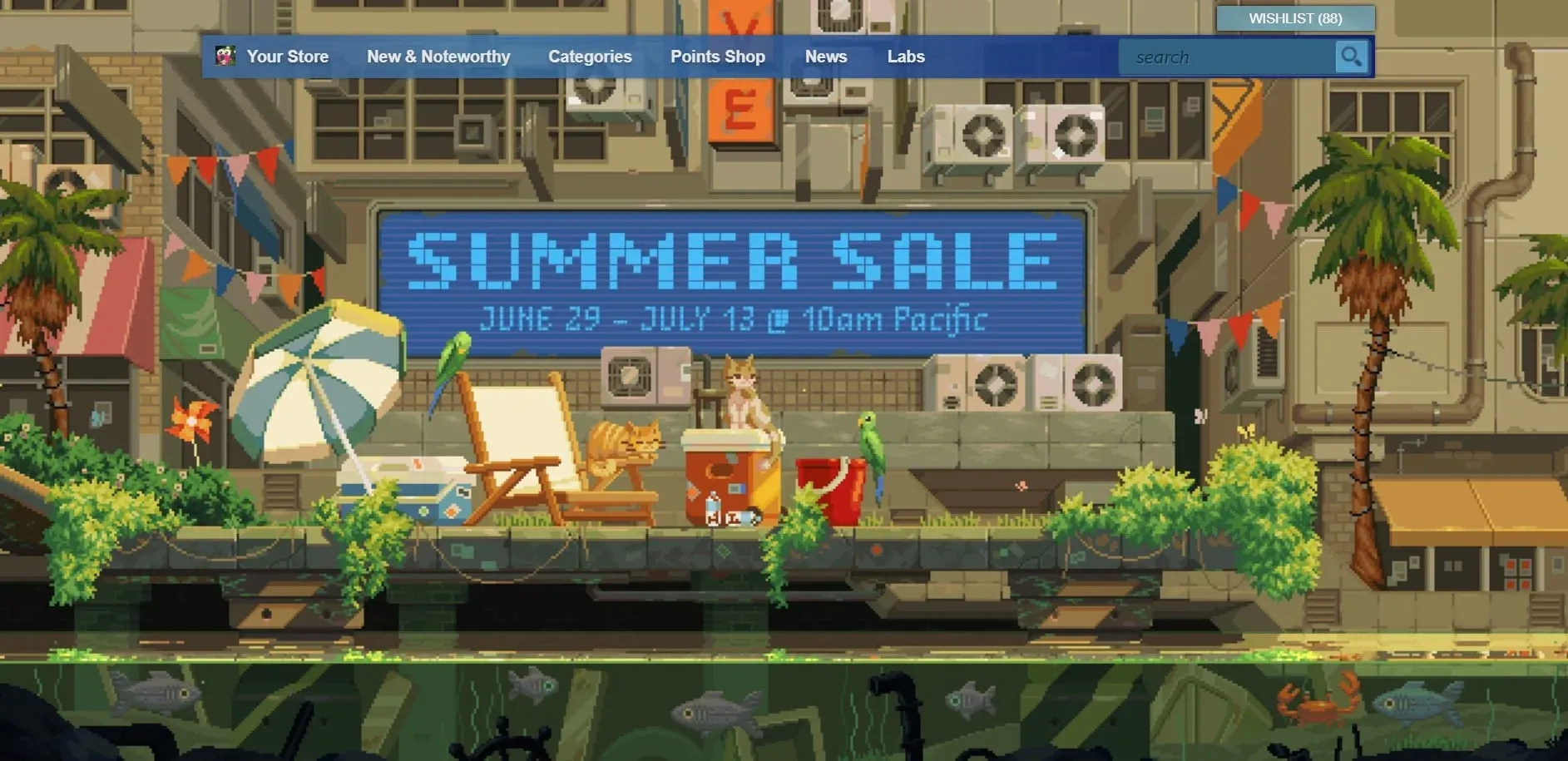


A quarter of PC gamers have made a firm decision: full price is someone else's problem.
A poll tracking Steam spending habits across the PC gaming community has surfaced a pretty telling split. Exactly 25% of respondents say they never pay full price for a game, period. The Steam wishlist has effectively become a price-drop notification system for them, a holding pen where games sit until a sale brings them within acceptable range.
Use code TRYHARD33 at checkout to redeem this offer before code expires again.
Get 33% Off GAMES+ Subscription
The full breakdown: how PC gamers actually spend
Here's the thing: that 25% isn't even the biggest group. The majority of respondents, 51%, still buy games at full price but only when they're genuinely hyped about a release. Think day-one purchases for the titles that dominate conversation the moment they drop. Clair Obscur: Expedition 33 and Forza Horizon 6 both landed in that category for a lot of players this year, with plenty of people dropping $60 or $70 without hesitation.
The remaining respondents break down like this:
- 18% will pay full price for cheaper indie games but hold out on big $70 releases until a sale
- 4% buy most games at full price regardless of cost
- 3% go even further and pre-order, chasing day-one preloads and minute-one access
That 3% pre-order crowd is a dying breed, but they exist. Respect the commitment, even if the strategy rarely pays off.
What this says about how PC gaming has changed
The pre-order era, where locking in a purchase months early felt like the natural thing to do, has quietly faded for most players. The shift isn't just about being frugal. It reflects a broader change in how PC gamers think about value.
Game prices hitting $70 as a new baseline has accelerated this. When a single title costs as much as a month of several subscription services combined, the calculus changes fast. Waiting six months for a 40% or 50% discount on a game that has also been patched, reviewed by real players, and potentially expanded with post-launch content starts to look less like patience and more like good sense.
The 18% who draw the line at indie pricing are making a similar call. A $15 or $20 game from a small team feels different to a $70 release from a publisher with a marketing budget larger than some studios' entire development costs. The price point shifts the psychology.
The 51% holding the industry together
For all the talk of patient gaming, the majority still buy games at launch when the pull is strong enough. That 51% is essentially the group keeping day-one sales figures alive on Steam. Publishers track those numbers closely, and a strong opening weekend still shapes how a game is perceived, how quickly it gets patched, and whether a sequel gets greenlit.
What most players miss is that their own purchasing timing has real downstream effects. A game that launches to modest sales but builds a following over time through sales and word of mouth tells a very different story to publishers than one that front-loads its revenue. Both can be successful, but they lead to different decisions about sequels, DLC, and development priorities.
The patient gaming approach works best for single-player games where missing the cultural moment doesn't cost you much. For multiplayer titles, waiting can mean joining a smaller or more established playerbase, which changes the experience entirely.
The backlog problem nobody wants to admit
The unspoken reality for that 25% is the backlog. Buying games during every Steam sale is a reliable way to accumulate dozens of titles that may never get played. The discount that felt irresistible in December can still be sitting untouched the following summer.
That's a different conversation, but it's worth keeping in mind when planning the next seasonal haul. Check out our game reviews before committing, even at sale prices, because a cheap game you never finish is still a worse deal than a full-price game you actually play through.
For players who want to make smarter calls about what's actually worth the wait versus what deserves day-one attention, our gaming guides can help sort the must-plays from the eventual-plays. The Summer Sale window is coming up fast, and that wishlist isn't going to clear itself.