

Ray tracing fans have been waiting for this one. Nvidia has officially announced that a DLSS 4.5 update is coming to Ray Reconstruction, the AI-powered denoising feature that sits at the heart of the company's path-tracing pipeline. The promise: noticeably better ray-traced and path-traced image quality without asking your GPU to work any harder than it does today.

Use code TRYHARD33 at checkout to redeem this offer before code expires again.
Get 33% Off GAMES+ Subscription
What Ray Reconstruction actually does (and why the upgrade matters)
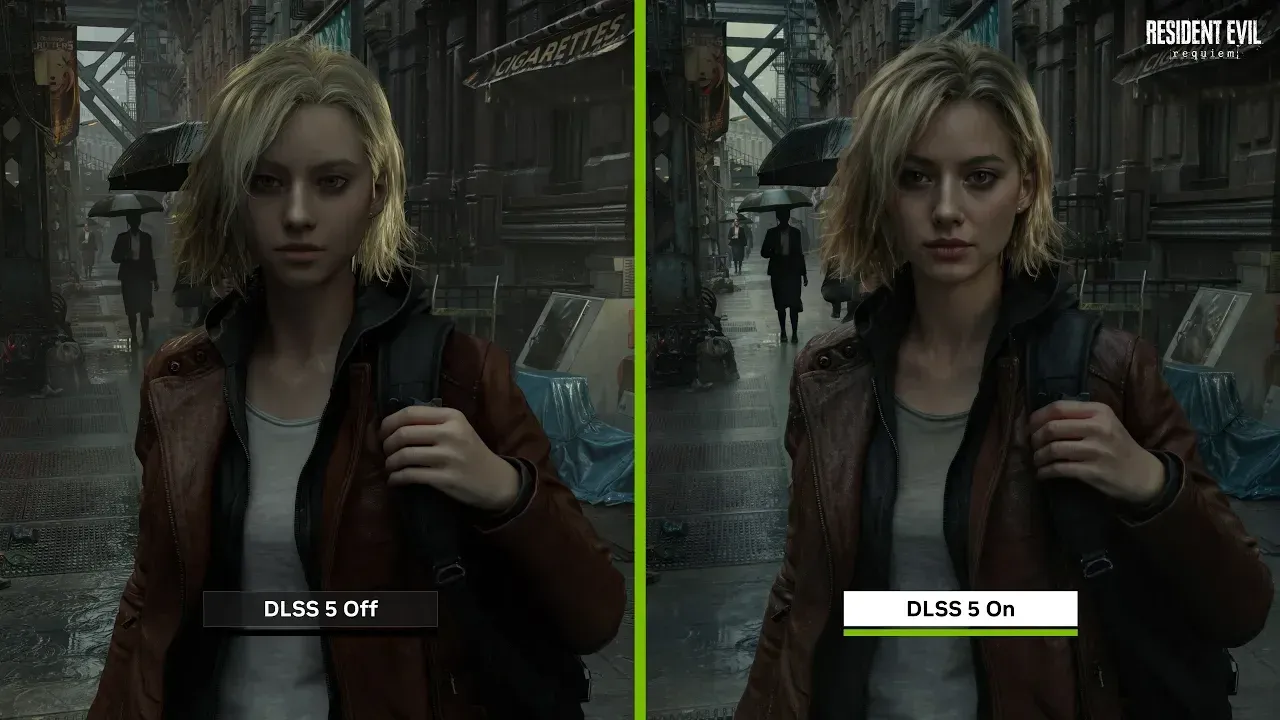
Ray Reconstruction replaced the traditional denoisers that games use to clean up the noisy output of ray-traced and path-traced rendering. Standard denoisers are hand-tuned, game-by-game algorithms. Ray Reconstruction swaps those out for a neural network trained specifically on ray-traced content, which means it can reconstruct lighting, shadows, and reflections with more accuracy and fewer of the blurring artifacts that older denoisers tend to smear across the image.
Here's the thing: even the existing version of Ray Reconstruction was already a meaningful step up over traditional denoisers in path-traced titles like Cyberpunk 2077 and Alan Wake 2. The DLSS 4.5 version is supposed to push that further, with Nvidia claiming improved quality across both ray-traced and full path-traced workloads while keeping performance impact in line with the current model.
That "similar performance" framing is the part worth paying attention to. Previous DLSS generational jumps have sometimes come with a small but measurable overhead. If the 4.5 update genuinely delivers better visuals without a performance regression, that's a straight upgrade for anyone already running Ray Reconstruction in supported titles.
The Computex timing and what Nvidia showed off
The announcement landed during Computex 2026, where Nvidia used Capcom's upcoming title Pragmata as a visual demonstration of what DLSS 4.5 Ray Reconstruction can do. Path-traced games are the clearest showcase for this kind of technology because every light bounce, every shadow, and every reflection is computed in real time. The more accurately a denoiser can reconstruct that output, the more convincing the final image looks.
What most players miss when these announcements drop is that the improvement isn't just about making screenshots look sharper. Better denoising means more stable images in motion, fewer flickering reflections, and lighting that holds together when the camera moves quickly. Those are the artifacts that actually pull you out of immersion during gameplay, and they're precisely what Ray Reconstruction targets.
Which games will benefit
Ray Reconstruction support has been growing steadily since its introduction. Games that already support the feature will receive the DLSS 4.5 version through driver and SDK updates, though the rollout timeline for individual titles depends on developer implementation. The key here is that Nvidia controls the underlying model, so the quality improvement flows through to supported games without players needing to do anything beyond keeping their drivers current.
Path-traced titles stand to gain the most. Ray-traced games that use Ray Reconstruction for specific effects like reflections or shadows should also see improvements, but the delta will be most visible in games where the entire lighting pipeline runs through path tracing.
For a broader look at how these GPU technologies translate into real-world gaming performance, our game reviews regularly test ray-traced titles across different hardware configurations.
What to watch for when it rolls out
No hard release date has been attached to the DLSS 4.5 Ray Reconstruction update beyond the Computex announcement window. Nvidia has a pattern of shipping major DLSS updates alongside driver releases tied to high-profile game launches, so Pragmata being used as the demo title is probably not a coincidence.
Pro tip: when the update does land, the easiest way to see the difference yourself is to toggle Ray Reconstruction on and off in a path-traced title while standing in a scene with lots of dynamic lighting. Reflections on wet surfaces and indirect lighting in interior spaces tend to show the most obvious quality gap between the old and new models.
For players who want to stay across every hardware and software update that affects how their games look and run, our gaming guides section covers GPU features, settings optimization, and more as new updates ship.