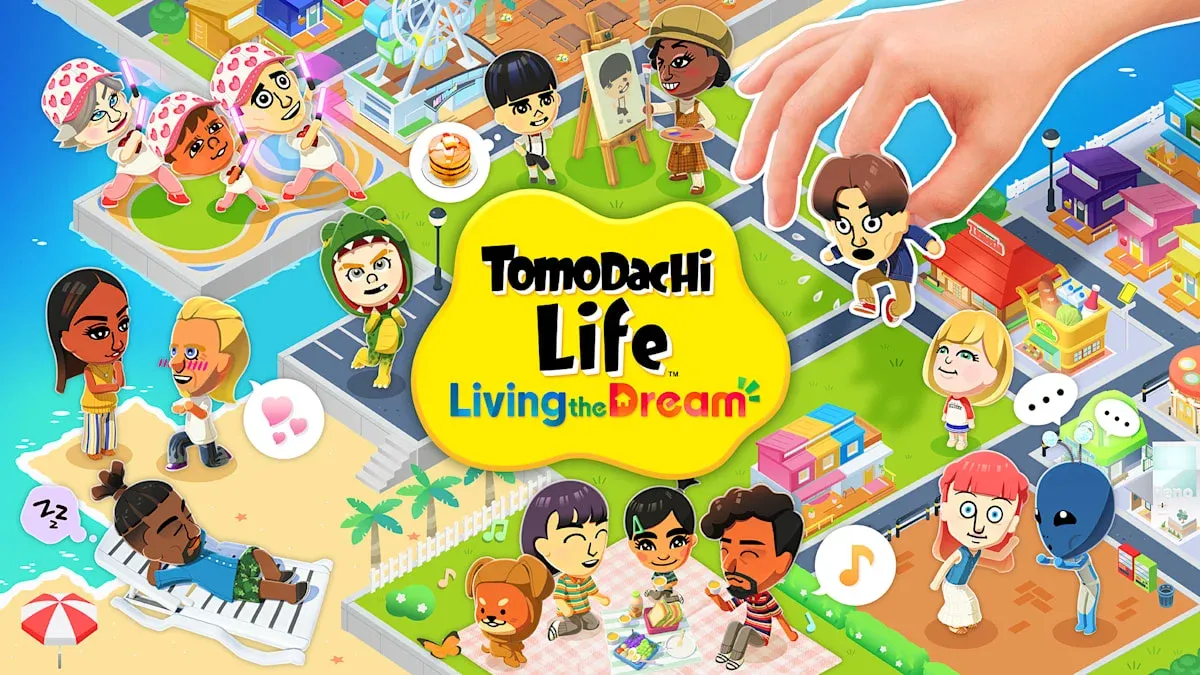


Nintendo's latest financial report includes a number worth paying attention to: Tomodachi Life: Living the Dream has sold over 3.8 million units globally in its first two weeks on sale. That figure appears in Nintendo's official financial data published May 8, 2026, covering sales through the end of March 2026. The game launched April 16, so that window captures barely two full weeks.
What the numbers actually mean
Nintendo's financial report cut off before it could fully capture the launch window, so 3.8 million is almost certainly a conservative floor rather than a ceiling. The company noted the timing limitation directly in the report while still calling out the result as a strong start.
For context, the original Tomodachi Life on 3DS finished its commercial run at 6.73 million units, making it the 10th best-selling game on that platform. It outsold both The Legend of Zelda: A Link Between Worlds and the Ocarina of Time and Majora's Mask 3DS remakes. Hitting nearly 4 million in the first two weeks puts Living the Dream on a trajectory that could realistically clear that predecessor total within months, especially given the Switch's install base dwarfs the 3DS's.
Chart performance backs the momentum
The sales data doesn't exist in isolation. Living the Dream has been holding strong at the top of both the UK and Japanese sales charts since launch. In the UK, it recently reclaimed the number one position, beating out Saros. In Japan, the game has been similarly untouchable. Consistent chart performance across two major markets suggests this isn't a spike that burned out fast.
The game is also a Switch 1 title, which matters. Running on the older hardware rather than being a Switch 2 exclusive means it has access to a dramatically larger potential audience. That accessibility almost certainly contributed to the velocity of early sales.
The community reaction: love it, want more of it
Players who have been vocal since launch largely fall into two camps: genuinely charmed by the weirdness of Mii life simulation, and hungry for more content. The Mii character creator has drawn particular praise as the most fully realized part of the package, while some players have flagged repetitive dialogue and a sense that the game could use additional depth over time.
Several players have pointed to seasonal visual elements already in the game, specifically autumn trees and foliage, as possible hints that content updates are planned. Nintendo hasn't said anything official, but the fan appetite is clearly there. Spending patterns suggest this is the kind of casual game with long-tail potential if Nintendo supports it post-launch.
What most players miss early on is how much of the experience is player-driven. Customizing your island lingo, designing buildings, and stacking your roster with recognizable Miis generates moments the base game alone doesn't hand you. The more you put in, the more you get back.
Pro tip: if you're just getting started, our guide on how to get Warm Fuzzies in Tomodachi Life: Living the Dream is a good first stop for understanding the happiness economy that drives most of your island's activity.
A series that refused to stay dormant
The original Tomodachi Life launched in Japan in 2013 and reached Western markets in 2014. The gap between that game and Living the Dream is over a decade. Nintendo went quiet on the series for a long time, and there was a real question of whether it would ever return. The answer, apparently, is 3.8 million units and counting.
Nintendo didn't need a massive marketing push to get here. Word of mouth did a lot of the heavy lifting, which says something about how much genuine affection exists for this particular flavor of life simulation. The Mii format gives it a personal hook that more generic life-sim games can't replicate.
For players still figuring out the systems, our full Tomodachi Life: Living the Dream guide collection covers everything from relationships to time travel mechanics, and it's worth bookmarking as Nintendo's next financial report will likely confirm whether Living the Dream has already cleared its predecessor's lifetime total.