

Ever wonder what actually goes into a Hall effect keyboard switch before it lands under your fingertips? Wooting CEO Calder Limmen just answered that question in the most satisfying way possible: a full factory walkthrough video that follows the Lekker Tikken switch from raw plastic pellets to finished product.
The video, published this week, is the kind of content that scratches a very specific itch. Think How It's Made, but for keyboard nerds who want to know exactly why their switches feel the way they do.

Use code TRYHARD33 at checkout to redeem this offer before code expires again.
Get 33% Off GAMES+ Subscription
Where it all starts: plastic injection
The process kicks off with plastic injection moulding, used to create three core components: the top case, bottom case, and stem. Plastic pellets feed into a machine that injects molten material into a shaped mould, producing each part with tight dimensional tolerances.
Here's the thing: Wooting deliberately avoids using recycled plastic in this process. Limmen explains that recycled material introduces inconsistency in the mechanical properties of each switch, leading to more wobble and less predictable feel. Fresh material only, every time.
The assembly line and where the magnet comes in
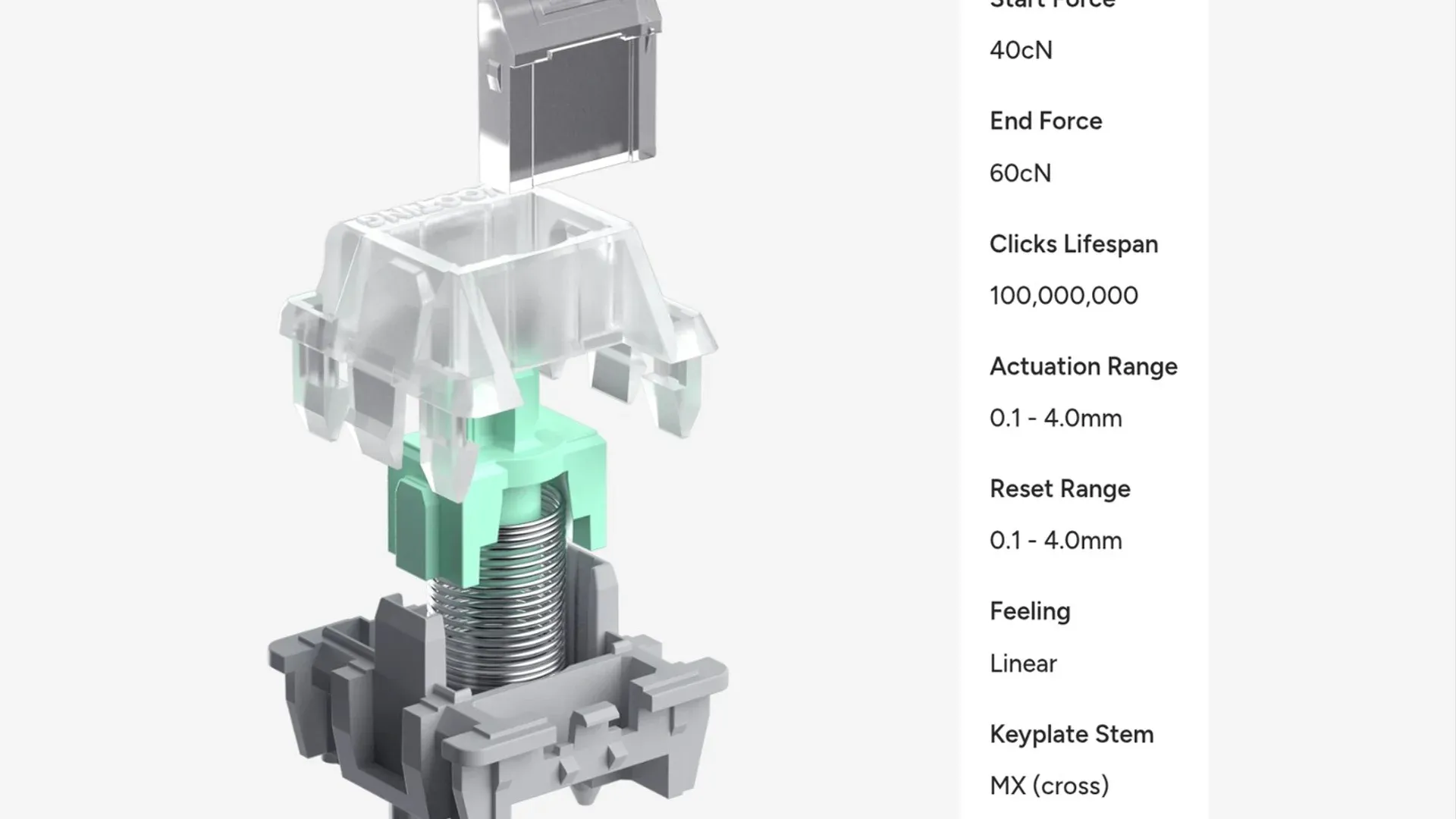
Once the plastic components exist, a series of tumblers and mechanical arms piece the switch together, starting with the top case. The stem drops in next, and this is the stage where lubricant gets applied to both the stem and the top case interior, handling both smooth assembly and long-term feel in one step.
Then comes the part that makes a Hall effect switch actually work: a small magnet gets pressed into the stem. That single component is the entire basis of the Hall effect (or TMR) sensing system. The sensor itself lives on the keyboard PCB, reading the magnetic field to determine how far the switch has traveled. No physical contact required, which is a big part of why these switches last so much longer than traditional mechanical designs.
After the magnet, a 22 mm spring goes into the stem, the bottom case gets attached (with another application of lube), and the LED diffuser is added at a separate stage.
Testing: where bad switches meet the bad bucket
Every completed switch goes through two checks before it ships. First is gram force testing, confirming the switch actuates at the correct 54 cN. Second is gauss value testing, which measures the strength of the magnetic field produced by the magnet inside the stem.
That second test matters more than it might seem. Magnets are notoriously difficult to manufacture with tight consistency at scale, and a magnet that reads outside spec will throw off the analog input accuracy that makes Wooting keyboards worth buying in the first place. Switches that pass both checks move to final packaging, either as standalone switches or bundled with a Wooting 60HE. Switches that fail go straight into the reject bin.
What this means for gamers who care about their hardware
Wooting has built its reputation on analog input precision, and this video makes clear that the quality control behind that reputation is genuinely rigorous. The decision to avoid recycled plastics, the dual-stage lubrication, the per-switch magnet testing: none of these are things you would know about just from using the keyboard, but they all feed directly into the consistency that competitive players rely on.
The Lekker Tikken is the switch inside the Wooting 80HE, currently sitting at the top of PC Gamer's best gaming keyboard list, and the Wooting 60HE v2, which holds the best 60% spot on the same list. Knowing what goes into making each individual switch adds real context to why those boards carry the price tags they do.
For anyone who wants to go deeper on Hall effect keyboards and what separates them from standard mechanical options, browse the latest gaming hardware guides for more context on the tech driving competitive peripherals right now.