
The Nvidia RTX 5050 is a card that lands in an awkward spot: it's the best option at its price point, but that doesn't make it a good deal. That contradiction defines the entire product.
What the GB207 chip actually is
The RTX 5050 runs on the GB207-300 die, which is 24% smaller than the AD107 chip inside the RTX 4060, carries 20% fewer transistors (15.1 billion vs. 18.9 billion), and has 17% fewer CUDA cores (2,560 vs. 3,072). Nvidia compensates with higher boost clocks (2,572 MHz vs. 2,460 MHz), a larger L2 cache (32 MB vs. 24 MB), and more memory bandwidth (320 GB/s vs. 272 GB/s). The TDP ticks up slightly to 130W from 115W.
The result is a GPU designed to be cheaper to manufacture while matching the previous generation's bottom rung. That's the plan, anyway.
How it actually performs against the competition
At 1080p, the RTX 5050 trades punches with the RTX 4060 in most games. Black Myth Wukong at 1080p High sees both cards hit 50 avg fps. Total War: Warhammer 3 gives the RTX 5050 a slight edge at 54 fps vs. the 4060's 50 fps. F1 24 flips that around: the RTX 4060 pushes 63 fps while the 5050 manages 54 fps.
The Intel Arc B580 complicates things. With 12 GB of VRAM and a $290 price tag, it can deliver significantly higher frame rates in some titles, then collapse in others. Homeworld 3 at 1080p sees the B580 hit only 63 avg fps while the RTX 5050 reaches 96. That inconsistency makes the Arc card hard to recommend for general use.
At 1440p, the RTX 5050 starts to fall behind the RTX 4060 more noticeably. Metro Exodus at 1440p Ultra shows the 4060 pulling 50 fps to the 5050's 46 fps, and in Cyberpunk 2077 at 1440p RT Ultra the 4060 leads 19 fps to 17 fps. Small gaps, but they matter.
| GPU | MSRP | 1080p Black Myth avg fps | 1440p Metro avg fps | TDP |
|---|---|---|---|---|
| RTX 5050 | $249 | 50 | 46 | 130W |
| RTX 4060 | $299 | 50 | 50 | 115W |
| RTX 5060 | $299 | 64 | 63 | 145W |
| RX 9060 XT | $360 | 71 | 68 | 175W |
| Arc B580 | $290 | 43 | 63 | 218W |
What most players overlook is that the RTX 5060 sits at the same $299 MSRP as the old RTX 4060 and delivers a meaningful performance jump over the 5050, with 3,840 shaders vs. 2,560. If you can stretch to $299, the 5060 makes the 5050 look hard to justify.
DLSS 4 and the upscaling safety net
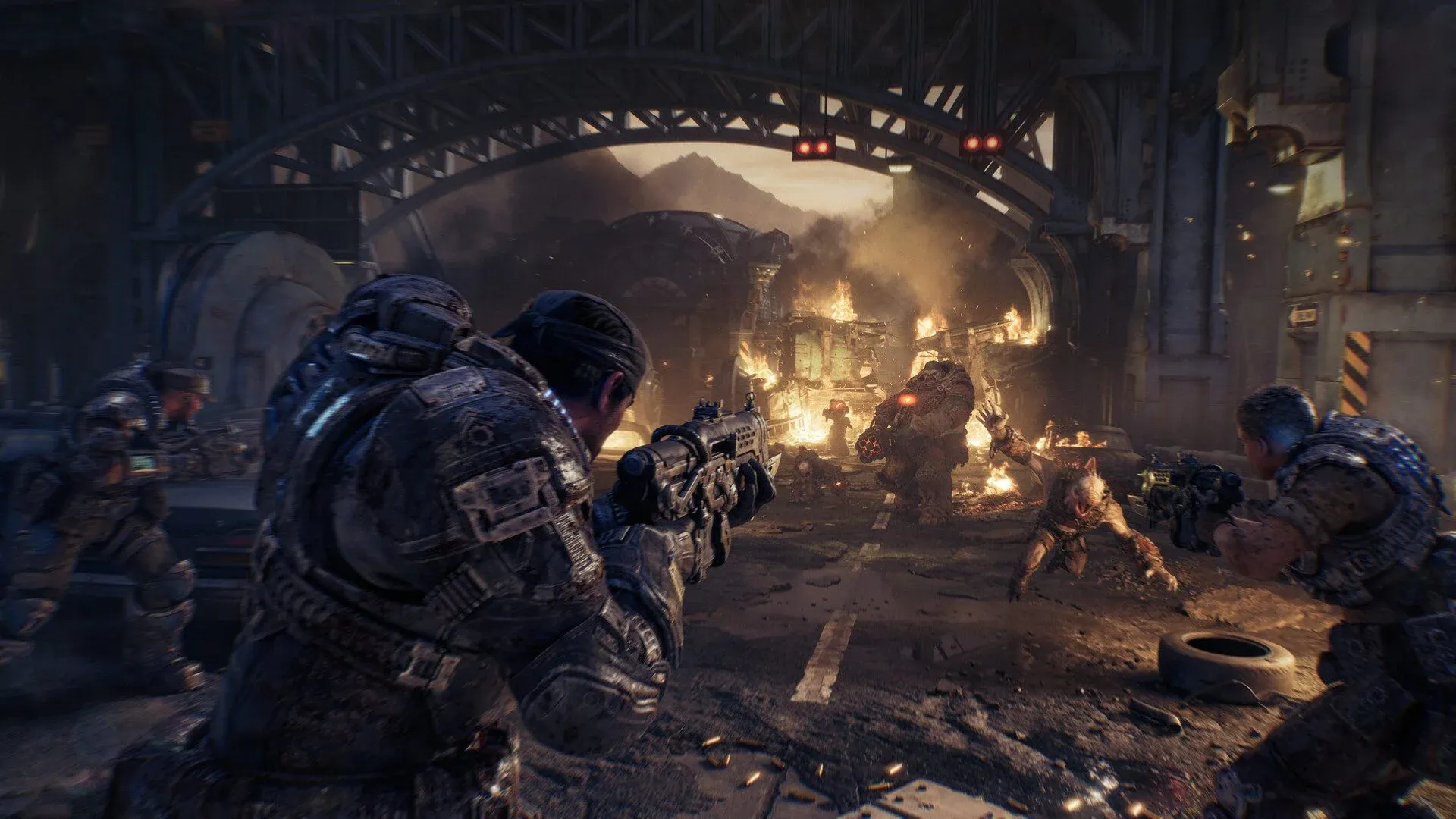
The RTX 5050 does bring DLSS 4 with Multi Frame Generation support, recently expanded to 6x modes. With upscaling enabled at Quality preset, the card can hit around 60 fps in Cyberpunk 2077 at 1440p, jumping from a native 17 fps to 61 fps with DLSS quality upscaling plus frame gen. For single-player games where input latency matters less, that's a workable situation.
For fast-paced competitive titles, you'll want to be more careful. Frame generation adds latency, and at the baseline frame rates this card produces, that trade-off becomes more noticeable.
Thermals and noise: the one genuine win
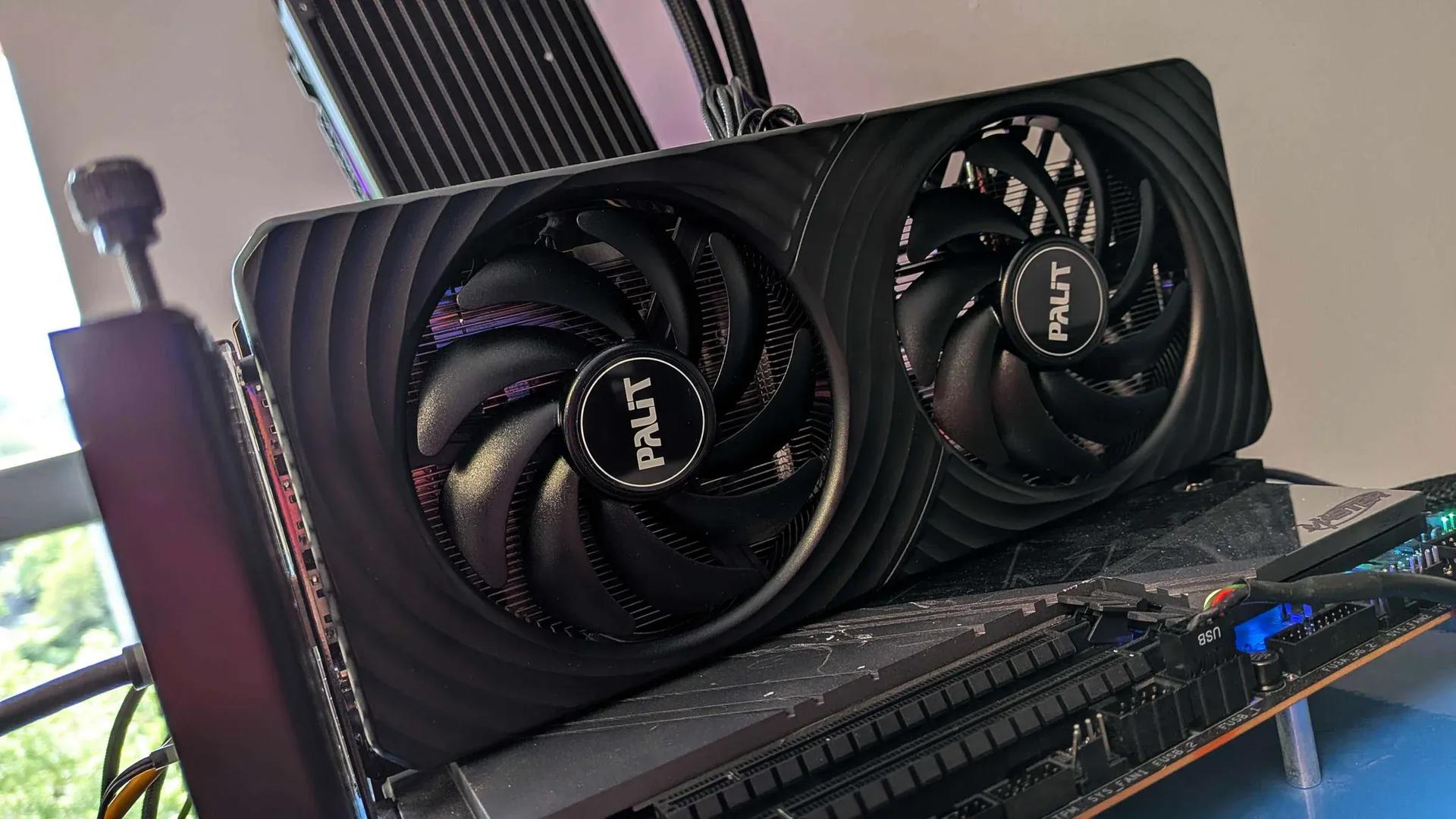
The Palit Dual cooler is basic. The backplate is plastic with a faux-brushed-metal finish. The dual-fan setup is nothing special to look at. But it works. The RTX 5050 peaks at just 68°C under sustained load, lower than the RTX 4060's 75°C peak in the same test conditions. Average power draw sits at 128W, the lowest of any current-gen GPU in the comparison group.
More practically, the card is quiet. Running on an open test bench, the fans stay consistent and unobtrusive even through extended Metro Exodus sessions. No coil whine either, which has plagued some other RTX Blackwell cards.
The value question in a market that's moved on
At launch, the RTX 5050 carried a $249 MSRP. The idea was to slot in below the RTX 4060's $299 launch price and deliver comparable performance at a lower cost. That made some sense on paper. In practice, the RTX 4060 had already dropped to around the same price before Blackwell launched, so the value gap never really existed.
Now, with component prices elevated across the board, the RTX 5050 sits closer to $300 in most markets. At around $260 when it dips, it's a more defensible purchase. At $300, you're paying RTX 4060 prices for RTX 4060 performance in a newer package.
Here's the thing: if your budget is hard-capped at $300 and you need a new GPU today, the RTX 5050 is the most reliable option at that price. The Arc B580 is cheaper on paper but inconsistent in practice. The RX 9060 XT is better but costs meaningfully more. The RTX 5050 wins by default rather than by merit.
For anyone sitting on an RTX 4060 already, there is no upgrade path here. The performance delta is essentially zero.
For a broader look at where the RTX 5050 fits against other current hardware, our latest reviews cover the full Blackwell stack and competing AMD cards. If you're still figuring out which GPU tier makes sense for your setup and budget, our gaming guides hub has build advice that puts these benchmark numbers into practical context.