
New data analysis reveals how streaming activity directly impacts Steam wishlist growth and early sales performance. By tracking historical wishlist estimates for recent Steam releases, the research shows that pre-release streaming hours consistently drive users to add games to their wishlists. The pattern holds across multiple genres and launch strategies, though the effect varies significantly based on game type and marketing approach.
Case study: Mecha Break
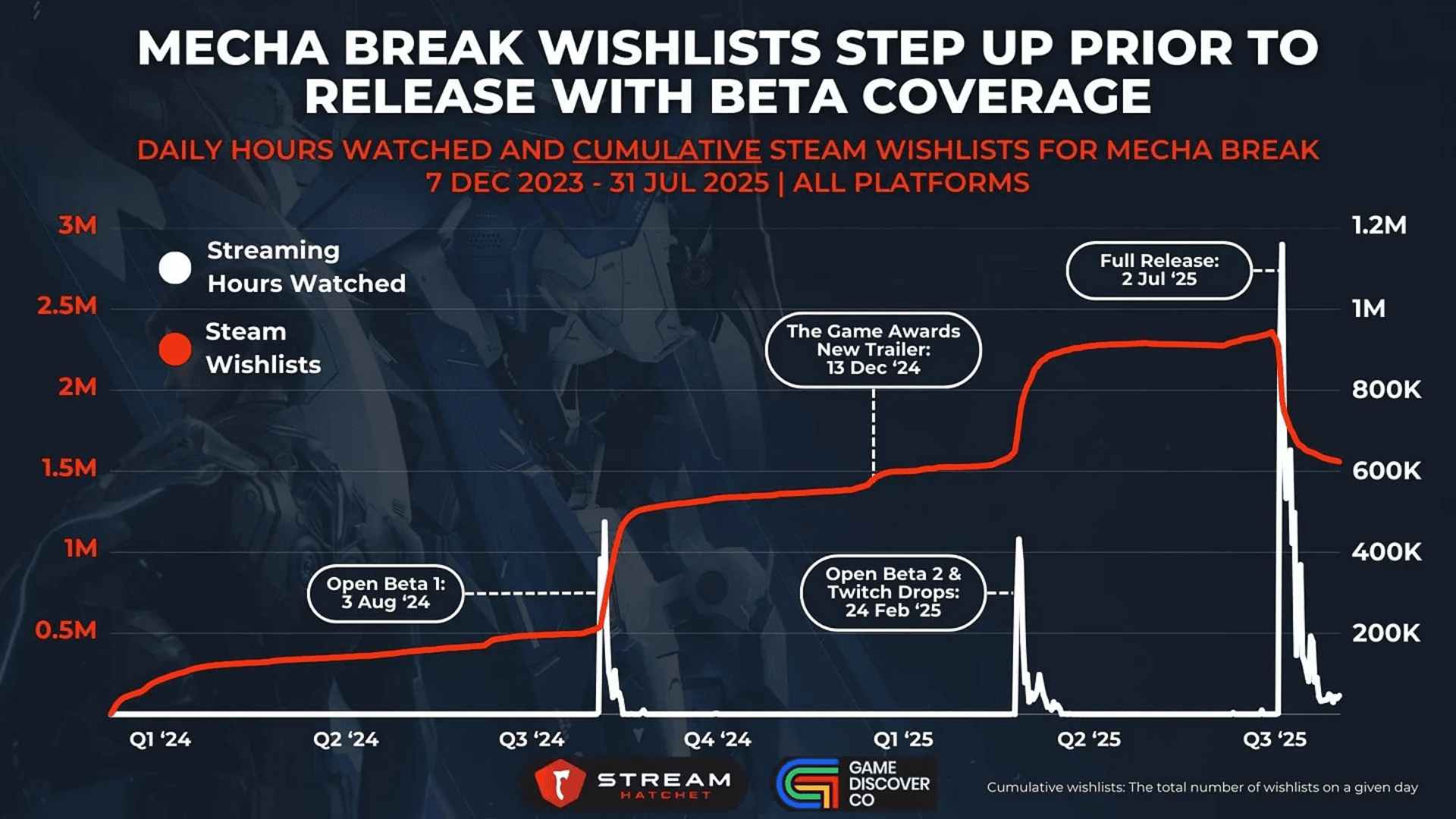
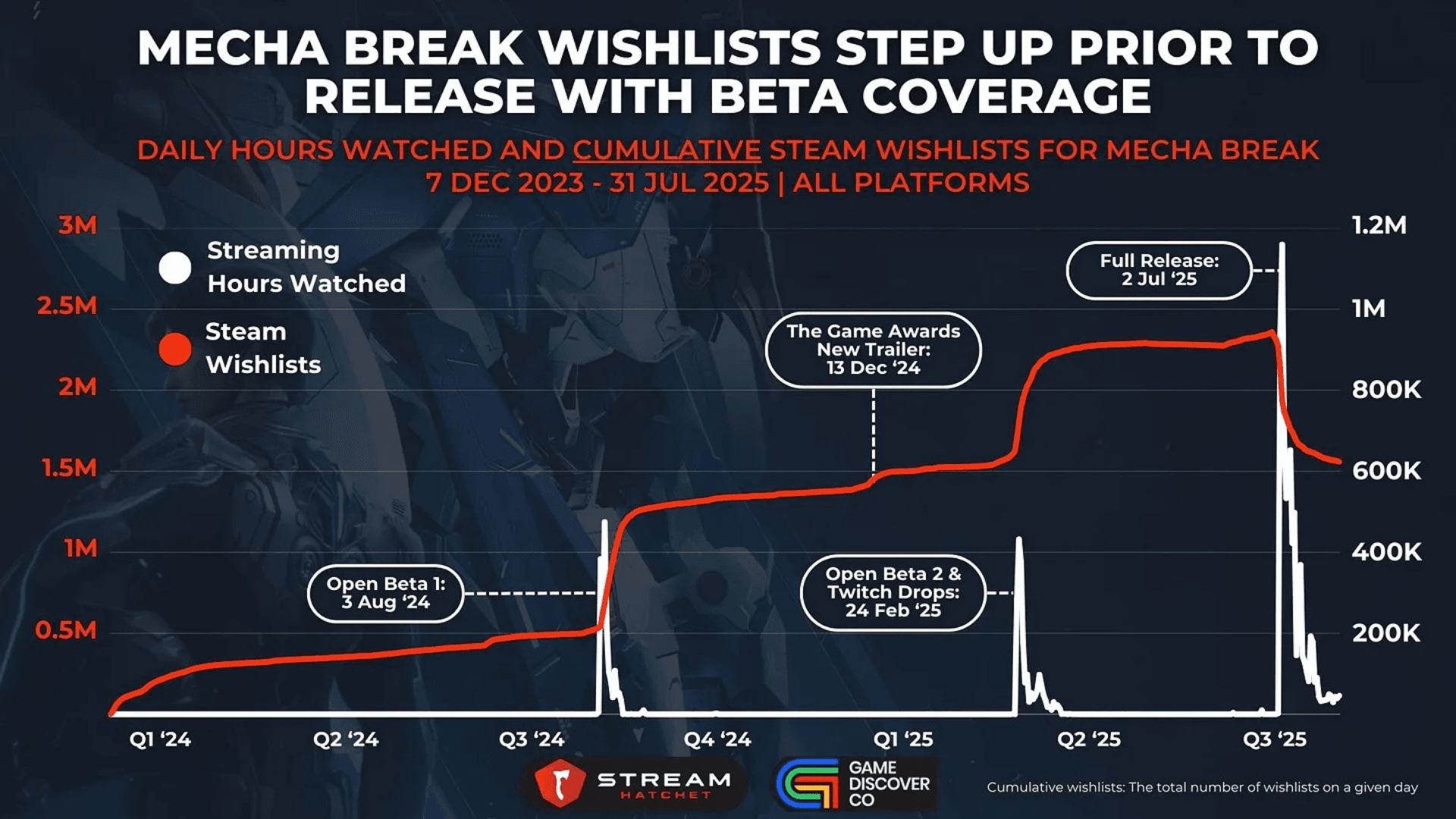
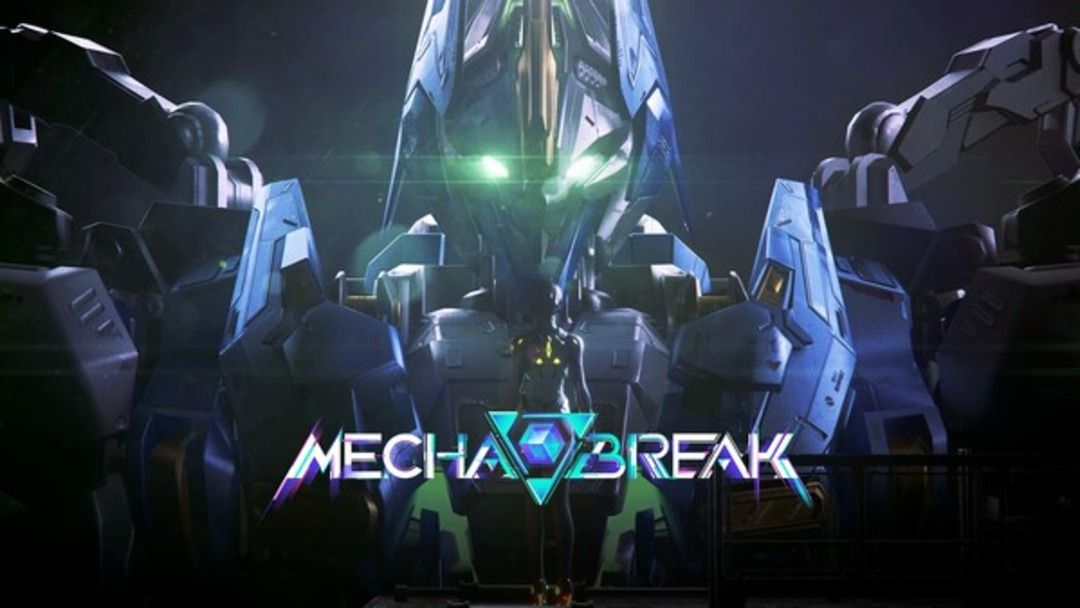
The free-to-play multiplayer title Mecha Break demonstrates how open beta windows combined with creator coverage can spike wishlist numbers. The game recorded clear wishlist jumps during both open beta periods, with major streamers broadcasting gameplay to large audiences.
Concurrent player counts dropped off after launch (peaking at 5,000 following an initial 132,000), but those beta windows generated real attention. The approach echoes other online multiplayer launches like Battlefield 6, which used pre-release streams to build early momentum.
Streamer Activity and Steam Wishlist Growth

Monster Hunter Wilds: balancing legacy and exposure
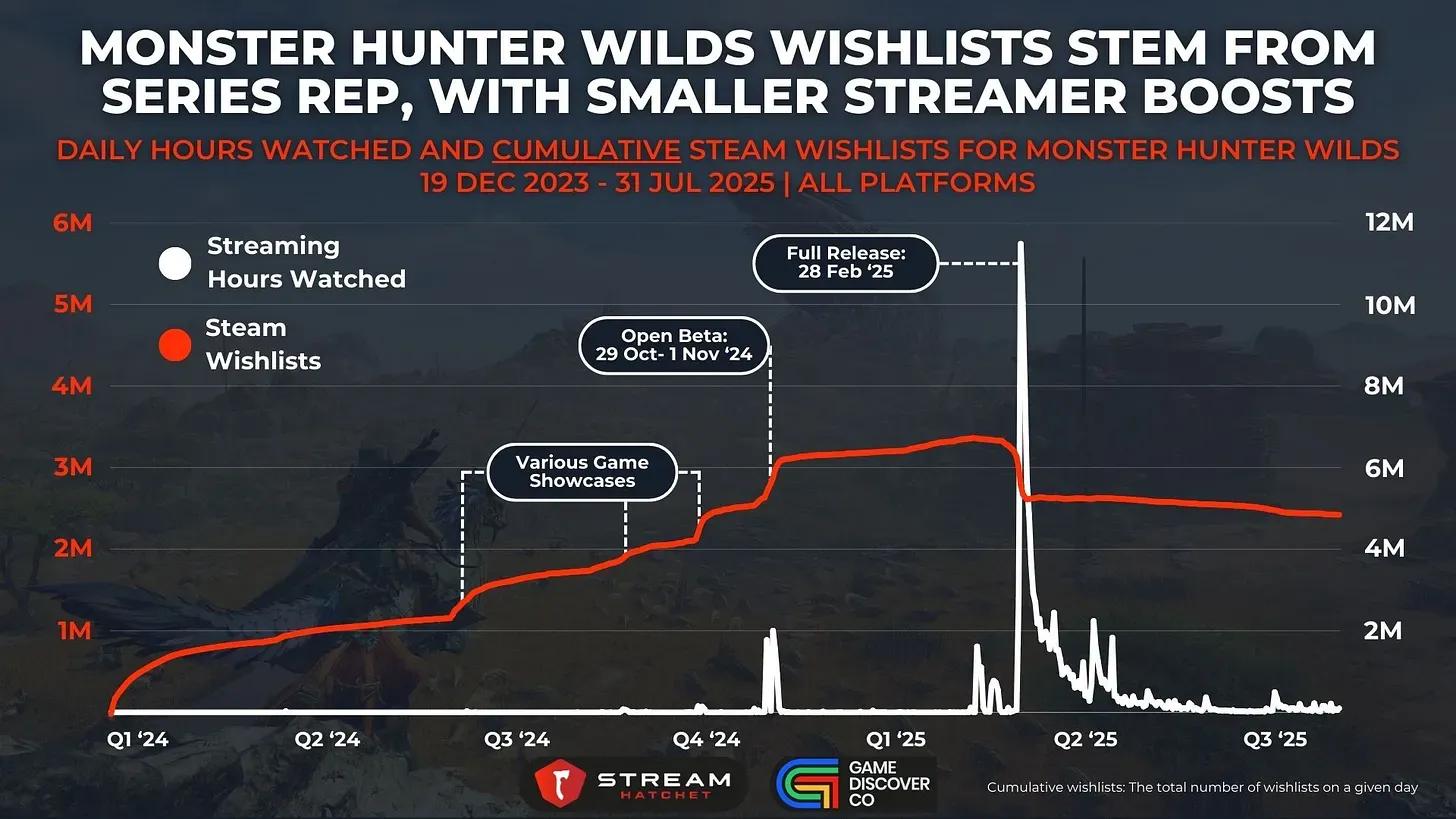
Monster Hunter Wilds played a different game. As a legacy AAA series, the title relied on existing franchise weight rather than manufactured early-access hype. Streamer coverage and open betas contributed to wishlist totals, but the real streaming surge arrived at launch.
Analysis shows the first beta spike for Monster Hunter Wilds was several times larger than Mecha Break's beta bumps, though launch-day numbers eclipse everything else. Additional exposure through PlayStation State of Play events and Steam's Discovery Queue also fed wishlist growth. Pre-orders during the second beta offset new wishlist additions, explaining why that window shows no visible spike.
Streamer Activity and Steam Wishlist Growth
Clair Obscur: Expedition 33 and viral launch performance
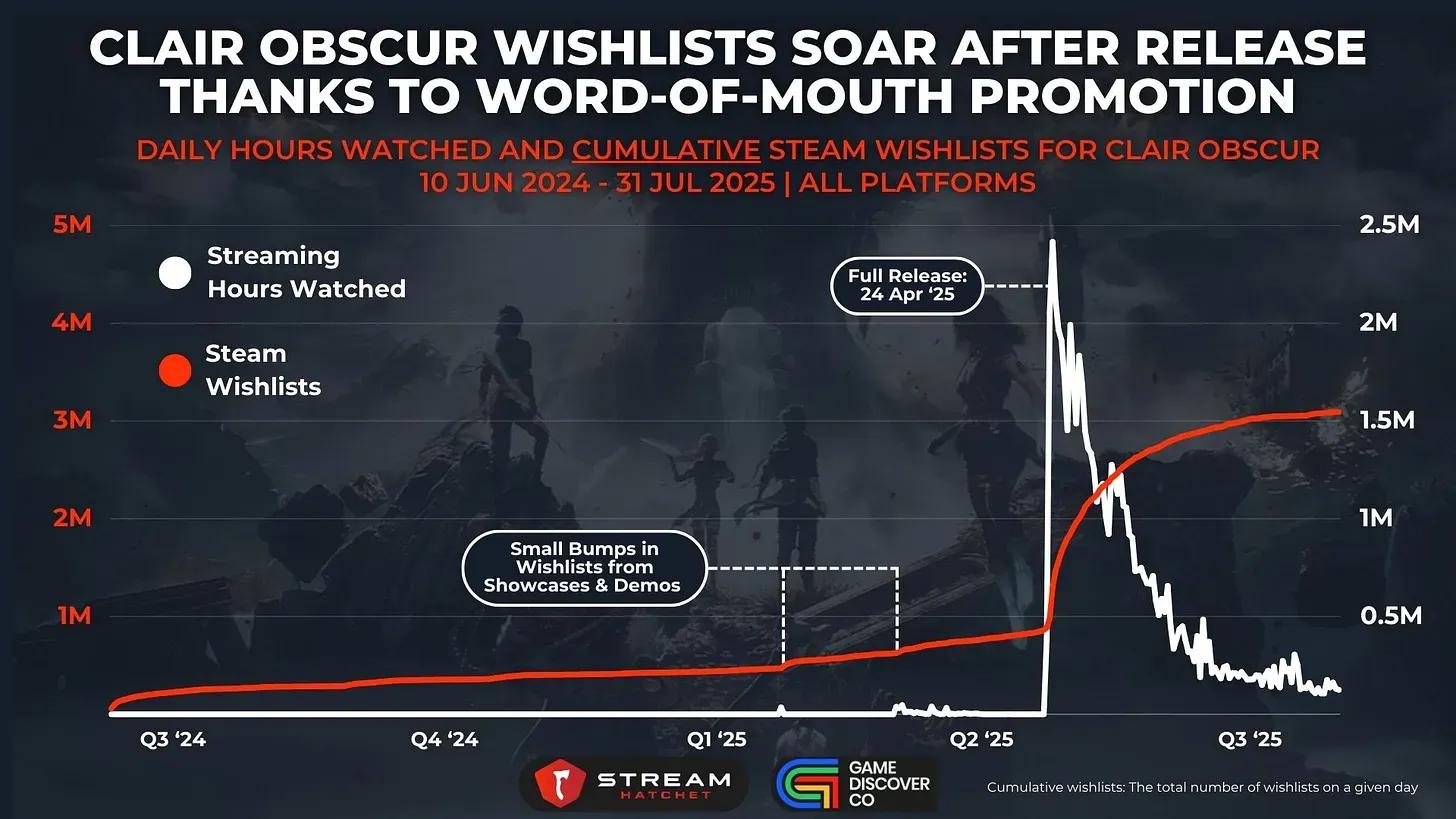
Clair Obscur: Expedition 33 accumulated high wishlist counts without significant pre-release streaming or beta access. The game landed between 750,000 and 1 million wishlists at launch, and its wishlists-to-week-one sales multiplier of 0.66x exceeded expectations. Minimal pre-release streaming didn't prevent strong performance, showing that audience anticipation and targeted marketing can drive wishlist growth independently.
Streamer Activity and Steam Wishlist Growth
Streaming hours and post-launch sales
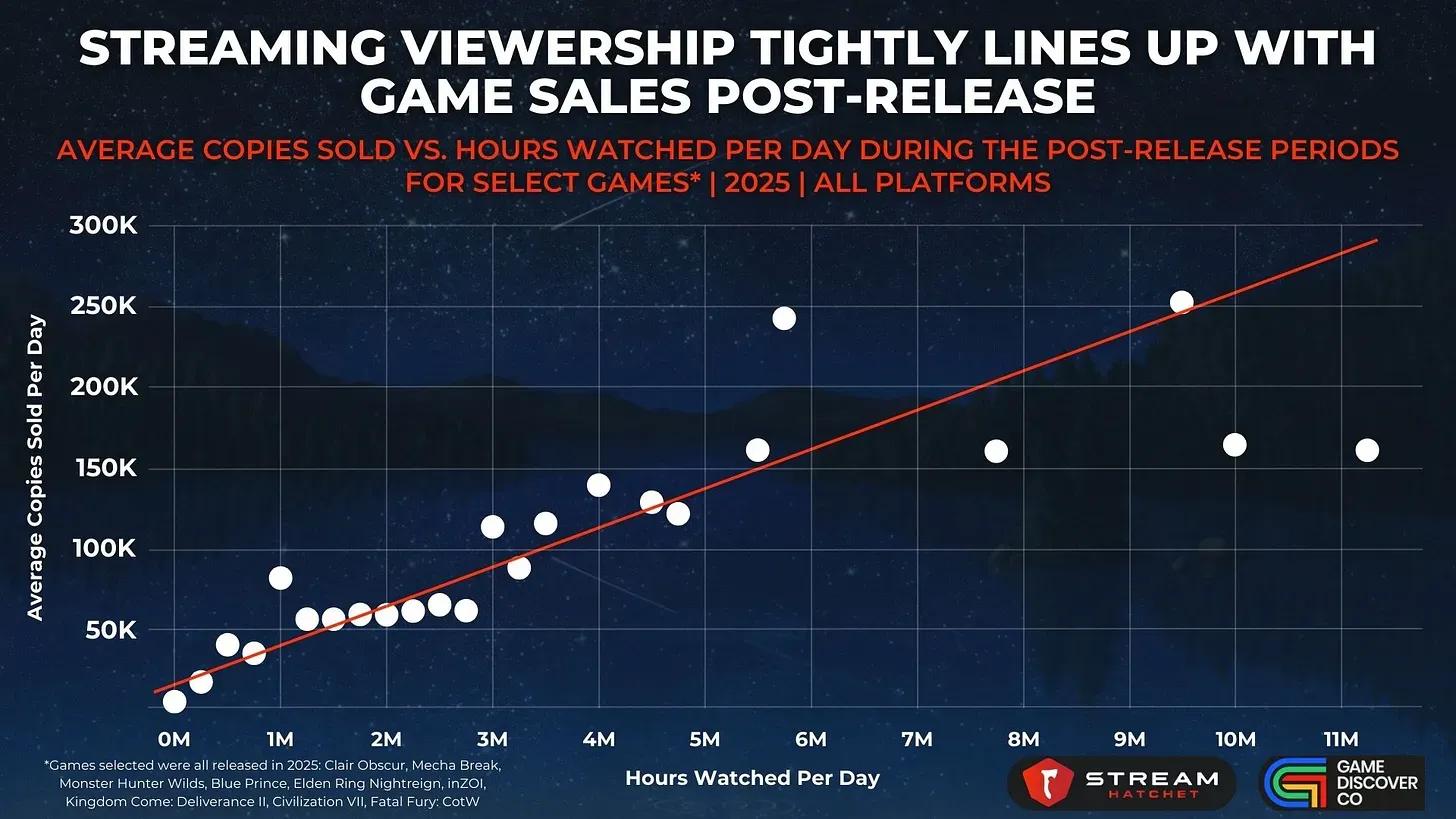
Expanded analysis covering several major 2025 Steam releases — including Blue Prince, Elden Right Nightreign, inZOI, Kingdom Come: Deliverance II, Civilization VII, and Fatal Fury: CotW — reveals a consistent pattern. Mapping daily streaming hours against sales shows that, on average, 41 hours of post-release streaming aligns with one copy sold. That's correlation rather than causation, but it demonstrates how higher streaming engagement tracks with stronger post-launch sales.
Implications for game launch strategies
Both pre-release and post-release streamer activity measurably influence Steam wishlists and sales. Multiplayer and online-focused games extract more value from beta-driven streaming, while legacy or single-player titles depend more heavily on marketing, announcements, and existing brand recognition. Developers and publishers can apply these patterns to optimize launch strategies, balancing pre-release demos, streamer partnerships, and marketing campaigns to maximize visibility and commercial outcomes.
Streamer Activity and Steam Wishlist Growth
Frequently asked questions (FAQs)
How do streamers influence Steam wishlists?
Streamers increase visibility for games before release, driving viewers to add titles to their Steam wishlist. High-profile creators playing open betas or demos can trigger wishlist spikes, particularly for multiplayer or online-focused games.
Do wishlist increases guarantee higher sales?
Wishlists indicate interest but don't directly convert to guaranteed sales. Post-launch data shows that higher wishlist counts and streaming engagement often correlate with stronger early sales performance.
Why do some games show wishlist spikes during beta periods but not at launch?
Wishlist spikes during beta events can get offset by pre-orders or purchases at launch. When a game becomes available for purchase after beta testing, some users move from wishlist to ownership, flattening visible wishlist growth.
Can single-player games benefit from streamer hype like multiplayer titles?
Single-player and legacy titles can gain from streamer exposure, but the effect is typically weaker than for multiplayer games. Marketing campaigns, franchise reputation, and cultural relevance often drive more wishlist growth in these cases.
What is the relationship between streaming hours and post-launch sales?
Data analysis shows a measurable correlation between streaming hours and sales. On average, every 41 hours of post-release streaming corresponds to one copy sold. That represents a strong link, though it's correlation rather than direct causation.
Does streaming impact long-term player retention?
Streamer hype primarily affects initial visibility and early sales. Long-term retention depends on the game's content, updates, and community engagement, not streamer exposure alone.
How can developers use this data for launch strategies?
Developers can plan beta events, pre-release demos, and targeted streamer partnerships to maximize visibility. Understanding the connection between streaming hours, wishlist growth, and early sales helps balance pre-release hype with marketing campaigns and post-launch support.
Here's a list of all the games mentioned:
- Mecha Break
- Battlefield 6 (mentioned for comparison)
- Monster Hunter Wilds
- Clair Obscur: Expedition 33
- Blue Prince
- Elden Right Nightreign
- inZOI
- Kingdom Come: Deliverance II
- Civilization VII
- Fatal Fury: CotW