

The Steam Deck just got a lot more expensive, and the gaming internet is now watching two billionaire CEOs throw shade at each other on social media.
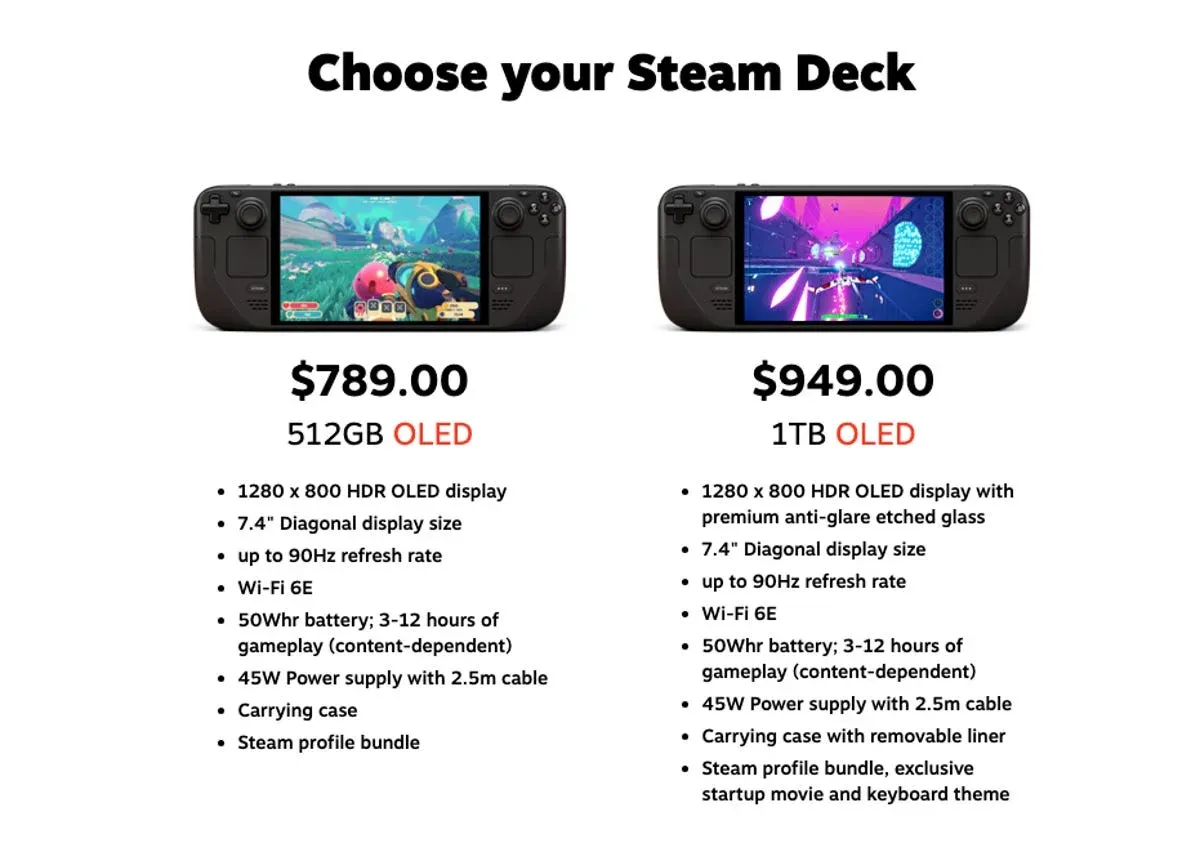
Steam Deck prices just jumped
Valve announced this week that it was raising Steam Deck prices by hundreds of dollars across its lineup. Devices that used to represent some of the best value in PC gaming have crossed into premium territory almost overnight. The culprit, at least in part, is the ongoing AI-driven RAM shortage, which has squeezed component costs and hit handheld manufacturers harder than traditional PC builders because they lack the same supply chain leverage.

Use code TRYHARD33 at checkout to redeem this offer before code expires again.
Get 33% Off GAMES+ Subscription
When your rival CEO owns a $500 million boat
Tim Sweeney, CEO of Epic Games and the man behind Fortnite, spotted an opportunity. On Thursday, he posted a sarcastic message on X that read: "Everyone's being too harsh here. There has been a significant rise in the cost of components that Steam customer spending ultimately funds, and economic trends have created severe disruptions in the component parts supply chain for megayachts."
The target was unmistakable. Gabe Newell owns a superyacht called the Leviathan, valued at approximately $500 million. The vessel has been making rounds in the press recently, with glowing features detailing its submarine garage, basketball court, and, in a very on-brand touch, an onboard PC gaming café. It is, by any measure, an extraordinary piece of conspicuous wealth.
Here's the thing: Sweeney's point has a kernel of real logic to it. Valve is genuinely under pricing pressure it can't easily absorb. But framing that criticism around a superyacht while positioning yourself as a consumer advocate is a bold move for the CEO of a company with its own complicated relationship with its workforce.
The glass house problem
The reply section did not let Sweeney's post land clean. Gamers and industry observers were quick to point out that just months ago, Epic laid off 1,000 employees. One user on X put it bluntly: "Hey Tim when was the last time Valve laid off their employees? Oh yeah never?"
That comparison stings for a reason. Valve is famously lean, reportedly generating around $50 million in revenue per employee. The company has never conducted mass layoffs. Epic, by contrast, let go of over 1,000 people in a single wave, with affected staff describing the event as sudden and shocking. "The layoff was very sudden and we only had a slight hint that the company revenue wasn't doing well," one former employee said publicly after the cuts.
Roughly half of those former Epic employees have since been listed on a community-built resource to help game industry recruiters find them. The contrast between that reality and a CEO posting yacht jokes about a competitor is the kind of optics that tends to follow a person around.
What this means for Steam Deck owners
Lost slightly in the CEO drama is the fact that real players are now paying significantly more for Steam Deck hardware. The price increases are not symbolic. The most affordable entry point into Valve's handheld ecosystem has moved, and for players who were eyeing a Steam Deck as a budget-friendly way into PC gaming, the calculus has genuinely changed.
Valve hasn't announced any new hardware to justify the increase, and there's no indication the pricing will reverse once component costs stabilize. The practical takeaway for anyone shopping right now is that the Steam Deck is no longer the value proposition it was at launch.
Sweeney's jab may have backfired socially, but the underlying frustration he was channeling is one a lot of players share. Watching a company raise prices on consumer hardware while its founder's $500 million yacht gets magazine profiles is a tough sell, regardless of who's pointing it out. The action games space and broader PC gaming ecosystem both feel the downstream effects when accessible hardware becomes less affordable.
For players keeping an eye on the handheld PC market, the next few months will be telling. Competing devices are already circling, and Valve's price move leaves an opening that rivals will almost certainly try to fill.