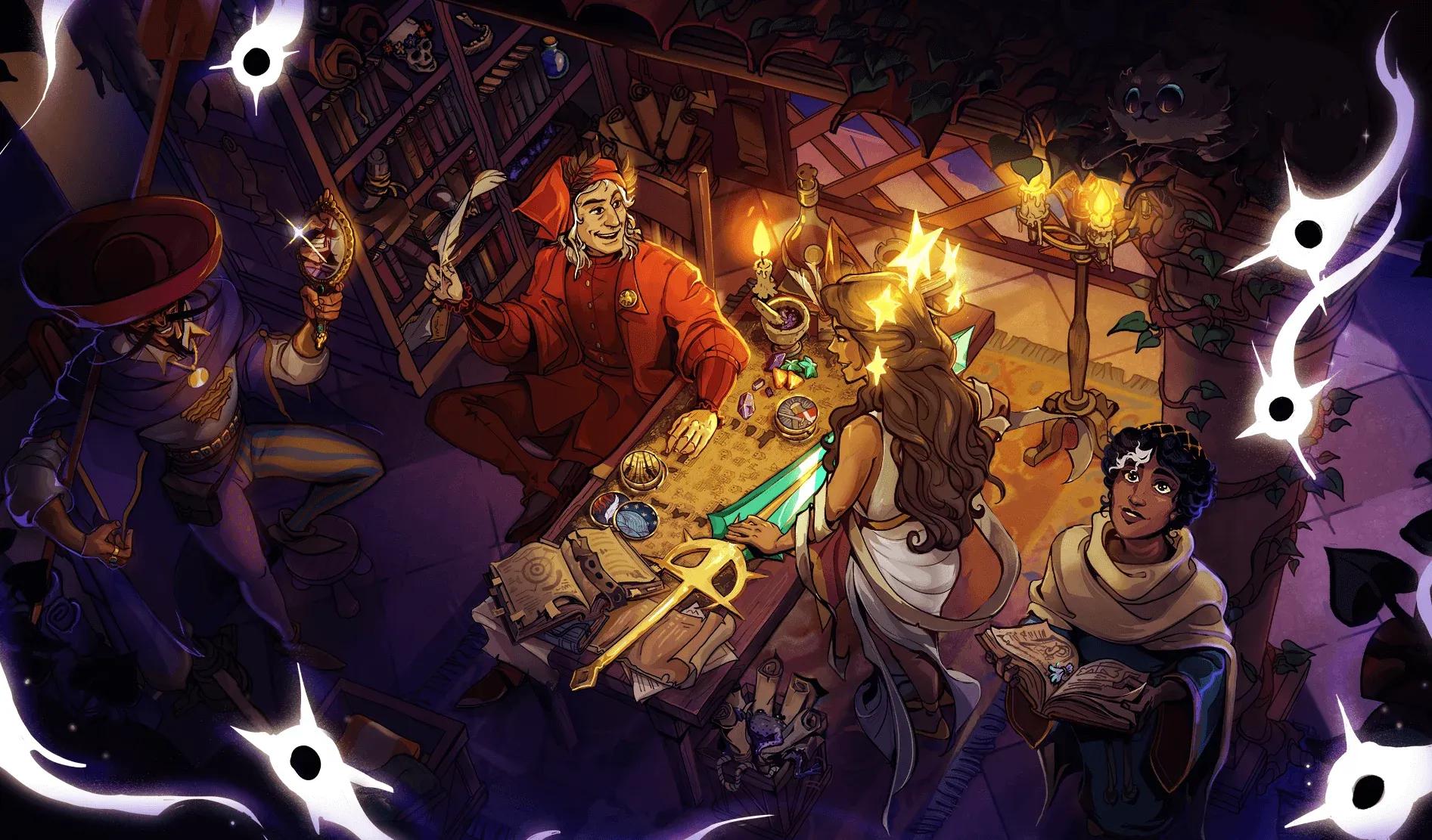


Thunder Lotus set out to solve one of multiplayer gaming's most persistent problems: how do you give solo players the feeling of a proper raid without requiring a pre-built group, a guild, or a subscription fee? The answer was 33 Immortals, a Dante's Inferno-inspired co-op action game where up to 33 players drop into the same afterlife and work toward a shared goal. The pitch is genuinely clever. The execution, though, is where things get complicated.

Pay less for your games.
Get discounts up to 80% off
The concept that makes 33 Immortals worth talking about
The setup is this: your character died, got flagged as a Rebel Soul by a guide named Beatrice, and now has a shot at defying fate by running through three increasingly difficult afterlife zones. Inferno supports up to 33 players, Purgatorio drops to 22, and Paradiso caps at 11. Each zone has its own boss gating the next, so you need a key from Lucifer before you can even attempt Adam and Eve in Purgatorio, and another key to reach the Wrath of God in Paradiso.
The structure is smart. Smaller groups in higher zones mean the players you're running with have already proven they can get through the earlier content. By the time you reach Purgatorio's 22-player sessions, the co-op dynamic genuinely improves because everyone present has cleared the entry requirement. Here's the thing: that progression filter does real work. Inferno, by contrast, is where the experience is most uneven, and unfortunately it's also where most players will spend the bulk of their early hours.
Four weapons, one obvious safe choice
At the start, players pick from four weapons that double as class roles. The Sword of Justice is the all-rounder: close-range, capable of dealing damage, blocking attacks, and throwing out Bubble Shields to protect nearby allies. The Daggers of Greed lean into aggressive close-range play with constant attacks and bone harvests, but the lack of defensive options makes them punishing when you're surrounded without support. The Bow of Hope handles ranged damage and works fine in most situations. The Staff of Sloth sends out orbs to attack, break armor, and slow groups of enemies, but it's the most dependent on having organized teammates around you.
What most players miss early on is that weapon choice has real consequences when running without friends. The Staff is genuinely fun when a coordinated group surrounds enemies, but in a random Inferno lobby where players scatter in every direction, it underperforms badly. The Sword ends up being the reliable fallback for solo players, not because it's the most exciting option, but because survivability matters more than style when you can't control who shows up in your session.
Where repetition starts to bite
The core loop involves clearing Torture Chambers across each zone to unlock the boss fight, then earning keys to move forward. It works on paper. The problem is that the art direction across all three afterlife zones reads as visually similar, which makes it hard to feel like you're progressing through distinct places. After the first hour, the environments stop feeling like new territory and start feeling like palette swaps of the same space.
The Perk and Relic system adds some build variety. Feats unlock bonuses like improved shrines and extra Perk slots, and Perk Tokens let you equip modifiers that affect survivability and loot quality. But the system loses its teeth once you land on a reliable combination. Stacking a shield perk with an increased Rare and Epic Relic chance perk covers most situations well enough that swapping becomes optional rather than strategic. That's a progression design problem: when the optimal path becomes obvious within a few hours, the incentive to keep experimenting fades.
Cosmetics exist as a long-term reward, available through in-game drops, Eternal Shards, $5.99 DLC packs, and Twitch drops. The Familiar cat and dog pets available via Stardust and Familiar Tokens are a highlight, but cosmetic rewards alone rarely carry a game when the core loop starts feeling thin.
What actually works, and what Thunder Lotus got right
The online infrastructure holds up. Sessions don't drop. The in-game map clearly marks Torture Chambers, points of interest, and other players, and proximity indicators keep you oriented without constant map-checking. The moveset across all four weapons feels responsive, and the combat has a satisfying rhythm once you understand it. The time Thunder Lotus spent in early access clearly paid off in terms of technical stability.
Purgatorio is genuinely better than Inferno as an experience, and not just because of the smaller player count. The players who make it there tend to know what they're doing, which means the co-op dynamic the game was built around actually functions as intended. The problem is that getting there requires grinding Inferno keys, and Inferno is where the game's weakest moments live.
For players who enjoy RPG games with a heavy co-op focus and don't mind grinding through uneven early sessions to reach the better content, 33 Immortals has real moments worth experiencing. The concept of drop-in massive multiplayer raids without the MMO overhead is still a good one. The execution just needs more variety in its maps, sharper progression incentives, and better tools for coordinating with strangers on the fly. If Thunder Lotus addresses those gaps in future updates, the foundation here is worth building on. Check out our gaming guides for more coverage on co-op titles worth your time.