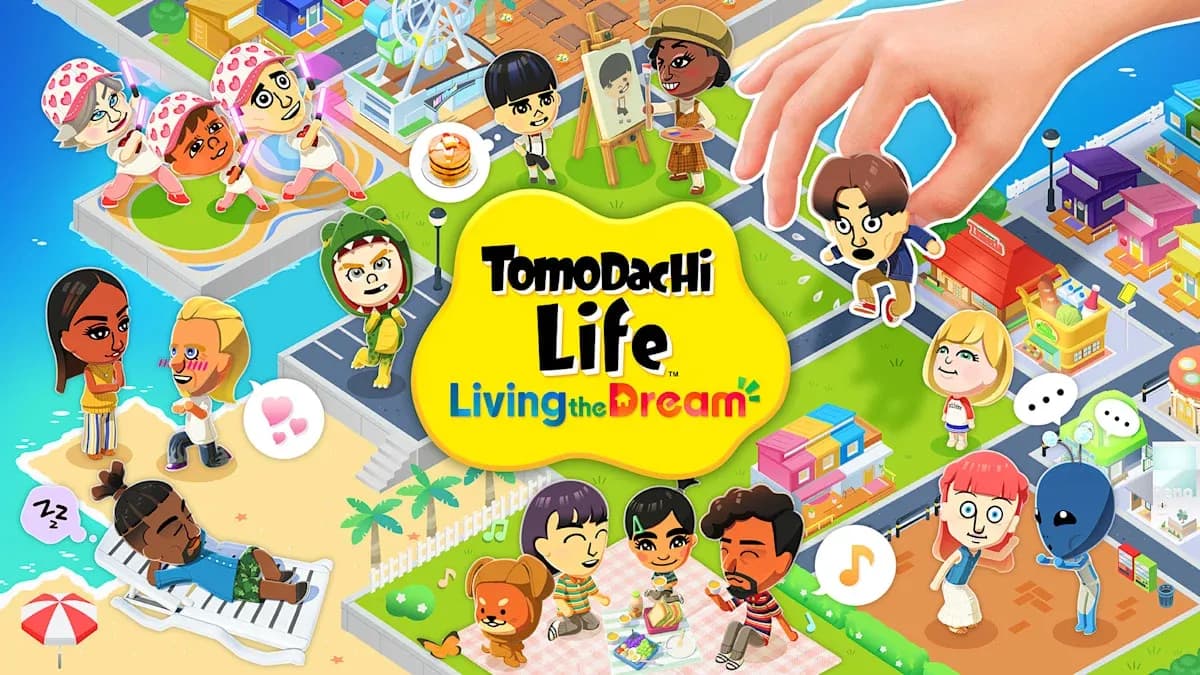


Nintendo's long-awaited life sim sequel pulled off something few games manage: outselling everything else on the market in its launch month. Tomodachi Life: Living the Dream landed at number one on the US sales charts for April 2026, making it the best-selling game in the country for the entire month.
A launch that silenced the doubters
The original Tomodachi Life launched on Nintendo 3DS back in 2013 and built a dedicated following, but a Western sequel took over a decade to materialize. When Nintendo finally announced Living the Dream, the skeptics were loud. Could a quirky, low-stakes life sim compete in a market dominated by action titles and live-service juggernauts?
April's numbers answered that question decisively.
The game launched into a competitive month alongside Saros, which debuted at fourth place, and several returning titles that had already built strong sales momentum. Topping all of them is a real statement, and it signals that the appetite for casual games with personality and charm is bigger than many analysts expected.
What the chart actually tells us
Here's the thing about a number one debut: it means more when the competition is stiff. April 2026 was not a quiet month for releases. Saros entered the top 10 at fourth place. Returning heavyweights like Diablo IV and Starfield held top-five positions. MLB: The Show 26 and Resident Evil Requiem were both still moving units. Call of Duty Black Ops 7 rounded out the top 10, as it has for most months since launch.
Tomodachi Life: Living the Dream beat all of them.
One important caveat: the game's chart position does not include digital sales, which means the physical sales alone were enough to claim the top spot. Factor in digital and the real sales picture is almost certainly even stronger.
Why players showed up in force
The original game's fanbase waited over a decade for a follow-up, and that pent-up demand clearly converted into day-one purchases. But Living the Dream also attracted new players who had never touched the 3DS original, drawn in by Nintendo's marketing push and the game's genuinely distinct identity in a market full of sequels and remakes.
The Mii-based life sim format, where your real-world contacts become island residents with their own personalities, relationships, and absurd daily dramas, does not have a direct competitor. That uniqueness is a commercial advantage that Nintendo has finally chosen to act on.
The broader Nintendo Switch 2 picture
Living the Dream's success fits neatly into a larger pattern. The Nintendo Switch 2 launch window has been unusually strong, and first-party Nintendo titles have consistently outperformed expectations in early 2026. A life sim topping the charts reinforces that the Switch 2's audience is broad, not just the core action-game crowd.
For players already deep into the game, our Tomodachi Life: Living the Dream guides cover the mechanics worth understanding early, including the best Wishes to prioritize so you are spending your in-game resources where they actually pay off. Getting those decisions right early makes a noticeable difference in how your island develops.
With Living the Dream now confirmed as a genuine commercial hit, expect Nintendo to support it aggressively through updates and additional content. The sales momentum from a strong launch month tends to carry forward, and a game this distinct has real word-of-mouth potential as more players share their Mii drama stories online.