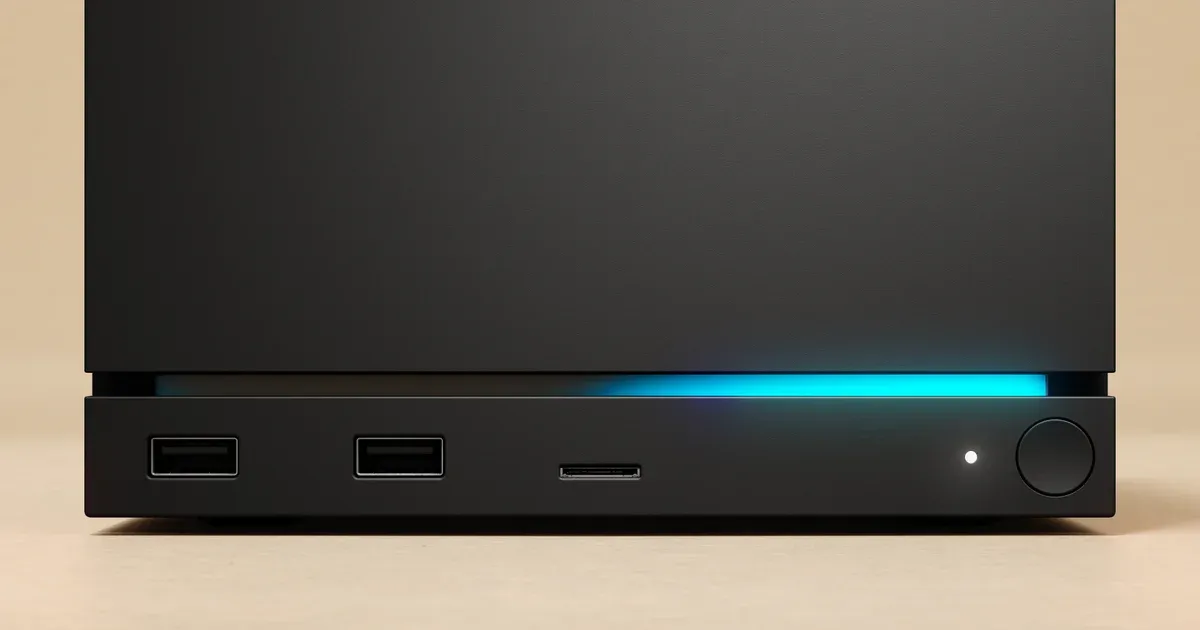


Back in late 2025, Valve announced a living-room gaming PC called the Steam Machine alongside a new Steam Controller, aiming to bring the full PC gaming experience to your TV. Then component prices went off the rails, storage and RAM became nearly impossible to source at scale, and the whole launch got pushed back. Now Valve has a firm date: June 29, with a starting price of $1,049.
That price is going to sting, but it's not a surprise to anyone who's been watching hardware costs climb over the past year.

Use code TRYHARD33 at checkout to redeem this offer before code expires again.
Get 33% Off GAMES+ Subscription
What you actually get for $1,049
The Steam Machine ships in two configurations. The base model comes with 512GB of storage at $1,049, while the 2TB model runs $1,349. Both can be bundled with a Steam Controller for an extra $79. Buy the 2TB version and you also get a pair of exclusive faceplates in red fabric and walnut finishes, which is a nice touch for something sitting in your living room.
Under the hood, both models run on a custom six-core AMD Zen 4 CPU clocked up to 4.8GHz. The integrated AMD RDNA3 GPU packs 28 compute units with 8GB of dedicated DDR6 VRAM soldered directly to the board, alongside 16GB of system DDR5. That's enough to handle moderately demanding PC games on a TV, especially with upscaling doing some of the heavy lifting. Like the Steam Deck, the machine runs SteamOS, Valve's Linux-based operating system.
Here's the thing: those specs are genuinely competitive for a compact living-room PC in 2026. The price isn't Valve being greedy. When the company started sourcing components back in 2023, it expected the Steam Machine to cost significantly less. Valve has publicly admitted the original pricing vision is "no longer viable" given what components actually cost right now.
Context on the price tag
For reference, Sony has pushed the base PlayStation 5 to $600, with the Pro sitting at $900. Nintendo launched the Switch 2 at $450 before bumping it to $500. Dell, Lenovo, and HP have all raised PC prices across their lineups. Valve also raised the Steam Deck's price by more than $200 recently. The Steam Machine at $1,049 lands in a market where everything costs more than it did two years ago.
Valve has also flagged that pricing on future batches could shift as component costs continue moving. That's not a reassurance exactly, but it does signal the company isn't treating this as a fixed price forever.
The reservation lottery and why it exists
Getting one of these on launch day is far from guaranteed. Supply shortages didn't just push prices up. At times, Valve couldn't source the parts it needed at any price, which has severely limited how many units are available for the first batch.
To keep things fair and shut out bot-driven resellers, Valve is running a randomized reservation system. There's no speed advantage here. No one with a faster internet connection or an automated script can jump the queue.
The window to register closes on Thursday, June 25 at 10 AM Pacific. Any Steam account holder who made at least one purchase before April 27, 2026, is eligible, with a hard limit of one reservation per household. After registrations close, Valve runs a one-time randomization to set the waitlist order, then sends out emails later that same day.
The email will either confirm you're in the "Reservation queue" (a unit is allocated, ships when ready) or notify you that you've been added to the waitlist for future production runs. Even the lucky ones may not see their machine ship exactly on June 29. Valve says orders will start going out that day and continue as units become available.
The key here is that Valve is trying to solve a real problem. Anyone who watched the Steam Deck sell out repeatedly in North America earlier this year knows how frustrating that process was. A lottery isn't perfect, but it's more defensible than a first-come, first-served race that rewards bots over actual players.
If you're interested in the broader gaming hardware space and want to keep up with what's worth your time and money, our gaming guides hub covers the full range of platforms and titles worth paying attention to right now. And if you play adventure games on PC, SteamOS's growing library compatibility is worth keeping an eye on as more titles get verified for the platform.