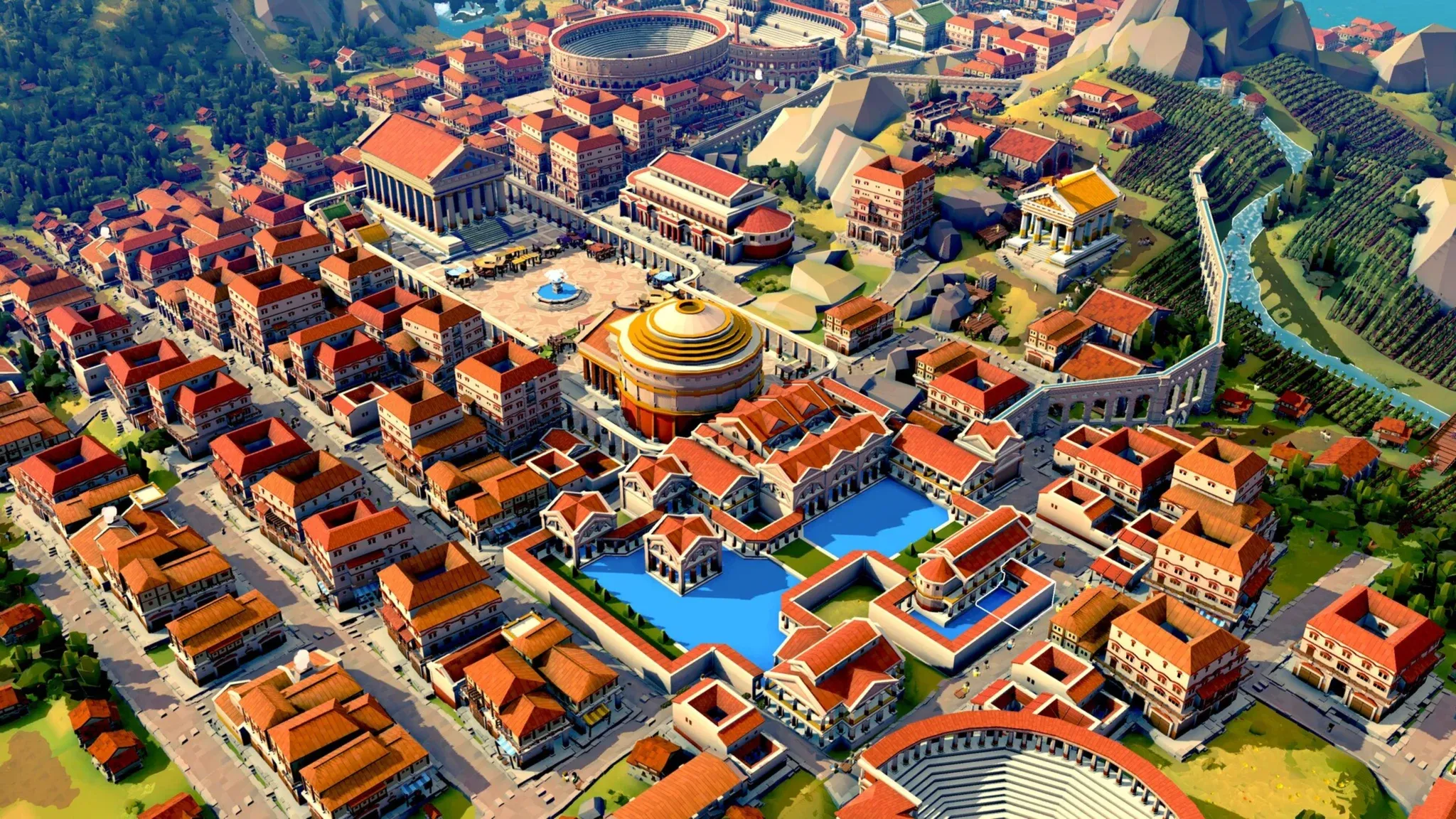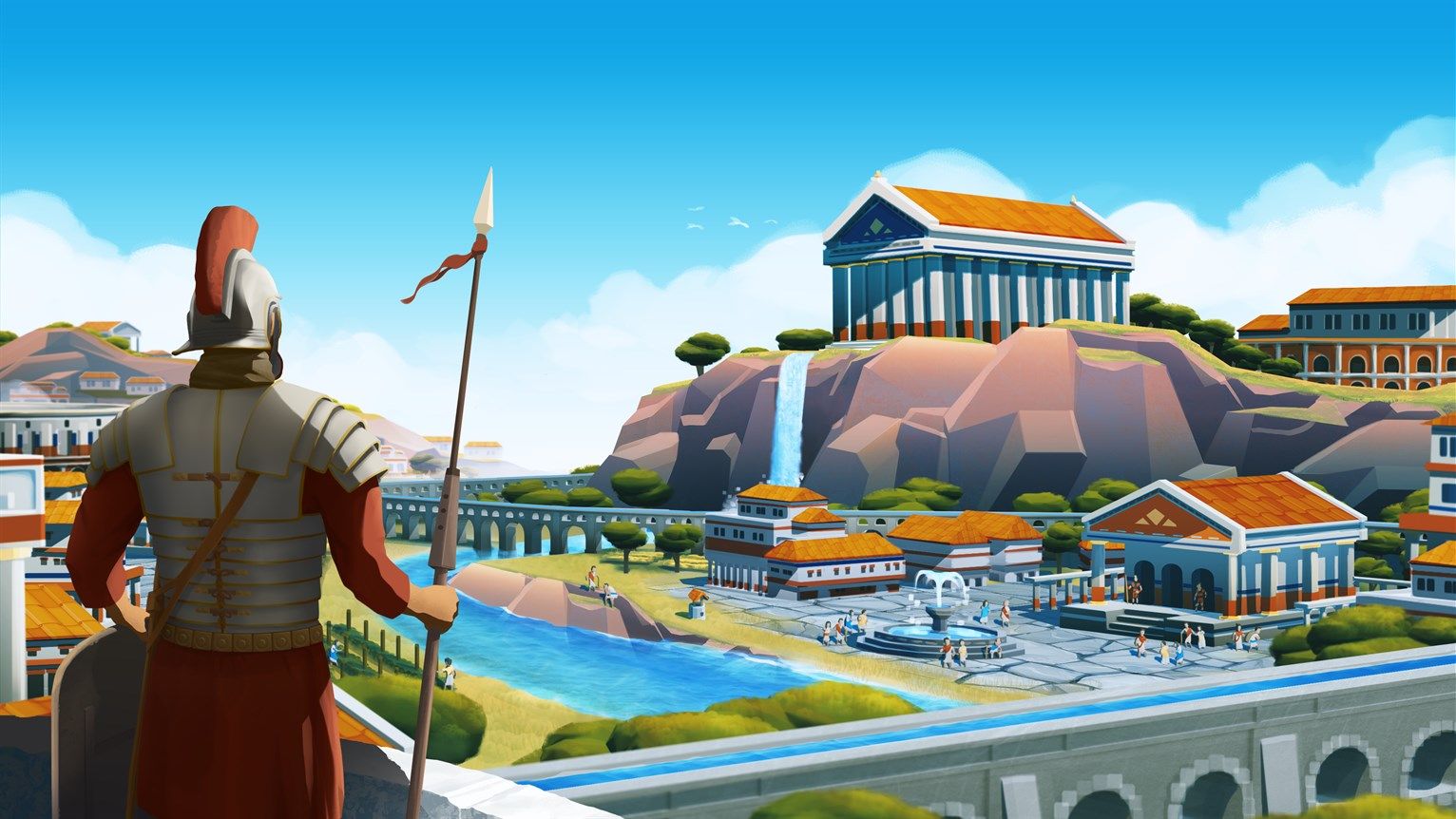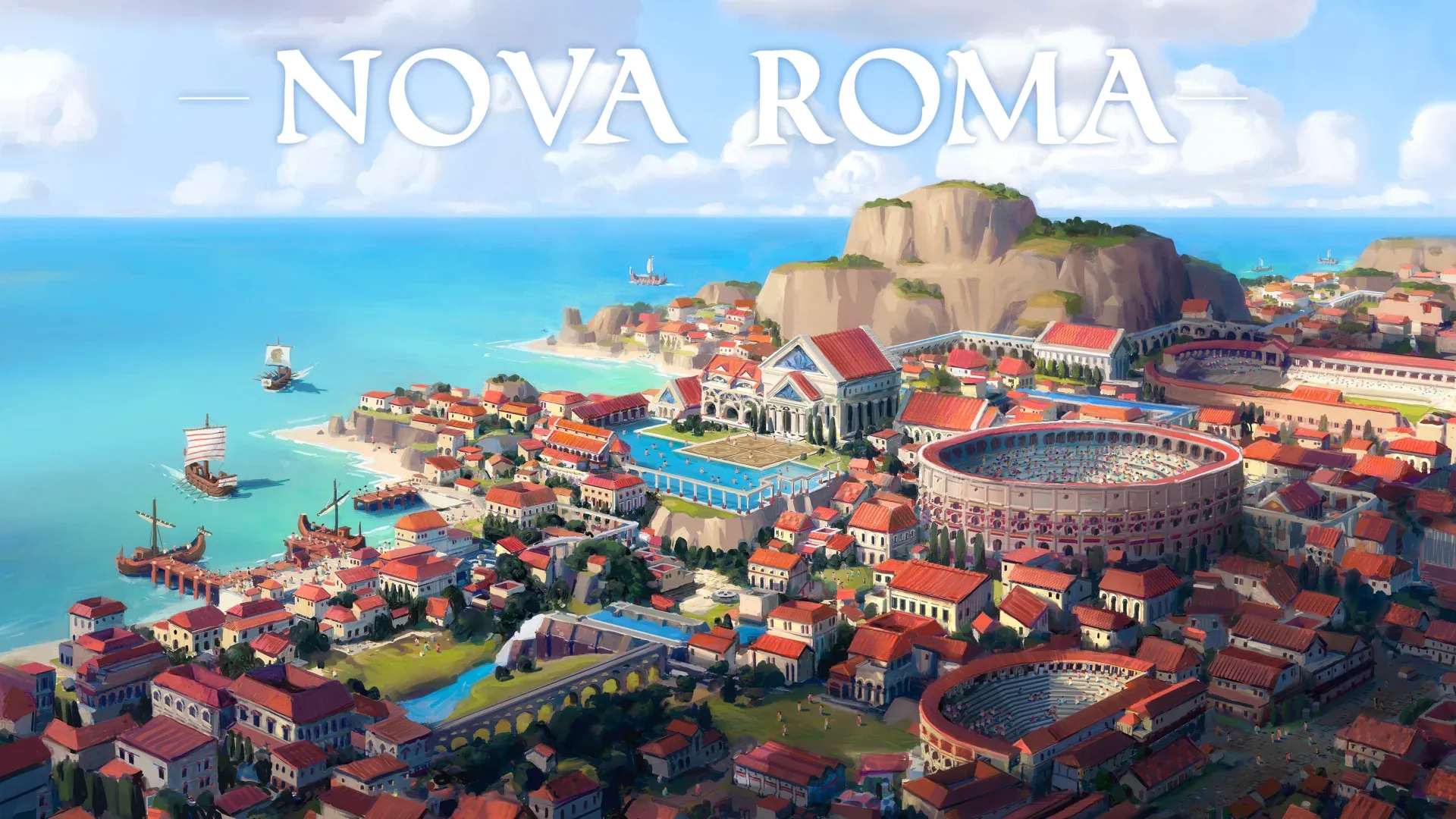

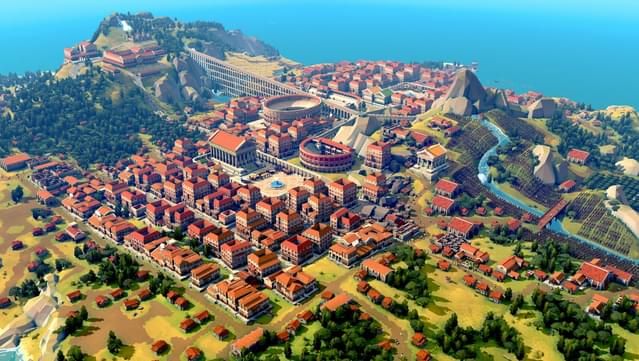
Nova Roma drops you into a Roman city-builder where the water flows downhill whether you want it to or not, gods throw lightning at your town square if you forget their temples, and your citizens will happily starve to death while standing next to a granary you forgot to connect. Lion Shield's Early Access release, which launched on March 26, 2026, inherits the DNA of Kingdoms and Castles but swaps dragons for a capricious pantheon and siege warfare for aqueduct engineering. Here's everything you need to survive your first few decades.
What do you need to keep citizens alive?
Your population needs three things before anything else: housing, food, and heat. Winter kills more early-game cities than any other mechanic. Temperatures plummet, and citizens burn through wood or charcoal just to avoid freezing. Raw wood works in a pinch, but it vanishes from stockpiles at a terrifying pace. Get a Charcoal Maker running as soon as possible — it converts wood far more efficiently and keeps your forests from being completely stripped by the time spring arrives.
Building integrity is the other silent killer. Structures degrade over time and will collapse on your workers if you ignore repairs. Drop Masonries early so maintenance happens automatically instead of waiting for half your city to crumble during a food shortage.
Food supply must be in surplus before you expand housing. New immigrants pour into any fresh homes you build and will devour your reserves in days. The rule is straightforward: lock down a food surplus first, then add houses.

How does the tax system work in Nova Roma?
Gold is the only way to pay specialized workers, fund your military, and run major terraforming projects. A Tax Office collects from buildings within an 11-tile radius, and you can set rates anywhere from 0% to 60%. Max it out and your citizens become miserable, immigration stops, and existing residents pack up and leave.
The better approach is to tax by neighborhood instead of applying a flat rate citywide. A Hovel at 10% produces almost nothing. A Villa Rustica at the same rate generates far more gold. Cluster your Tax Offices around high-tier housing and leave your poorer districts at lower rates. This keeps happiness stable while still generating real income.
The three social classes each respond differently to taxation:
| Class | Share of Population | Tax Sensitivity | Optimal Rate |
|---|---|---|---|
| Plebeians | ~70% | High | Keep low, ~10% |
| Equites (merchants) | Moderate | Medium | 12-18% |
| Senators (elite) | Small | Low | Up to ~15% with amenities |
Testing shows the sweet spot sits around 15% overall with an emphasis on senator districts. Push beyond that without matching amenities and you trigger production penalties of around 40% during rebellions. The Nova Roma guides hub has detailed breakdowns of these mechanics.
How do water physics and aqueducts work?
Water is the mechanic that kills the most early-game cities. Nova Roma uses real gravity simulation: water only flows downhill, period.
To get water into your city, you need a Water Intake placed below the waterline of a river or lake. The intake must sit at a higher elevation than the city it's supplying. If your settlement is built on a hill taller than the intake valve, your aqueducts run dry no matter how many you construct.
Aqueducts require a specific slope angle. Too steep and the water flows too fast — the game blocks construction entirely. You have to find a gentler grade or route the aqueduct along a longer path to step the water down safely. The engineering tree unlocks aqueducts and requires stone as the primary material. A 1:500 gradient is the target, and the irrigation radius once water arrives covers 5-7 tiles.
Dam Planning Mode is your best tool for avoiding floods. Use it before committing to any dam structure. Pay attention to spillway heights and gate settings, because heavy rain will push your dam over capacity. A flooded industrial zone takes forever to recover from, and soil degradation follows waterlogging.
Elevation above 10 blocks also provides a +15% amenity bonus to nearby buildings, so routing water to higher districts pays off in multiple ways.
How does the pantheon system affect your city?
The gods in Nova Roma are not decorative. Ignore them and they will actively destroy your progress. Every temple you build must be dedicated to a specific deity, which opens Divine Tasks. Completing tasks earns Favor, the currency used to unlock new technologies, better crops, and advanced industry.
Here's what each god delivers when pleased and what they do when neglected:
| God | Blessing | Curse |
|---|---|---|
| Jupiter | Happiness boost in 5-tile radius | Lightning strikes, causing fires |
| Ceres | +output for 3 nearest farms/orchards | Devastating crop failures |
| Mars | +25% damage for 3 nearest defense towers | Crushes military morale |
| Neptune | Increased fish yield for 5 nearest fishing buildings | Floods and dangerous seas |
| Vulcan | +output for 5 nearest fire-based industry | Burns down industrial buildings |
Temples also function as gold vaults. A Small Temple holds 200 gold, while a Grand Temple holds 1,000. Rush a Large Temple early so you can run Festivals. They consume luxury food supplies, but the resulting happiness surge and Favor gain outweigh the cost significantly.
Keep the God Honor level above "Expected" at all times. Drop below that threshold and the curses listed above activate. Ceres is arguably the most dangerous to anger early on — a crop failure during your first winter is a city-ending event.
How do you defend against raids and invasions?
Barbarian raids in Nova Roma are infrequent — roughly once every 10 to 15 seasons — but they will sack buildings and steal resources if you have no defense. The good news is that the game's focus is economic, so your military investment can stay lean.
Start with an Outpost to recruit a basic militia. One catch: militia draws from your idle worker pool. If every citizen is employed in farms and quarries, you have nobody available to hold a spear. Keep a small reserve of unassigned workers or accept that you'll temporarily pull laborers off jobs when a raid appears.
Once Iron and Armament production are online, you can train proper Infantry and Cavalry. These units require wages, so your tax economy needs to be stable first. Ballista Towers have a range of 20 tiles and provide solid static defense. Don't build them everywhere — they cost gold to maintain. Instead, use wooden palisades or stone walls to funnel raiders into chokepoints, then concentrate your towers there.
Canals serve double duty as defensive obstacles. Water slows advancing raiders, and a well-placed canal network can break up an attack before it reaches your core districts. Jupiter's blessing also dampens storm damage during raids, making temple maintenance directly relevant to military survival.
After a raid ends, disband your militia immediately. Keeping them active drains your economy. Sending them back to civilian work also triggers a city-wide happiness boost as residents celebrate the victory.
What are the most common mistakes new players make?
After spending serious time with the early access build, a few patterns keep killing cities that should survive.
Worker commute distance is invisible until it destroys your productivity. Citizens physically walk from their homes to their jobs. A logging camp placed across the map from your residential zone means workers spend most of their day walking, not working. Build smaller, localized communities clustered around each industrial zone instead of one giant residential district feeding everything.
Logistics scaling catches up with you around the mid-game. A single citizen hauling stone across town works fine at 50 residents. At 200 residents, it's a catastrophic waste of labor. Set up transportation cart routes and river shipping lanes early so the infrastructure is already in place when your population scales up.
Tech tree balance matters more than it looks. The research tree runs from a settlement of 10 citizens up to a capital of 500+ across 5 eras. Research points come from Libraries, and Ceres provides a +20% harvest bonus that accelerates progress. Neglect the economic branch to rush military tech and you'll stall in Era 2 indefinitely.
The Steam Community page for Nova Roma has player discussions on build orders and early-game layouts that have proven effective during Early Access.
System requirements
Nova Roma runs on surprisingly modest hardware for an Unreal Engine 5 title:
| Component | Minimum | Recommended |
|---|---|---|
| OS | Windows 10 | Windows 10 |
| CPU | Intel i5-6600K / Ryzen 3 2200G | Intel i7-12700K / Ryzen 7 2700X |
| RAM | 4 GB | 8 GB |
| GPU | GTX 1050 / Radeon R9 285 | RTX 2070 / Radeon RX 7600 |
| DirectX | Version 11 | Version 12 |
| Storage | 2 GB | 2 GB |
Only 2 GB of storage is practically nothing by current standards. The stylized art direction keeps the footprint small without sacrificing the visual clarity you need to manage complex city layouts.
For more city-builder strategies and gaming guides, browse the latest guides on GAMES.GG to find coverage across every genre.