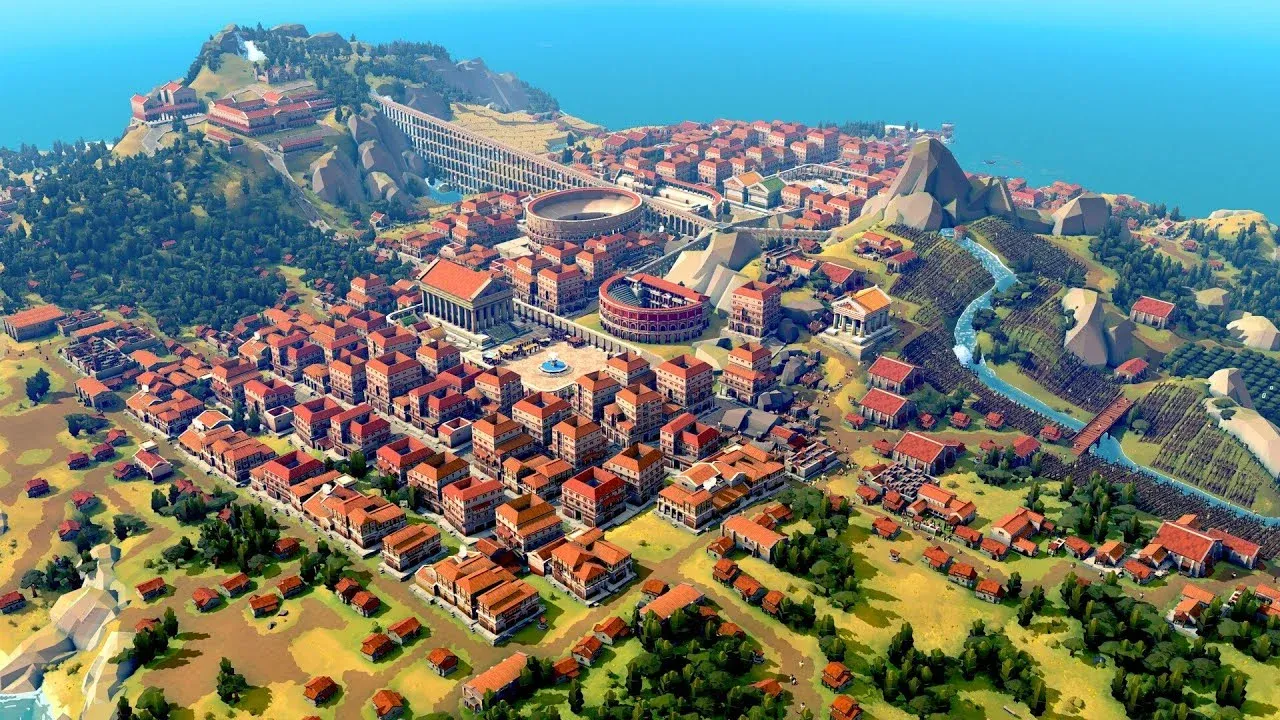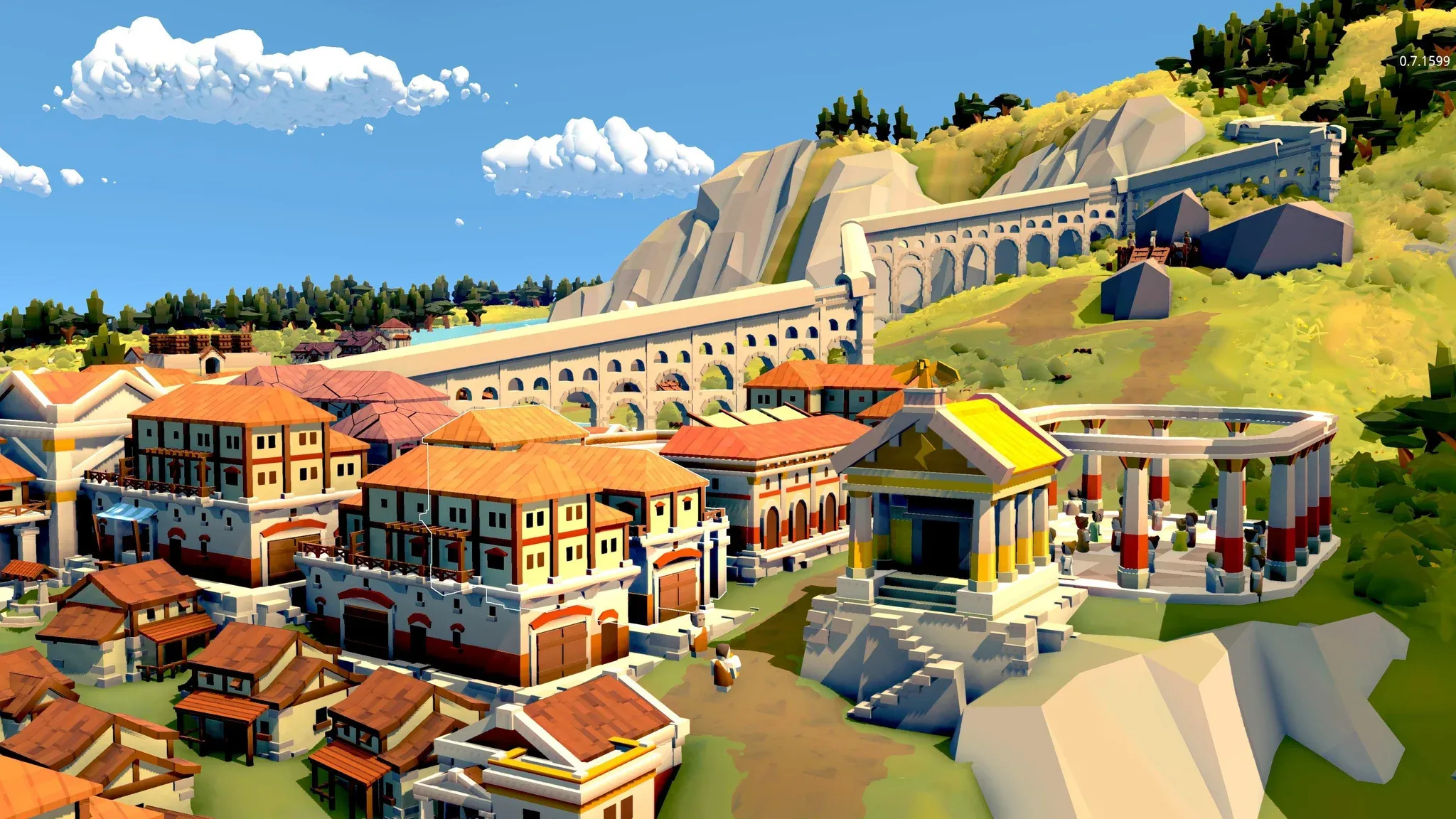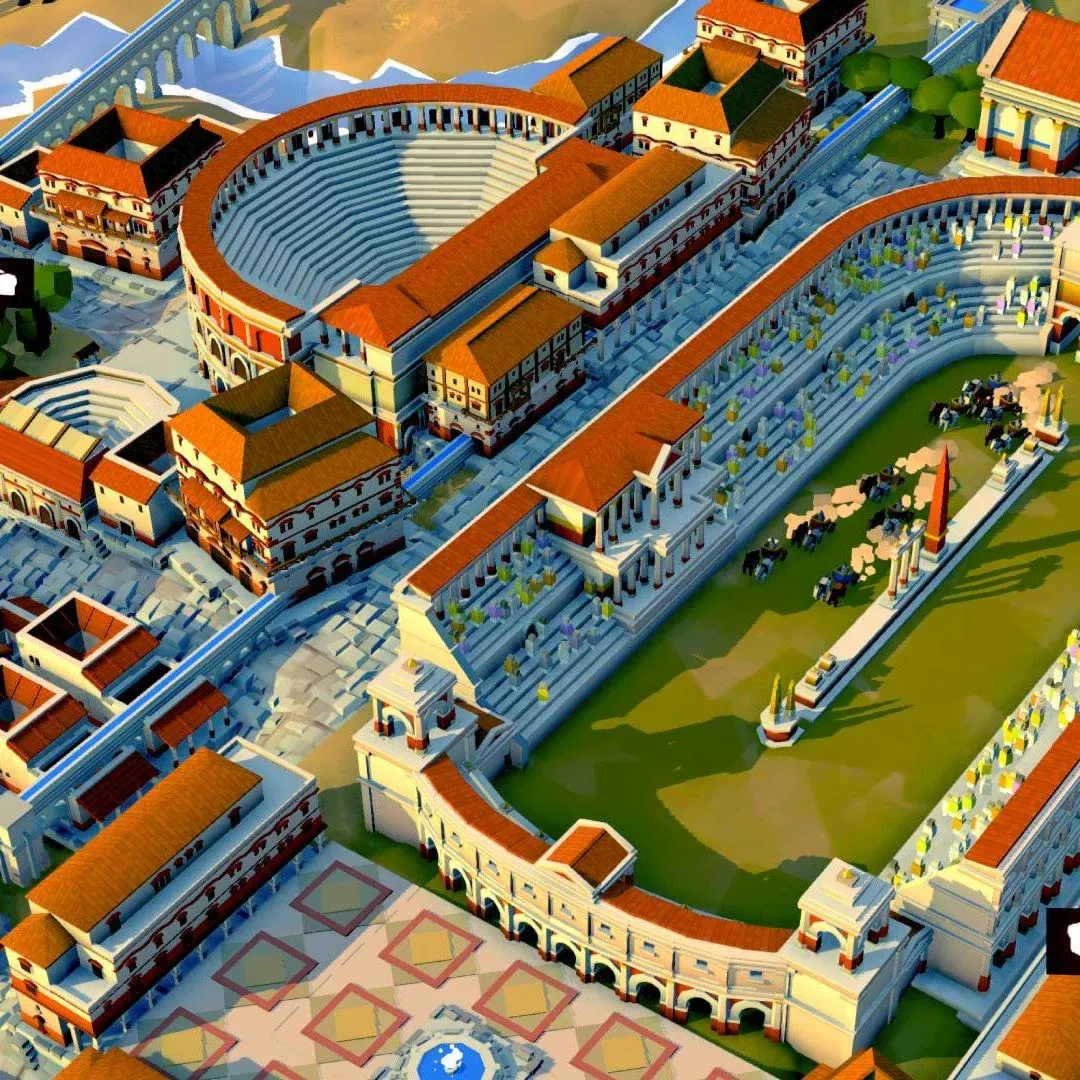

Nova Roma, Lion Shield's Early Access city-builder on the Epic Games Store, starts you off with a crumbling legacy and a blank shoreline. Building a functioning settlement is hard enough. Building one that doesn't get flattened by an angry Neptune? That takes actual planning.
This guide covers everything you need to know about the Divine Favor system and the Technology Tree: which Olympians to prioritize, where to physically place your temples, how to avoid triggering divine punishment, and which research unlocks pay off fastest.
How does the religion system work in Nova Roma?
Religion in Nova Roma runs through a single resource called Favor, represented in the UI as a star surrounded by a laurel wreath. Every temple you dedicate to an Olympian deity generates +2 Favor on dedication. Favor then feeds directly into the Technology Tree, acting as the currency for unlocking new buildings and improvements.
The game currently features five Olympian gods, each tied to a specific part of your economy. Dedicating a Small Temple to any of them also lets you activate Favor of the Gods, a permanent area buff that costs 1 Favor to enable. The catch is placement: the buff only applies within the temple's effective radius, so a Ceres temple sitting next to a warehouse full of pottery does absolutely nothing for your farms.
The five available deities and their Favor of the Gods effects are:
- Jupiter, God of Thunder: +3 citizen happiness within a five-tile radius. Best placed surrounded by Hovels and Insulae.
- Ceres, Goddess of Agriculture: +1 output to the three nearest Farms, Vineyards, and Orchards within the radius. Needs to sit inside your farming cluster.
- Neptune, God of the Sea: +1 fish yield to the five nearest fishing buildings. Coastal placement is non-negotiable.
- Vulcan, God of Fire and the Forge: +1 output to the five nearest fire-based industry buildings. Park him next to Charcoal Makers and Weaponsmiths.
- Mars, God of War: +25% damage to the three nearest Guard Towers within the radius. Useless unless he's actually adjacent to your defenses.

What are Divine Tasks and why do they matter?
Divine Tasks are the gods' ongoing demands. Complete them and you earn additional Favor. Ignore them long enough and you face divine punishment: Jupiter throws lightning, Ceres triggers crop failures, Neptune summons floods. These aren't cosmetic warnings. A flood that hits your port district can wipe out your fishing economy in a single in-game season.
The task types vary by deity:
- Jupiter wants population growth and happiness-boosting buildings.
- Mars wants Guard Towers and Weaponsmiths.
- Ceres asks for Bread donations.
- Vulcan asks for Stone donations.
- Almost every god will eventually ask for Gold, which means you need a Tax Office or higher-tier Insulae generating tax income before these demands start rolling in.
Gods can also demand that you construct Large Temples and Grand Temples as your city grows. Skipping these upgrades for too long accelerates their anger. Large Temples unlock Festivals, which cost resources like Gold, Wine, and Grapes but deliver significant citizen happiness boosts. Grand Temples are the endgame religious buildings, and each one gives you a powerful on-demand ability:
- Jupiter: Cancels rain, droughts, and floods.
- Ceres: Instantly satisfies all citizen hunger and diet requirements.
- Neptune: Sinks incoming enemy ships.
- Vulcan: Extinguishes every active fire in the city.
- Mars: Boosts friendly troop damage and movement speed.
Where should you place each temple for maximum effect?
Placement is where most players lose Favor efficiency. Here's the practical breakdown after testing each deity's radius against different city layouts:
| Deity | Ideal Placement | Buildings to Cluster Nearby |
|---|---|---|
| Jupiter | Center of residential zone | Hovels, Small Insulae, Large Insulae |
| Ceres | Inside or adjacent to farm plots | Farms, Vineyards, Orchards |
| Neptune | Coastal, within range of water | Fishing Huts, Fishing Docks |
| Vulcan | Industrial district | Charcoal Makers, Weaponsmiths |
| Mars | Near city perimeter defenses | Guard Towers, Infantry Barracks |
One thing that catches players off guard: Temples require staffed Priests at higher tiers. Large and Grand Temples won't generate Favor if your city lacks the educated workforce to fill those roles. That means your school infrastructure and residential desirability need to be in order before you start upgrading religious buildings. A Grand Temple with no Priests is an expensive stone monument and nothing else.
What are the best tech tree unlocks in Nova Roma?
Favor flows from your temples into the Technology Tree, which is divided into categories arranged clockwise from the upper-left. Not all of them are equally urgent. Here's how to prioritize based on what actually breaks cities in the early and mid-game:
Early-game priorities
Agriculture and Food should be your first investment. Place Fishing Huts near shoaling fish and Grape Vines near Farms, then build Ceres and Neptune temples in those zones. Two or three Fishing Docks early on provide a consistent food source that doesn't depend on seasonal weather, which matters a lot when a drought can wipe out your wheat supply.
Housing comes next. The Small Insula tech lets more citizens live in a single building, and a Food Counter built into the ground floor of a Small Insula adds happiness passively. More citizens per building means slower sprawl, which keeps your logistics from collapsing.
Finance is non-negotiable. The Tax Office needs to be running early because almost every Divine Task will eventually ask for Gold. Citizens who aren't paying taxes are a liability.
Utilities covers fire suppression. A Fire Brigade near a well handles most early fires, and this matters more once Vulcan's industrial zone starts operating.
Mid-game unlocks worth the Favor
Industry is where the real economy opens up. Foresters eliminate the need to manually clear trees for Wood. Stone Quarries automate Stone collection if your territory has deposits. A Claypit and Charcoal Maker feed the Pottery Workshop, which produces goods that boost happiness in Small Insulae. The Charcoal Maker also combines with Wheat to produce Bread, which feeds both citizens and Ceres's Divine Tasks.
Water and Bathhouses becomes necessary as your city scales. Aqueducts route water from mountain sources down to Water Towers, which then supply the Bath Reservoir and bathing complexes. Citizens without water access leave. Getting your aqueduct network established before zoning new residential blocks is a rule worth following strictly.
Trade and Shipbuilding is where exports turn into real money. The Dock combined with the Trading Agreements tech automates buying and selling. The Trading Post makes Merchant Ships visit more frequently. The Shrewd Dealmaking tech applies discounts for bulk resource purchases, which matters when you're importing stone or marble for late-game construction. For export revenue, Fine Wine (Grapes plus Pottery, exported from a Winery near the Docks) generates the highest returns of any production chain currently in the game.
Defensive and logistics tech
Defensive Structures can wait until raiders actually show up, but don't sleep on the Infantry Barracks unlock. Manually recruiting militia is tedious, and the Barracks automates it. A few Guard Towers with a Mars temple nearby handles most early raid scenarios.
Logistics is underrated. Small Stockpiles and Small Warehouses work fine early, but Transport Carts become mandatory once your city grows. Without them, goods sit in production buildings while citizens starve two tiles away. The game's recent hot-patches have adjusted delivery worker pathing, addressing some of the worst logistics bugs, but the fundamental design still rewards tight city layouts over sprawl.
How do you balance Favor spending between religion and research?
This is the tension that defines mid-game Nova Roma. Favor earned from temples goes into the Technology Tree, but the Technology Tree includes the Religion branch, which unlocks the Large and Grand Temples that generate more Favor. It's a loop you need to feed carefully.
The practical answer: prioritize Agriculture, Housing, and Finance research first. Then invest in the Religion branch to unlock Large Temples, which open Festivals. Festivals cost Gold, Wine, and Grapes but pay back in citizen happiness and additional Favor generation. Once you have Grand Temples for your most-used deities (Ceres and Jupiter are the highest-impact choices for most city layouts), you have on-demand divine abilities that function as emergency tools rather than passive buffs.
For a deeper look at how religion connects to the broader economy in Nova Roma, the developer's breakdown of each deity's mechanics covers the official details on religion bonuses and research techs.
Key mistakes that get cities destroyed
After spending significant time with the current Early Access build, these are the patterns that consistently end runs:
- Neglecting a single deity for too long. The Pantheon tracks relative favor. Pouring everything into Ceres while ignoring Neptune is how you end up with a flooded port district right when your export economy was taking off.
- Building temples in the wrong location. A Neptune temple placed inland generates +2 Favor on dedication and nothing else. The Favor of the Gods buff requires the correct buildings within the radius to function.
- Skipping the Tax Office. Gold demand from Divine Tasks shows up earlier than most players expect. Without a Tax Office or high-tier Insulae generating tax income, you'll fail resource donation tasks and watch Favor meters drop.
- Letting logistics sprawl outpace your Transport Cart unlock. Citizens will starve while food sits in distant granaries. Keep residential blocks within 10 tiles of food storage until you have carts running.
For more strategy guides covering city-builders and other games, browse the latest guides on GAMES.GG.