Search games, articles, guides...CtrlK
Sign InGet Started
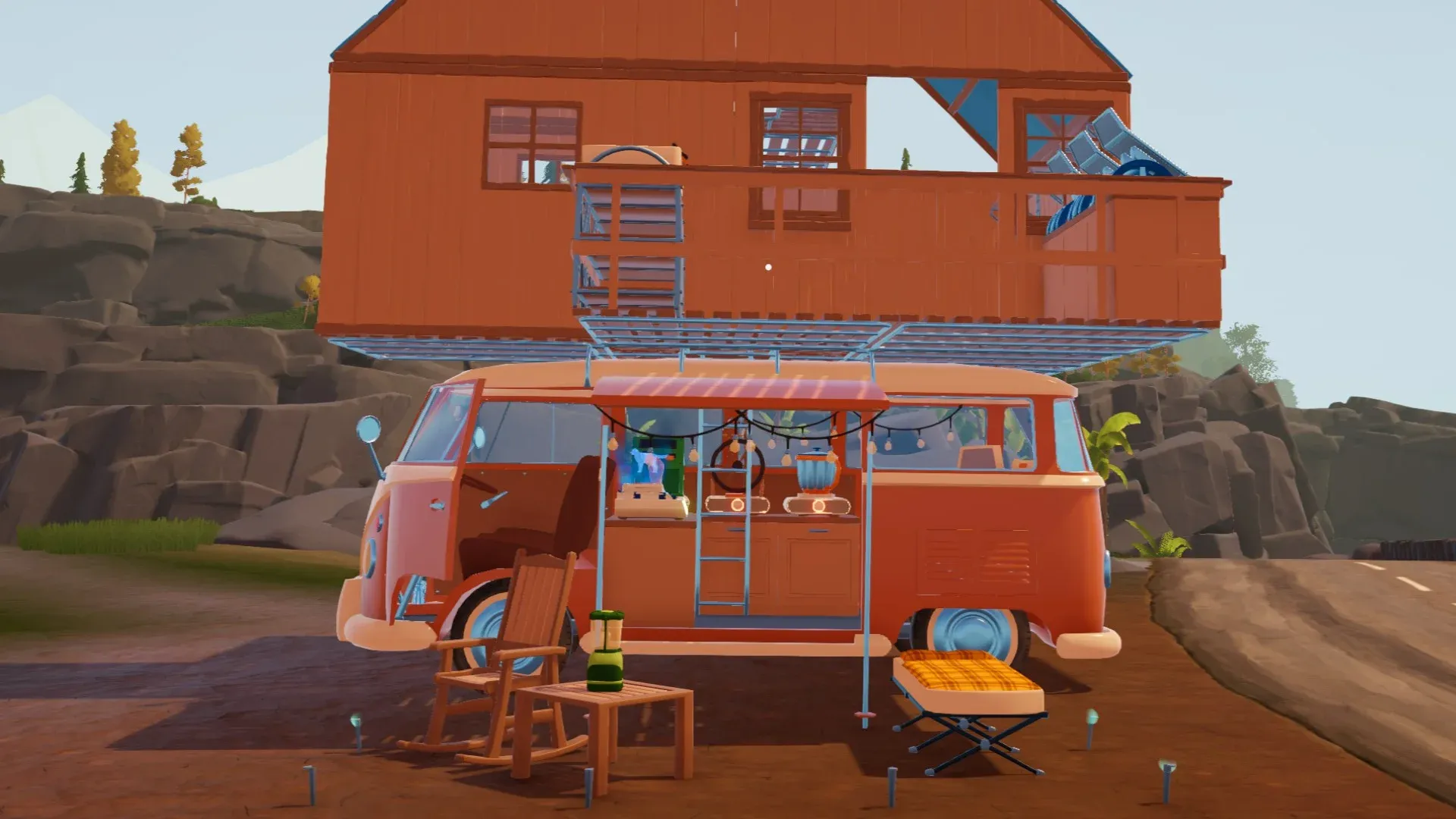
Every resource in Outbound, where to find it, and how to collect it across all four biomes and power systems.

Written by Mostafa Salem
Head of Gaming Research
See more GAMES.GG guides on Google
Add us as a preferred source and our guides show up first in your results.
Outbound Axe Guide: How to Get, Craft, and Use It
Learn how to unlock, craft, and use the Axe in Outbound to chop logs and dead trees for wood materials.
Outbound Scrap Metal Guide: Where to Find It and What It Builds
Find Scrap Metal fast in Outbound by hitting Signal Towers, managing supply caches, and keeping a reserve for key workstations.
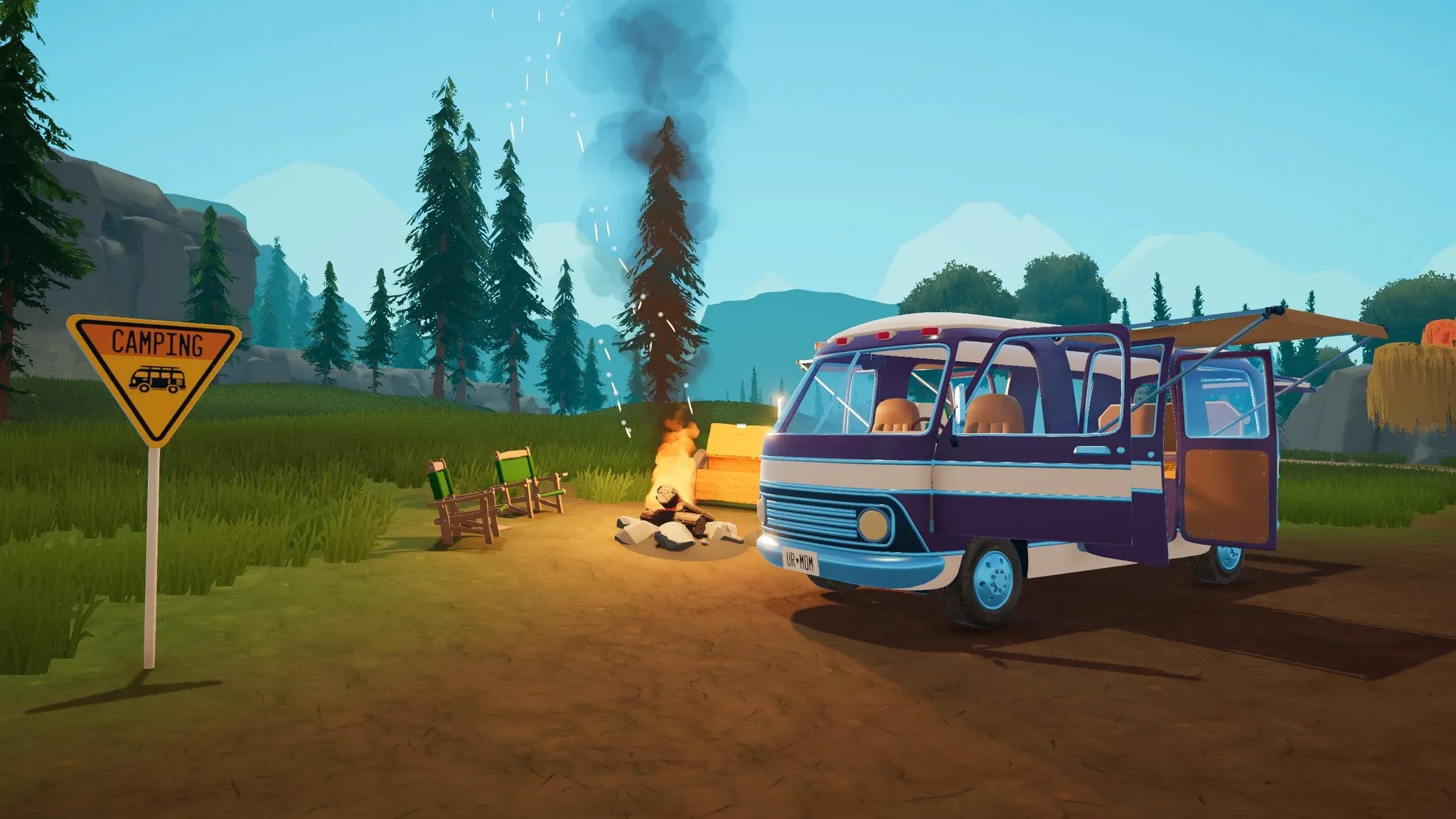
Outbound Tips and Tricks: All Strategies to Master Van Life
Master Outbound faster with tips on van selection, resource farming, tool priority, biome prep, and advanced base building.
Outbound drops you into a peaceful open world where gathering the right materials is the difference between a van that barely moves and one that's kitted out with solar panels, a full kitchen, and repaired bridges. The resource list is longer than it looks at first glance, and some materials only appear in specific biomes or require upgraded tools to collect. This guide covers every major resource across all four maps, the full energy system, and the crafted materials you'll need to unlock mid and late game upgrades.
The game starts you off in Biome 1 (Forest and Farms) with a handful of items you can grab bare-handed: Everwood logs on the ground, Scrap Metal near Signal Towers, and Litter scattered around campsites. These three get you through the first few upgrades and let you build your first crafting stations.
Here's what each starter resource does:
If you're just getting started and need direction on the first hour, the Outbound ultimate beginner's guide covers the core loop and Signal Tower priorities in detail.
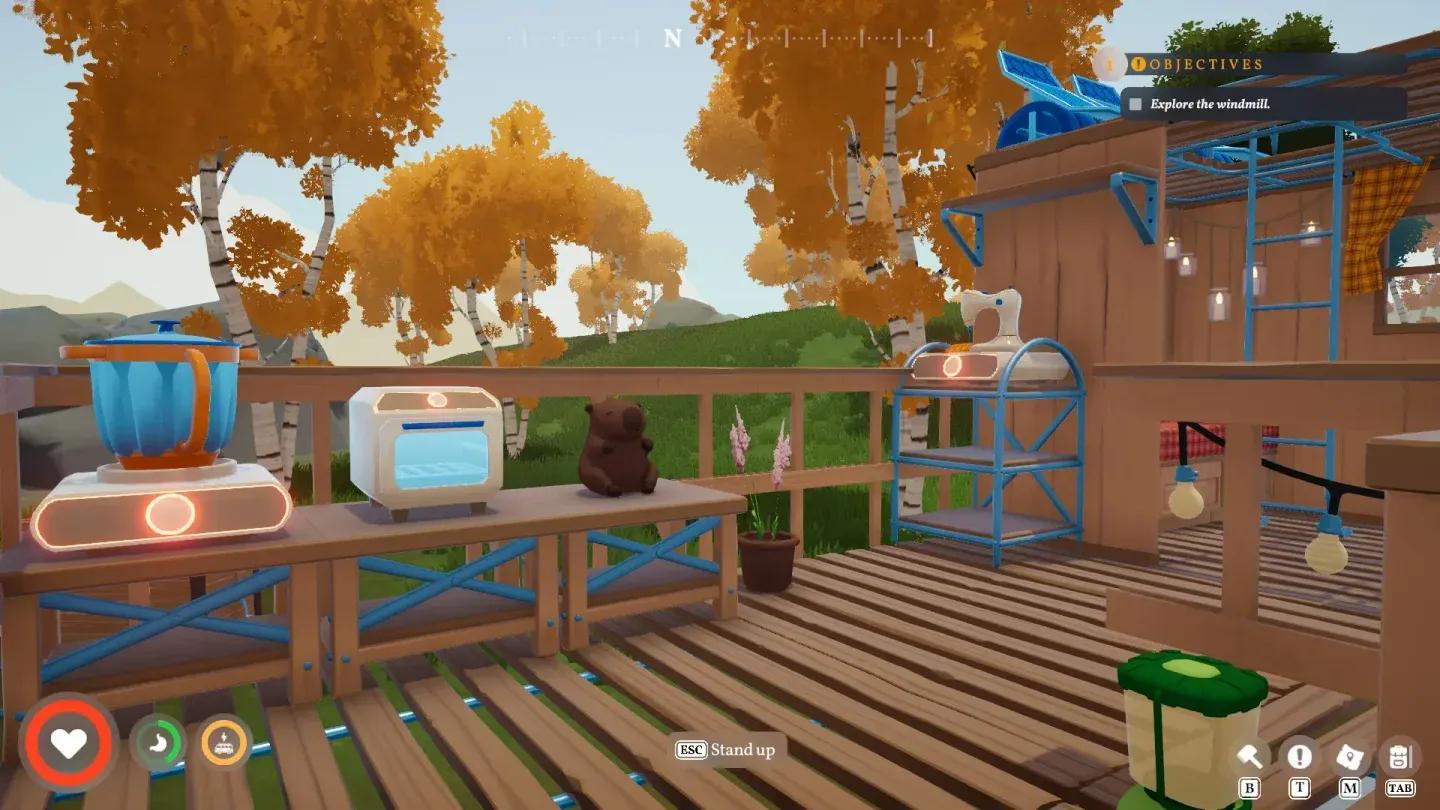
Early resource inventory screen
The table below covers every major raw material confirmed across the four biomes, sorted by where you find it.
| Resource | Biome | How to Collect | Primary Use |
|---|---|---|---|
| Everwood | 1, 2 | Hand (loose logs) or Axe (large logs) | Bridges, van upgrades, Everwood Planks |
| Silverbark Wood | 1 | Axe II on logs in golden grass areas | Silverbark Planks |
| Redwood | 2 | Ground near Redwood trees, or Axe III | Redwood Planks |
| Fiber | 1 | Hand (small shrubs) or Sickle (large) | Van fuel, crafting |
| Durafibre | 2 | Hand or Sickle II on Sturdy Bushes | Durathread |
| Rough Stuffing | 1, 2 | Harvest Reeds by hand near water | Clothing upgrades |
| Cotton | 2, 3 | Harvest from ground or crop plots | Cloth |
| Rocks | 1 | Hand (loose) or Pickaxe (boulders) | Power Unit, crafting |
| Coarse Ore | 1 | Pickaxe II, northwest mountains or south cave | Coarse Metal |
| Mossrock | 1, 2 | Pickaxe II, south cave and Biome 2 hills | Onyx Minerals |
| Amberstone | 3 | Mine from orange boulders on cliffs | Crafting (Biome 3) |
| Red Ore | 2, 3 | Storage box in Biome 2 cave; mine at cliff bases in Biome 3 | Crafting |
| Clay | 3 | Harvest clay deposits near southeast cliffs | Casings |
| Scrap Metal | All | Pick up near Signal Towers | Van upgrades, Sheet Metal, Bolts |
| Litter | All | Pick up at campsites and seating areas | Download Coupons |
| Bottlecaps | 1 | Near campsites, charging stations, birdhouses | Vending machines |
| Bamboo | 2 | Crate inside the Biome 2 cave (drain with waterwheel) | Crafting |
| Natural Rubber | 2 | Rubber Taps on silver-wrapped trees, east Biome 2 | Processed Rubber |
| Beeswax | 2, 3 | Harvest Beehives in flower field (Biome 2); one near Bonsai Tree (Biome 3) | Crafting |
| Lavender | 2 | Harvest flowers southeast of the Biome 2 bridge | Crafting |
| Sea Shell | 2 | Pick up on sandy beaches along the coastline | Decoration |
| Flower Petals | 1, 2, 3 | Harvest Tulips (Biome 1), Wildflowers (Biome 2), Cactus Flowers (Biome 3) | Paint (5 petals per batch) |
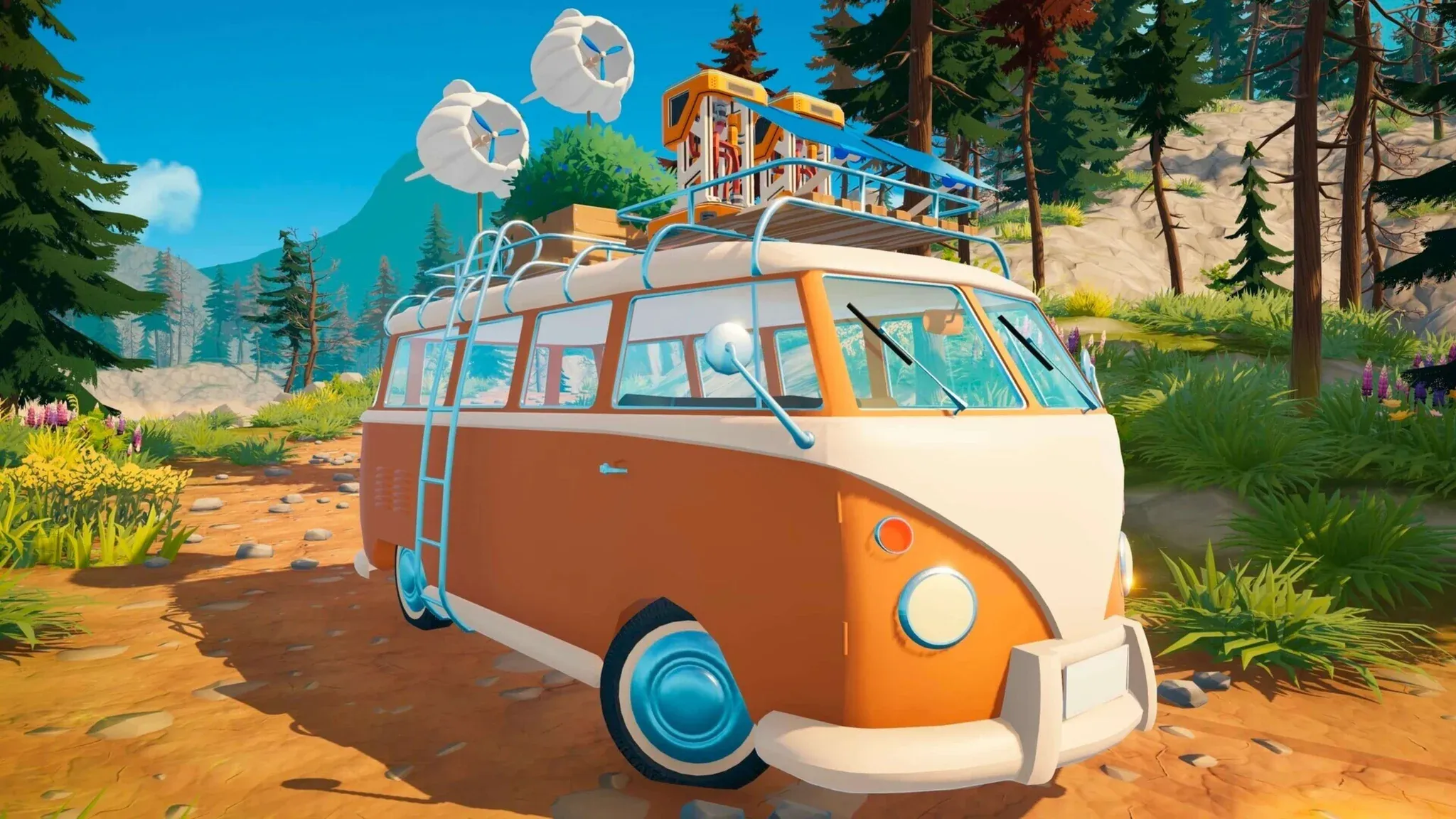
Your van doesn't run on gasoline. You keep it charged through a combination of up to 7 different power sources, all unlocked via Signal Tower Terminals. The base Power Unit comes with the van and accepts Wood or Fiber as fuel. Everything else is weather-dependent.
Each energy unit charges independently, so stacking two Solar Panels charges the battery twice as fast as one. Building extras doesn't appear to affect van weight, so there's no penalty for loading up on chargers.
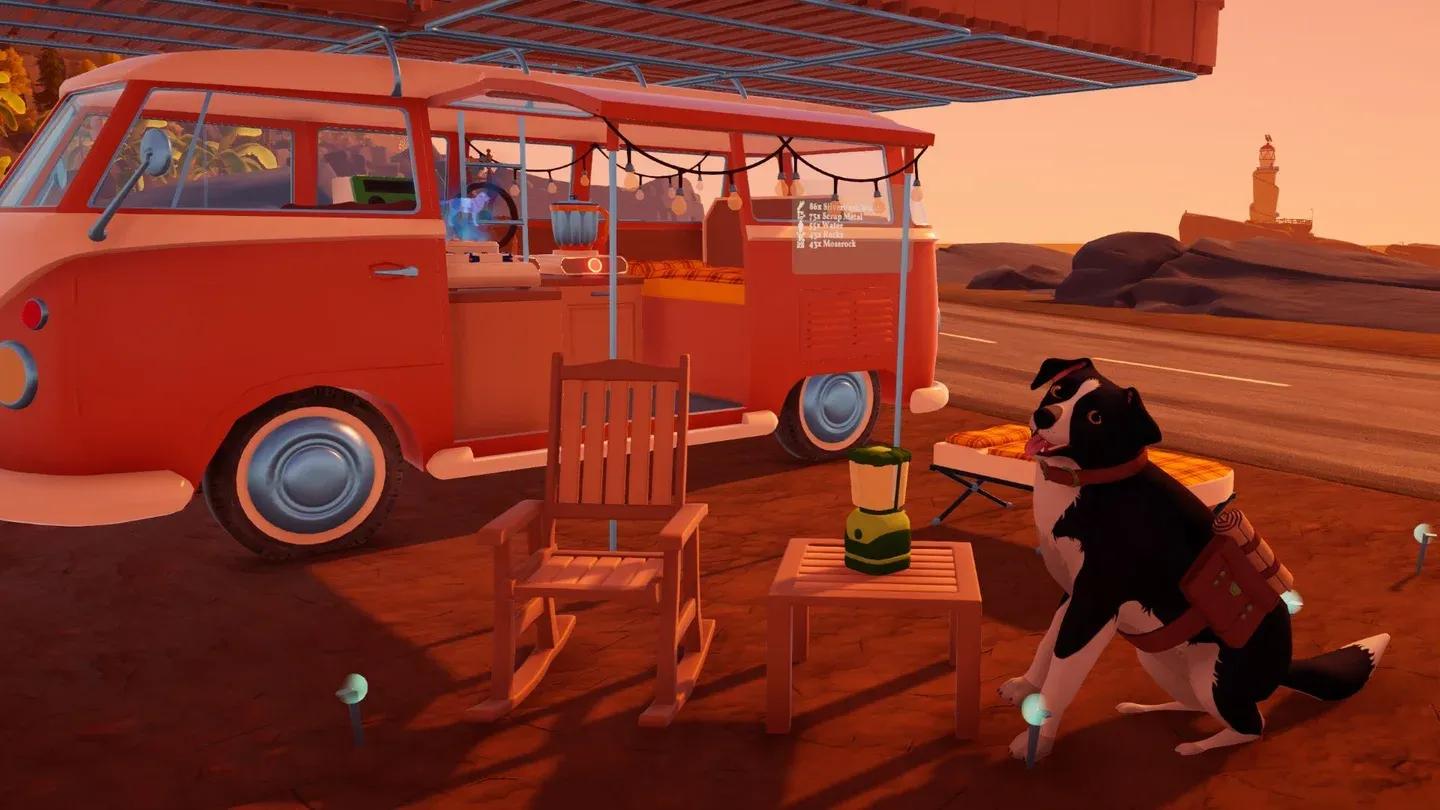
Energy build menu, all sources
| Power Source | Unlock Map | Craft Cost | Charges When |
|---|---|---|---|
| Power Unit | Map 1: Forest and Farms | 3 Rocks, 3 Fiber | Wood or Fiber placed inside |
| Solar Panel | Map 1: Forest and Farms | 5 Scrap Metal | Sun is out |
| Wind Turbine | Map 1: Forest and Farms | 5 Fiber | Wind is blowing |
| Efficient Solar Panel | Map 2: The Coast | 1 Electronics, 2 Sheet Metal, 2 Bolts | Sun is out |
| Rainwater Turbine | Map 2: The Coast | 5 Fiber | Raining |
| Efficient Wind Turbine | Map 3: The Canyon | 2 Cloth, 2 Thread | Wind is blowing |
| Efficient Rainwater Turbine | Map 3: The Canyon | 2 Strong Weave, 2 Hardened Metal | Raining |
Weather patterns differ significantly between maps, so the right energy build changes as you progress. Here's what works best in each zone:
Raw resources only get you so far. Most mid-game van upgrades and clothing recipes require processed materials that you produce at workstations installed in your van. Each workstation blueprint comes from a Signal Tower Terminal.
| Crafted Material | Recipe | Workstation | Blueprint Source |
|---|---|---|---|
| Download Coupon | 1x Litter | Recycler | Starter recipe |
| Everwood Plank | 2x Everwood | Sawmill | Signal Tower, Biome 1 |
| Silverbark Plank | 2x Silverbark Wood | Sawmill | Signal Tower, Biome 1 |
| Redwood Plank | 2x Redwood | Sawmill | Signal Tower, Biome 1 |
| Reinforced Plank | 1x Everwood + 1x Everwood Plank | Wood Nailer | Signal Tower, Biome 1 |
| Bolts | 2x Scrap Metal | Bolt Press | Signal Tower, Biome 1 |
| Metal | 2x Scrap Metal | Metal Smelter | Signal Tower, Biome 1 |
| Coarse Metal | 1x Coarse Ore | Metal Smelter | Signal Tower, Biome 1 |
| Thread | 2x Fiber | Spinning Wheel | Sunbeam Acres Farm |
| Durathread | 2x Durafibre | Spinning Wheel | Sunbeam Acres Farm |
| Sheet Metal | 1x Scrap Metal | Sheet Press | Signal Tower, Biome 2 |
| Casings | 1x Sheet Metal + 2x Clay | Sheet Press | Signal Tower, Biome 2 |
| Electronics | 1x Sheet Metal + 1x Casings | Assembler | Signal Tower, Biome 2 |
| Common Minerals | 1x Rock | Smasher | Signal Tower, Biome 2 |
| Onyx Minerals | 1x Mossrock | Smasher | Signal Tower, Biome 2 |
| Processed Rubber | Natural Rubber | Rubber Processor | Signal Tower, Biome 2 |
| Paint | 5x Flower Petals | Mortar and Pestle | Windmill Terminal, Biome 1 |

Sawmill plank crafting menu
Hunger is a real mechanic in Outbound. Early on, Roadberries (+10 Nutrition) are the easiest food to find since they grow on dark green bushes near Everwood trees throughout Biome
Once you reach Biome 2, the calorie density jumps: Bananas, Coconuts, Coastberries, and Honey all give +22 Nutrition, making them far more efficient than the Biome 1 forageables.
For cooked food, the Cooking Pot and Baking Oven unlock some serious nutrition payoffs:
| Recipe | Nutrition | Ingredients | Workstation |
|---|---|---|---|
| Mushroom Soup | +22 | 2x Amber Morel or 2x Indigocaps + 1x Water | Cooking Pot |
| Bread | +22 | 2x Grain + 1x Water | Baking Oven |
| Jam | +22 | Roadberries | Food Processor |
| Tomato Sauce | +22 | 2x Tomato | Food Processor |
| Coconut Smoothie | +50 | 1x Coconut + 1x Water | Food Processor |
| Pizza | +50 | 2x Grain + 1x Water + 1x Tomato Sauce | Baking Oven |
| Banana Bread | +50 | Found in Biome 2 maze blue storage box | N/A |
Water is used in multiple recipes but isn't consumed directly. Collect Water Bottles from houses and campsites, or draw from wells scattered across Biome 1. When you pick up a bottle, your inventory automatically splits it into a Bottle Cap and Water.
Several resource-rich areas in Biome 1 are blocked until you repair the broken bridges. The Amber Morel field north of the Fire Lookout, for example, sits behind one of these crossings. Bridges require Everwood Planks crafted at a Sawmill. If you're hitting walls on exploration, the Outbound broken bridge repair guide covers all three crossings and the drawbridge.
For everything else in the game, the full Outbound guides collection has dedicated pages on fiber farming, van storage, and more.