Overview
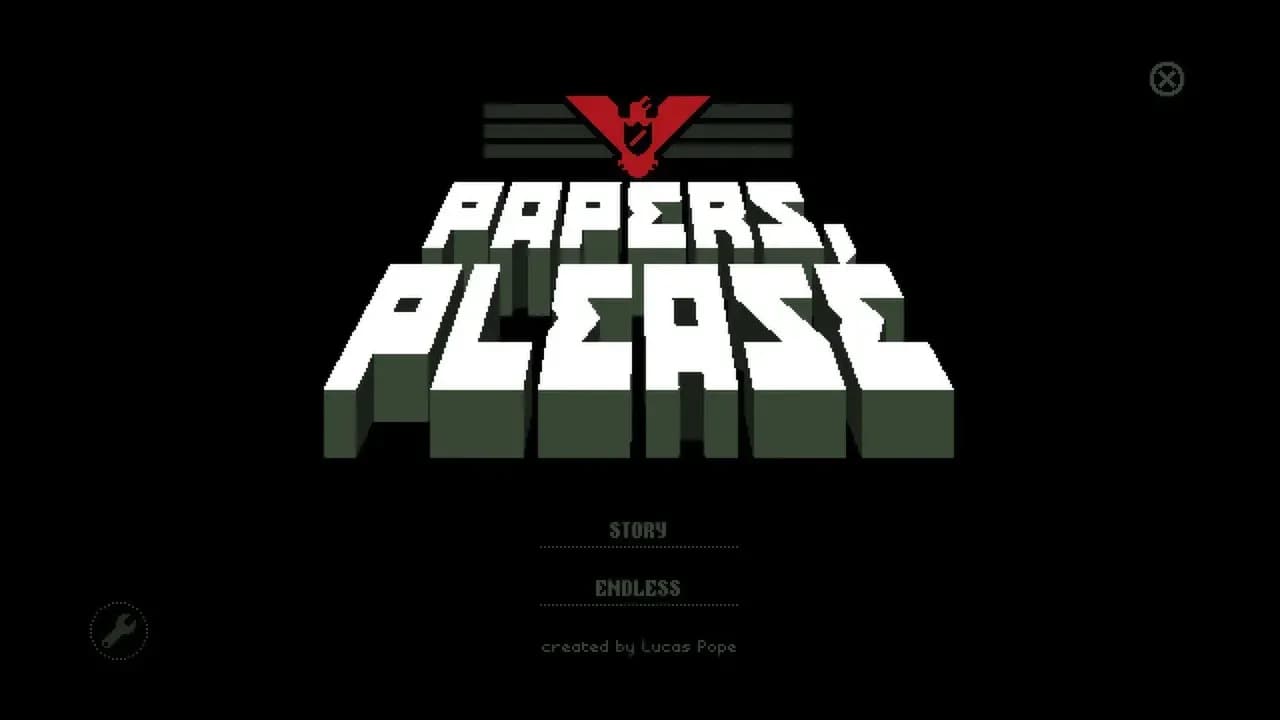
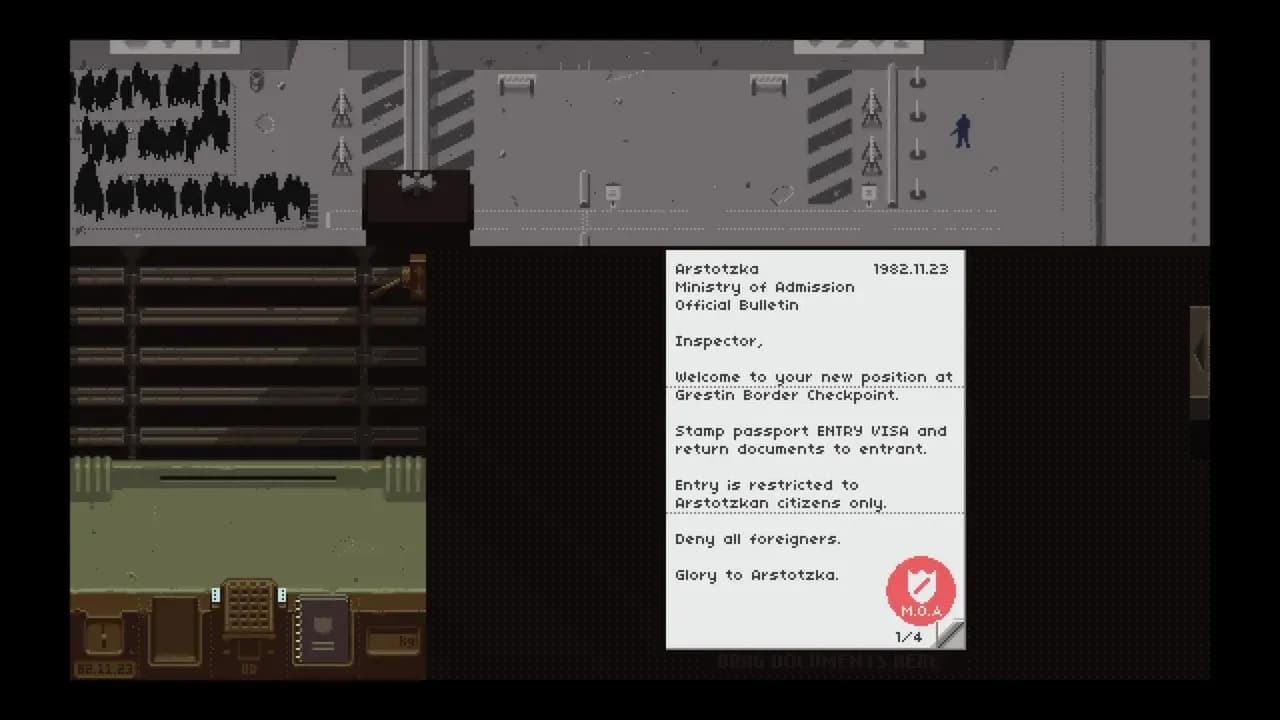
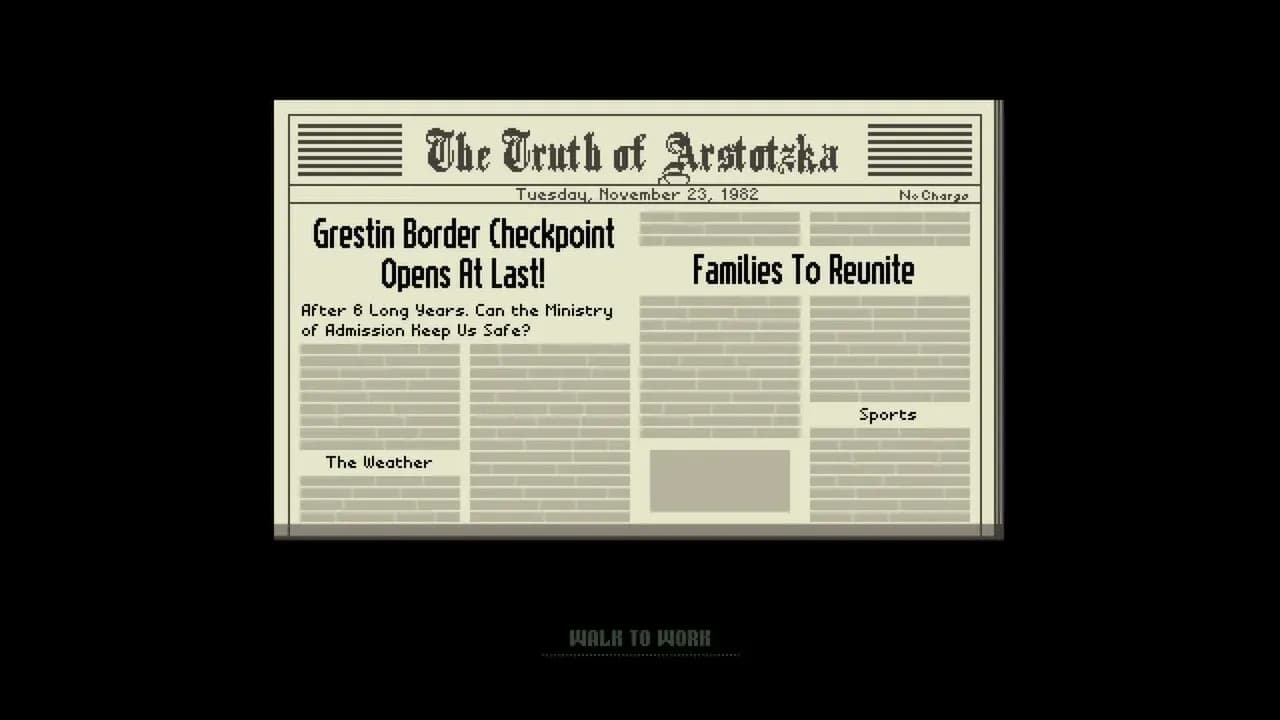
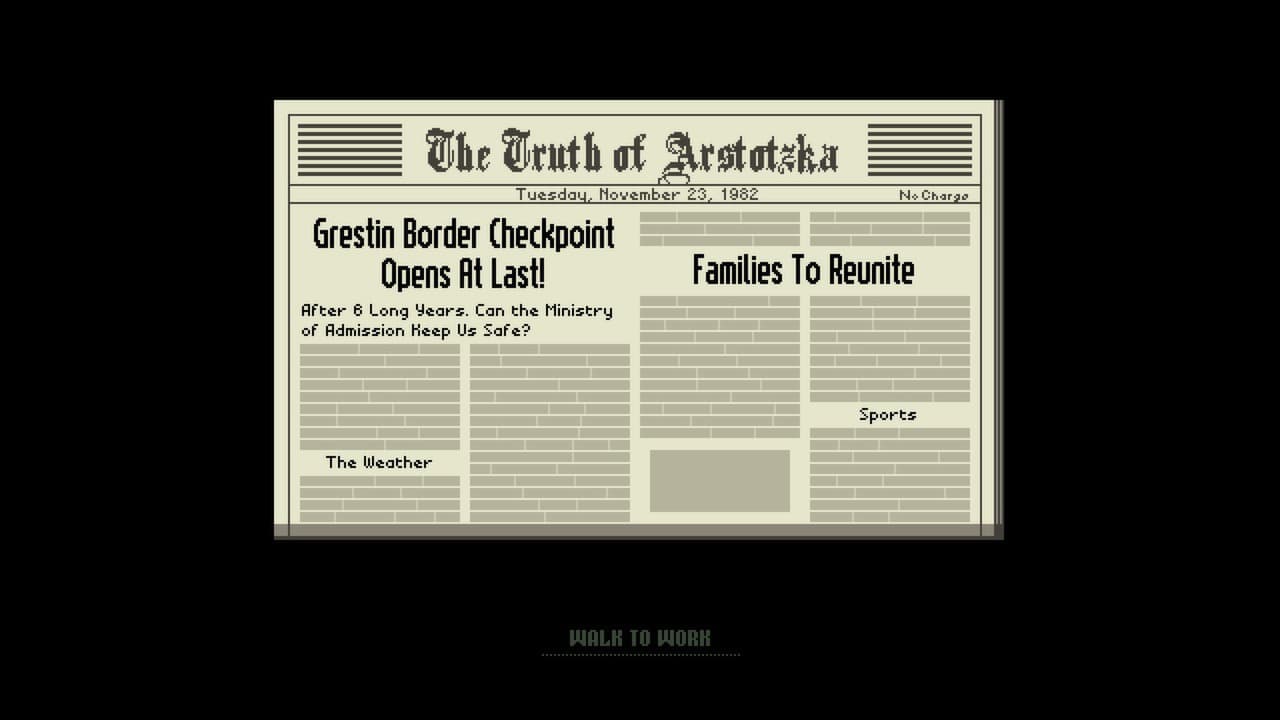
Papers, Please is a document inspection puzzle game developed entirely by Lucas Pope and released in August 2013. Set in the fictional Eastern Bloc nation of Arstotzka following a six-year war with neighboring Kolechia, the game places you behind an immigration checkpoint booth. Your job is to process travelers, verify their paperwork, and decide who gets in. The premise sounds mundane. The execution is anything but.
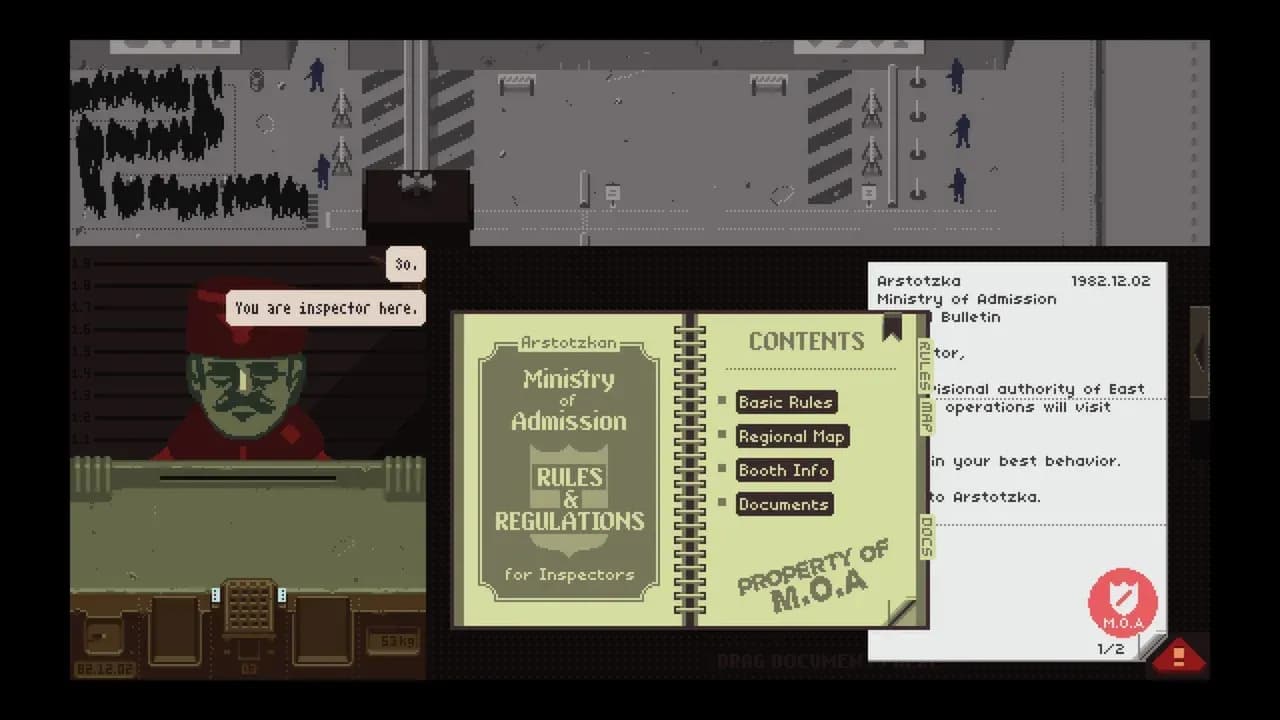
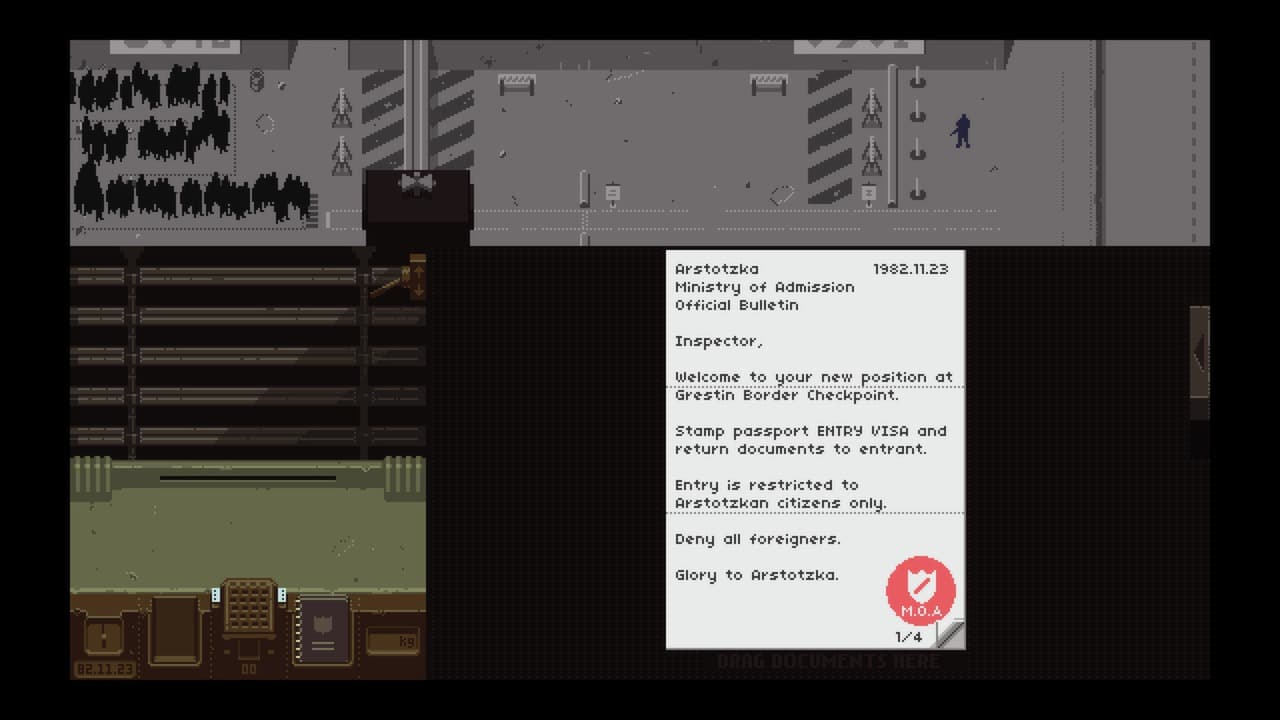
Each in-game day adds new rules from the Ministry of Admission: deny entry to citizens of specific countries, require additional identity documents, cross-reference entry permits against passports. The ruleset grows faster than most players can comfortably track, and that mounting pressure is exactly the point. Mistakes cost money. Money pays for food, rent, and heat for your family. Starving them out is also a game over condition.
Gameplay and mechanics
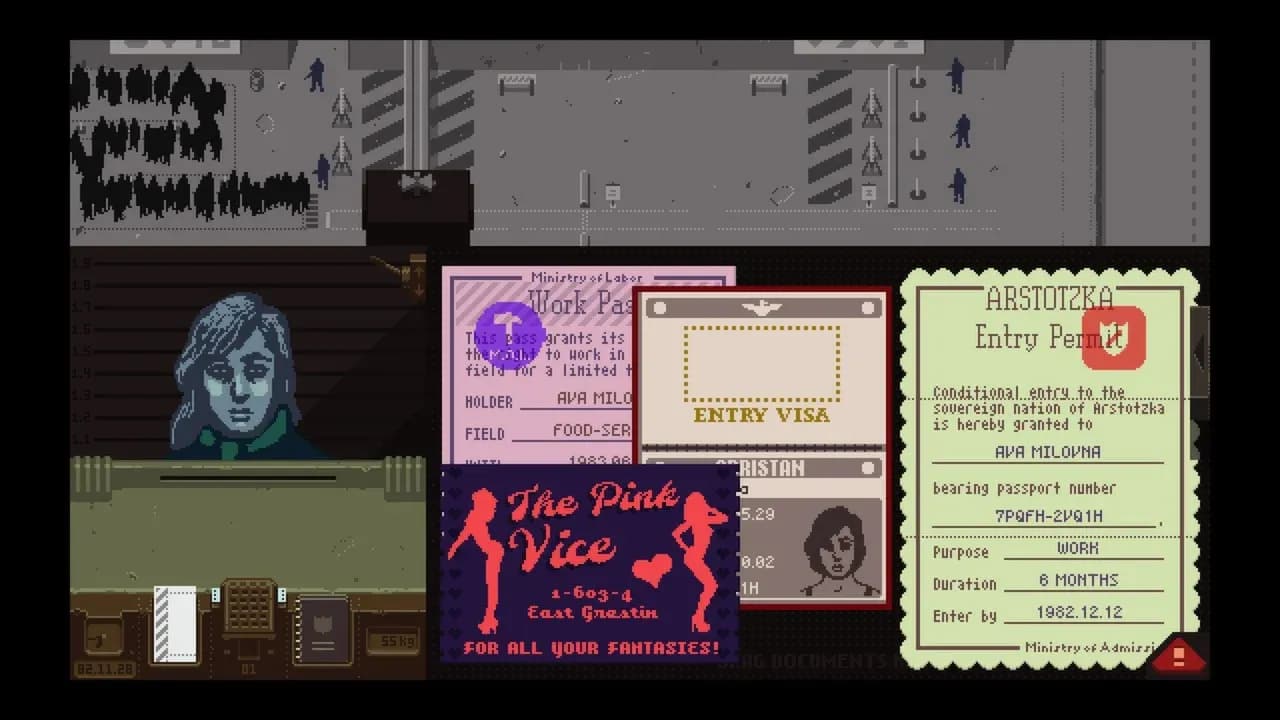
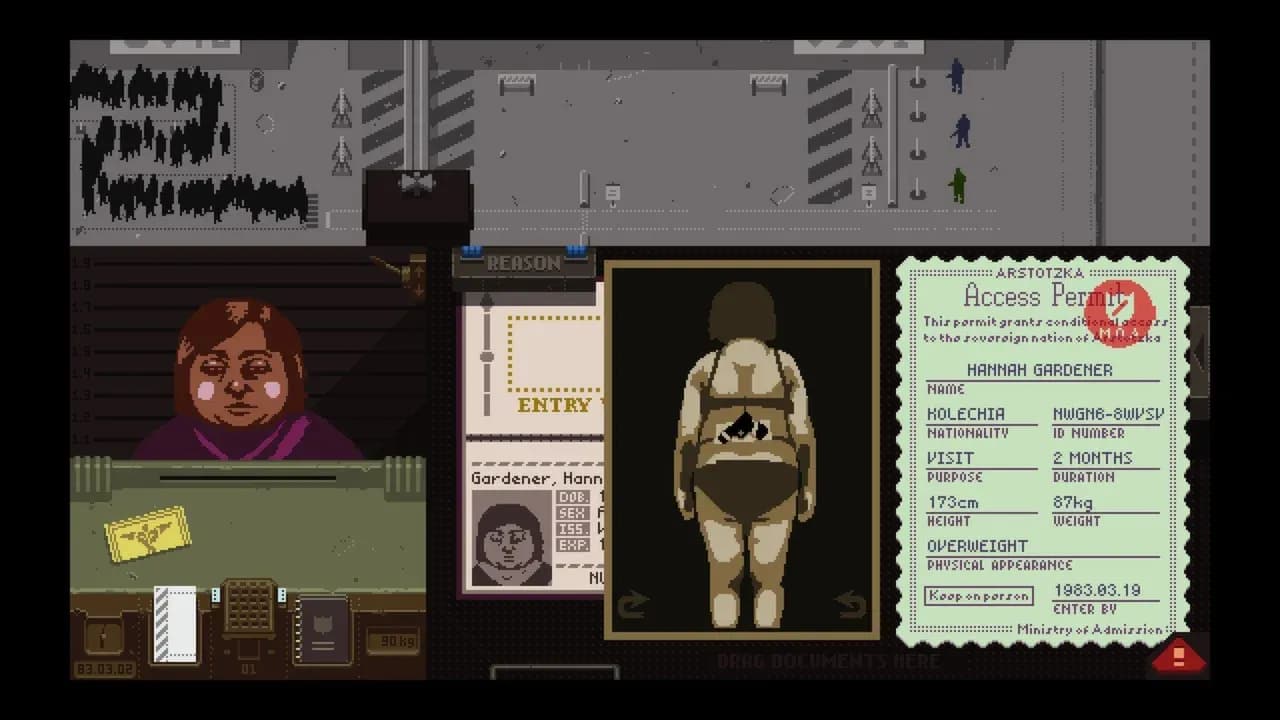
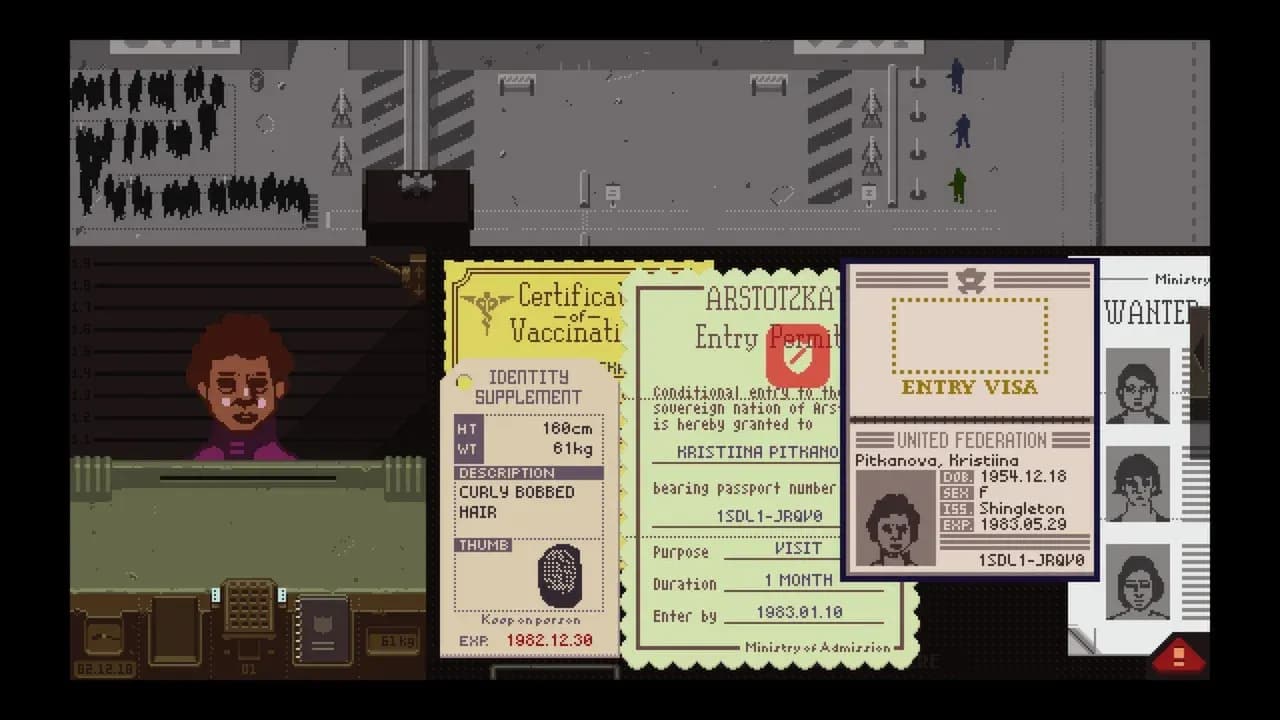
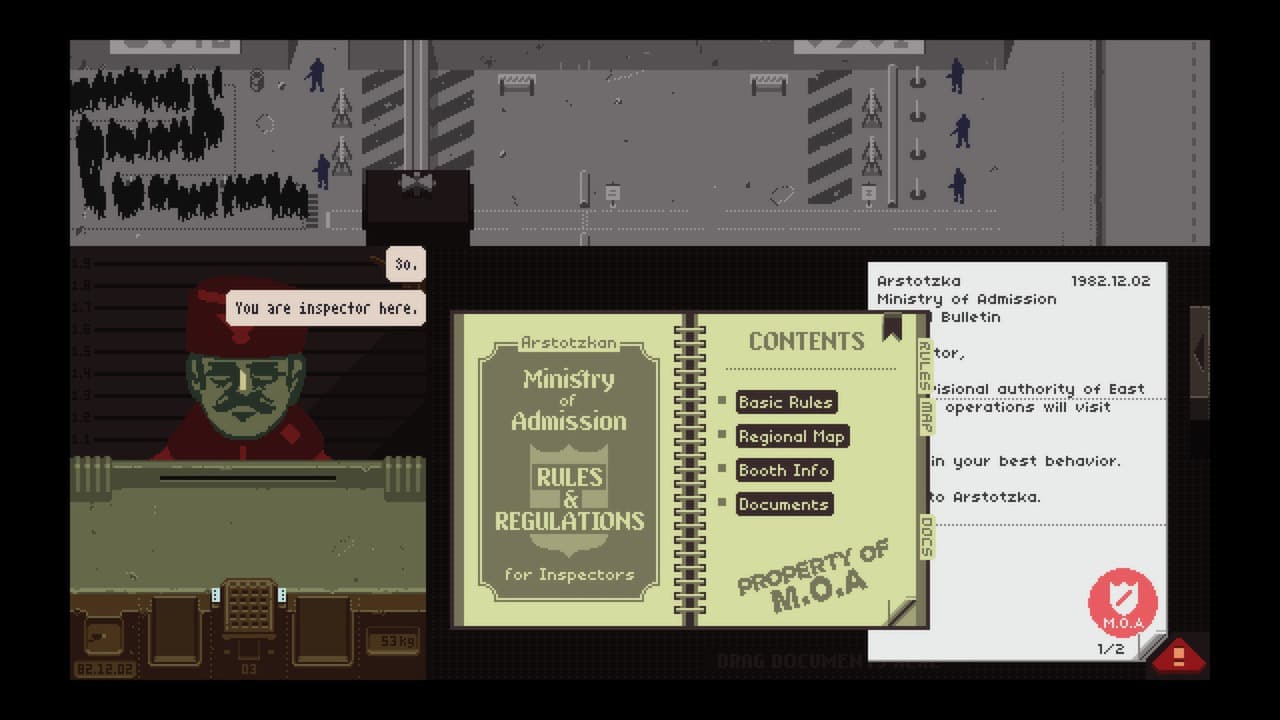
The core gameplay loop of Papers, Please is document verification under time pressure. Travelers arrive one at a time, hand over their papers, and the player must cross-reference every detail using a growing stack of rule booklets and inspection tools.
Key mechanics include:
- Passport and document cross-referencing
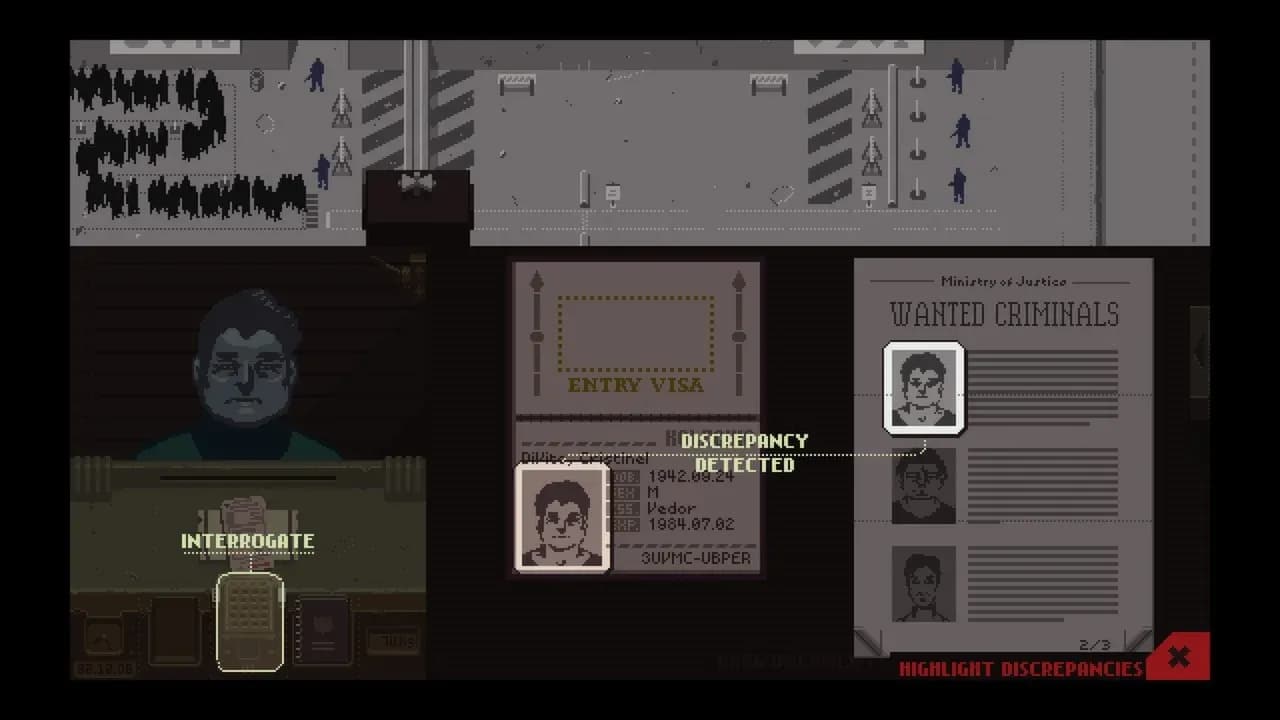
- Fingerprint and photo matching
- Contraband body searches
- Interrogation and detainment options
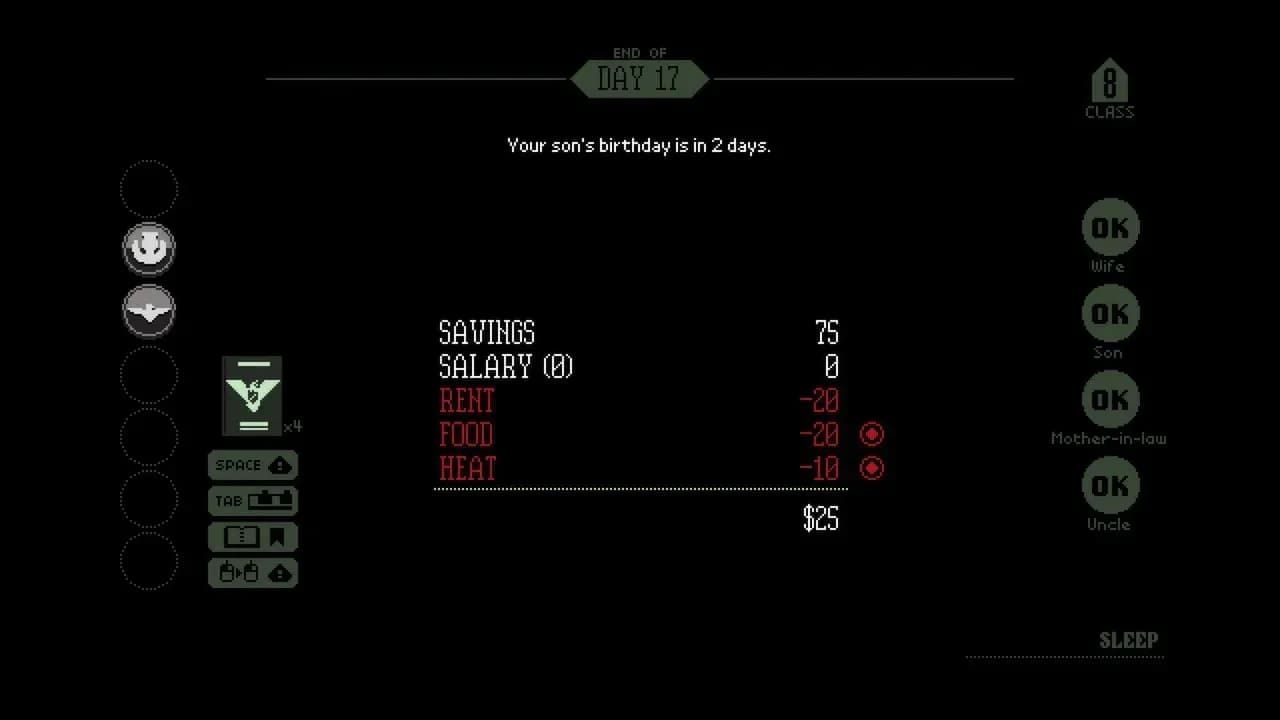
- Daily budget allocation for family survival
The genius is in how the system scales. Early days involve checking a single document against a short rulebook. By the mid-game, you're juggling six document types, a diplomatic exceptions list, and a wanted-criminals board simultaneously, all while a queue of impatient travelers stacks up outside. Speed and accuracy pull in opposite directions, and the game never lets you forget it.
What makes the moral dilemmas hit so hard?
Papers, Please earns its reputation as a morality-driven simulation because the ethical weight comes from the mechanics themselves, not cutscenes or dialogue trees. A woman claims the man ahead of her is her husband and begs you to let her through despite incomplete papers. Her desperation reads as genuine. Her papers might be forged. Letting her through risks a penalty; turning her away might separate a real family.
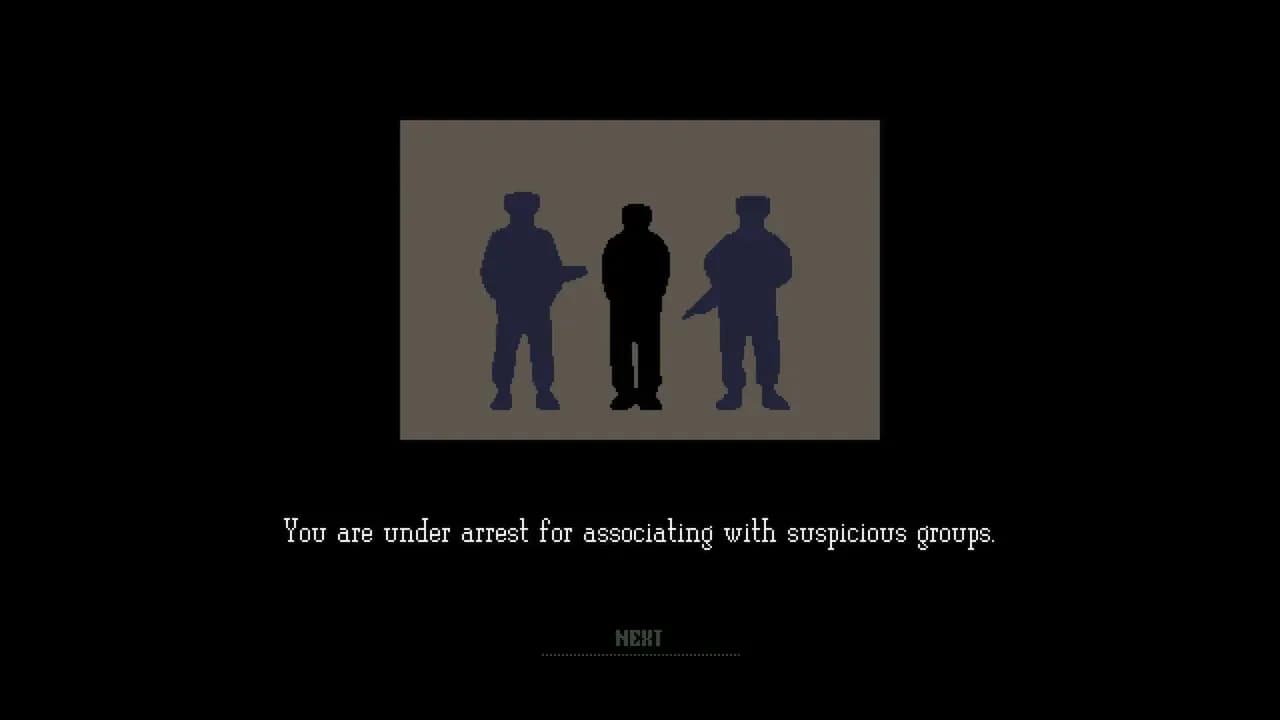
A shadowy anti-government organization called EZIC contacts the inspector across multiple days, asking for small favors: let this person through, look the other way on that document. The player can help them, ignore them, or report them, and those choices feed into one of Papers, Please's multiple possible endings. There are 20 distinct endings in total, shaped by every major decision the player makes throughout the story mode.
World and setting
Arstotzka is a masterclass in environmental storytelling built almost entirely through paperwork. The country's oppressive bureaucracy, its suspicion of foreigners, and the grinding poverty of its citizens all emerge through the documents you process and the family budget screen you manage each night. The pixel art aesthetic keeps everything deliberately sparse, which makes the moments of human desperation land harder.
The sound design reinforces the setting without overplaying it. A rubber stamp thud, a rejection buzzer, the ambient noise of a cold border checkpoint. Pope composed the score himself, and it stays appropriately bleak without becoming distracting.
Content and replayability
The story mode runs roughly five to six hours on a first playthrough, though hunting every ending adds significant time. An unlockable endless mode strips away the narrative and focuses purely on document-checking accuracy, functioning as a score-attack challenge for players who want to stress-test their inspection speed.
Papers, Please is available on Windows, macOS, iOS, Android, and PlayStation Vita. The mobile versions include a touch-friendly interface that holds up well given the point-and-click nature of the original. Across all platforms, the game remains one of the most discussed examples of mechanics-driven storytelling in independent game development, a status it has held since winning the Independent Games Festival Grand Prize in 2014.
| Requirement | Minimum |
|---|---|
| Processor | 1.5 GHz Core2Duo |
| Memory | 2 GB RAM |
| Graphics | OpenGL 1.4 or better |
| Storage | 100 MB available space |