
What is Return of the Ancients and why does it matter?
Path of Exile 2 patch 0.5, titled Return of the Ancients, launches May 29 and is the largest update Grinding Gear Games has ever shipped. It completely restructures the endgame, introduces a new challenge league, adds two Ascendancy classes, and redesigns the Atlas Passive Tree from the ground up. Grinding Gear Games game director Jonathan Rogers has confirmed this is the final major content update before the 1.0 full release, which is still targeted for late 2026 following ExileCon in November.
The update drops on all platforms on May 29, 2026 at 1 PM PDT. Here is everything you need to know before you log in.
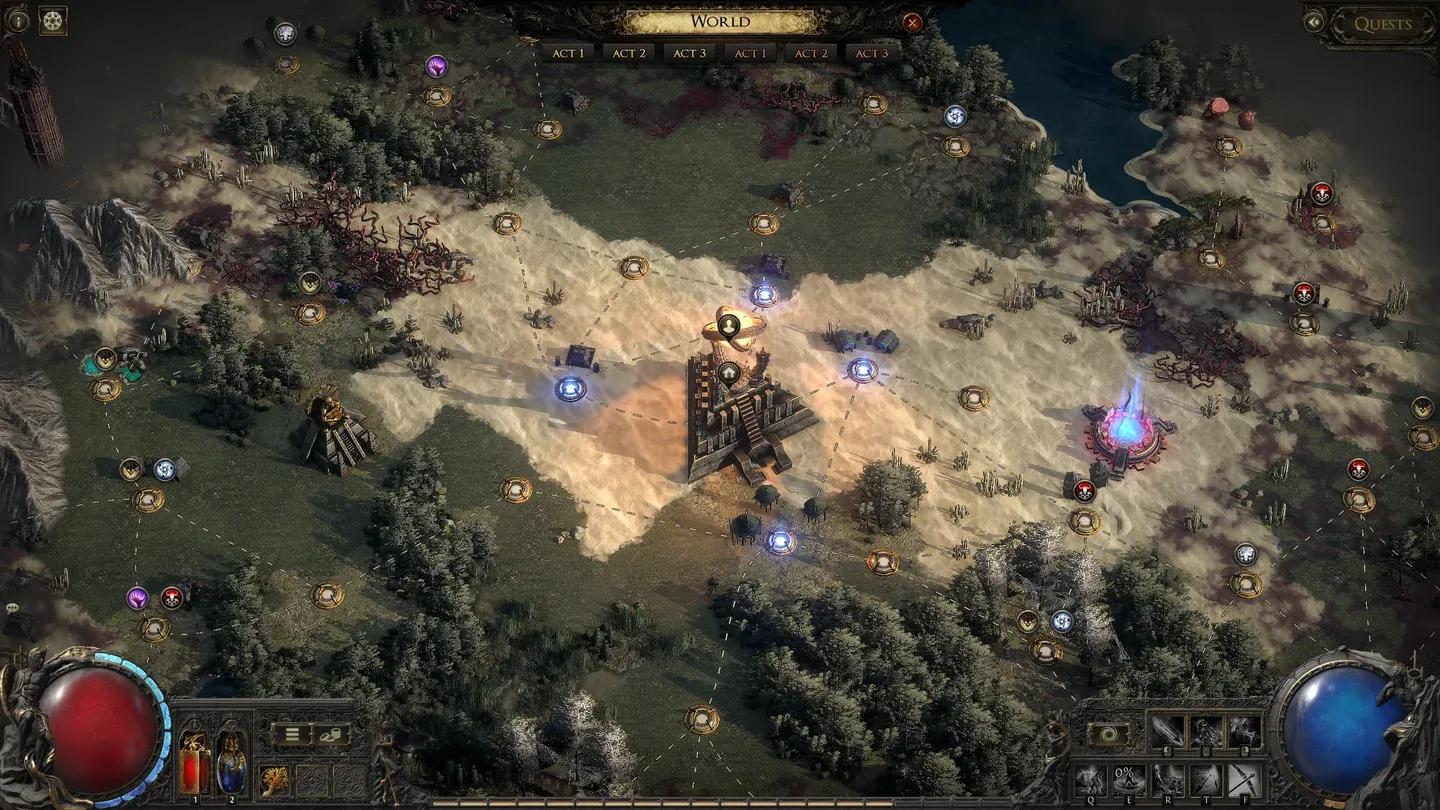
The new Atlas fortress layout

Why did GGG rebuild the endgame?
The honest answer is that the old endgame loop had a burn-out problem. Rogers explained in a pre-launch briefing that a significant percentage of negative Steam reviews came from players with 200 or more hours who left unhappy, not because the game was bad but because there was no clear stopping point. Players would grind maps until boredom set in and then feel like the experience was hollow.
The solution is structural. Instead of an infinite web of waystones with no narrative throughline, the endgame now has five distinct storylines that guide you through content and give you a genuine sense of completion. The infinite grind is still there for players who want it, but GGG is no longer forcing everyone down that road. Rogers put it plainly: the goal is to let players reach a point where they feel genuinely done before the next league starts.
What are the five new endgame storylines?
Each storyline introduces a mechanic from a previous league alongside a dedicated crafting system. The five are:
- Tangmazu, the Raven Trickster storyline, accessed through fog-covered areas in the Delirium content
- Keepers of the Flame storyline, where you help Ailith's monks fight wave-based Breach encounters
- King in the Mist storyline, centered on freeing a woman's spirit through Ritual content
- Atlas Masters storyline, tied to the new Masters of the Atlas progression system
- Rog's Missing Wife storyline, sending you across a procedurally generated ocean in the Expedition overhaul
Every major endgame boss is now reached through a dedicated questline rather than random key drops. That alone removes one of the most frustrating parts of the previous endgame structure.
How does the Atlas rework change progression?
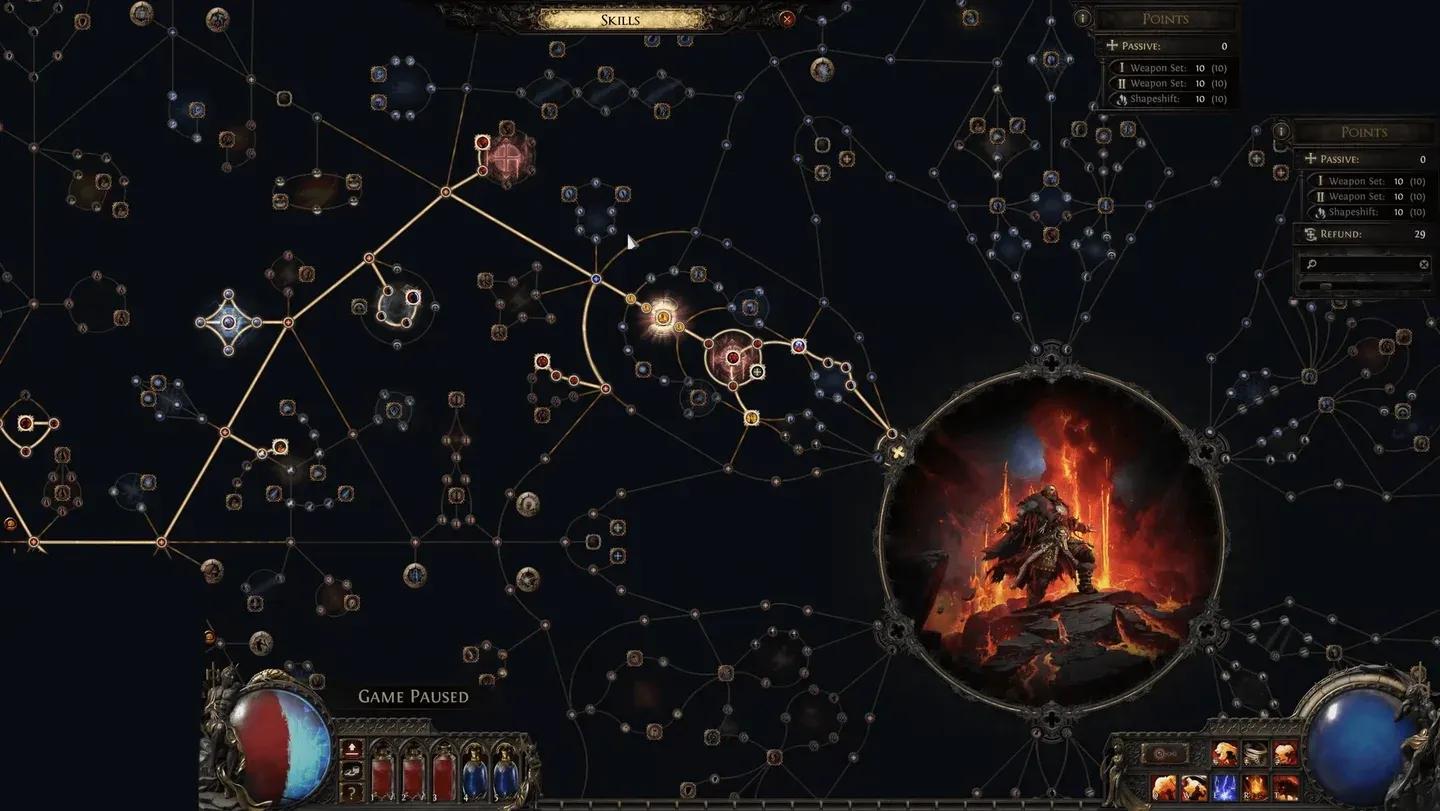
The Atlas Passive Tree has been rebuilt with a different philosophy. The old version pushed players toward a single optimized path. The new version lets you unlock every node by completing maps throughout the Fortress, and many nodes now offer branching multi-choice decisions that shape your endgame without requiring constant respeccing.
Hybrid nodes are the most interesting addition. Certain combinations allow multiple boss encounters to appear in the same map simultaneously, such as the Act 1 and Act 2 bosses appearing together, which was demonstrated during the reveal livestream.
The Masters of the Atlas system adds Ascendancy-style progression to the endgame itself. You align with different Atlas figures such as Jado of the Order of the Djinn or the monster hunter Hilda, each offering unique asymmetric bonuses. These bonuses can be swapped between maps without heavy friction, which means you can shift your endgame focus based on your build goals for a given session.
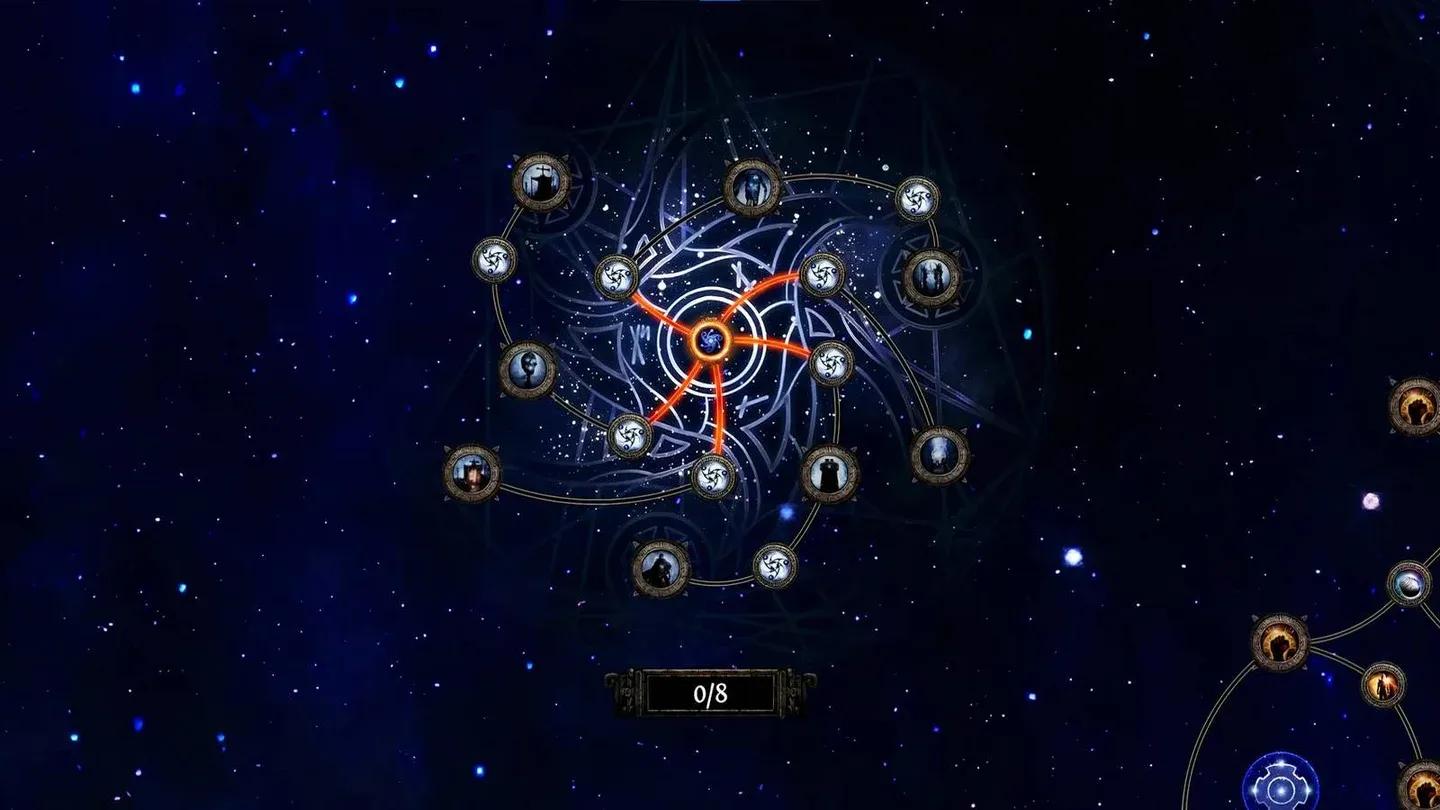
Reworked Atlas passive tree
What is the Runes of Aldur league?
Runes of Aldur is the new challenge league launching alongside 0.5 and it runs through the Expedition mechanic. The central system is Ezomyte Runesmithing, introduced through a young blacksmith named Farrow.
Here is how it works in practice:
- You find Ezomyte Remnants throughout maps and inscribe symbols onto them
- The symbols you choose determine your crafting rewards, ranging from basic currency to socketable runes with specific properties
- Activating a Remnant wakes nearby enemies and scales their abilities based on your rune choices (fire runes give enemies fire abilities, Moon runes introduce celestial hazards mid-fight)
- More rune slots become available as you progress, increasing both loot potential and encounter difficulty
The risk-reward loop here is unusually direct. Every crafting decision has an immediate combat consequence, which makes Runesmithing feel like a live system rather than a menu you interact with between fights.
The league also introduces Verisium, a new crafting resource with three primary uses:
- Alloys that grant predetermined modifier sets to items, functioning similarly to Essences
- Converting armor defenses into Runic Ward, a secondary defensive pool that sits below your life total and prevents death when life hits zero
- Creating Runeforged Uniques that upgrade existing unique items with new modifiers or bring weaker uniques up to endgame viability
Kalguuran Skills are a new skill type that can only be cast using Runic Ward. Crucially, they have no attribute requirements, making them usable across a wide range of builds. Kalguuran Support Gems work the same way, adding Runic Ward costs in exchange for powerful effects on any linked skill.
The league also introduces over 100 new runes, including elemental conversion options and modifier manipulation tools that push crafting into experimental territory.
League Challenges
Runes of Aldur marks the first time Challenges have appeared in Path of Exile 2. There are 8 challenges total, covering everything from basic currency use to Pinnacle boss kills. Players who complete all 8 earn the Knight of Aldur armour set, a hideout statue, and an in-chat display to show off their progress.
How have the existing league mechanics changed?
All four existing leagues have been updated with new storylines, dedicated crafting systems, and expanded mechanics. Here is a breakdown of the most significant changes to each.
| League | Key Change | New Pinnacle Boss |
|---|---|---|
| Delirium | Visible depth bar tracks fog progress | Tangmazu, the Raven Trickster |
| Breach | Kills extend encounter, enraged phase added | Xesht (after Tul and Esh) |
| Ritual | Rewards restricted to Uniques and Omens only | Bodach |
| Expedition | Full ocean exploration with procedural islands | New Pinnacle among scouted islands |
| Abyss | Abyssal fractures appear on the Atlas map | Vessel of Kulemak |
Delirium
The biggest quality-of-life addition is the visible depth indicator that shows exactly how far you are pushing into the fog. This removes the guesswork that made Delirium feel unpredictable. Rewards are now transparently tied to depth, so the decision to push further is an informed one rather than a gamble. The new storyline tracks down Tangmazu, the Raven Trickster, the entity freed from a Karui Prison in Act 4.
Colored Delirium Mirror Shards now alter encounters in various ways, and completing encounters can yield Liquid Emotions that can be used for a new Jewel Crafting function alongside their existing Amulet use.
Breach
Breach now rewards sustained engagement over quick clears. Killing enough enemies during a Breach stabilizes it, which summons stronger foes that drop Hiveblood and Wombgifts. Hiveblood feeds the Genesis Tree at the Keeper of the Flame Monastery, which grows over time and unlocks new base types and modifiers, particularly useful for caster and minion builds.
Once you accumulate enough fragments and Hiveblood, you can access Hiveborn-controlled regions via a Breachstone. These areas lead to a Hiveborn Fortress controlled by Tul and Esh, and repeated encounters with them eventually unlock a fight against Xesht, the Breach Pinnacle boss.
Ritual
The Ritual reward pool has been narrowed significantly. Ritual Windows in the endgame now only offer Unique Items or Omens, which makes each interaction feel more consequential. The King in the Mists is no longer the Pinnacle boss for Ritual content. He now serves as a gateway to the Rite of the Nameless, where you select multiple maps and face escalating hordes carrying over from previous maps, culminating in up to 5 Map Bosses simultaneously. Completing the Final Ritual unlocks the domain of Bodach, the new Ritual Pinnacle.
Expedition
Expedition has been transformed into a full ocean exploration system. Using Logbooks, you scout procedurally generated routes that reveal islands with basic Expeditions, Greater Expeditions, boss encounters, and eventually a new Pinnacle Boss. The storyline follows Rog searching for his missing wife Gwennen. Bosses like Medved and Uhtred serve as milestones within this structure.
Farrow also joins Dannig as part of Expedition encounters starting in Act 4, integrating the Runesmithing system directly into Expedition gameplay. Completing Runecrafts while placing explosives adds all rune modifiers to every enemy spawned by that explosive chain, so the risk escalates in real time.
Abyss
Abyss has not been fully reworked but has been meaningfully expanded. Your first endgame Abyss encounter now triggers a questline that sends you toward massive Abyssal Fractures that appear directly on the Atlas map. Each map along these fractures contains modified Abyss encounters with special properties. Completing all three Abyssal faction encounters unlocks access to the Vessel of Kulemak.
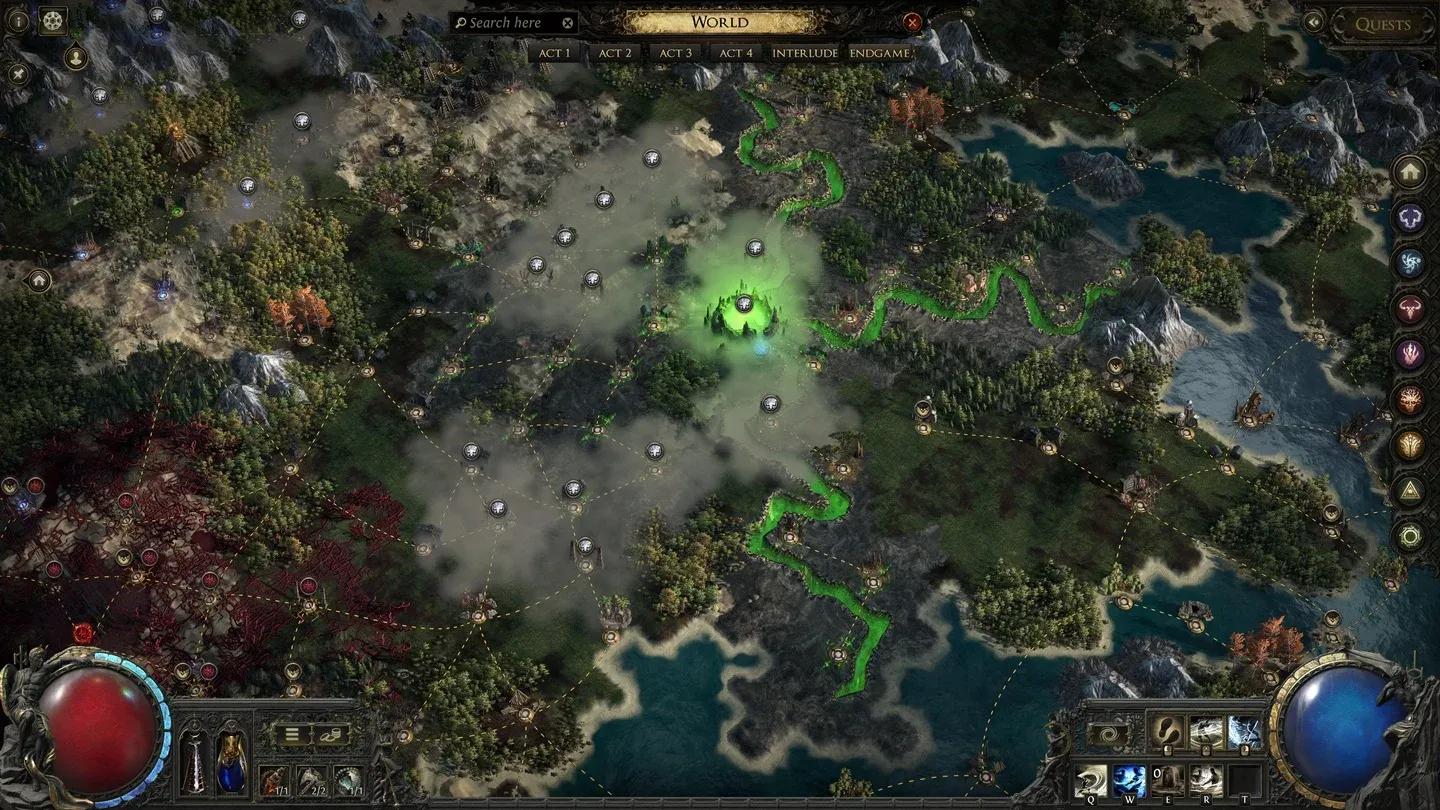
Runesmithing a Remnant in-game
What are the two new Ascendancy classes?
Spirit Walker (Huntress Ascendancy)
The Spirit Walker channels Azmerian spirits tied to three animal aspects: Stag, Owl, and Bear. Each spirit meaningfully alters your build direction.
- Stag builds lean into stampede-style engagements
- Owl builds emphasize ranged enhancement and projectile empowerment
- Bear attunement grants a bear spirit companion that can be buffed through Ascendancy nodes
The Spirit Walker also interacts with Idolatry and beast taming. It can bring creatures like the Chimeral Beast or Frozen Talon into its arsenal as active allies. No other Ascendancy in the game can tame boss enemies, which makes Spirit Walker genuinely unique in its combat identity.
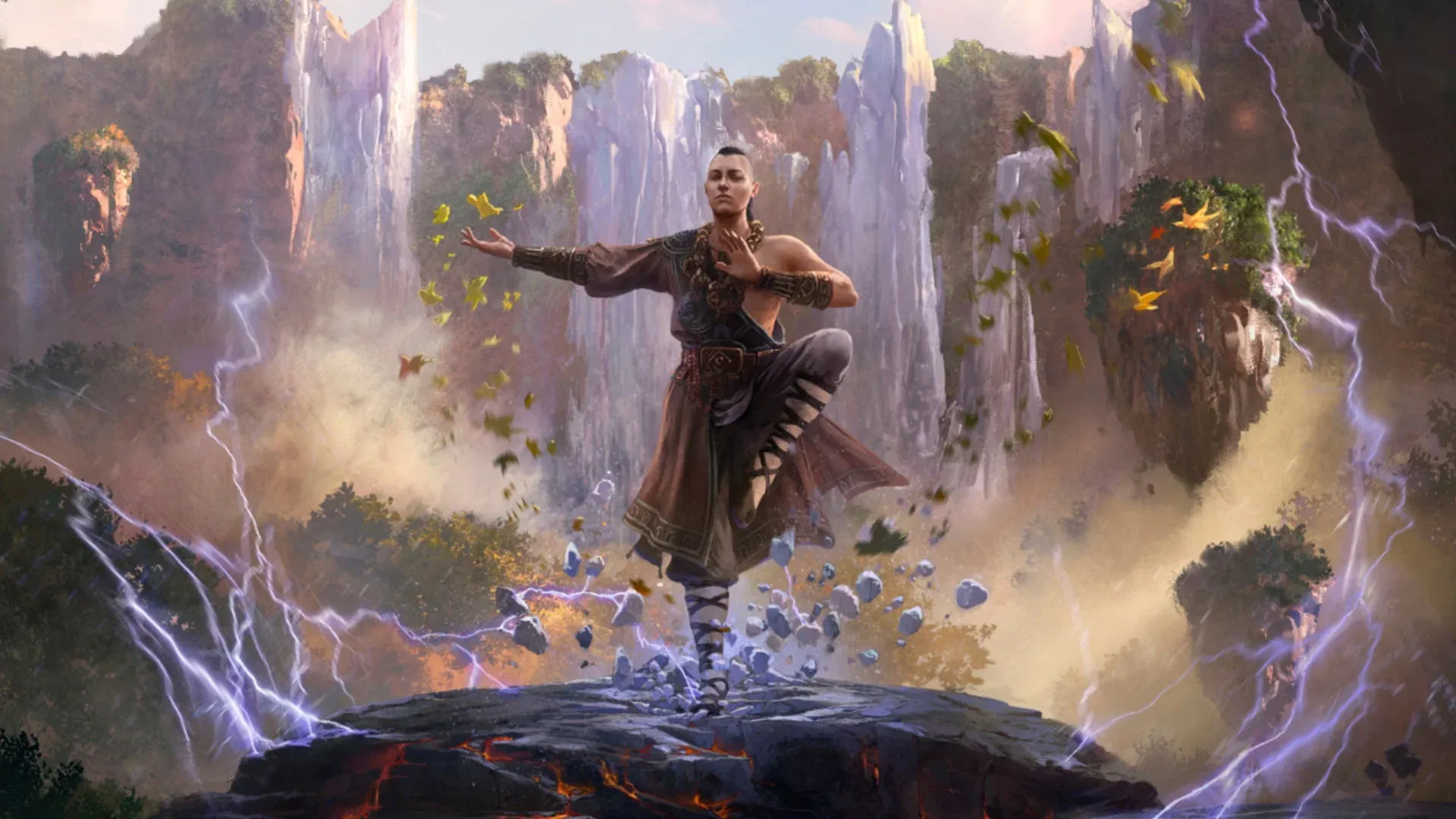
Martial Artist (Monk Ascendancy)
The Martial Artist rewards timing and attack chaining. Properly sequenced attacks build momentum and trigger amplified effects, making player input directly shape damage output rather than relying on passive scaling.
Key mechanics include:
- Echoing attack clones that repeat your strikes, multiplying damage when positioned correctly
- Spectral bell constructs that detonate and punish clustered enemies, making positioning a core part of the damage loop
- Runic tattoos that let you socket runes directly into your character rather than into gear, giving the Ascendancy a mechanical identity that no other class shares
For a deeper look at how these fit into the broader class picture, the Path of Exile 2 classes tier list for 0.3 Edict covers the full Ascendancy breakdown and will be updated as 0.5 data comes in.
What quality-of-life improvements are in 0.5?
The campaign has received significant navigation improvements. Visual trails such as locust paths now lead toward objectives in zones like Hunting Grounds, blood trails from creatures like the Crowbell guide you toward boss locations, and signposts direct players toward key locations like Ogham Village. These changes reduce early-game confusion without removing exploration.
The in-game Build Guide system is the most significant QoL addition. Community creators can publish structured .build files that appear directly in the client, showing passive trees, Ascendancy choices, skill gems, support links, and item recommendations in a step-by-step format with level-based transition notes. Platforms like Maxroll.gg already support this format. It turns following a build from a multi-tab juggling act into something you can do entirely inside the game.
Other additions include:
- A live-search Atlas map
- Navigational landmarks and trails throughout the campaign
- Over 40 new weapons, jewelry, and armors
- 30+ new unique items
- A native Build Planner
In-game build guide system
What does 0.5 mean for 1.0?
Return of the Ancients is confirmed as the last major content update before 1.0. Grinding Gear Games will continue releasing balance patches and event leagues during this period, but the next large-scale content expansion will be 1.0 itself. The full release is targeted for late 2026, with more details expected at ExileCon on November 7 and 8.
Act 5 and Act 6 are confirmed for 1.0. Not all core classes will be available at launch, with remaining classes arriving in post-1.0 updates. All current classes will have complete Ascendancy sets by 1.0. Mac client support and additional language options are also planned for the full release.
For players planning their 0.5 league starter now, the best builds guide for PoE 2 patch 0.3 Edict covers the strongest options across all weapon types and will be the foundation for understanding which builds carry their power into 0.5. The full Path of Exile 2 strategy guide collection has everything else you need to prepare.