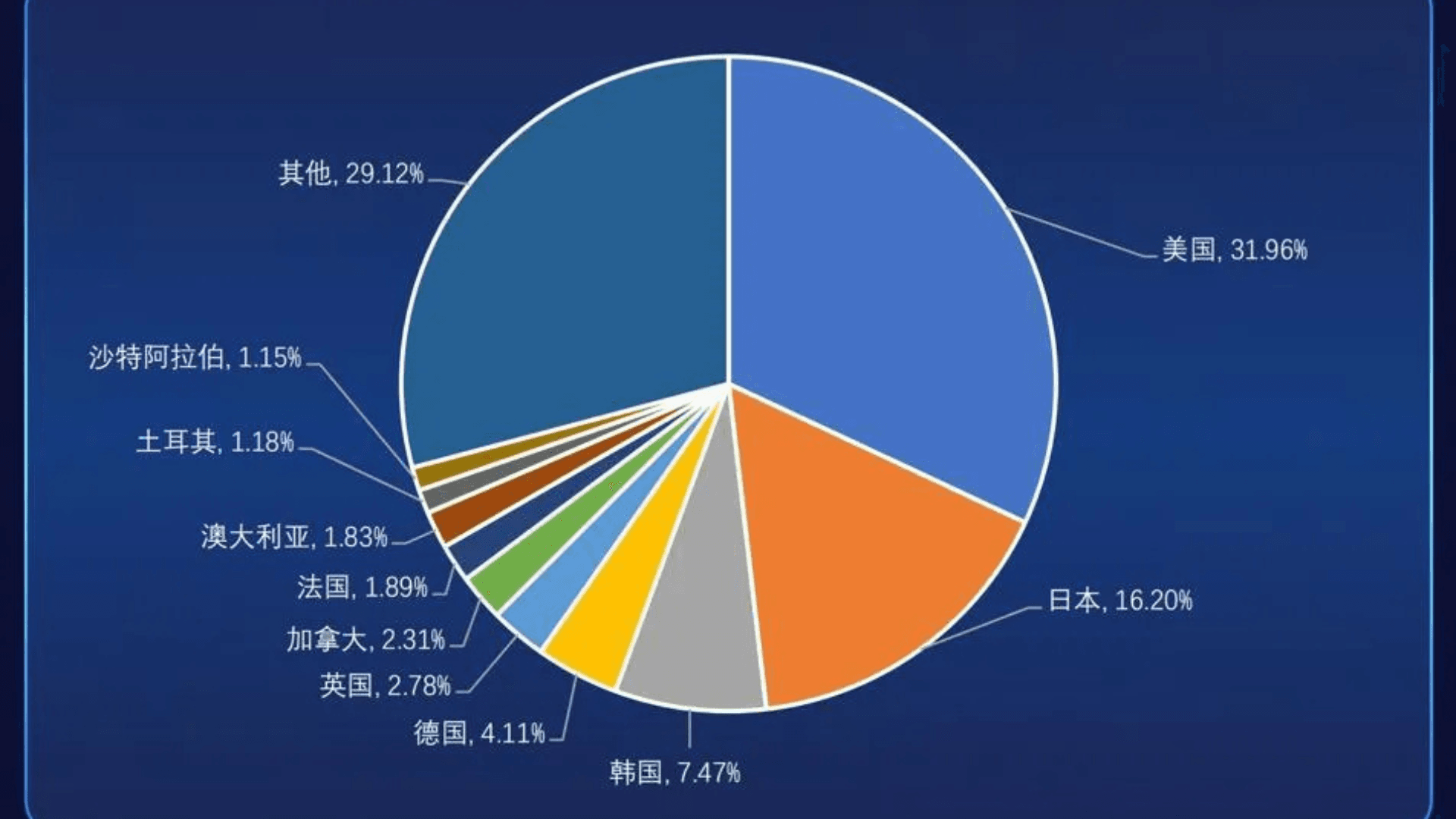
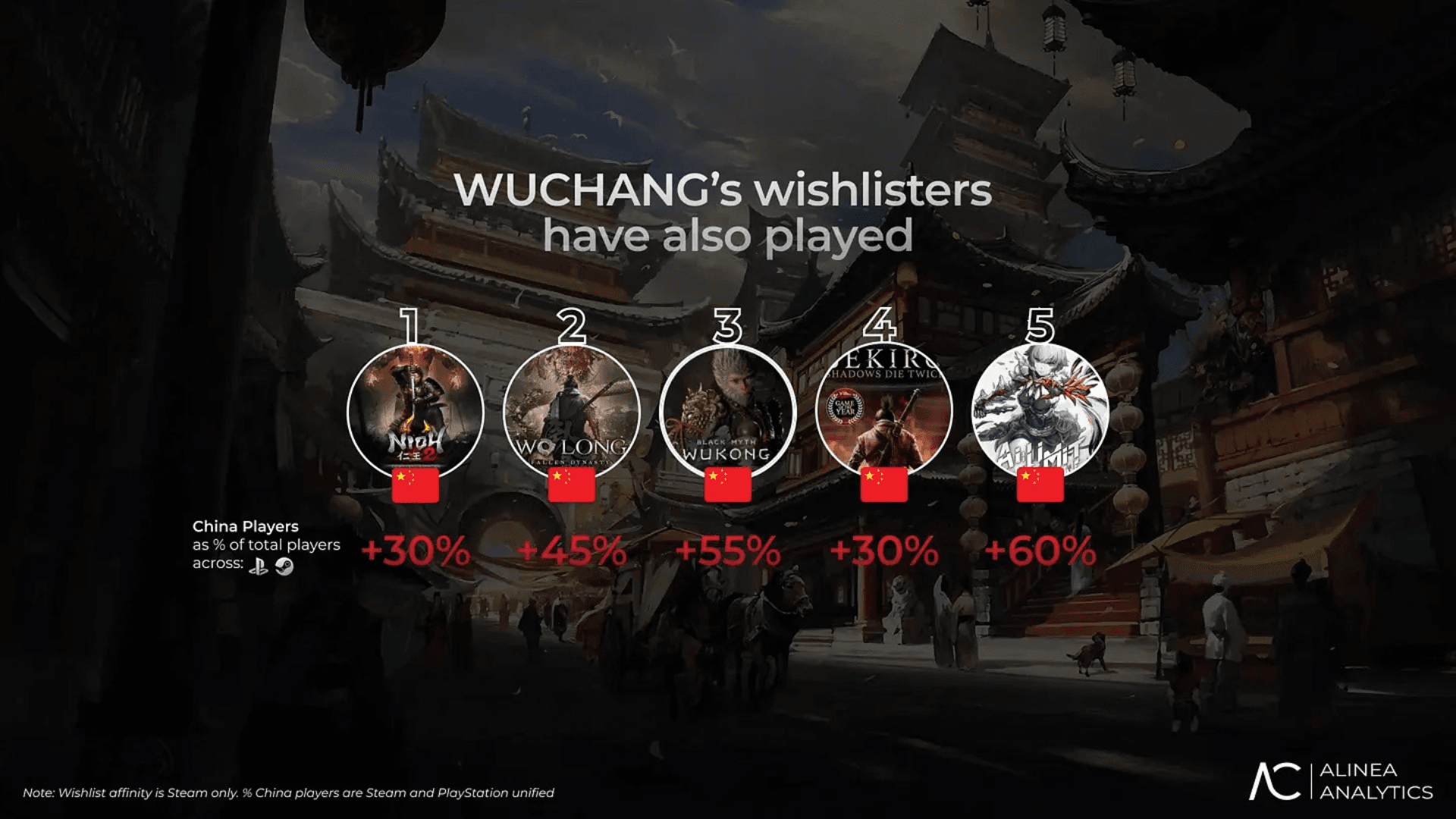
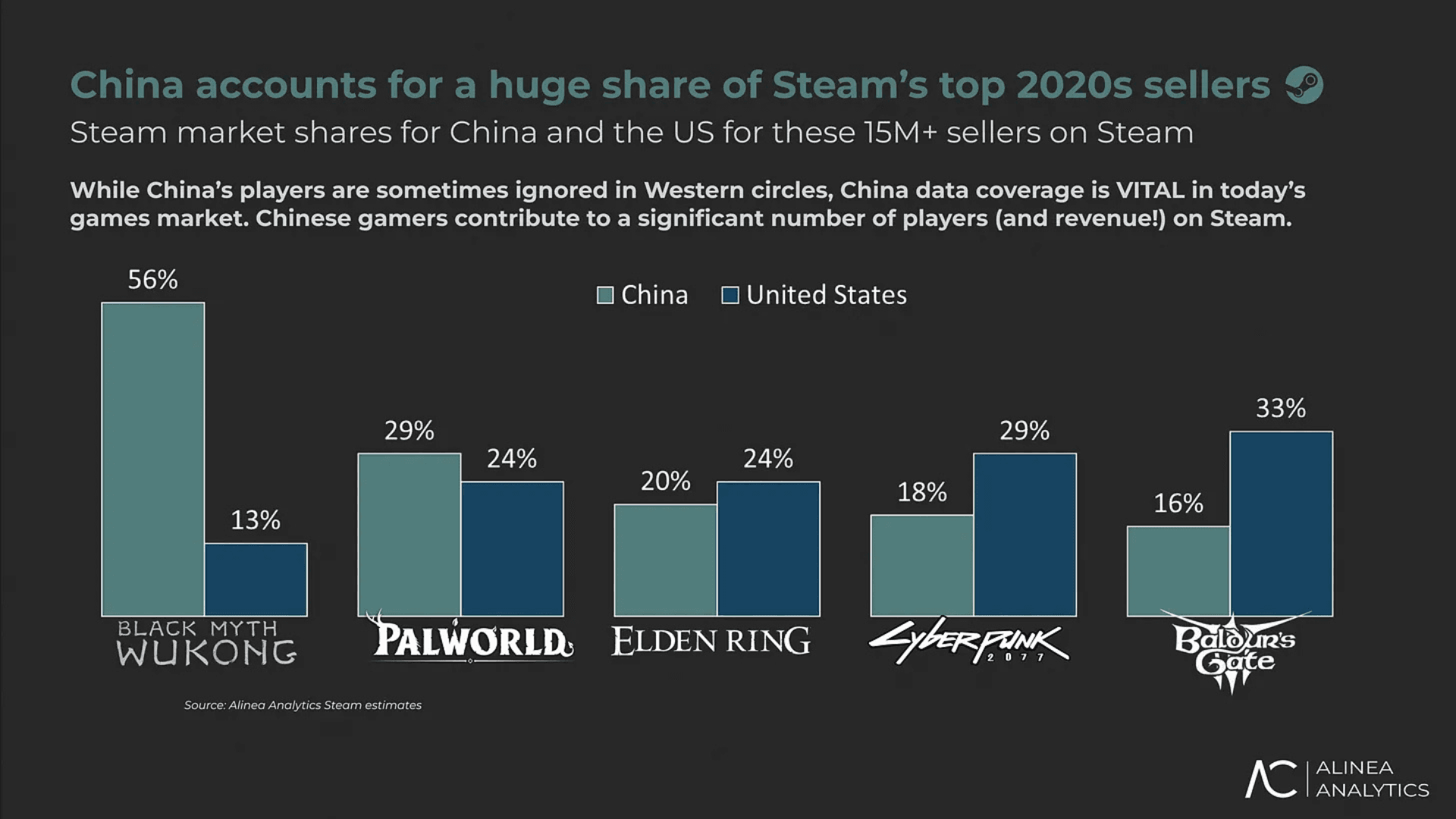
The global AAA gaming landscape has become increasingly competitive, with PC and console player counts in Western markets plateauing. For developers and publishers looking to expand, China offers a massive untapped audience. Data shows that Chinese gamers make up a significant portion of the player base for many top-selling AAA titles on Steam, across both domestic and international releases.
Use code TRYHARD33 at checkout to redeem this offer before code expires again.
Get 33% Off GAMES+ Subscription
China's expanding presence in AAA gaming
Games like Black Myth Wukong, developed by a Chinese studio and rooted in traditional Chinese mythology, naturally draw a majority Chinese audience. But China also accounts for a large share of players in internationally developed games like Palworld, Elden Ring, Cyberpunk 2077, and Baldur's Gate III.
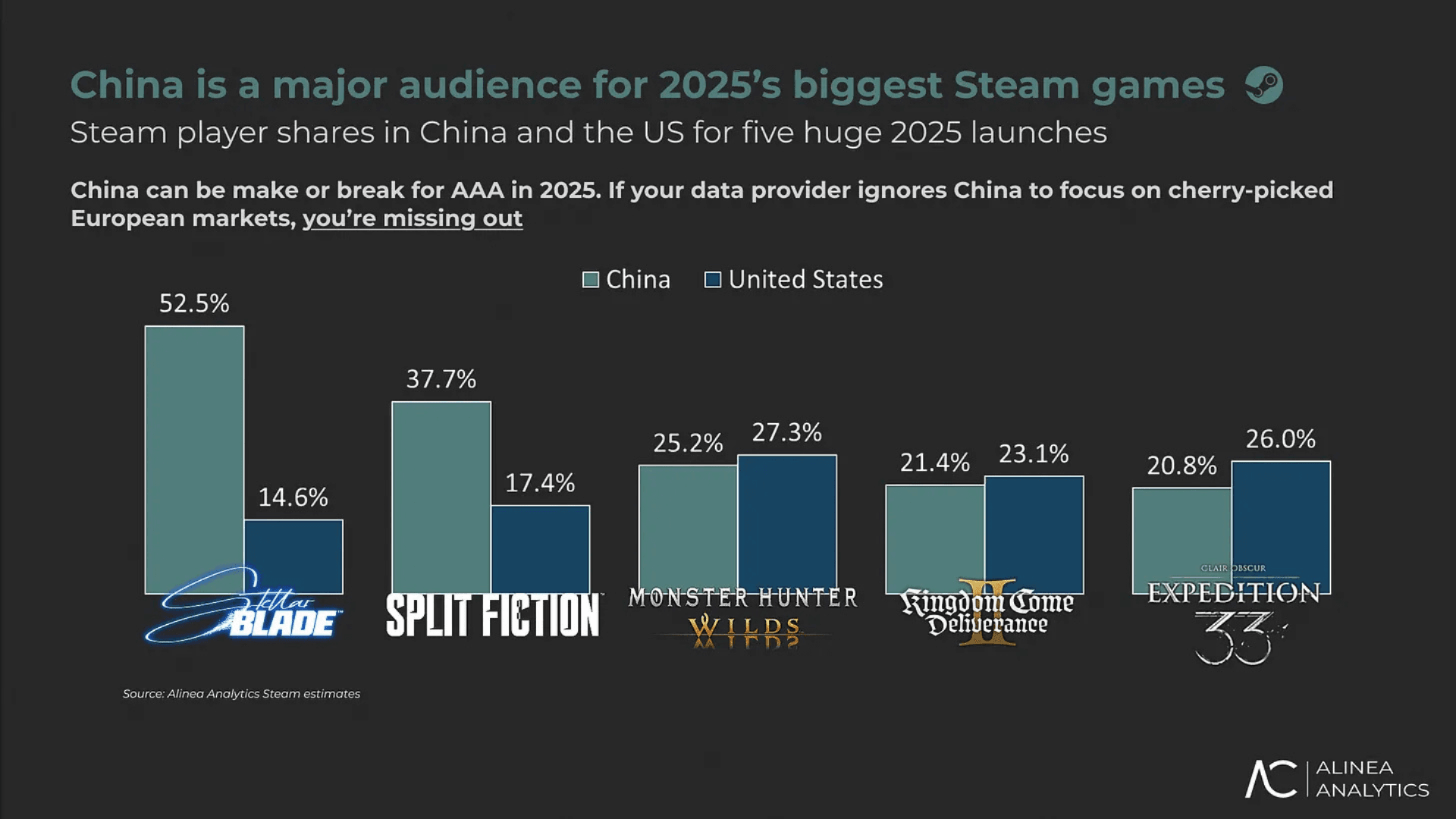
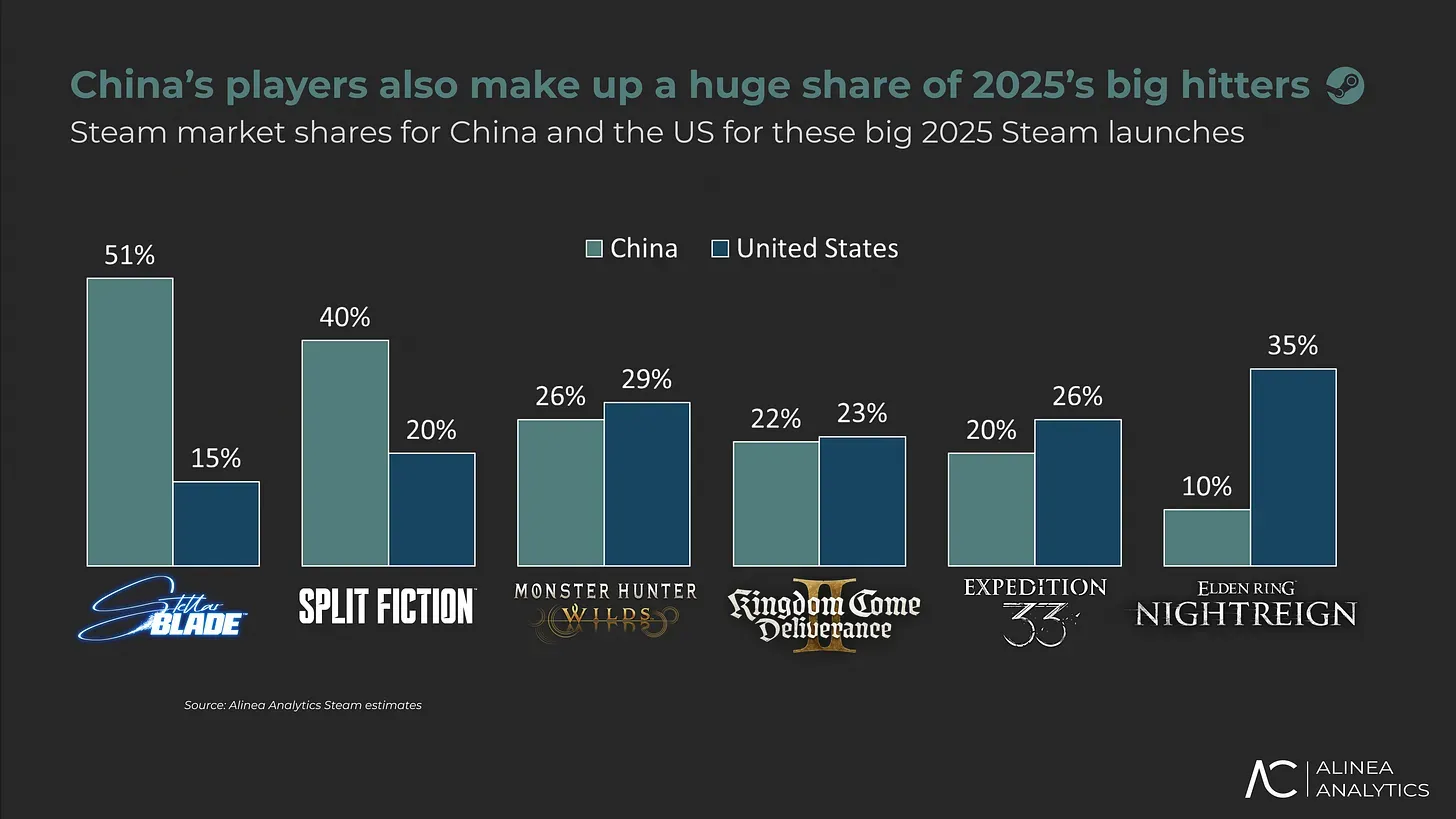
Even newer releases like Stellar Blade and Split Fiction have substantial Chinese player bases, sometimes matching or exceeding the United States in size. Other breakout successes, including Clair Obscur Expedition 33, owe a notable portion of their momentum to the Chinese market.
China's Growing Role in AAA Gaming
Navigating China's gaming regulations
The Chinese market is enormous, but it's also heavily regulated. Developers releasing games in mainland China must secure an ISBN license through the National Press and Publication Administration (NPPA). International publishers typically need a local partner to handle this process, which can impact release timing, localisation, and even core design decisions.
While approvals have become more predictable since the licensing freezes of 2021, timing is still unpredictable. Developers need to plan for potential delays in live-ops schedules and coordinated global launches. The Chinese government also enforces strict youth protection measures, including real-name account systems, playtime caps for minors, and anti-addiction features.
Content is also reviewed for compliance with Chinese cultural and political standards, covering violence, sexual content, and representation of LGBTQI+ themes. International titles historically make up only a small fraction of officially approved games, with less than 10% meeting licensing requirements in 2024.
China's Growing Role in AAA Gaming
Shanghai's pilot policy opens new doors
In 2025, Shanghai launched a three-year pilot policy allowing foreign studios with local development operations to be treated as domestic for licensing purposes. This shortens approval timelines and reduces reliance on grey-market platforms like VPN-enabled Steam.
International studios with Shanghai offices, such as EA and 2K, can take advantage of this by integrating development pipelines locally. If the pilot proves successful, it could expand nationwide, potentially granting official storefront access to a wider range of foreign games while cracking down on grey-market activity.
Market strategies for Western developers
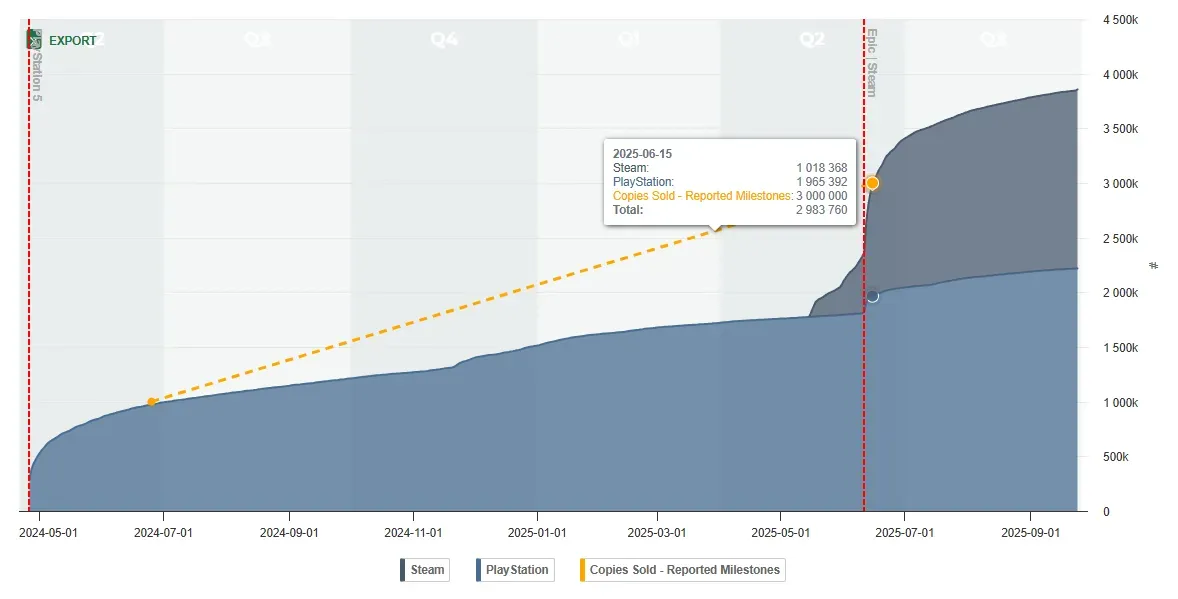
Breaking into China requires more than basic translation. Chinese players expect natural dialogue, culturally appropriate idioms, and UI/UX patterns tailored to local preferences. Stellar Blade is a strong example, with fully lip-synced dubs and localised pricing that made the game more accessible compared to Western markets. Strategic marketing on local platforms like Bilibili, Weibo, Douyin, and WeChat, combined with releases timed around major Chinese festivals and sales events, can dramatically boost discoverability.
Local partnerships are also critical. Working with publishers who understand licensing, marketing channels, and regional QA processes ensures compliance and supports post-launch operations. Building community trust through bilingual management and education on youth protection measures can reduce regulatory risk and improve player engagement.
China's Growing Role in AAA Gaming
Common pitfalls for Western studios
Western studios often stumble when entering the Chinese market. Treating localisation as a simple translation task can frustrate players and generate negative reviews. Applying Western user acquisition strategies without accounting for China's influencer-driven social distribution can also limit reach. Licensing approvals remain uncertain, and tying global launch dates to unpredictable timelines can create coordination headaches. Despite these obstacles, quality games that are properly localised consistently find an audience among Chinese players.
Final thoughts
China is a critical market for AAA developers, offering a growing audience that can make or break a game's global success. Navigating local regulations, investing in proper localisation, and building community engagement are the keys to breaking through. While entry can be complicated, developers who adapt their strategies to China's unique landscape can tap into one of the world's largest and most active gaming markets.
Frequently Asked Questions (FAQs)
Why is China important for AAA games?
China represents a large and growing audience for PC and console games. Even international titles often see substantial Chinese player bases, making it a key market for revenue growth.
What are the main regulatory challenges in China?
Games released in China must obtain NPPA approval, which includes content review, youth protection compliance, and licensing through a local partner. Approval timelines can be unpredictable, affecting release schedules.
Can foreign studios release games in China without local partners?
Historically, foreign studios needed local partners to navigate licensing. Shanghai's pilot policy now allows studios with local operations to be treated as domestic, easing access to approvals.
What strategies help games succeed in China?
Effective localisation that goes beyond translation, targeted marketing on local platforms, strategic pricing, and community engagement are critical. Partnerships with local publishers also improve compliance and discoverability.
Are grey-market platforms still relevant?
Some Chinese players access international versions of Steam via VPNs. While grey-market activity remains common, regulatory trends and pilot policies may reduce its significance in the future.
Do good games succeed in China regardless of origin?
Yes. Properly localised and culturally adapted games tend to find audiences in China, with quality being the primary driver of success.