
Slay the Spire 2 drops you into a brutal roguelike world where every card choice, every map path, and every relic decision shapes your fate. Built from the ground up on the Godot engine by Mega Crit, the sequel expands on the original with two new classes, a 4-player Co-Op mode, reworked Colorless Cards, and brand-new enemy mechanics. If Act 1 is already destroying you, that's completely normal. This guide breaks down exactly what you need to know to stop dying and start climbing.
The Single Most Important Rule: Keep Your Deck Small
The fastest way to lose in Slay the Spire 2 is to take a card after every single fight. It feels rewarding in the moment, but a bloated deck is an inconsistent deck. When you're staring down a boss hitting for 45 damage and you need a Block card right now, drawing it from a 40-card pile is a gamble you will often lose.
Aim to finish each run with roughly 20 to 25 cards that work together tightly. Every card you skip is a decision, not a failure. The Skip button is one of the most powerful tools in the game.
Skip wisely to stay consistent


Why Does Deck Size Matter So Much?
In a smaller deck, your best cards cycle back faster. If you have a key combo piece like a massive damage card or a crucial defensive Power, you want to see it every two or three turns, not every six or seven. Tight decks create reliable outcomes. Bloated decks create chaos.
How to Plan Your Map Route Effectively
Map navigation accounts for roughly half of your success in any given run. Before you click your first room, scroll all the way to the top of the map to identify the Act Boss. Knowing what you're building toward changes every decision you make on the way up.
The Core Routing Principles
- Check the boss first. Different bosses demand different defensive strategies. Build accordingly from the very start of the Act.
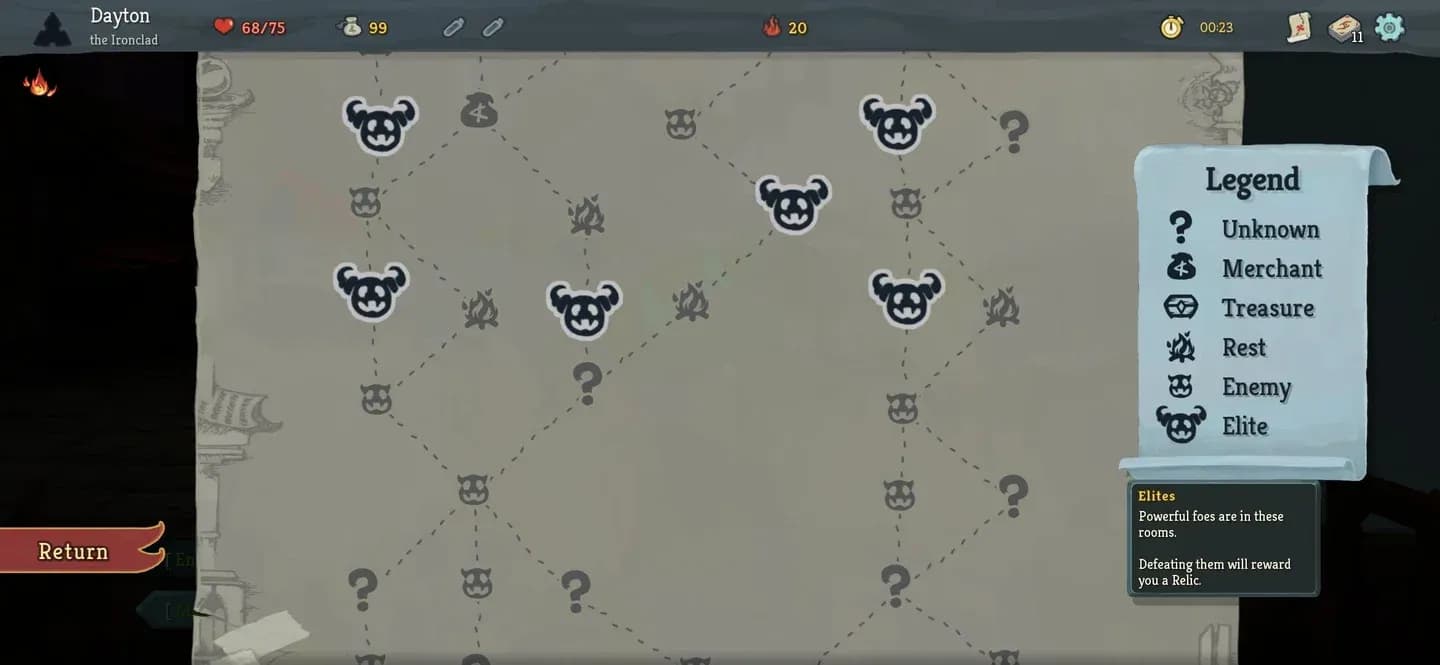
- Hit a Campfire before Elites. The ideal path lets you upgrade a key card at a Rest Site immediately before tackling an Elite enemy. That single upgrade can be the difference between winning and losing the fight.
- Prioritize at least 2 Elites per Act. Elite enemies drop Relics, which are permanent passive bonuses that snowball your power across the entire run. Skipping Elites means falling behind on relic count.
- Treat Question Mark rooms as wildcards. Event rooms (marked with ?) can swing wildly in your favor or cost you max HP. Take them when your deck needs a boost or you're feeling experimental. Stick to guaranteed hallway fights when you're building toward a specific strategy.
Plan your route before moving
What Is the Best Campfire Choice?
Most of the time, upgrade a card rather than rest for HP. If you find yourself needing to heal constantly, that's a signal your deck isn't killing enemies efficiently enough. The upgrade path solves the root problem. Healing just delays the inevitable.
The exception: if you're heading into the Act Boss at critically low health and your deck is already strong, resting is the correct call.
Understanding the Two New Classes
Slay the Spire 2 brings back the Ironclad, Silent, and Defect with updated card sets, but the two brand-new classes are where the sequel really shows its identity.

Choose your class carefully
The Necrobinder: High Risk, High Reward
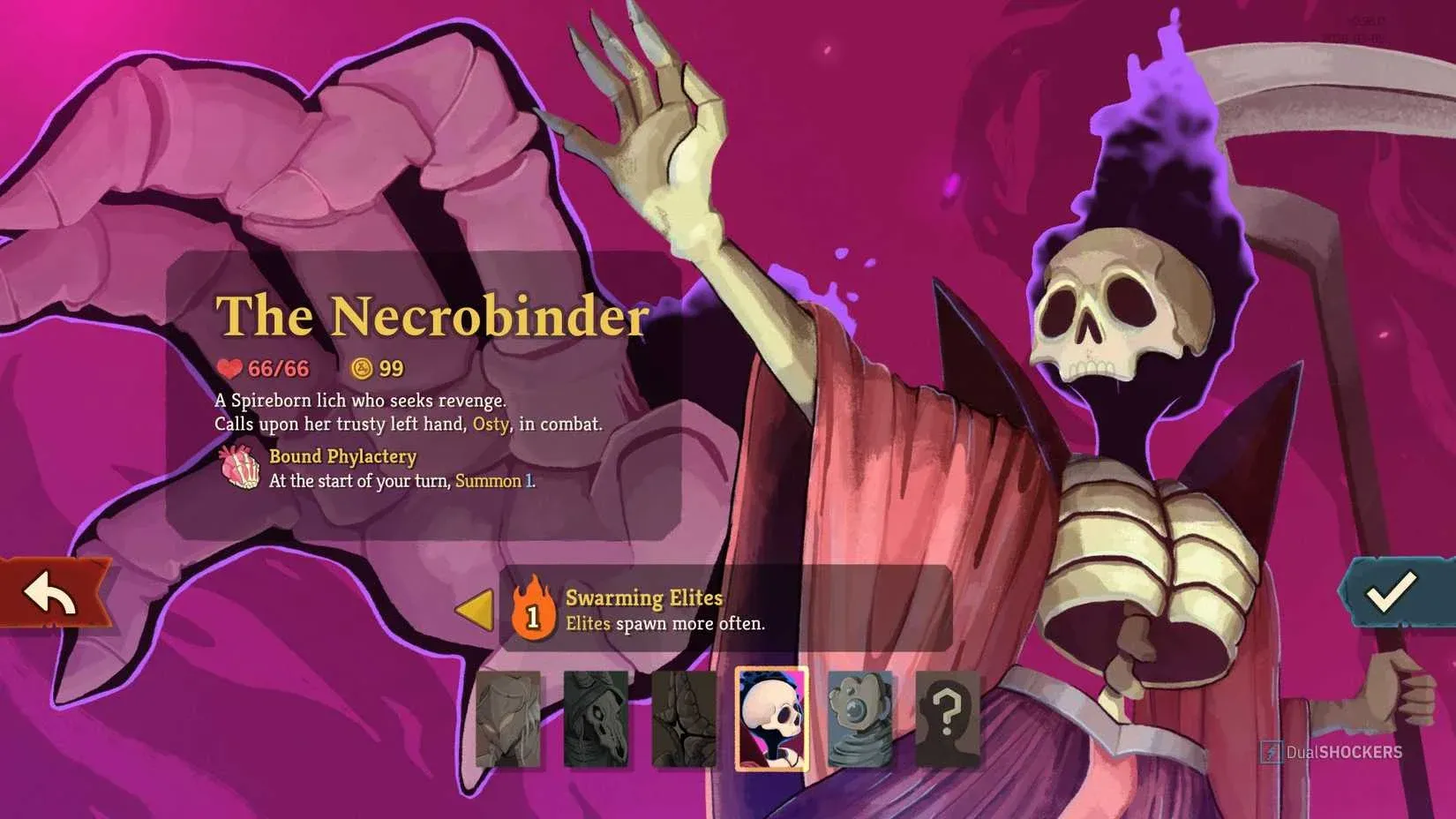
The Necrobinder is built around a mechanic called the Graveyard (the sequel's renamed Exhaust pile). This class can physically summon Minions onto the battlefield to absorb incoming damage, and uses Blood Magic to spend your own HP in exchange for massive damage bursts.
The risk is real: mismanaging your health with the Necrobinder can end a run faster than almost any other class. The reward is equally real: a well-constructed Necrobinder deck with strong Minion coverage and efficient Blood Magic usage hits like nothing else in the game.
The Regent: Patience and Precision
The Regent plays around a secondary resource called Stars, which carry over between turns rather than resetting. The Regent's signature win condition is the Sovereign Blade, a weapon card that sits in your hand accumulating power as you spend Stars, then delivers a devastating single strike when you're ready.
The Regent rewards patience. You're not looking for explosive turn-one pressure. You're building toward a perfectly timed, overwhelming blow.
| Class | Core Mechanic | Difficulty | Playstyle |
|---|---|---|---|
| Necrobinder | Graveyard / Blood Magic / Minions | High | Aggressive, resource-hungry |
| Regent | Stars / Sovereign Blade | Medium | Patient, setup-focused |
| Ironclad | Strength scaling | Low-Medium | Straightforward aggression |
| Silent | Poison / Shivs | Low-Medium | Chip damage, evasion |
| Defect | Orb Channeling | Medium | Technical, combo-oriented |
What Are the Key Keywords You Must Know?
Understanding Slay the Spire 2's keyword system is non-negotiable. These mechanics define entire build archetypes and appear on cards constantly.
Essential keywords for beginners:
- Block prevents damage until the start of your next turn.
- Exhaust removes a card from your deck until the end of combat.
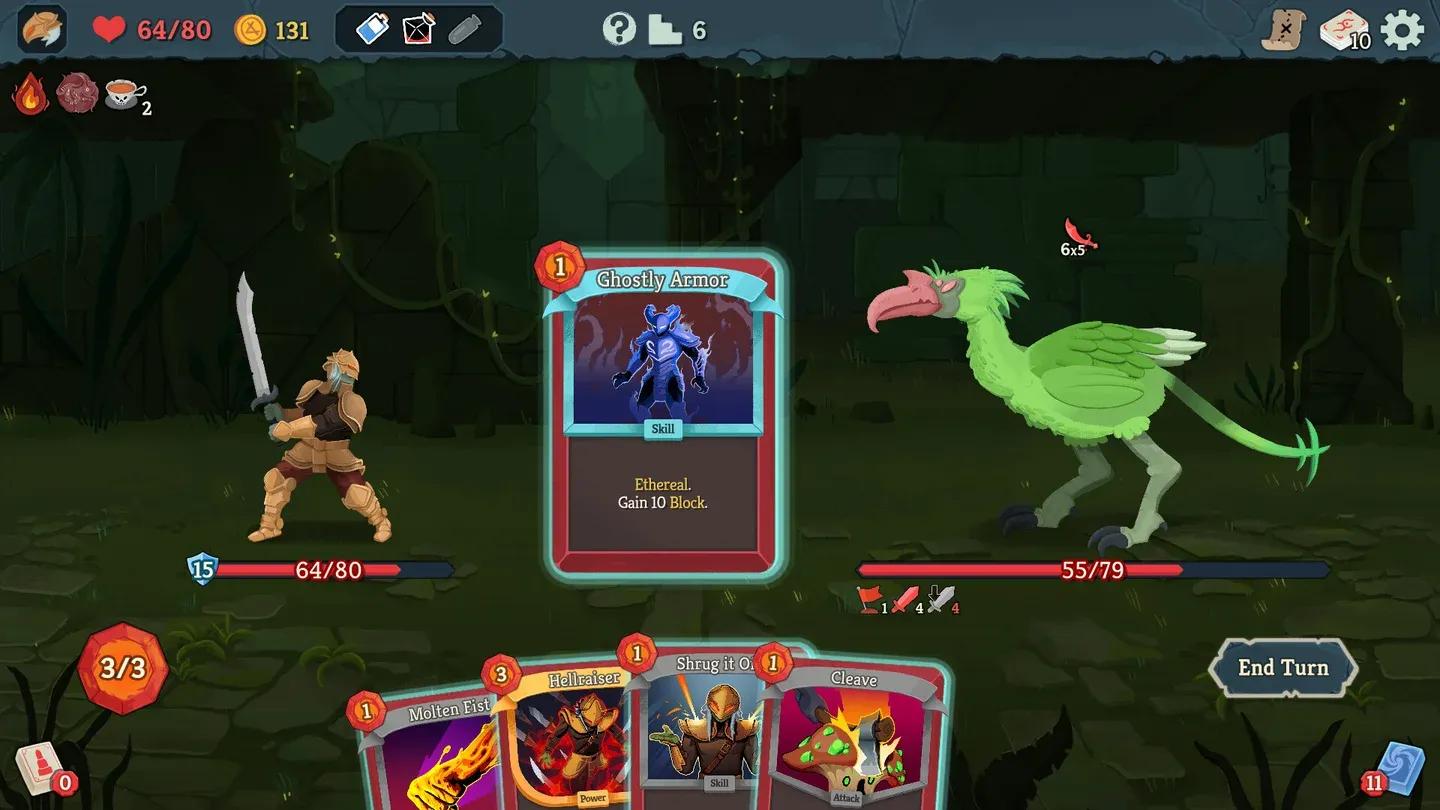
- Ethereal means the card is exhausted automatically if it's still in your hand at end of turn.
- Retain keeps a card in your hand instead of discarding it at turn's end.
- Vulnerable causes the affected creature to take 50% more damage from Attacks.
- Weak causes the affected creature to deal 25% less damage with Attacks.
- Strength adds bonus damage to every attack.
- Dexterity increases the Block gained from cards.
- Poison deals HP loss at the start of the poisoned creature's turn, then decreases by 1 each turn.
- Innate means the card always starts in your opening hand.
New keywords introduced in the sequel:
- Doom (NEW): When a creature's Doom value meets or exceeds its current HP, it dies at the end of its turn. This is a powerful delayed-execution mechanic.
- Sly (NEW): If this card is discarded from your hand during your turn, it plays for free. Building around Sly creates explosive free-action turns.
Know your status effects cold
How Does the Merchant and Card Removal Work?
One of the highest-value actions in any run is visiting the Merchant and paying Gold to remove a card from your deck. The primary targets are your starting Strikes and Defends. These basic cards are inefficient compared to the powerful cards you draft during a run, and they actively reduce the consistency of your best draws.
Removing two or three basic cards can feel like a dramatic improvement to how your deck flows. Prioritize this whenever you have surplus Gold.
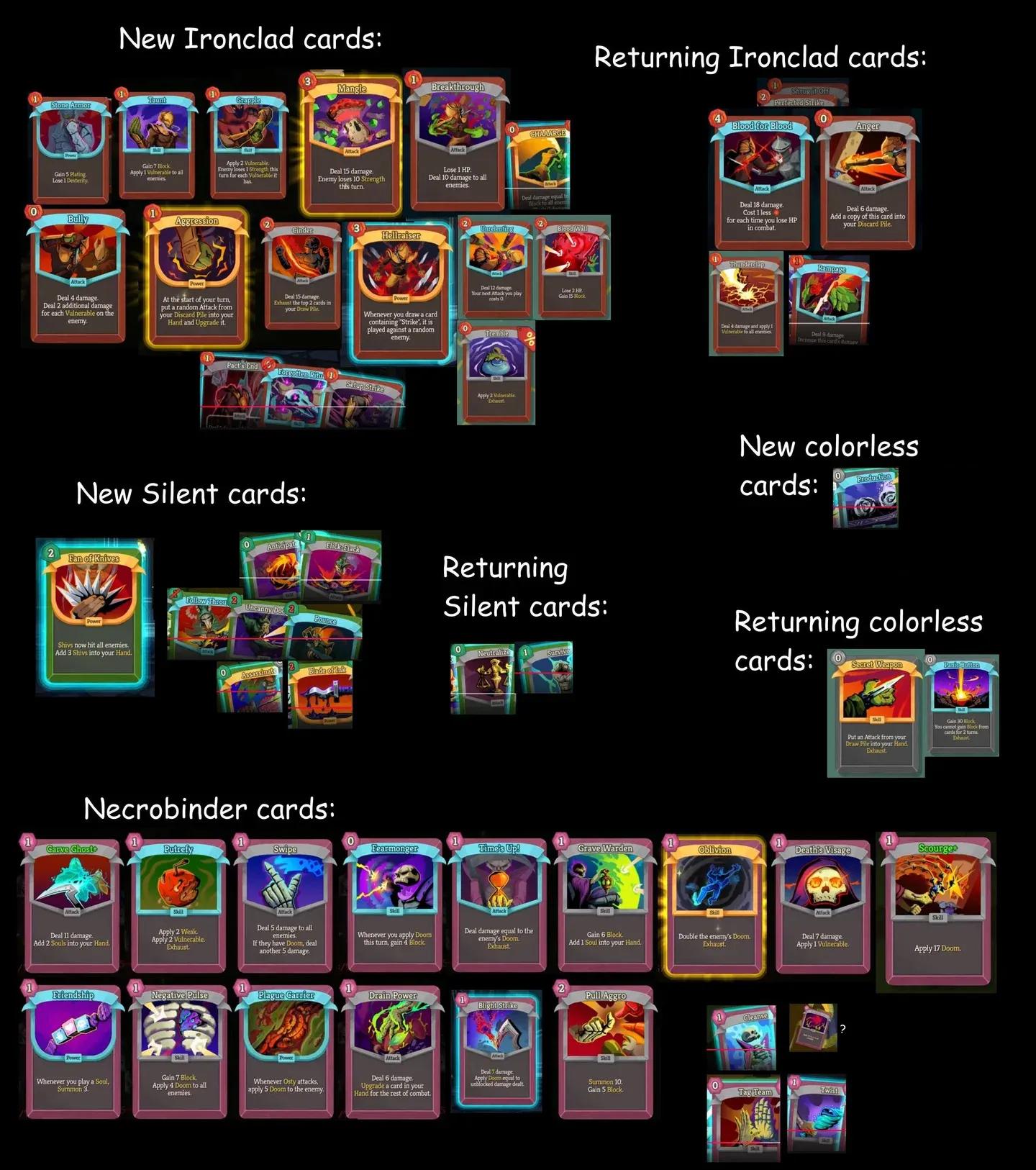
The Merchant also sells Colorless Cards, which any class can use. Slay the Spire 2 significantly expanded the Colorless card pool compared to the original, moving several previously class-exclusive cards into it. Always keep a Gold reserve when shopping, because a well-timed Colorless Card purchase can fill a gap your class-specific cards can't cover.
What Is the Best Starting Bonus from Neow?
At the start of every run, Neow (the Whale) offers you a choice of opening bonuses. For beginners, the safest and most consistent options are:
- Choose a Card from a small selection, letting you tailor your opening hand immediately.
- Gain Max HP, which gives you more room to absorb mistakes in Act 1.
- Remove a Card from your starting deck, thinning it before the run even begins.
Trading your starting Relic for a random Boss Relic is a high-variance gamble. It can produce incredible results, but it can also leave you with a Relic that does nothing for your current class. Beginners should avoid this option until they understand which Boss Relics pair well with which strategies.
Essential Mechanics Reference Table
| Mechanic | Effect | Build Relevance |
|---|---|---|
| Vulnerable | Target takes 50% more Attack damage | Core offensive debuff |
| Weak | Target deals 25% less Attack damage | Defensive utility |
| Poison | HP loss per turn, decreases by 1 each turn | Silent-focused attrition |
| Doom (NEW) | Creature dies when Doom meets current HP | Delayed execution builds |
| Sly (NEW) | Plays for free when discarded during your turn | Discard synergy builds |
| Retain | Card stays in hand at end of turn | Setup and combo cards |
| Exhaust | Card removed from deck until combat ends | Deck thinning mechanic |
| Strength | Adds damage to all Attacks | Ironclad scaling core |
Five Rules to Memorize Before Your Next Run
If you take nothing else from this guide, lock in these five fundamentals:
- Skip card rewards freely. A lean deck beats a fat one every time.
- Check the Act Boss before picking your first room. Build to counter it.
- Fight at least 2 Elites per Act. Relics win runs.
- Upgrade at Campfires, don't just heal. Offense solves the problem healing delays.
- Remove Strikes and Defends at the Merchant. Basic cards are dead weight late in a run.
Every death in Slay the Spire 2 teaches you something. Which cards to pass on, which paths to avoid, which boss mechanics require specific counters. The runs where everything goes wrong are often the most instructive. Keep your deck tight, plan your route before you move, and the Spire will start falling.