
Solar panels flickering out overnight. Wind turbines sitting idle in calm weather. A farm that trips the whole grid the moment you add one more machine. Power management is where a lot of early Solarpunk bases quietly fall apart, and the fix is almost always the same: you need more than one source, and you need batteries before you need more machines.
This guide breaks down every power source in the game, explains when to build each one, and shows you how to layer them so your base stays online through bad weather, dark nights, and the inevitable moment you decide to double your crop beds.
What power sources are available in Solarpunk?
Solarpunk gives you three generation types and two delivery systems to work with. Each one has a different use case, and none of them work well in isolation.
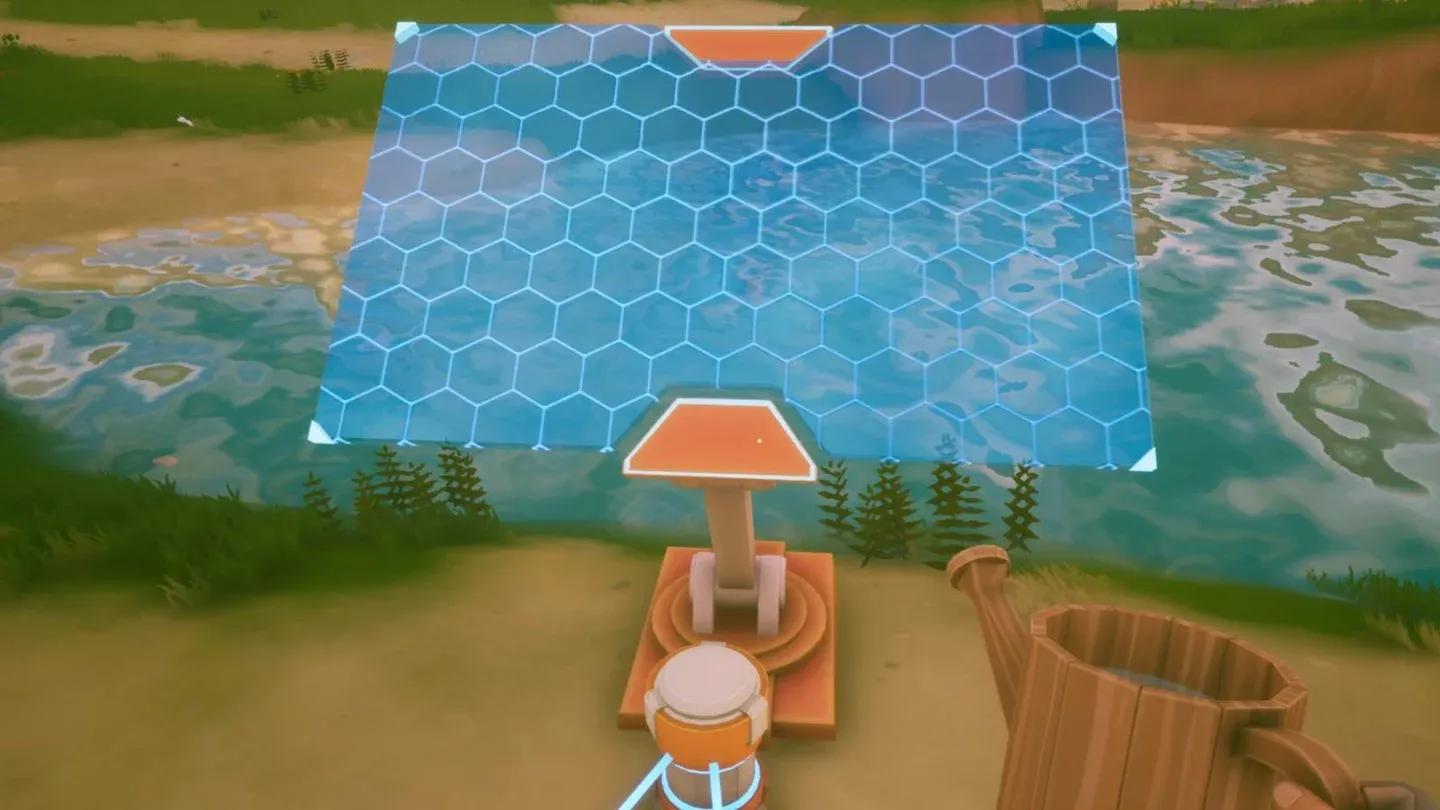
Solar plus battery starter setup

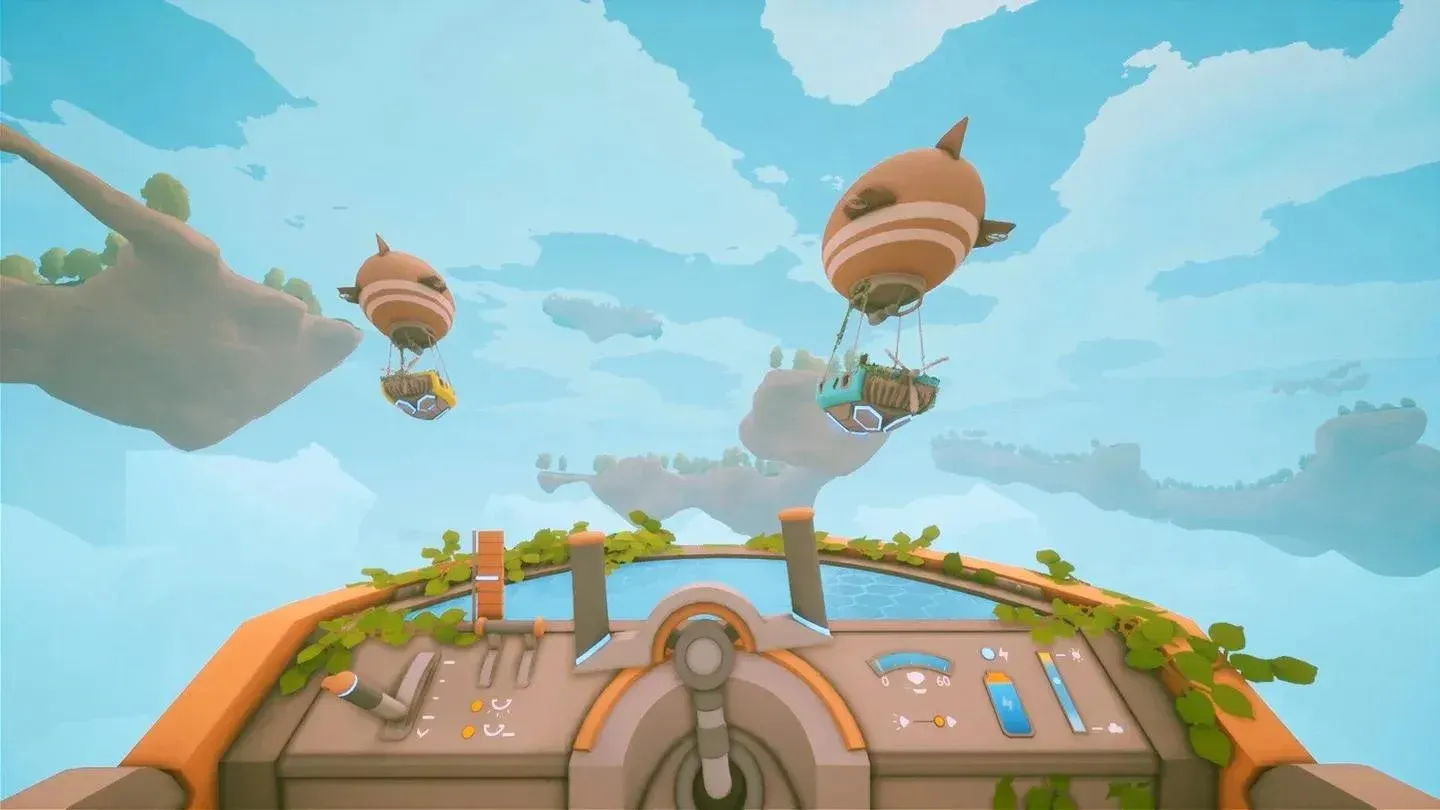
Solar panels
Solar panels are your first daytime power lane. They generate electricity from sunlight, which makes them excellent in clear weather and nearly useless at night or during storms. Build them early, but pair them with batteries immediately. A solar-only setup will leave every machine offline the moment the sun drops or clouds roll in.
The reported material inputs are wood, glass, and iron, with glass being the one that tends to create a bottleneck early. Save your glass for solar panels before spending it on anything decorative.
Wind turbines
Wind turbines generate steadily with some weather influence and work during the night, which makes them the natural backup for solar. High island positions are reported to perform better for wind placement, though exact altitude math needs testing in your own build before you commit.
The reported inputs are wood planks, iron, and cloth. Cloth is also used for airship parts and research, so check your supply before diverting it to turbines.
Water generators
Water generators are the steadiest option available when your base sits near a water feature. They are listed as providing consistent output without the weather dependency that affects solar and wind. The trade-off is placement: you need a base route that actually puts you close enough to water for it to make sense.
If your starter island has a water source nearby, a water generator can anchor your power grid and let solar and wind handle the variable load on top.
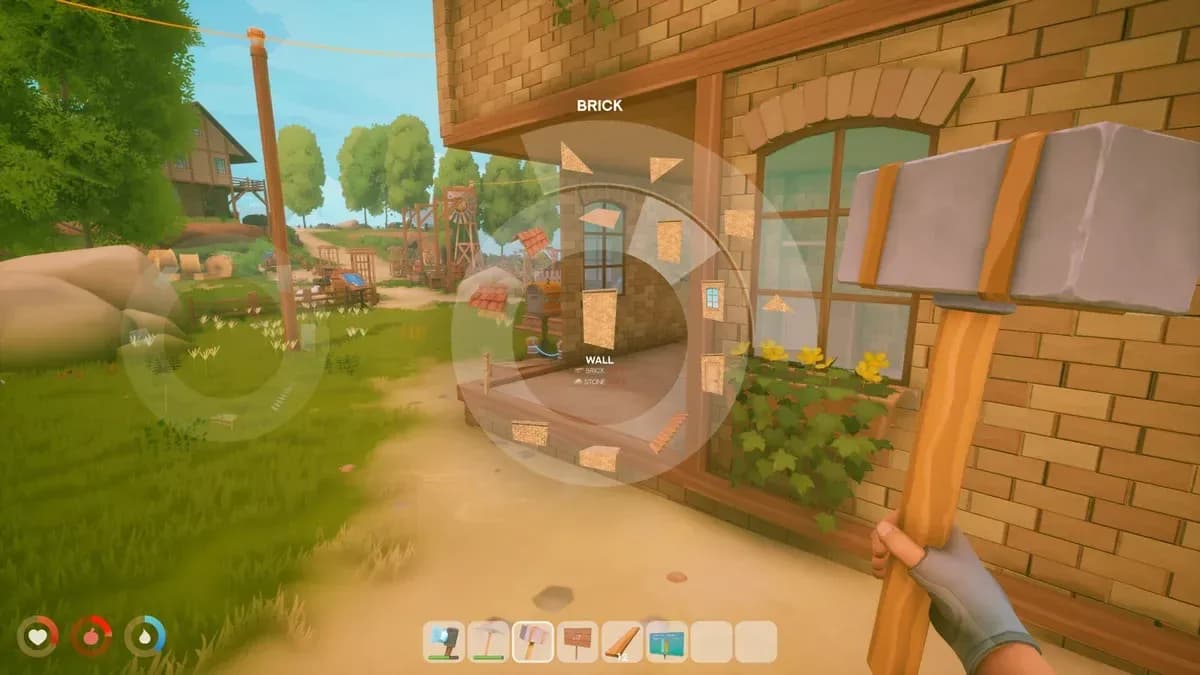
Wind turbine high-ground placement
How do batteries work in Solarpunk?
Batteries store surplus energy from any generator and discharge it when production drops below demand. They are the single most important power component in the game, and most players build them too late.
The reported inputs are iron and cloth. Capacity and discharge rates need a live check in your current build before you scale up, but the principle is simple: place batteries before you add a larger farm, a workshop, or a co-op workload. Trying to add storage after the grid is already under pressure is slower and more expensive.
How does wireless power work?
Wireless power handles delivery across your base layout and to remote stations. Range is not confirmed until tested in your build, and failure behavior when something falls out of range needs a small test before you spread machines across multiple platforms.
The practical approach: build a small wireless setup first, confirm range with one machine, save and reload to check it survives, then expand. Assuming range before testing it is one of the fastest ways to strand a machine mid-operation.
| Power source | Best use case | Weather risk | Night output | Key material |
|---|---|---|---|---|
| Solar panels | Starter daytime generation | High (clouds, night) | None | Glass, iron |
| Wind turbines | Backup and night coverage | Medium (storm influence) | Yes | Cloth, iron |
| Water generators | Steady base anchor | Low | Yes | Placement-dependent |
| Batteries | Storage and gap coverage | None | Discharges stored power | Iron, cloth |
| Wireless power | Base layout delivery | None | Depends on generators | Iron, cloth |
What farm devices draw power?
Two automation devices connect directly to your power grid and are worth planning around before you build them.
The Auto-Irrigator draws a reported low amount of power and handles water delivery to crop beds. Build it only after a small crop test proves actual water demand, because scaling a large farm around untested coverage values is a common way to waste materials.
The Auto-Planter handles repeat crop loops and is a mid-game unlock. Check seed priority settings before using it, because it will plant rare seeds if they are in the same storage as common ones.
For a deeper look at how crops interact with your power and water systems, the Solarpunk farming guide covers crop priorities, wheat gates, and chicken feeding order in detail.
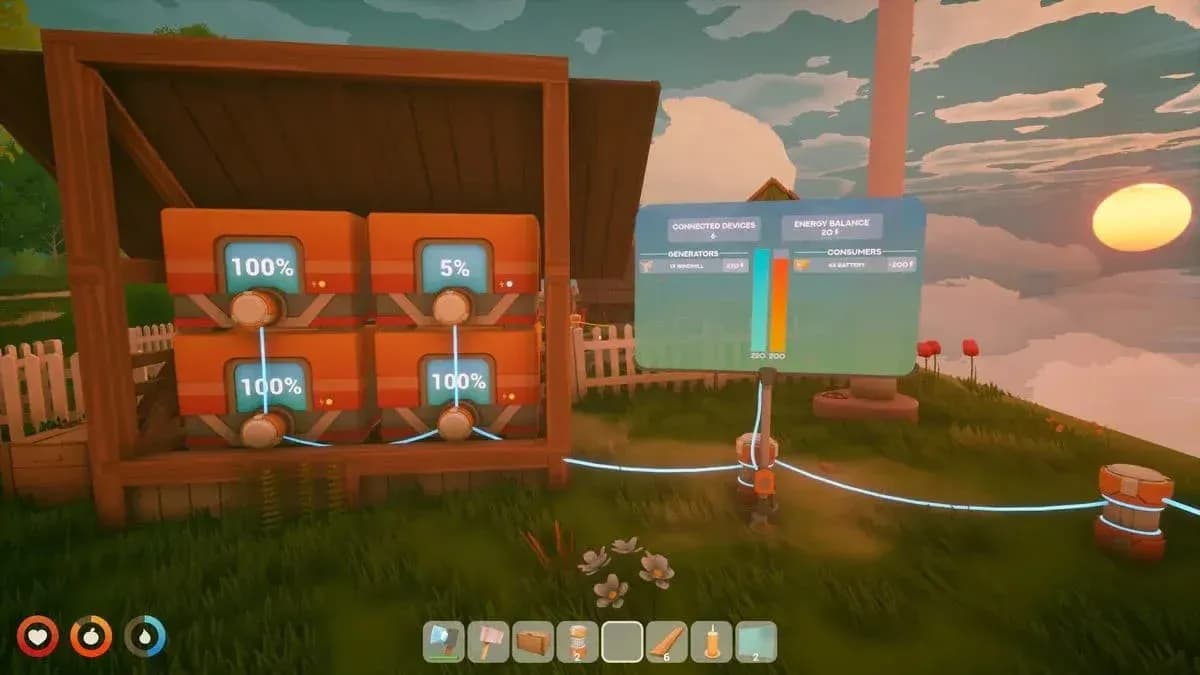
Auto-Irrigator farm automation
What is the right build order for power?
The order matters more than the quantity. Here is the sequence that keeps your base stable through each progression stage.
- Build solar panels as your first generator as soon as you have wood, glass, and iron
- Add at least one battery before connecting any machine to the grid
- Add a wind turbine once cloth supply is stable, to cover nights and weather gaps
- Build a water generator if your base route puts you near water and you need a steady anchor
- Expand wireless power only after confirming range with a small test
- Connect Auto-Irrigator and Auto-Planter last, after the grid handles the base load comfortably
The Airship Dock also draws power, so account for it before you build it. The reported inputs include concrete, iron, and a solar panel, and it should only go up after the base has stable generation and return storage ready.
For everything involved in getting your airship off the ground, the Solarpunk airship guide covers the dock, parts, upgrades, and island route rules from start to finish.
How do island routes affect power planning?
Different island types supply different materials, and your power setup depends on getting the right ones at the right time.
Forest islands are the first resource route and supply wood and basic materials for early generators. Desert islands are where glass and rare seeds come from, which matters because glass gates solar panel production. Mountain islands carry ore and support wind turbine and advanced device recipes. Crystal islands supply Crystal Shards, which feed into advanced solar sail upgrades and rare crafts.
For a full breakdown of where to find silicon, cobalt, and other key materials across these islands, the Solarpunk resources guide covers every major material and how to route for it.
Building a power setup that actually holds
The most common mistake is treating power as a problem to solve once. It is not. Every time you add a machine, a crop bed, an animal shelter, or an airship dock, the load on your grid changes. Build with that in mind from the start.
Solar handles the daytime load. Wind covers the gaps. Batteries absorb the difference. Water generators anchor the whole thing if placement allows. Wireless power connects it all. None of those five components are optional at scale, and building them in that order keeps you from hitting a wall mid-progression.
For more guides covering every system in the game, the full Solarpunk guide collection is the fastest way to find the next thing blocking your save.