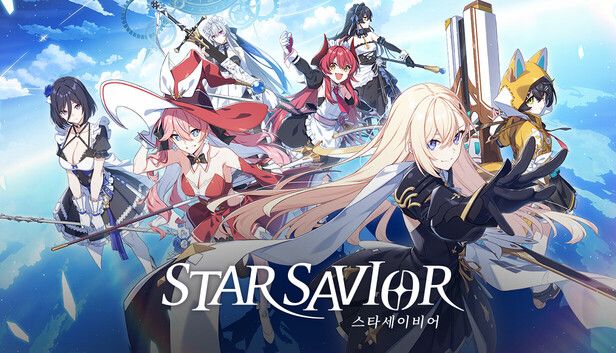

Star Savior's roster looks manageable until you actually start pulling, and suddenly you're staring at a dozen Saviors wondering which ones are worth your Arcana, gear, and Breakthrough materials. The answer depends heavily on whether you're grinding PvE stages, tackling Hard Mode boss fights, or stepping into the PvP arena, because the meta shifts between those modes more than most players expect. Here's the full breakdown, covering every tier from the S+ units that shape the meta down to the C-tier picks that are better used as fodder.
How does team composition work in Star Savior?
Every team runs four slots: two front-line positions and two back-line positions. Front-line units absorb roughly 80% of incoming damage, so placing a squishy DPS there without a tank backing them up is a fast way to lose. The baseline formula that holds across most content is 1 Tank + 1 Healer/Support + 2 DPS, but the game rewards flexibility.
Elemental matchups matter more than many new players realize. Sun beats Moon, Moon beats Star, and Star beats Sun in a classic triangle. Chaos and Order are neutral against the other three elements but strong against each other. For most general PvE content you can ignore this, but specific boss fights and PvP matchups can swing dramatically based on element advantage.
For PvP specifically, the sweet spot is 2 DPS + 1 Tank + 1 Support. Pure offensive squads can work, but they demand well-geared units and leave no room for error against experienced players.

Front vs back row positioning
Full Star Savior tier list (PvE meta, April 2026)
This ranking reflects the current meta as of March to April 2026.
| Tier | Characters |
|---|---|
| S+ | Bunnygirl Charlotte, Emily, Waltz of Starlight Asherah, Lacy |
| S | Hilde, Muriel, Frey Noble Princess, Bunnygirl Claire, Bell Rhys |
| A | Charlotte, Kyra, Petra, Lugh, Yoo Mina, Roberta, Dana, Haydee, Tanya, Luna, Seira, Elisa, Lydia |
| B | Bunnygirl Scarlet, Harley, Serpang, Asherah, Epindel, Lily, Frey, Omega, Smile |
| C | Annah, Carmen, Marcille, Trish, Marsil, Scarlet |
S+ tier: the units that define the meta
Bunnygirl Charlotte sits at the top as a universal damage dealer with team-wide ATK buffs that last 2 turns. She handles wave clears and boss burst equally well, and she stays relevant even at low Breakthrough levels. If you're rerolling for a single unit, she's the argument.
Emily is the most reliable frontline defender in the current meta. Her kit delivers strong HP and defense scaling alongside self-sustain, and she performs at 0 Breakthrough without needing heavy investment. Practically every top-performing team composition runs her.
Waltz of Starlight Asherah is a hybrid support striker who heals through basic attacks, removes debuffs from allies with her ultimate, and boosts the action gauge to speed up skill rotations. She anchors the Light and Dark all-rounder composition, and that reputation is well earned.
Lacy combines healing, damage, and frontline durability in one kit. Her signature ATK reduction debuff and attack-scaling heals let her contribute offensively and defensively at the same time. She was once the dominant meta-defining unit and has slipped slightly due to power creep, but she still fits into almost any team that needs flexible sustain.
S tier: elite alternatives worth heavy investment
Hilde brings full debuff immunity and an initial barrier to the whole team from the moment combat starts. Her damage scales with HP, so she functions as both a tank and a secondary damage source in prolonged fights.
Muriel specializes in debuff extension. Her ultimate deals AoE damage and reduces enemy attack, while her special skill extends all negative effects on targets. She's the unit you want in turn-limited stages.
Frey Noble Princess provides team shielding, AoE healing, and debuff cleansing. She's a free launch unit, which makes her one of the most accessible S-tier picks for F2P players. Her ultimate also applies attack-reducing debuffs to enemies.
Bunnygirl Claire is the strongest Moon attribute striker. She self-buffs with each attack, ramping her damage progressively, and delivers consistent burst in boss-focused teams.
Bell Rhys is a debuffer with solid damage output who excels against buff-heavy enemies. In endgame PvE content where enemies stack buffs aggressively, she becomes a core pick rather than a situational one.
A tier: reliable workhorses
A-tier units carry you through most of the game and remain useful even after you pull S+ units. Dana is a strong AoE caster who grants attack buffs to the highest-ATK ally and slows enemies with her ultimate. Luna deals area damage with every single ability in her kit, making her the go-to pick for mob-heavy stages. Elisa brings a revive and single-target healing, which is irreplaceable in attrition-heavy boss encounters. Kyra is a meta core for Cosmo Gate content and benefits from Kira's Arcana support.
Tanya provides critical rate buffs to the entire team and increases her own action gauge, making her a solid mid-game buffer who also breaks enemy toughness quickly.
B and C tier: when to use them
B-tier units are acceptable filler but generally get replaced once your S and S+ roster fills out. Smile provides defense debuffs via her ultimate and is actually a strong pick specifically for Hard Mode defense-break windows, even though her baseline coefficients are low. Epindel is a single-target assassin who gains extra turns and stack-based damage, making her viable in single-target fights despite her lower overall ranking.
C-tier units like Carmen and Trish have niche uses but are outclassed by newer options. Carmen has high durability but loses the tank role to Emily and Hilde. Trish can chain burst kills but lacks consistency in sustained fights.
Star Savior PvP tier list: who actually wins in the arena?
PvP rankings diverge from PvE in several meaningful ways. SR rarity characters are generally not worth running in the arena at all, so focus your resources entirely on SSRs.
| PvP Tier | Characters |
|---|---|
| S | Hilde, Emily, Bell Rhys, Bunnygirl Charlotte, Elisa, Bunnygirl Claire, Haydee, Kyra, Lacy, Luna |
| A | Waltz of Starlight Asherah, Charlotte, Seira, Roberta, Frey Noble Princess, Dana, Mina, Muriel |
| B | Petra, Lugh, Tanya, Bunnygirl Scarlet, Lydia, Frey, Lily, Carmen |
| C | Asherah, Trish, Harley |
| D | Epindel, Omega, Smile |
The most notable shift from PvE rankings is Smile dropping to D tier in PvP despite her Hard Mode utility, and Haydee entering S tier for PvP where her Star element Defender kit handles the aggressive damage dealers common in the arena. Muriel also drops from S to A tier, since her debuff-extension toolkit is less impactful against human opponents who play more reactively than PvE AI.
What are the best team archetypes for PvE?
The Light and Dark all-rounder
Order and Chaos element characters are neutral against Sun, Moon, and Star, meaning you can run them into almost any stage without worrying about elemental disadvantage. The core is Waltz Asherah as the sustain anchor and Lacy for dark coverage with both single-target and AoE damage. Fill the remaining two slots with a Light element unit plus whatever your current content demands, whether that's Luna for wave clearing or a second tank for survivability.
The double defender strategy
Running Emily alongside Ed (Sun/Defender) abuses the Careful Tactics passive, which generates extra Nova Force at the start of each turn. This gives the whole team better skill uptime and more damage over time. Lacy fills the main DPS slot naturally here, and the fourth slot goes to Waltz Asherah or Elisa depending on whether you need raw healing or a revive safety net.
The F2P core
Emily on the front line paired with Waltz Asherah as healer is the most accessible strong foundation for players not pulling on every banner. If you don't have Waltz Asherah, Serpang (Sun/Support) or the free unit Frey (Star/Support) can substitute, though the power gap is noticeable. The two flex DPS slots are almost interchangeable once this core is locked in.
The speed kill squad
For mob-heavy stages where chaining kills resets cooldowns, running three DPS units plus Waltz Asherah (the 3+1 variation) is the smarter version of the quad-DPS approach. Units with built-in sustain like Lacy or Bunnygirl Charlotte work best in front slots since there's no dedicated tank absorbing hits. This composition falls apart against bosses with heavy AoE, so swap to a tankier setup before those encounters.
How to survive Hard Mode
Hard Mode unlocks after Mainstream Stage 14, and the stat spike is real. Getting your Resonance Level to at least 8 before attempting it is the threshold that separates clean clears from repeated wipes.
The core combat loop in Hard Mode revolves around the Break and Nova Burst windows. Activate your tank's shield before the boss's telegraphed ultimate, apply defense-down debuffs immediately after, then focus all DPS on depleting Toughness while holding ultimates. Fire your main DPS ultimates inside the Break window to hit the damage multiplier, then sustain through the follow-up AoE before resetting.
For Arcana stacking in Journey Hard Mode, stacking multiple Arcanas of the same type outperforms mixing different types. Three Strength-type Arcanas on your main DPS is the most efficient setup. Push your main damage stat to 1,250 before the end of a run, and only invest in Focus or Protection training when you have three or more queued at once.
Key role picks at a glance
| Role | Top Picks | F2P Option |
|---|---|---|
| Defender (Tank) | Emily, Hilde | Vesta |
| Support/Healer | Waltz Asherah, Frey Noble Princess, Elisa | Bella |
| Striker (single target) | Bunnygirl Claire, Epindel | Sayla |
| Ranger/Caster (AoE) | Luna, Dana, Lacy, Bunnygirl Charlotte | Serpang |
The table above reflects role recommendations for the March to April 2026 meta window.
For more guides covering the games you're playing right now, browse more guides on GAMES.GG.