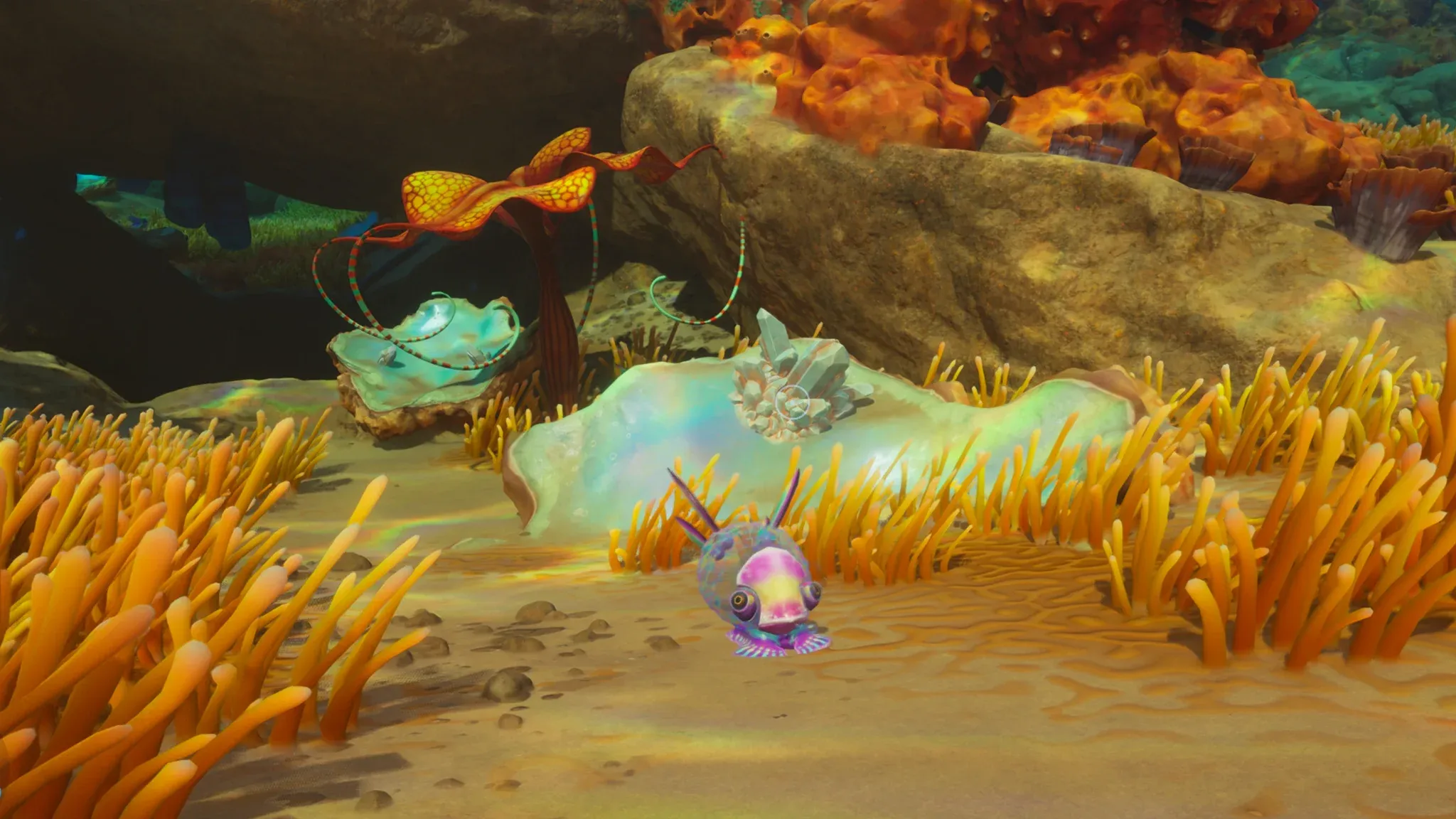

Salt is one of those resources in Subnautica 2 that seems minor until suddenly it isn't. You need it for food preservation, yes, but more importantly it unlocks a base power storage unit and the power cells required to craft your first submarine. Miss salt early and your progression stalls hard. This guide covers exactly where to find it, what it looks like, and how to pull roughly 35 pieces in a single farming run once you have the right adaptation unlocked.
What does salt look like in Subnautica 2?
Salt spawns as a pinkish, crystal-like boulder on the seabe. This is different from what many players expect: the crystals are not the tiny white flakes you might picture. They sit on the ocean floor as distinct formations, but they still blend into brighter sandy areas and shallow reef environments if you're moving too fast.
The deposits tend to appear on:
- Rocky surfaces and cave walls
- Uneven terrain and cliff edges
- The base of large underwater pillars
- Sandy seabed near structural landmarks
Slowing down near rocky outcroppings and scanning terrain edges carefully makes a significant difference in how many you spot per dive.
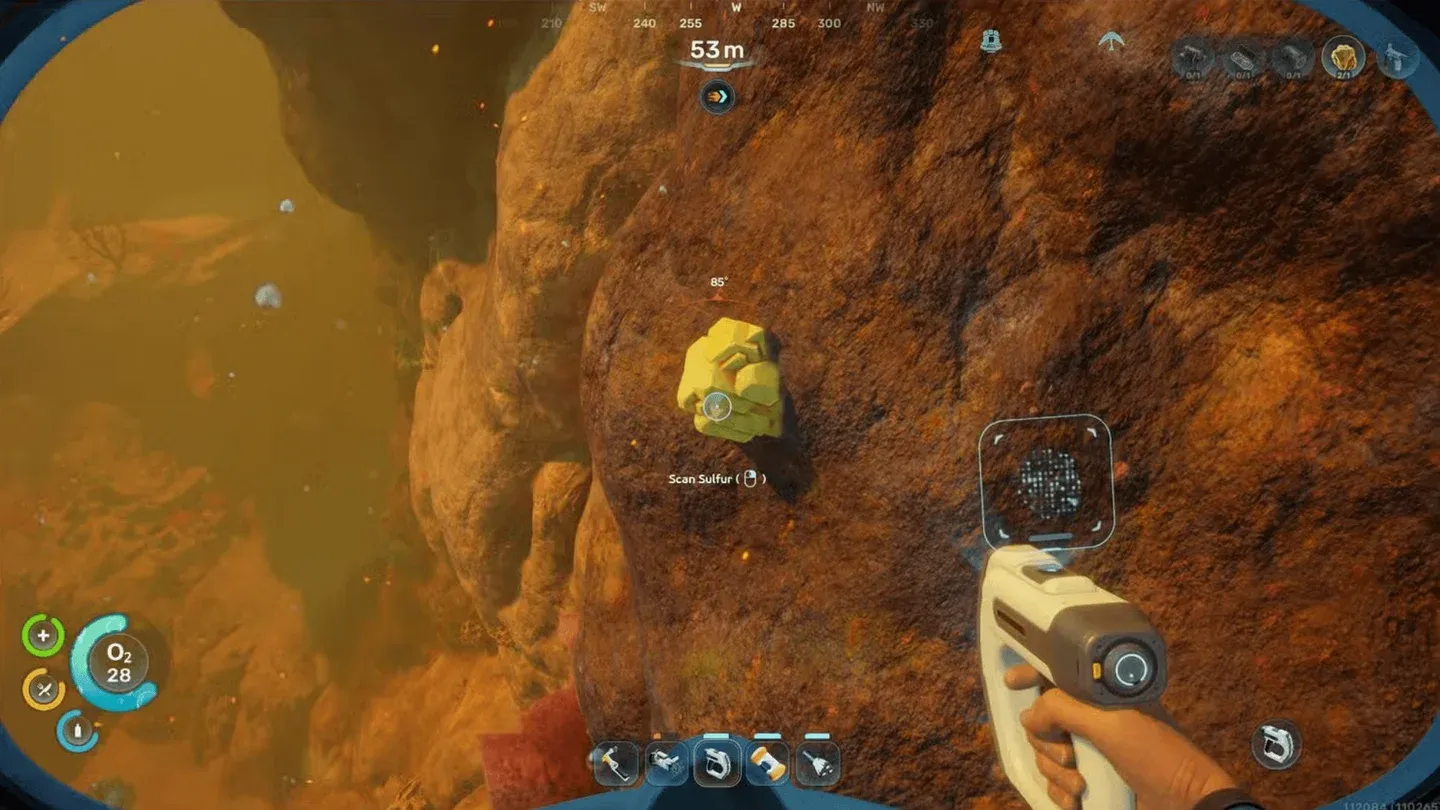
Salt crystal on the seabed
Where to find salt early: Chap's Blackbox
The first reliable salt location is Chap's Blackbox. From the Lifepod, swim 220 meters southeast. If you're starting from the Welcome Center instead, it's only 130 meters southeast. No special adaptations are required to collect salt here, which makes it the go-to spot for early-game runs.
Look for the large pillar that breaks the water's surface. Dive into the circular gorge surrounding its base and you'll find several small salt pieces at the pillar's foot. The hatch to Chap's Blackbox lets you replenish oxygen between collection passes without surfacing. After exiting the hatch, turn left around the corner and there's additional salt near the cave's exit.
This won't fill your inventory, but it's enough to get your first recipes moving without any risk.
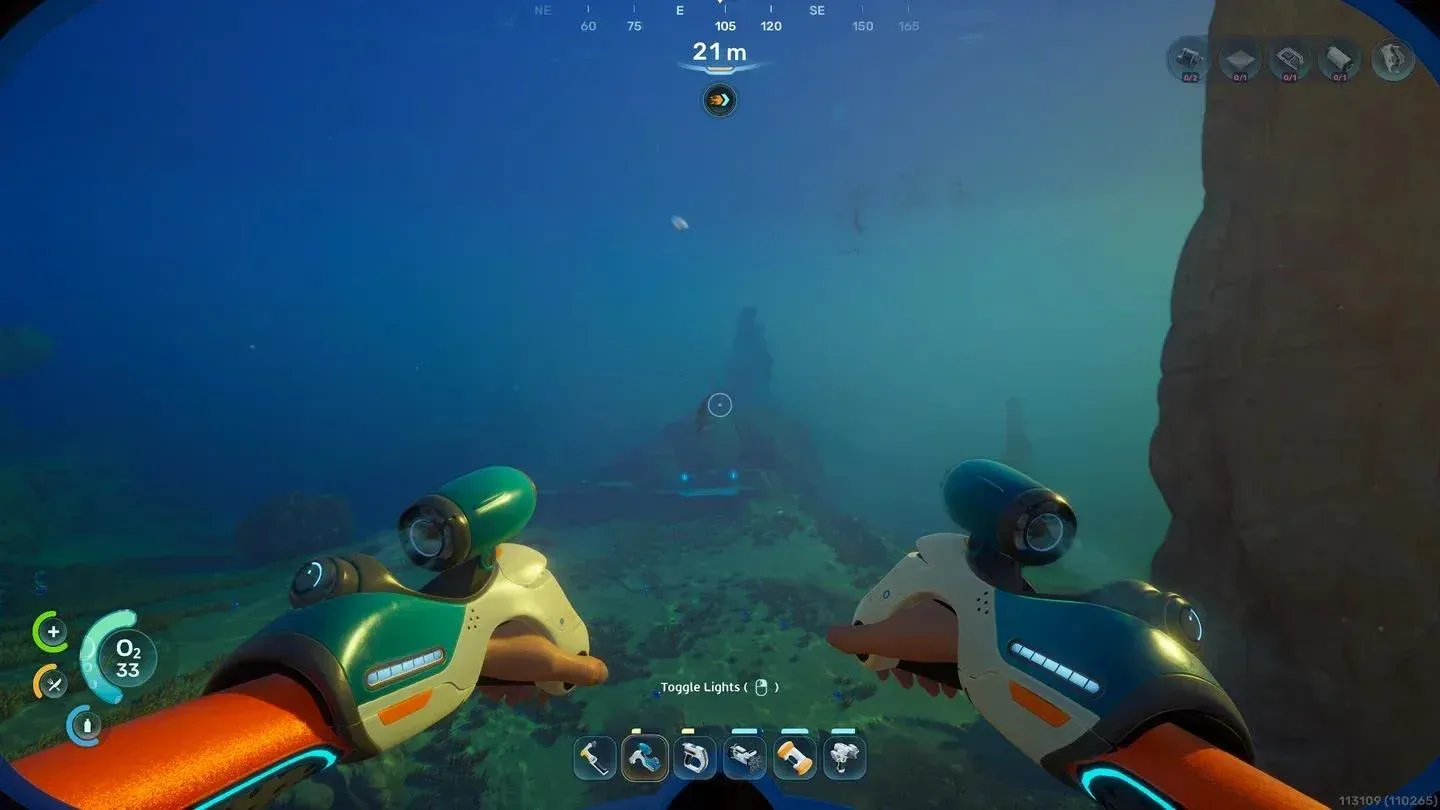
Chap's Blackbox salt spot
The best salt farming location in Subnautica 2
The high-yield salt farming route requires the heat tolerance adaptation. To unlock it, follow the main story progression: chase new signals, interact with every blackbox, obtain the sonic resonator, and use it to cure the Angel Comb starting at the Wander Blackbox. Heat tolerance is the third adaptation you receive, after pressure tolerance and digestion.
Once you have it, return to Chap's Blackbox and swim northeast approximately 100 meters. Behind the human-made items on the seabed, you'll spot two large salt crystals. Use the sonic resonator to break each one and collect around 5 pieces of salt per deposit.
From those two crystals, continue north-northeast along the seabed to a third deposit, then pivot north toward the large Coral Crabs. Turning north-northeast again from there reveals four more salt deposits on the ocean floor. Breaking every crystal in this area yields approximately 35 pieces of salt in a single run.
What is salt used for in Subnautica 2?
Salt's crafting applications go well beyond food. The sources confirm three main uses:
- Advanced food recipes that last longer than standard cooked fish, reducing how often you need to return to base during long dives
- Power storage unit for your base, which stores excess solar power for use at night
- Power cells, which are part of the tadpole crafting recipe, the mini submarine
The submarine connection is the reason salt feels urgent. Players who skip resource management early often hit a wall when they realize the tadpole requires power cells and power cells require salt. Managing your food, water, and survival needs alongside salt collection from the start keeps that progression moving without a scramble later.
How does salt farming change as you progress?
Early game, manual searching near rocky terrain and cave entrances is your primary method. The Seaglide improves this considerably by increasing movement speed between deposits and making cave exits safer if something goes wrong.
Later, the Scanner Room changes the equation entirely. Once you unlock base-building and Scanner Room technology, it detects salt deposits automatically, highlights nearby resource nodes, and removes the need to visually scan every surface. For players who find the early search tedious, this is worth rushing toward.
For reference on other resources that follow similar farming logic, the guide to finding quartz in Subnautica 2 covers the Coral Dome locations that often share terrain with salt spawns. Salt and quartz frequently appear in the same rocky zones, so combining those runs saves time.
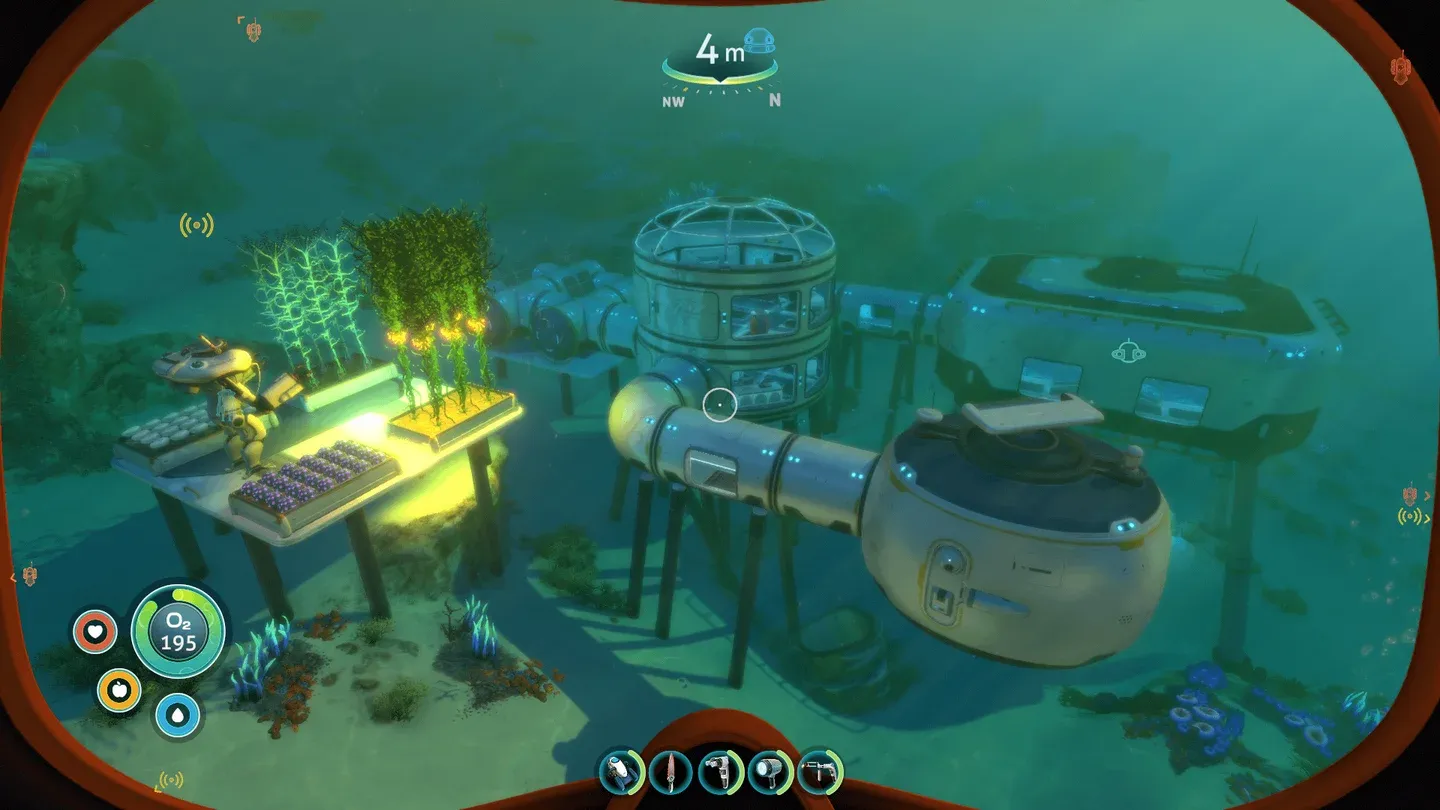
Scanner Room finds deposits automatically
Common mistakes that make salt harder to find
After spending time with the early-game loop, a few patterns consistently slow players down:
- Searching only flat sandy areas where deposits rarely spawn
- Moving too quickly past rocky surfaces and terrain ridges
- Diving deep before exhausting shallow cave entrances near the starting area
- Ignoring the Chap's Blackbox pillar gorge entirely because it doesn't look like a resource zone
- Not having the sonic resonator equipped when reaching the larger crystal deposits
Salt rewards the same slow, terrain-reading approach that Subnautica 2 applies to most of its resources. Speed works against you here.
For a broader look at what to collect alongside salt, the full Subnautica 2 guides collection covers silver, gold, sulfur, and battery crafting, all of which follow similar early-game logic and pair well with a salt farming run.